



 Edit article
Series
13 Years, 617 Scholars, 1 Torah


Categories:
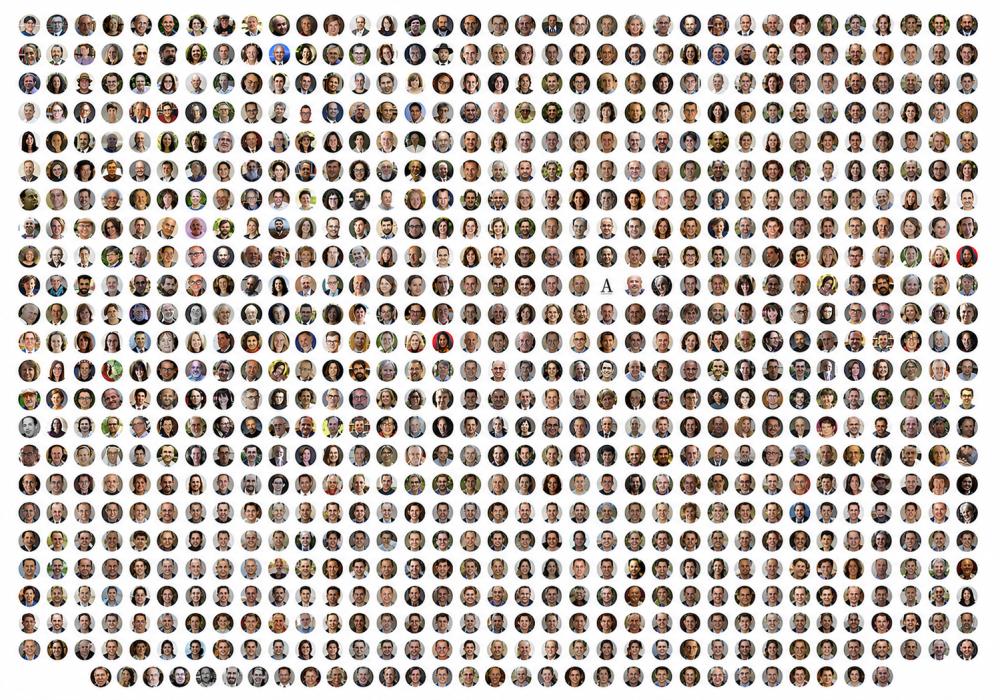
Authors of TheTorah.com
I love the festival of Shavuot—not only for its more original agricultural aspects,[1] but also for the way it highlights the centrality of Torah to Jewish life—even though I do not believe that any version of the Decalogue (the “Ten Commandments”) was given to Moses on Shavuot (or any other time).
Believing that the Sinai theophany is not historical does not diminish my love for the Torah reading for the holiday, Exodus 19, which contains several contradictory images of what revelation looked like, offering (alongside Exodus 24 and Deuteronomy 4–5) enough options to satisfy just about anyone.[2]
Indeed, what makes the Sinai revelation narratives so powerful to me is precisely that they do not preserve a single, fixed picture of revelation, but multiple voices and perspectives struggling to describe an encounter with the divine.
Later Jewish tradition emphasizes that there are שׁבעים פנים לתורה—seventy different ways that just about any biblical text might be interpreted.[3] What I appreciate about TheTorah.com is that it highlights the way in which the Bible itself is amazingly and beautifully complex, containing a multiplicity of viewpoints that we may choose from as we construct our Jewish lives.
Over the last thirteen years, 617 scholars (!!!)—an average of 47 new authors each year—have contributed to TheTorah.com, helping make the richness and complexity of Torah accessible to a broad audience. Collectively, TheTorah.com has shown that the meanings of the Bible can be widely accessible to all—as Deuteronomy 30:12 says, לֹא בַשָּׁמַיִם הִוא, “It is not in heaven,” meaning that Torah and its interpretation need not remain obscure or arcane.
I am grateful for what I have learned from TheTorah.com, and I look forward to what future articles will continue to teach both me and the broader community.
Wishing you chag sameach
Marc Brettler
TheTorah.com is a 501(c)(3) nonprofit organization.
We rely on the support of readers like you. Please support us.
Published
|
Last Updated
May 21, 2026
Previous in the Series
Next in the Series
Before you continue...
Thank you to all our readers who offered their year-end support.
Please help TheTorah.com get off to a strong start in 2025.
Footnotes

Essays on Related Topics: