


 Edit article
Series
When Building a Sukkah Became a Commandment


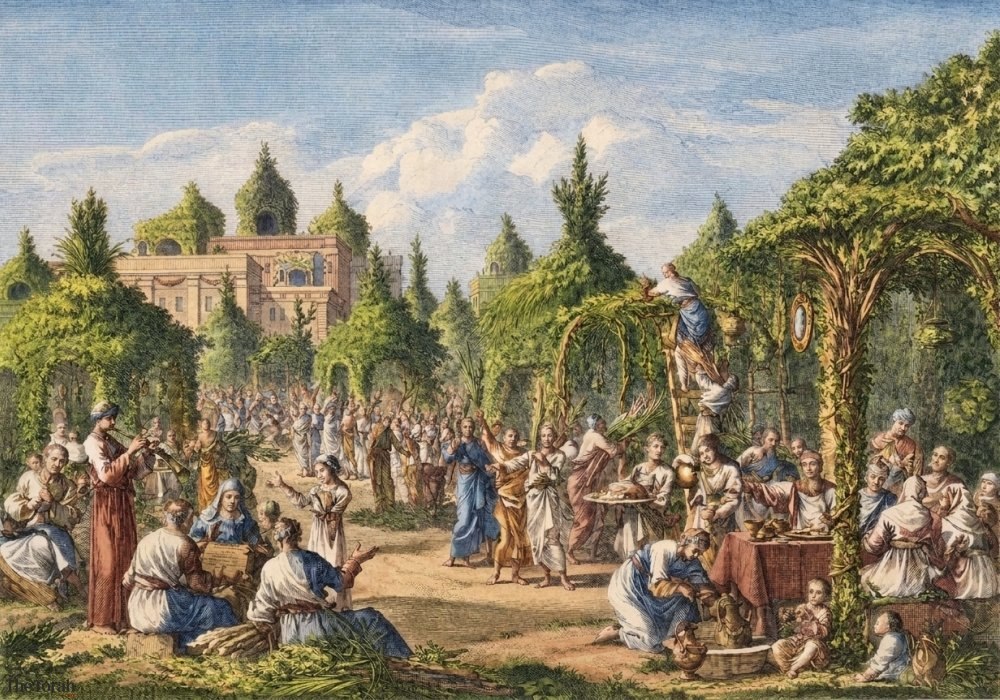
The Feast of Booths (colorized) Jan Luyken, 1705. Rijks Museum
After the first public reading of the Torah—as described in the book of Nehemiah[1]—the people began to study the scroll’s contents, and discovered a commandment to build Sukkot, booths:
נחמיה ח:יד וַיִּמְצְאוּ כָּתוּב בַּתּוֹרָה אֲשֶׁר צִוָּה יְ־הֹוָה בְּיַד מֹשֶׁה אֲשֶׁר יֵשְׁבוּ בְנֵי יִשְׂרָאֵל בַּסֻּכּוֹת בֶּחָג בַּחֹדֶשׁ הַשְּׁבִיעִי. ח:טו וַאֲשֶׁר יַשְׁמִיעוּ וְיַעֲבִירוּ קוֹל בְּכׇל עָרֵיהֶם וּבִירוּשָׁלַ͏ִם לֵאמֹר צְאוּ הָהָר וְהָבִיאוּ עֲלֵי זַיִת וַעֲלֵי עֵץ שֶׁמֶן וַעֲלֵי הֲדַס וַעֲלֵי תְמָרִים וַעֲלֵי עֵץ עָבֹת לַעֲשֹׂת סֻכֹּת כַּכָּתוּב.
Neh 8:14 They found written in the Torah that YHWH had commanded Moses that the Israelites must dwell in booths during the festival of the seventh month, 8:15 and that they must announce and proclaim throughout all their towns and Jerusalem as follows, “Go out to the mountains and bring leafy branches of olive trees, pine trees, myrtles, palms and other leafy trees to make booths, as it is written.”[2]
A slightly different form of this commandment appears in the book of Leviticus, at the end of the section on festivals:
ויקרא כג:מב בַּסֻּכֹּת תֵּשְׁבוּ שִׁבְעַת יָמִים כׇּל הָאֶזְרָח בְּיִשְׂרָאֵל יֵשְׁבוּ בַּסֻּכֹּת.
Lev 23:42 You shall live in booths seven days; all citizens in Israel shall live in booths (sukkot).
The people comply and build sukkot in Jerusalem:
נחמיה ח:טז וַיֵּצְאוּ הָעָם וַיָּבִיאוּ וַיַּעֲשׂוּ לָהֶם סֻכּוֹת אִישׁ עַל גַּגּוֹ וּבְחַצְרֹתֵיהֶם וּבְחַצְרוֹת בֵּית הָאֱלֹהִים וּבִרְחוֹב שַׁעַר הַמַּיִם וּבִרְחוֹב שַׁעַר אֶפְרָיִם.
Neh 8:16 So the people went out and brought them, and made themselves booths, each on his roof, and in their courtyards, and in the courtyards of the House of God, and in the square of the Water Gate, and in the square of the Ephraim Gate.
Apparently, this is the first time they did so in historical memory:
ח:יז וַיַּעֲשׂוּ כׇל הַקָּהָל הַשָּׁבִים מִן הַשְּׁבִי סֻכּוֹת וַיֵּשְׁבוּ בַסֻּכּוֹת כִּי לֹא עָשׂוּ מִימֵי יֵשׁוּעַ בִּן נוּן כֵּן בְּנֵי יִשְׂרָאֵל עַד הַיּוֹם הַהוּא וַתְּהִי שִׂמְחָה גְּדוֹלָה מְאֹד.
8:17 The whole community that returned from captivity made booths, and dwelt in the booths—the Israelites had not done so from the days of Joshua[3] the son of Nun to that day—and there was very great gladness.
This passage reports that building sukkot as a practice disappeared after Joshua and was only brought back now, in the time of Ezra.
Of Course Israel Built Sukkot: The Talmud
The Talmud is unsurprisingly bothered by how such a basic Torah commandment could have been ignored for the entire period between the settlement and the Persian period return. The Talmud quotes the verse[4] and asks:
בבלי ערכין לב: [מינכן 95] אפשר בא דוד ולא עשה סכה בא שלמה ולא עשה סכה עד שבא עזרא?!
b. Arakhin 32b [Munich 95] Is it possible that David came, and didn’t build a sukkah, and then Solomon came and didn’t build a sukkah, until Ezra came?[5]
Ignoring the plain sense of the verse, the Talmud argues that the mention of Joshua is simply meant to imply other parallel elements between the time of Joshua and that of Ezra:
אלא מקיש ביאתם בימי עזרא לביאתם בימי יהושע בן נון, מה בימי יהושע בן נון מנו שמטין ויובלות [קדשו ערי חומה] ונתחייבו במעשר אף ביאתם בימי עזרא מנו שמטין ויובלות וקדשו ערי חומה ונתחייבו במעשר!
Rather, it is connecting the arrival [of exiled Judeans] in the time of Ezra to their arrival in the days of Joshua son of Nun: Just as, from the time of Joshua son of Nun, they started the count for sabbatical and jubilee years, [and they sanctified walled cities,] and they became obligated in tithes, so too, in the days of Ezra, they started the count for sabbatical and jubilee years, and sanctified walled cities, and became obligated in tithes.
A Metaphoric Sukkah: No Idolatry
The Talmud later offers a metaphoric understanding: In the time of Ezra, the people receive protection against the desire to worship foreign gods, and this is described as sukkot that they built:
ואידך: ההוא דבעו רחמי על יצרא דע[בודה] ז[רה] ובטלוה ואגין זכותא עלייהו כסוכה.
Another interpretation: This refers to how he (Ezra) prayed for mercy against the [Israelites being overcome by] inclination to worship foreign gods, and this merit protected them like a sukkah.
The Bible suggests that during the First Temple period, the people regularly gave in to the temptation to engage in idolatry. The description of Ezra and his followers dwelling in sukkot should be understood as metaphoric language expressing that they remained loyal to the one God of Israel, and did not serve other gods, as did the previous generations.
The First Time with All Their Hearts—Gersonides
Rabbi Levi Gersonides (Ralbag, 1288–1344) offers two interpretations of what hadn’t been done since the time of Joshua:
a. Studying Torah
רלב"ג נחמיה ח:יז כי לא עשו מימי ישוע בן נון כן בני ישראל – רוצה לומר: להיות לב כל הבאים שם טוב עם י״י ולקרוא יום ביום בספר תורת האלהים וידמה שכן עשו בימי יהושע בן נון לקרוא גם כן בספר תורת האלהים
Gersonides Neh 8:17 “For the Israelites had not done so since the days of Joshua son of Nun” - meaning, that the heart of all who came there should be good with the LORD, and to read day by day in the book of God’s Torah; and it seems that they did the same in the days of Joshua son of Nun, to read likewise in the book of God’s Torah.
b. Dwelling in booths with their whole hearts turned to God
או יהיה שב אמרו כי לא עשו כן לעשות הסוכות ולב כלם[6] לי״י.
Or it (="they had not done so") may refer back to making the booths, with the heart of all of them toward YHWH.
Living in the Sukkah Properly—Metzudat David
Rabbi David Altschuler of Prague (1687–1769) in his Metzudat David commentary says that the verse in Nehemiah means that in the time of Ezra and Nehemiah people made the Sukkah their primary dwelling place throughout the festival, as they did in the time of Joshua. In the intervening generations, people lived in their regular homes and only visited the sukkah:
מצודת דוד נחמיה ח:יז "וישבו בסוכות" – ר״ל ישבו בהם בקביעות רב כמו שראוי להיות. כי לא עשו – ר״ל עשו המצוה מן המובחר אשר לא עשו כן מימי ישוע בן נון...
Metzudat David Neh 8:17 “And they dwelt in the booths” - that is, they dwelt in them with real permanence, as it ought to be. “For they had not done so” - that is, they performed the commandment in its choicest form, which they had not done since the days of Joshua son of Nun.
Sukkot in Jerusalem—Malbim
Rabbi Meir Leibush ben Yehiel Michal (Malbim, 1809–1879) suggests that the book of Nehemiah was referring to a new practice instituted in Jerusalem. First Temple period Jerusalem was only public land, and one does not build sukkot on public land, until Ezra came and changed the rule:
מלבי״ם נחמיה ח:יד — אשר ישבו בני ישראל בסכות בחג – זה דבר זר מאד שישראל לא עשו סכות מימי יהושע ועד עתה... ונראה לפמ״ש הרמ״א בא״ח סי׳ תרל״ז שאין לעשות סוכה ברה״ר, א״כ כיון דקיי״ל שירושלים לא נתחלקה לשבטים, לא נמצא שם רה״י... ובאשר בימי עזרא קנו שנית את א״י בחזקה וקדשוה התנו הב״ד שיעשו סכות בירושלים ובשאר רה״ר.
Malbim Neh 8:14 “That the Israelites should dwell in booths on the festival” - it is very strange that Israel did not make booths from the days of Joshua until now... It appears, following what Rema (=R. Moses Isserles) writes in (his glosses on Shulḥan Arukh) Oraḥ Ḥayim §637, that one may not build a sukkah in the public domain. Since we hold that Jerusalem was never apportioned among the tribes, no private domain was to be found there... But in the days of Ezra, when they took possession of the land a second time and sanctified it, the court stipulated that booths be built in Jerusalem and in other public domains.
These traditional readings grapple with the religious problem of how it could be that in hundreds of years of Israelite history they ignored a basic rule recorded explicitly in the Torah. A historical-critical approach to the composition of the Torah, however, takes this scene in Ezra-Nehemiah almost at its word: The Judeans really were unfamiliar with the building of sukkot until they heard this legislation.
For the author of Nehemiah, the law concerning building sukkot during this festival comes from the Torah of Moses, so the time of Ezra and Nehemiah could not literally have been the first time anyone heard of it. If building a sukkah was a commandment given at Sinai it must have been performed, so the passage suggests that sukkot were built in the time of Joshua and the practice was (somehow) lost after that. But contemporary academic scholarship argues that the composition of the Torah is much later than the period of Moses, and that it developed over time.
The Stages of Composition of the Laws of Sukkot
The earliest legal text in the Torah, the Covenant Collection,[7] mentions a festival of ingathering produce, with no mention of the term sukkot:
שמות כג:טז וְחַג הַקָּצִיר בִּכּוּרֵי מַעֲשֶׂיךָ אֲשֶׁר תִּזְרַע בַּשָּׂדֶה וְחַג הָאָסִף בְּצֵאת הַשָּׁנָה בְּאׇסְפְּךָ אֶת מַעֲשֶׂיךָ מִן הַשָּׂדֶה.
Exod 23:16 and the Feast of the Harvest, of the first fruits of your work, of what you sow in the field; and the Feast of Ingathering at the end of the year, when you gather in the results of your work from the field.
In the late First Temple period book of Deuteronomy, the festival is called Sukkot “booths,” but no explanation for this name is given, nor is it followed by a command for people to build booths:
דברים טז:יג חַג הַסֻּכֹּת תַּעֲשֶׂה לְךָ שִׁבְעַת יָמִים בְּאׇסְפְּךָ מִגׇּרְנְךָ וּמִיִּקְבֶךָ.... טז:טו שִׁבְעַת יָמִים תָּחֹג לַיְ־הֹוָה אֱלֹהֶיךָ בַּמָּקוֹם אֲשֶׁר יִבְחַר יְ־הֹוָה כִּי יְבָרֶכְךָ יְ־הֹוָה אֱלֹהֶיךָ בְּכֹל תְּבוּאָתְךָ וּבְכֹל מַעֲשֵׂה יָדֶיךָ וְהָיִיתָ אַךְ שָׂמֵחַ.
Deut 16:13 After the ingathering from your threshing floor and your vat, you shall hold the Feast of Booths for seven days…. 16:15 You shall hold a festival for YHWH your God seven days, in the place that YHWH will choose; for YHWH your God will bless all your crops and all your undertakings, and you shall have nothing but joy.
The festival of Sukkot also appears in the core layer of the festival calendar of the early Persian Period Holiness Collection in Leviticus:
ויקרא כג:לד...בַּחֲמִשָּׁה עָשָׂר יוֹם לַחֹדֶשׁ הַשְּׁבִיעִי הַזֶּה חַג הַסֻּכּוֹת שִׁבְעַת יָמִים לַיְ־הֹוָה. כג:לה בַּיּוֹם הָרִאשׁוֹן מִקְרָא קֹדֶשׁ כׇּל מְלֶאכֶת עֲבֹדָה לֹא תַעֲשׂוּ. כג:לו שִׁבְעַת יָמִים תַּקְרִיבוּ אִשֶּׁה לַיְ־הֹוָה בַּיּוֹם הַשְּׁמִינִי מִקְרָא קֹדֶשׁ יִהְיֶה לָכֶם וְהִקְרַבְתֶּם אִשֶּׁה לַיְ־הֹוָה עֲצֶרֶת הִוא כׇּל מְלֶאכֶת עֲבֹדָה לֹא תַעֲשׂוּ.
Lev 23:34 … On the fifteenth day of this seventh month there shall be the Feast of Booths to YHWH, [to last] seven days. 23:35 The first day shall be a sacred occasion: you shall not work at your occupations; 23:36 seven days you shall bring offerings by fire to YHWH. On the eighth day you shall observe a sacred occasion and bring an offering by fire to YHWH; it is a solemn gathering: you shall not work at your occupations.
The very next verse in the passage reads like the text’s ostensible ending:
ויקרא כג:לז אֵלֶּה מוֹעֲדֵי יְ־הֹוָה אֲשֶׁר תִּקְרְאוּ אֹתָם מִקְרָאֵי קֹדֶשׁ לְהַקְרִיב אִשֶּׁה לַיְ־הֹוָה עֹלָה וּמִנְחָה זֶבַח וּנְסָכִים דְּבַר יוֹם בְּיוֹמוֹ.
Lev 23:37 Those are the set times of YHWH that you shall celebrate as sacred occasions, bringing offerings by fire to YHWH—burnt offerings, grain offerings, sacrifices, and libations, on each day what is proper to it.[8]
Like Deuteronomy, then, the text tells us about a seven-day festival called Sukkot, but says nothing about why it is called this nor commands the people to build booths.
The Supplement: Introducing the Building of Sukkot
Following this ending, in an obvious and jarring manner, we get a redactional supplement:
ויקרא כג:לט אַךְ בַּחֲמִשָּׁה עָשָׂר יוֹם לַחֹדֶשׁ הַשְּׁבִיעִי בְּאׇסְפְּכֶם אֶת תְּבוּאַת הָאָרֶץ תָּחֹגּוּ אֶת חַג יְ־הֹוָה שִׁבְעַת יָמִים בַּיּוֹם הָרִאשׁוֹן שַׁבָּתוֹן וּבַיּוֹם הַשְּׁמִינִי שַׁבָּתוֹן.
Lev 23:39 Mark,[9] on the fifteenth day of the seventh month, when you have gathered in the yield of your land, you shall observe the festival of YHWH [to last] seven days: a complete rest on the first day, and a complete rest on the eighth day.
This verse mostly duplicates vv. 34–36, though adding that it is when the yield is gathered, and using the term shabbaton “complete rest” instead of miqra qodesh “sacred time.” Then it continues with a new command:
כג:מ וּלְקַחְתֶּם לָכֶם בַּיּוֹם הָרִאשׁוֹן פְּרִי עֵץ הָדָר כַּפֹּת תְּמָרִים וַעֲנַף עֵץ עָבֹת וְעַרְבֵי נָחַל וּשְׂמַחְתֶּם לִפְנֵי יְ־הֹוָה אֱלֹהֵיכֶם שִׁבְעַת יָמִים.
23:40 On the first day you shall take the product of hadar trees, branches of palm trees, boughs of leafy trees, and willows of the brook, and you shall rejoice before YHWH your God seven days.[10]
This is highly reminiscent of the passage in Nehemiah (quoted above), with the people taking leaves and branches to build their sukkot. And in fact, two verses later we find the command to build sukkot, complete with an explanation connected to the wilderness wandering period:
ויקרא כג:מב בַּסֻּכֹּת תֵּשְׁבוּ שִׁבְעַת יָמִים כׇּל הָאֶזְרָח בְּיִשְׂרָאֵל יֵשְׁבוּ בַּסֻּכֹּת. כג:מג לְמַעַן יֵדְעוּ דֹרֹתֵיכֶם כִּי בַסֻּכּוֹת הוֹשַׁבְתִּי אֶת בְּנֵי יִשְׂרָאֵל בְּהוֹצִיאִי אוֹתָם מֵאֶרֶץ מִצְרָיִם אֲנִי יְ־הֹוָה אֱלֹהֵיכֶם.
Lev 23:42 You shall live in booths seven days; all citizens in Israel shall live in booths, 23:43 in order that future generations may know that I made the Israelite people live in booths when I brought them out of the land of Egypt—I YHWH your God.
This reference points back at a story that is not found in the Torah. The Torah describes Israelites living in tents (אֹהָלִים) in the wilderness,[11] never mentioning either their dwelling in booths or God’s involvement in where they dwelt.[12] As David Frankel notes, connecting Sukkot to the exodus experience is just one example of a broader trend in the Torah’s late redaction, which connects festivals to historical events rather than agricultural seasons.[13]
In sum: An ancient Ingathering festival received the name Sukkot in the later First Temple period, is eventually supplemented with a command to collect branches and leaves and build sukkot, and is finally explained as being in memory of the wilderness period.
But Wasn’t It Already Called Sukkot?
If the festival was already called Sukkot in Deuteronomy, does that not imply that booths of some sort were connected to this festival? What was so new to the people in Nehemiah’s time? In response to this problem, several modern commentators take a similar approach to that of the traditional commentators, arguing that what was new was something other than the building of sukkot.
Newly Available Forests—Feliks
Yehuda Feliks (1922–2005), an expert on biblical flora, noticed that the Bible issues three commands to fetch building material from the hills:
- Joshua tells the house of Joseph to clear the forested highlands (Josh 17:15–18).
- Haggai sends the returnees up for timber (Hag 1:8).
- Nehemiah sends the people out for branches (Neh 8:15).
On his account the hill country stood forested only in those two periods, when the terraces farmed in between reverted to woodland. “They had not done so since the days of Joshua son of Nun” would then be about how much building material lay within reach, and not about building at all.[14]
The Connection to the Exodus—Williamson
H. G. M. Williamson of Oxford University suggests that the new element wasn’t the building of booths, which had always been part of the festival, but the connection between that traditional activity and the story of the exodus:
Even if booths were erected at the festival before Ezra’s time, they were merely part of the harvest aspect of the festival. …Now, however, the significance of the booths in terms of Israel’s history was introduced. For the first time in centuries, they were erected in Jerusalem as a reminder of the wilderness wanderings.[15]
Using the Species—Blenkinsopp
Joseph Blenkinsopp (1927–2022) of Notre Dame notes that the passage in Nehemiah seems to understand that of Leviticus as requiring the booths to be built from the species mentioned, and that this may have been the innovation the text means to highlight:
If, therefore, we are to look for any historical innovation, it is not in the celebration of the festival itself, which already was well established or even in the dwelling in booths implied in the very name of the festival but in the use of the species to construct and cover the sukkah.[16]
The Command Is New—Knohl
Israel Knohl argues that the change is the command itself. In his reading, the supplement in the Holiness legislation is “something of an innovation.” The school took “the folk name ‘feast of Booths’” and on that basis “ordained that the people dwell in booths throughout the seven‑day festival.”[17] This interpretation fits the language of Nehemiah best, but I would argue that this requirement developed from more than just a midrash on the name.
The Function of Sukkot
While the Holiness legislation supplement adds the requirement to build booths, the name of the festival already connected it to booths, which the Israelites had been building for centuries for other reasons.
Agriculture/Livestock—Booths were built in agricultural fields, to offer shade to workers. Isaiah pictures the daughter of Zion abandoned like a shelter left standing in a stripped field:
ישעיהו א:ח וְנוֹתְרָה בַת צִיּוֹן כְּסֻכָּה בְכָרֶם כִּמְלוּנָה בְמִקְשָׁה כְּעִיר נְצוּרָה.
Isa 1:8 Fair Zion is left like a booth in a vineyard, like a hut in a cucumber field, like a city beleaguered.
Job has the same depiction וּכְסֻכָּה עָשָׂה נֹצֵר “like the booth a watchman makes” (Job 27:18), and Jacob builds sukkot for his livestock at the place that takes its name from them (Gen 33:17).[18]
Travel/War—When David calls Uriah back from the front and tells him to go home, Uriah refuses:
שמואל ב יא:יא וַיֹּאמֶר אוּרִיָּה אֶל דָּוִד הָאָרוֹן וְיִשְׂרָאֵל וִיהוּדָה יֹשְׁבִים בַּסֻּכּוֹת וַאדֹנִי יוֹאָב וְעַבְדֵי אֲדֹנִי עַל פְּנֵי הַשָּׂדֶה...
2 Sam 11:11 Uriah said to David, “The Ark and Israel and Judah are dwelling in booths, and my lord Joab and my lord’s servants are camped in the open field…”[19]
The Ark and the army are in booths because they are away from home. Ben‑Hadad and the thirty‑two kings with him drink בַּסֻּכּוֹת (“in booths”?) at the siege of Samaria (1 Kgs 20:12, 16), and Jonah throws one up outside Nineveh to sit in its shade (Jonah 4:5).
These sukkot do not reflect a religious rite. A booth is what people build when they need shelter where they have no house: in the field at harvest, or on the road. Both shed some light on the festival’s history. As Sukkot is a later iteration of the festival of Ingathering, the booths may reflect those built in the fields that people slept in during this ingathering of fruits—both to maximize the time in the fields, and to guard the produce. And once Sukkot became a pilgrimage festival, it is likely that people would have built sukkot in Jerusalem while they stayed for the eight days of celebration.[20]
From Shelter to Commandment
Anyone who had made the pilgrimage before the destruction would have remembered the city filling with booths each autumn, and putting one up in Babylonia would have preserved a festival that had otherwise lost its place. On that reading the practice came home with the returnees rather than beginning in Jerusalem.[21]
The difference between pilgrimage times and this new iteration is clearest from the depiction in Nehemiah of how people would build sukkot in all their towns (not just Jerusalem), and they would do so אִישׁ עַל גַּגּוֹ וּבְחַצְרֹתֵיהֶם, “on their own roofs and in their own courtyards.”[22] These booths are no longer the practical results of gathering produce or travelling to Jerusalem; they are built for their own sake, as a ritual practice, begun in exile in memory of the booths that filled Jerusalem on the pilgrimage festival of Sukkot.
The Torah Reading
If the commandment was already in the scroll, why does the community in Nehemiah 8 behave as though it had never heard of it?
While some elites or communities in exile may have had the practice, it was apparently not widespread. The community responsible for the supplement to the Holiness Collection who put the practice down as a supplement to its festival legislation knew of the practice—but how widespread or influential was this group? Furthermore, a commandment in a scroll is not yet a practice.
Enter the public Torah reading. When they get to the law of the sukkah, Ezra knows the rule; the crowd does not, but they learn of it that day. As the species that the people gather—olive, oleaster, myrtle, palm and leafy branches “to make booths, as it is written”—are not an exact replica of what we read in Leviticus, scholars debate whether this is a loose understanding, or whether the Leviticus text they had was actually different in some respects from what we have.[23]
From Practical to Ritual
Sukkot began as things people needed. A farmer sleeping out by his vines, an army in the field, a pilgrim seven days from home—in each case the booth addressed a practical need, and nobody had to be told why it was there.
What Nehemiah 8 records is the first time Israelites built booths they did not need. The branches came down out of the hills into a city where the builders already had houses, and went up on their roofs and in their courtyards, a few steps from the door. That is the moment the sukkah became a religious observance. And it is why the one passage in the Torah that commands booths is also the only one that offers a reason for them, since at this stage, the booths are no longer practical necessities, only ritual ones.
TheTorah.com is a 501(c)(3) nonprofit organization.
We rely on the support of readers like you. Please support us.
Published
September 24, 2026
|
Last Updated
September 24, 2026
Previous in the Series
Next in the Series
Before you continue...
Thank you to all our readers who offered their year-end support.
Please help TheTorah.com get off to a strong start in 2025.
Footnotes


Rabbi Steven Bob is Rabbi Emeritus of Congregation Etz Chaim in Lombard, IL. He serves Guest Faculty at Wheaton College and as an Instructor at the Hebrew Seminary for the Deaf and the Hearing. He is the author of: When Judaism Began; Exploring the Books of Ezra and Nehemiah ( Wipf & Stock 2026), Jonah and the Meaning of Our Lives: A Verse-by-Verse Contemporary Commentary (JPS, 2016) and Go to Nineveh: Medieval Jewish Commentaries on the Book of Jonah translated and Explained (Pickwick Publications, 2013).
Essays on Related Topics: