


 Edit article
Series
Each Man Does What Is Right in His Eyes: Deuteronomy 12:8—A Crux Interpretum


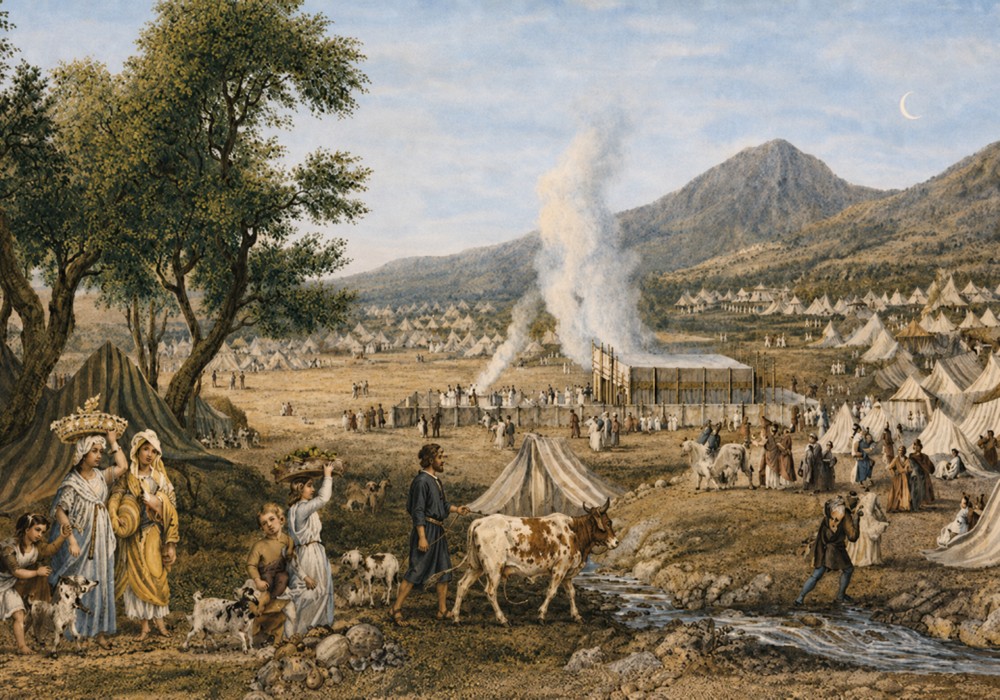
The Tabernacle (adapted), The Bible and its story, 1908. Wikimedia
At the beginning of Deuteronomy’s legal section, Moses says that when the Israelites enter the land, YHWH will choose one place for worship, and all sacrifices must be brought and the sacrificial meat consumed there. Then Moses warns:
דברים יב:חלֹא תַעֲשׂוּן כְּכֹל אֲשֶׁר אֲנַחְנוּ עֹשִׂים פֹּה הַיּוֹם אִישׁ כׇּל הַיָּשָׁר בְּעֵינָיו.
Deut 12:8 You shall not do according to everything that we are doing here today—each man all that is right in his eyes.
The final phrase is also found in the book of Judges:
שופטים יז:ובַּיָּמִים הָהֵם אֵין מֶלֶךְ בְּיִשְׂרָאֵל אִישׁ הַיָּשָׁר בְּעֵינָיו יַעֲשֶׂה.
Judg 17:6 In those days there was no king in Israel; each man did as was right in his eyes (cf. 21:25).
Deuteronomy (12:8b) contains no finite verb, but its meaning is nevertheless clear: The verb עשׂה, “to do,” from the first part of the verse, likely functions in the second half as well, and it might be translated “each man [doing] all that is right in his eyes.” But what exactly are they doing, and how does the expression relate to the first part of the verse and to the verse that follows?
דברים יב:ט כִּי לֹא בָאתֶם עַד עָתָּה אֶל הַמְּנוּחָה וְאֶל הַנַּחֲלָה אֲשֶׁר יְ־הֹוָה אֱלֹהֶיךָ נֹתֵן לָךְ.
Deut 12:9 For you have not yet come to the resting place and the inheritance that YHWH your God is giving you.
How should the very common initial wordכִּי be translated? It often means “because/for,” but that translation here creates an apparent contradiction. Verse 8 instructs the people not to do as they are doing today, which sounds like something has changed. Yet verse 9 reiterates that they still have not reached the land, which suggests that the future change has not yet happened.
Finally, how might this passage, which seemingly describes the wilderness period as a time in which sacrifice remained decentralized, with the centralized cult depicted in Leviticus?
ויקרא יז:גאִישׁ אִישׁ מִבֵּית יִשְׂרָאֵל אֲשֶׁר יִשְׁחַט שׁוֹר אוֹ כֶשֶׂב אוֹ עֵז בַּמַּחֲנֶה אוֹ אֲשֶׁר יִשְׁחַט מִחוּץ לַמַּחֲנֶה. יז:ד וְאֶל פֶּתַח אֹהֶל מוֹעֵד לֹא הֱבִיאוֹ לְהַקְרִיב קׇרְבָּן לַיְ־הֹוָה לִפְנֵי מִשְׁכַּן יְ־הֹוָה דָּם יֵחָשֵׁב לָאִישׁ הַהוּא דָּם שָׁפָךְ וְנִכְרַת הָאִישׁ הַהוּא מִקֶּרֶב עַמּוֹ. יז:ה לְמַעַן אֲשֶׁר יָבִיאוּ בְּנֵי יִשְׂרָאֵל אֶת זִבְחֵיהֶם אֲשֶׁר הֵם זֹבְחִים עַל פְּנֵי הַשָּׂדֶה וֶהֱבִיאֻם לַיְ־הֹוָה אֶל פֶּתַח אֹהֶל מוֹעֵד אֶל הַכֹּהֵן...
Lev 17:3 Regarding anyone of the house of Israel who slaughters an ox or sheep or goat in the camp, or does so outside the camp, 17:4 and does not bring it to the entrance of the Tent of Meeting to present it as an offering to YHWH, before YHWH’s Tabernacle: bloodguilt shall be imputed to them; having shed blood, that person shall be cut off from among their people. 17:5 This is in order that the Israelites may bring the sacrifices that they have been making in the open—that they may bring them before YHWH, to the priest, at the entrance of the Tent of Meeting...
Deuteronomy Is Set Before Leviticus: A Problematic Solution
The critical solution to this problem is illustrated, e.g., by the Scottish Bible scholar Sir George Adam Smith (1856–1942), who argued that Deuteronomy 12:8–9 contrasts Israel’s future obligation to worship at a single sanctuary with its earlier wilderness practice, during which worship was conducted wherever each individual considered appropriate. On this basis he concluded that Deuteronomy presupposes a stage earlier than the Priestly legislation in Leviticus.
This interpretation, however, is somewhat problematic, because it creates a logical difficulty with verse 9. “For you have not yet come to the resting place” is not the reason for the prohibition to act this way in the future; it rather explains why Moses permits them to act this way in the present.
To put it another way, if Moses’ primary purpose is to announce that centralization will apply upon reaching the allotted sanctuary, a direct positive command would seem more natural than a prohibition framed in terms of present conduct. This problem of textual logic is not solved by Smith’s source-critical distinction—especially if we translate the initial word of v. 9 as “because” or “for,” thus suggesting a causal nexus between the two verses. We must therefore seek alternative solutions.
1. Deuteronomy Describes Israelite Practice During the Wilderness Period
Some traditional commentators suggest that both Deuteronomy and Leviticus refer to Israel’s current practice in the wilderness, but they do not contradict one another.
Nahmanides
R. Moses Nahmanides (Ramban, ca. 1195–ca.1270) argues that the wilderness period involved a comparatively permissive cultic regime in which certain obligations were suspended until Israel reached its permanent sanctuary. In this way he preserves continuity between Deuteronomy and the broader Torah.
רמב"ן דברים יב:חכי ישראל נצטוו במדבר לזבוח כל בקרם וצאנם שלמים לפני המשכן (ויקרא יז:ג-ו), אבל באי זה מקום שיהיה המשכן יעשה אותם.
Nahmanides Deut 12:8 For the Israelites were commanded to sacrifice their cattle and herd animals as a shelamim (well-being) offering[1] before the Tabernacle (Lev 17:3–6), but wherever the Tabernacle happened to be is where they would offer them.
ואם לא ירצה לאכול שור ושה לא יתחייב להביא קרבן כלל, וגם כן אינו חייב להביא בכורות, ולא מעשר בהמה, ומעשר שני. והנה לא יבא בחיוב למשכן כלל, ואפילו ברגלים לא נתחייב לבא שם.
And if he does not wish to eat beef or mutton, he is not obligated to bring a sacrifice at all, and he also need not bring the firstborn animals, nor the domesticated animal tithe, nor the second tithe. There is no obligation to go to the Tabernacle at all, even on pilgrimage festivals one need not go there.[2]
וכן אחרי זריקת הדם והקטר חלבים בשלמים יאכל אותם במדבר בכל מקום שירצה, כי לא נתן בהם הכתוב מחיצה, אבל אוכלים אותם במחנה וחוץ למחנה.
So too, after sprinkling the blood and burning the fats, he can eat them in the wilderness anywhere he wants, for scripture did not assign them a limited space, so they can consume them in the camp or outside the camp.
והנה אין להם בכל ענין הקרבנות חובה, רק איש הישר בעיניו. על כן צוה בכאן כי אחרי המנוחה והנחלה לא יעשו כן, אבל יבאו בחובה למקום ידוע ומיוחד נבחר מהשם, ויביאו שם הזבחים והמעשרות והבכורות ויאכלום שם במחיצה לפני השם.
And nothing about the sacrifices is obligatory, just every man as he pleases. Therefore, the command here is that once they have arrived at their resting place and inheritance, they do not act this way, but they enter into the obligation to one known and special place chosen by God, and they bring their offerings, and tithes, and firstborn animals there, and consume them there, in the designated area, before God.
Although Nahmanides’ theological conclusions differ sharply from those of modern critical scholarship, his reading encounters the same textual obstacle noted above concerning George Adam Smith: Verse 9 is understood to explain why Israel presently enjoys a more permissive regime, yet the wording still appears to justify existing practice rather than explain its prohibition. The logical tension, therefore, remains unresolved.
Netziv
Rabbi Naftali Zvi Berlin (Netziv, 1816–1893) also reads the phrase as explaining a leniency in Israel’s wilderness worship:
נצי"ב העמק דבר ויקרא יז:ה ...התיר הכתוב באותה שעה דבר שיהיה אסור לדורות, דבארץ ישראל שהיה בשר תאוה מותר, היה אסור להביא שלמים כדי לאכול הבשר לתיאבון, דמשולחן גבוה קא זכו, ומי שאוכל בשר קרבן הרי זה דומה לאוכל על שולחנו של מלך....
Netziv Haʿamek Davar Lev 17:5 …Scripture permitted at that time something that was prohibited for generations after. In the land of Israel, where non-sacrificial slaughter for the sake of enjoying a meat meal was permitted, it was forbidden to bring a shelamim offering just for the sake of having a meat meal, for it was served from the divine table, and anyone consuming sacrificial meat was like someone sitting at the king’s table…
אבל כל זה היה בארץ ישראל, דמי שירצה בשר תאוה היה אוכל כאשר תאוה נפשו. אבל במדבר שלא היו יכולים לאכול בשר תאוה... משום הכי התיר להם הקב״ה להקריב שלמים כדי לאכול הבשר לנפשם, אע״ג שאין זה כבודו יתברך.
But all this was in the land of Israel, where whoever wanted to consume meat could do so as much as he desired.[3] But in the wilderness, they were not permitted to consume non-sacrificial meat... for this reason, the Blessed Holy One permitted them to offer shelamim just so they could have a meat meal, even though this is not in keeping with the Blessed One’s dignity.
He continues by explaining the reason for this leniency is the fear of goat-demon worship in the wilderness, where they live:
מ״מ הניח להם כדי להפרישם משעירים שהיו רגילים בהם במדבר ביחוד, כידוע דשם (במדבר) עיקר משכן שדים.
Nevertheless, he permitted them to do so to separate them from the goat demons that they would otherwise sacrifice to in the wilderness specifically, as is know that there (in the wilderness) is the main place where goat demons live.
This is based on a later verse in that same Leviticus passage:
ויקרא יז:ז וְלֹא יִזְבְּחוּ עוֹד אֶת זִבְחֵיהֶם לַשְּׂעִירִם אֲשֶׁר הֵם זֹנִים אַחֲרֵיהֶם חֻקַּת עוֹלָם תִּהְיֶה זֹּאת לָהֶם לְדֹרֹתָם.
Lev 17:7 And that they may offer their sacrifices no more to the goat-demons after whom they stray. This shall be to them a law for all time, throughout the ages.
His interpretation centers on the temporary requirement that meat consumption be associated with shelamim offerings during the wilderness period. According to Netziv, this exceptional arrangement ceased once Israel entered a new stage of its history.
Netziv’s proposal is ingenious and internally coherent, but it too encounters the same difficulty noted above concerning Smith and Nahmanides.
2. Deuteronomy Describes an Intermediate Period before Israel Entered the Land
As noted earlier, אִישׁ כׇּל הַיָּשָׁר בְּעֵינָיו, “each man all that is right in his eyes” (Deut 12:8b) is a nominal clause, meaning that it contains no verb. In Hebrew, the time that such clauses refer to—past, present, or future—is determined by context.[4] Often the context unambiguously points to a specific time—but not always. This verse is indeed ambiguous, and it could be read something like:
Deut 12:8 [In the future], you shall not do according to everything that we are doing here today. [For now, though], each man [shall do] all that is right in his eyes.
This restores the apparent logic of verse 9, which explains why everyone may worship as they please now, “for you have not yet come to the resting place…” Yet this solution requires the addition of additional detail that is not explicit in the text.
Each of the following readings depends upon assumptions supplied from outside the immediate wording of the passage. Though possible, they achieve coherence only by supplementing the text.
Rashi
Rabbi Shlomo Yitzhaki (Rashi, ca. 1040–1105) understands Moses to be speaking about the transitional period between Israel’s entry into the land and the establishment of the permanent sanctuary. During this interval the Israelites are permitted to sacrifice on temporary altars (bamot), but only certain categories of offerings—principally vows and freewill offerings. The prohibition of verse 8 therefore concerns the centralized wilderness cult, while the disputed phrase introduces a limited dispensation appropriate to the unsettled conditions before Israel reaches its “resting place.”[5]
רש"י דברים יב:ח"לא תעשון ככל אשר אנחנו עשים פה"—מוסב למעלה על (יא:לא): "כי אתם עוברים וגו׳", כשתעברו את הירדן מיד אתם מותרין להקריב בבמה, כל ארבע עשרה שנה של כיבוש וחילוק.
Rashi Deut 12:8 “You shall not do according to everything that we are doing here today”—this is building on an earlier verse (11:31) “for you are crossing over, etc.” When you cross over the Jordan, immediately, you will be permitted to make offerings on high places, for the entire fourteen years of conquest and land division.
ובבמה לא תקריבו כל מה שאתם מקריבין פה היום במשכן שהוא עמכם ונמשח, והוא כשר להקריב בו חטאות ואשמות נדרים ונדבות, אבל בבמה אין קרב אלא הנידר והנידב.
But you may not offer everything on a high place that you offer here today at the Tabernacle which is with you and anointed, for it is fit to have sin offerings and guilt offerings, vows and gift offerings offered upon it, but a high place is fit only for vows and gift offerings.
וזהו: "איש כל הישר בעיניו"—נדרים ונדבות שאתם מתנדבים על ידי שישר בעיניכם להביאם, ולא על ידי חובה, אותם תקריבו.
And this is the meaning of “Every man all that is right in his eyes”—vows and gift offerings, which you donate to me, what is right in your eyes to bring, but not out of obligation, those you may offer.
This interpretation gives verse 9 an intelligible rationale: because Israel has not yet reached its permanent sanctuary, a temporary relaxation of centralized worship is appropriate. Yet nothing in the wording distinguishes obligatory from voluntary offerings, refers explicitly to the rabbinic doctrine of heter bamot (permission to worship on high places), or limits the permission to a particular historical interval. These essential features derive from received tradition rather than from the text. Furthermore, Rashi’s interpretation reads verse 8b, which seems to be very broad, in a very narrow fashion. Consequently, the interpretation cannot be described as a straightforward peshat.
David Zvi Hoffmann
R. David Zvi Hoffmann (1843–1921) likewise seeks to preserve the coherence of the passage by treating the disputed phrase independently. Hoffmann, who was well-aware of the developing historical-critical approach to biblical studies, begins by laying out the apparent contradiction with Leviticus:
הופמן דברים יב:ח איסור הבמות מתייחס למנהג הנוכחי של בני ישראל. "לא תעשון ככל אשר אנחנו עושים פה היום", משמע שבימי משה היו הבמות מותרות; אבל בויקרא יז מוכח שהיו אסורות, שהרי נאמר שם שכל המקריב מחוץ לאוהל מועד חייב כרת....
Hoffmann Deut 12:8 The prohibition of high places relates to the contemporary practice of the Israelites. “You shall not do according to everything that we are doing here today” meaning, in the time of Moses, high places were permitted, but in Leviticus 17, it is clear they were forbidden, for it says there that anyone who makes an offering outside the Tent of Meeting is liable to the punishment of being cut off…
Picking up on the same reference to goat demons in the wilderness as Netziv, Hoffmann suggests that as Deuteronomy is set in the conquered Moabite plains, they are now in settled territory and the concern about goat demon worship and its concomitant prohibition no longer apply. Therefore, they can “today” make offerings wherever they want:
נראה לנו כי המקרא יתפרש כפשוטו על פי ההנחה דלהלן... כיון שנכנסו ישראל לארץ נושבת ובטל החשש שמא יקריבו לשעירים, לא נזהרו יותר באיסור שחוטי חוץ... לפי זה מובן מאליו, שעם כיבוש עבר הירדן בטל האיסור שנאמר בויקרא יז....
It seems to us that the passage can be explained according to its simple meaning with the following premise... once the Israelites entered settled land, and there was no further fear that they might sacrifice to goat demons, they were no longer strict about not offering sacrifices outside the sacred precinct... According to this, it is apparent that with the conquest of the Transjordan, the prohibition in Leviticus 17 was nullified.[6]
Hoffman argues that, with Israel’s impending entrance into Canaan, the stringent wilderness regulations governing centralized slaughter were relaxed because the historical circumstances had changed. The causal clause of verse 9 then explains why this temporary arrangement is appropriate before the nation reaches its permanent sanctuary.
Like Rashi, Hoffmann restores the logical flow of the verses. Yet he as well does so by introducing several assumptions that are not explicitly present in the Hebrew text. His interpretation requires an implicit contrast (“but”), an unexpressed transition between present and future practice, and a historically conditioned dispensation that the passage itself never states directly. These additions are interpretive supplements rather than textual observations, and thus sit uneasily with the classical ideal of peshat, according to which the plain sense should arise primarily from grammar, syntax, rhetoric, and context.
A Crux Interpretum
Neither of the approaches I have outlined succeeds without paying a significant interpretive price. Thus, the passage turns out to be a genuine crux interpretum, a Latin phrase (literally “cross of the interpreters”) that refers to a difficult, puzzling, or deeply ambiguous passage in a text.[7] Each interpretive approach has a peshat cost.[8]
The first proposed reading of verse 8 makes it incongruous with verse 9. But making the phrase אִישׁ כׇּל הַיָּשָׁר בְּעֵינָיו, “each man all that is right in his eyes,” into a separate and disconnected directive assumes what the text never explicitly states and thus defies the rabbinic interpretive requirement that אין מקרא יוצא מידי פשוטו, “Scripture does not escape its plain sense.” Every classical solution preserves one aspect of the text only by weakening another.
TheTorah.com is a 501(c)(3) nonprofit organization.
We rely on the support of readers like you. Please support us.
Published
August 5, 2026
|
Last Updated
September 17, 2026
Previous in the Series
Next in the Series
Before you continue...
Thank you to all our readers who offered their year-end support.
Please help TheTorah.com get off to a strong start in 2025.
Footnotes


Dr. Albert D. Friedberg holds a Ph.D. from the Department of Near and Middle Eastern Civilization of the University of Toronto and attended Ner Israel Rabbinical College. He is the author of, Crafting the 613 Commandments: Maimonides on the Enumeration, Classification and Formulation of the Scriptural Commandments. He currently runs an investment firm in Toronto.
Essays on Related Topics: