


 Edit article
Series
Solomon Never Repents, but Kohelet Does


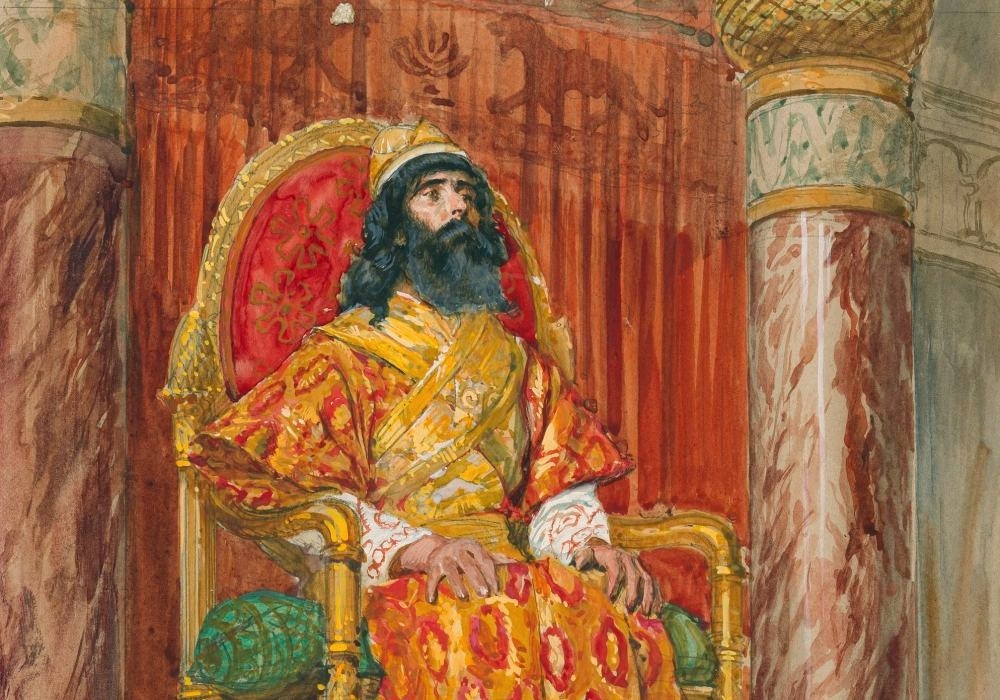
Solomon Is Made King (detail), James Tissot, completed by Georges Bertin Scott, c. 1896–1902. Jewish Museum
Following the extraordinary wisdom divinely granted to him at Gibeon (1 Kgs 3:5–14),[1] King Solomon is described as excelling in all facets of knowledge and understanding: in the realm of judgment (3:16–28), economic and domestic affairs (4:7–19), literary and scientific achievement (5:9–13), grandiose construction projects—such as the Temple, public buildings and his palace (chapters 6–7)—and international trade (chapter 10).
Despite these extraordinary accomplishments, Solomon’s reign is ultimately marred by his violation of the restrictions placed upon the monarch in Deuteronomy’s law of the king.[2]
Horses – The law begins by prohibiting the king from both accumulating horses and acquiring them from Egypt:
דברים יז:טז רַק לֹא יַרְבֶּה לּוֹ סוּסִים וְלֹא יָשִׁיב אֶת הָעָם מִצְרַיְמָה לְמַעַן הַרְבּוֹת סוּס וַי־הֹוָה אָמַר לָכֶם לֹא תֹסִפוּן לָשׁוּב בַּדֶּרֶךְ הַזֶּה עוֹד.=
Deut 17:16 Moreover, he shall not multiply horses for himself or send people back to Egypt to add to his horses, since YHWH has warned you, “You must not go back that way again.”[3]
Solomon not only obtains 12,000 horses, but even buys them from Egypt:
מלכים א י:כו וַיֶּאֱסֹף שְׁלֹמֹה רֶכֶב וּפָרָשִׁים וַיְהִי לוֹ אֶלֶף וְאַרְבַּע מֵאוֹת רֶכֶב וּשְׁנֵים עָשָׂר אֶלֶף פָּרָשִׁים וַיַּנְחֵם בְּעָרֵי הָרֶכֶב וְעִם הַמֶּלֶךְ בִּירוּשָׁלָ͏ִם.... י:כח וּמוֹצָא הַסּוּסִים אֲשֶׁר לִשְׁלֹמֹה מִמִּצְרָיִם וּמִקְוֵה סֹחֲרֵי הַמֶּלֶךְ יִקְחוּ מִקְוֵה בִּמְחִיר.
1 Kgs 10:26 Solomon assembled chariots and horses. He had 1,400 chariots and 12,000 horses, which he stationed in the chariot towns and with the king in Jerusalem … 10:28 Solomon’s horses were procured from Egypt and Kue. The king’s dealers would buy them from Kue at a fixed price.
Wealth – The king is also prohibited from acquiring excess wives and wealth:
דברים יז:יז וְלֹא יַרְבֶּה לּוֹ נָשִׁים וְלֹא יָסוּר לְבָבוֹ וְכֶסֶף וְזָהָב לֹא יַרְבֶּה לּוֹ מְאֹד.
Deut 17:17 He shall not multiply wives to himself, lest his heart turn astray; nor shall he amass for himself silver and gold to excess.
Solomon, however, amasses large amounts of gold during his reign:
מלכים א י:כא וְכֹל כְּלֵי מַשְׁקֵה הַמֶּלֶךְ שְׁלֹמֹה זָהָב וְכֹל כְּלֵי בֵּית יַעַר הַלְּבָנוֹן זָהָב סָגוּר אֵין כֶּסֶף לֹא נֶחְשָׁב בִּימֵי שְׁלֹמֹה לִמְאוּמָה.
1 Kgs 10:21 All King Solomon’s drinking cups were of gold, and all the utensils of the Lebanon Forest House were of pure gold: silver did not count for anything in Solomon’s days.[4]
Rashi (on Deut 17:17) cites the Talmud (b. Sanh. 21b), which derives from the biblical phrase לּוֹ, “for himself,” that the prohibition applies only when the accumulation serves the king’s personal aggrandizement. A king is permitted to accumulate אלא כדי ליתן אפסניא, “only as much as he needs for his soldiers’ pay.” Solomon’s extraordinary wealth appears to exceed this limit.[5]
Wives – Most serious of all, due to its destructive impact, is Solomon’s accumulation of foreign wives and concubines. At the beginning of his reign, he marries Pharaoh’s daughter:
מלכים א ג:א וַיִּתְחַתֵּן שְׁלֹמֹה אֶת פַּרְעֹה מֶלֶךְ מִצְרָיִם וַיִּקַּח אֶת בַּת פַּרְעֹה וַיְבִיאֶהָ אֶל עִיר דָּוִד עַד כַּלֹּתוֹ לִבְנוֹת אֶת בֵּיתוֹ וְאֶת בֵּית יְ־הֹוָה וְאֶת חוֹמַת יְרוּשָׁלַ͏ִם סָבִיב.
1 Kgs 3:1 Solomon allied himself by marriage with Pharaoh king of Egypt. He married Pharaoh’s daughter and brought her to the City of David until he had finished building his own house and the house of YHWH and the wall around Jerusalem.[6]
Ostensibly, the narrative offers no critique of this marriage because two verses later, the text affirms that Solomon had been devoted to YHWH, noting only his sacrifice at private shrines (bamot) as a misdemeanor and making no mention of his intermarriage:
מלכים א ג:ג וַיֶּאֱהַב שְׁלֹמֹה אֶת יְהֹוָה לָלֶכֶת בְּחֻקּוֹת דָּוִד אָבִיו רַק בַּבָּמוֹת הוּא מְזַבֵּחַ וּמַקְטִיר.
1 Kgs 3:3 Solomon loved YHWH, following the practices of his father David, except that he sacrificed and offered incense at the high places.
Rashi, however, does not look favorably upon Solomon’s marriage, arguing that the statement that Solomon loved YHWH refers to the period before he married Pharaoh’s daughter:
רש״י על מלכים א ג:ג ויאהב שלמה ללכת בחקות דוד אביו – ארבע שנים עד שלא התחיל לבנות הבית, אבל משהתחיל לבנות– "ויתחתן שלמה את בת פרעה" (לעיל, פס' א).
Rashi, 1 Kgs 3:3 Solomon loved God, following the practices of his father David – [For] four years, preceding the construction of the Temple.[7] But once he began to build, and: “Solomon married Pharaoh’s daughter” (3:1).[8]
In other words, Solomon’s love for YHWH diminishes after his marriage, and he no longer follows his father David’s example with the same devotion.
An Afterthought Critique
Only at the end of the biblical account of Solomon’s reign do we find explicit criticism of his foreign wives and concubines:
מלכים א יא:א וְהַמֶּלֶךְ שְׁלֹמֹה אָהַב נָשִׁים נׇכְרִיּוֹת רַבּוֹת וְאֶת בַּת פַּרְעֹה מוֹאֲבִיּוֹת עַמֳּנִיּוֹת אֲדֹמִיֹּת צֵדְנִיֹּת חִתִּיֹּת. יא:ב מִן הַגּוֹיִם אֲשֶׁר אָמַר יְ־הֹוָה אֶל בְּנֵי יִשְׂרָאֵל לֹא תָבֹאוּ בָהֶם וְהֵם לֹא יָבֹאוּ בָכֶם אָכֵן יַטּוּ אֶת לְבַבְכֶם אַחֲרֵי אֱלֹהֵיהֶם בָּהֶם דָּבַק שְׁלֹמֹה לְאַהֲבָה. יא:ג וַיְהִי לוֹ נָשִׁים שָׂרוֹת שְׁבַע מֵאוֹת וּפִלַגְשִׁים שְׁלֹשׁ מֵאוֹת וַיַּטּוּ נָשָׁיו אֶת לִבּוֹ.
1 Kgs 11:1 King Solomon loved many foreign women in addition to Pharaoh’s daughter—Moabite, Ammonite, Edomite, Phoenician, and Hittite women, 11:2 from the nations of which YHWH had said to the Israelites, “None of you shall join them and none of them shall join you, lest they turn your heart away to follow their gods.” Such Solomon clung to and loved. 11:3 He had seven hundred royal wives and three hundred concubines; and his wives turned his heart away.
The detrimental impact of these marriages represents a direct fulfillment of Deuteronomy’s warning: וְלֹא יַרְבֶּה לּוֹ נָשִׁים וְלֹא יָסוּר לְבָבוֹ, “He shall not have many wives, lest his heart go astray” (17:17). Indeed, Solomon’s wives turn his heart after other gods (1 Kgs 11:4–8), and he erects altars for their worship:
מלכים א יא:ז אָז יִבְנֶה שְׁלֹמֹה בָּמָה לִכְמוֹשׁ שִׁקֻּץ מוֹאָב בָּהָר אֲשֶׁר עַל פְּנֵי יְרוּשָׁלָ͏ִם וּלְמֹלֶךְ שִׁקֻּץ בְּנֵי עַמּוֹן. יא:ח וְכֵן עָשָׂה לְכׇל נָשָׁיו הַנׇּכְרִיּוֹת מַקְטִירוֹת וּמְזַבְּחוֹת לֵאלֹהֵיהֶן.
1 Kgs 11:7 At that time, Solomon built a shrine for Chemosh the abomination of Moab on the hill near Jerusalem, and one for Molech the abomination of the Ammonites. 11:8 And he did the same for all his foreign wives who offered and sacrificed to their gods.
Here, however, Rashi quotes the Talmud and offers a more restrained interpretation of Solomon’s transgression, arguing that Solomon’s error is not in personally constructing the altars, but rather in permitting his wives to do so:
רש״י על מלכים א יא:ז אז יבנה שלמה במה (יא, ז) – רבותינו אמרו (שבת נ"ו(: מתוך שלא מיחה בנשיו, נקראת על שמו.
Rashi, 1 Kgs 11:7 At that time Solomon built a bamah [private altar] – Our Rabbis said (Shabbat 56b), that because he did not protest against his wives, it is called by his name.
In this sense, Solomon’s failure to prevent idolatry is treated as though he himself had participated in it. Nevertheless, the biblical text leaves no doubt regarding YHWH’s displeasure with Solomon, stating:
מלכים א יא:ט וַיִּתְאַנַּף יְ־הֹוָה בִּשְׁלֹמֹה כִּי נָטָה לְבָבוֹ מֵעִם יְ־הֹוָה אֱלֹהֵי יִשְׂרָאֵל הַנִּרְאָה אֵלָיו פַּעֲמָיִם. יא:י וְצִוָּה אֵלָיו עַל הַדָּבָר הַזֶּה לְבִלְתִּי לֶכֶת אַחֲרֵי אֱלֹהִים אֲחֵרִים וְלֹא שָׁמַר אֵת אֲשֶׁר צִוָּה יְ־הֹוָה.
1 Kgs 11:9 YHWH was angry with Solomon, because his heart turned away from YHWH, the God of Israel, who had appeared to him twice 11:10 and had commanded him about this matter, not to follow other gods; he did not obey what YHWH had commanded.
Consequently, YHWH announces that the kingdom will be torn away from Solomon and given to one of his servants (Jeroboam; 11:28). However, in recognition of David’s faithfulness, this punishment will not take effect during Solomon’s lifetime, but during the reign of his son (11:11–13).[9]
In response to this divine reprimand and judgment, the biblical account includes no record of Solomon admitting his error. This silence stands in stark contrast to his father, David, who, when confronted by Nathan the prophet following his transgression with Bathsheba, immediately declares, חָטָאתִי לַי־הוָה, “I have sinned against YHWH” (2 Sam 12:13); similarly, after foolishly conducting the census of Israel, he responds, חָטָאתִי מְאֹד, “I have sinned grievously” (2 Sam 24:10).
Solomon Repents in Ecclesiastes
The book of Ecclesiastes is attributed to an anonymous קֹהֶלֶת בֶּן דָּוִד מֶלֶךְ בִּירוּשָׁלָ͏ִם, “Kohelet son of David, king in Jerusalem” (1:1), but rabbinic tradition identifies Kohelet as Solomon.[10] Rashi identifies two word plays on the root ק.ה.ל, “to assemble, gather together,” that connect this epithet and the king’s life:
רש״י על קהלת א:א קהלת (א, א) – על שם שקיהל חכמות הרבה...ויש בדרשנים (קהלת זוטא א':א') אומר, שהיה אומר כל דבריו ב'הקהל'.
Rashi, Eccl 1:1 Kohelet – because he gathered (qihel) much wisdom…and some darshanim (homiletical interpreters) say: that he would say all his words in public assembly (haqhel).[11]
The first explanation refers to Solomon’s reputation for wisdom, and the second to his presiding, as king, over the mandatory public assembly in Jerusalem where the Torah was read (Deut 31:10–13).
Though the book of Kings defers Solomon’s punishment until the reign of his son (1 Kgs 11:11–12), Rashi, however, imagines that Solomon, a.k.a. Kohelet, losing his kingdom during his own lifetime. Kohelet states:
קהלת א:יב אֲנִי קֹהֶלֶת הָיִיתִי מֶלֶךְ עַל יִשְׂרָאֵל בִּירוּשָׁלָ͏ִם
Eccl 1:12 “I, Kohelet, was king over Israel in Jerusalem.”
Rashi interprets the use of the perfect or past tense, “was,” and the explicit designation of “Jerusalem” as evidence that Solomon’s sovereignty was progressively stripped away:
רש״י על קהלת א:יב אני קהלת הייתי מלך (א, יב) – על כל העולם כולו, ולבסוף על ישראל, ולבסוף בירושלם לבדה, ולבסוף על מקלו, שהרי נאמר הייתי מלך בירושלם – אבל עכשיו איני מלך.
Rashi, Eccl 1:12 I, Kohelet, was king – Over the whole world, and later, over Israel, and then, over Jerusalem only, and finally, over my staff, for it says: I was king…in Jerusalem – but now I am no longer king.[12]
Kohelet reflects on the abundant fruits of his labor:
קהלת ב:י וְכֹל אֲשֶׁר שָׁאֲלוּ עֵינַי לֹא אָצַלְתִּי מֵהֶם לֹא מָנַעְתִּי אֶת לִבִּי מִכׇּל שִׂמְחָה כִּי לִבִּי שָׂמֵחַ מִכׇּל עֲמָלִי וְזֶה הָיָה חֶלְקִי מִכׇּל עֲמָלִי.
Eccl 2:10 I withheld from my eyes nothing they asked for, and denied myself no enjoyment; rather, I got enjoyment out of all my labor. And this was my portion from all of my labor.
Rashi, citing the interpretation of the sages Rav and Samuel that Solomon’s remaining possessions were reduced to either his walking stick (maqlo) or a simple earthenware cup (maqqeida),[13] treats the final phrase as an ironic reflection:
רש״י על קהלת ב:י וזה היה חלקי – ואחרי עשותי כל אלה אין לי מכולם אלא זה, רב ושמואל חד אמר מקלו וחד אמר קידו, מקידה של חרס ששותה בה.
Rashi, Eccl 2:10 And this (zeh) was my portion[14] – And after doing all these [things], I have nothing more than this. Rav and Shemuel: one says, “his staff,” and one says, “his cup.” מַקֵּידָה is an earthenware cup, from which people drink.
Both items are implements of a traveler far from home, serving as symbols of Solomon's complete loss of royal status and material wealth.[15]
Kohelet earlier reflects on his life in an internal monologue:
קהלת א:טז דִּבַּרְתִּי אֲנִי עִם לִבִּי לֵאמֹר אֲנִי הִנֵּה הִגְדַּלְתִּי וְהוֹסַפְתִּי חׇכְמָה עַל כׇּל אֲשֶׁר הָיָה לְפָנַי עַל יְרוּשָׁלָ͏ִם וְלִבִּי רָאָה הַרְבֵּה חׇכְמָה וָדָעַת.
Eccl 1:16 I said to myself: “Here I have grown richer and wiser than any that ruled before me over Jerusalem, and my mind has zealously absorbed wisdom and learning.”
Building again on the use of the verb in the perfect tense, depicting the past, Rashi further imagines that Solomon is reflecting on his loss of the throne:
רש״י על קהלת א:טז דברתי אני עם לבי (א, טז) – עכשיו שירדתי מגדולתי אני נותן לבי לאמר: מי יאמר עלי שאבא לידי מדה זו? אני הגדלתי וגו'.
Rashi, Eccl 1:16 I said to myself – Now that I have sunk from my greatness, I speak to myself, saying, “Who would have said about me that I would come to such a state?” “Here I have grown,” etc.
Kohelet continues:
קהלת א:יח כִּי בְּרֹב חׇכְמָה רׇב כָּעַס וְיוֹסִיף דַּעַת יוֹסִיף מַכְאוֹב.
Eccl 1:18 For in much wisdom is much vexation, and those who increase knowledge increase sorrow.
Rashi explains that Solomon is acknowledging his transgressions, and his confession reveals the fundamental flaw in his thinking; he believed that the biblical prohibitions did not apply to him because he possessed the strength and wisdom to resist their potential dangers:[16]
רש״י על קהלת א:יח כי ברוב חכמה (א, יח) –... אני אמרתי: סוסים ארבה ולא אשיב את העם מצרימה (ראה דב' יז, טז), וסוף השיבותי (ראה מ"א י, כח-כט), אני ארבה נשים ולא יסור לבבי (ראה דב' יז, יז), והרי נכתב עלי נשיו הטו את לבבו (מ"א י"א, ד).
Rashi, Eccl 1:18 For in much wisdom – … I thought, “I will get many horses, but I will not return the people to Egypt” (cf. Deut 17:16), but ultimately, I returned them (1 Kgs 10:28–29). “I will take many wives, but they will not turn my heart away” (cf. Deut 17:17), but it is written about me, “His wives swayed his heart” (1 Kgs 11:4).
וכן הוא אומר שעל רוב חכמתו סמך ועשה, שנאמר: נאם הגבר לאיתיאל איתיאל ואוכל (משלי ל':א').
And so he says that he relied upon much wisdom and acted, as it says, “The speech of the man to Ithiel, to Ithiel v’ukhal” (Prov 30:1).
Proverbs’ Agur, Is a Pseudonym for Solomon
The prooftext that Rashi cites for Solomon’s confession is the title verse for a poem on wisdom in Proverbs, also traditionally attributed to Solomon:[17]
משלי ל:א דִּבְרֵי אָגוּר בִּן יָקֶה הַמַּשָּׂא נְאֻם הַגֶּבֶר לְאִיתִיאֵל לְאִיתִיאֵל וְאֻכָל.
Prov 30:1 The words of Agur son of Yaqeh, [man of] Massa; The speech of the man to Ithiel, to Ithiel and Ucal.
In a lengthy homily, Rashi first connects the name Agur to the Hebrew root א.ג.ר, “to gather,” and Yaqeh to the root ק.י.א, “to vomit,” implying that Solomon ultimately “expelled” the wisdom that he had “gathered”:[18]
רש״י על משלי ל:א ברי אגור בן יקא – דברי שלמה שאגר את הבינה והקיאה, כך פירשוהו חכמ׳.
Rashi, Prov 30:1 The words of Agur son of Yaqeh (Prov 30:1) – The words of Solomon, who gathered (agar) understanding and vomited it (heiqiah); this is how the Rabbis interpreted it.
Rashi further connects Ithiel to the Hebrew phrase אִתִּי אֵל, “God is with me,” suggesting that Solomon thought himself exempt from the three traditional prohibitions placed upon a king because God would always be with him, and protect him from any negative consequences:
נאם הגבר לאיתיאל – אמר הגבר שלמה המשא הזה על עצמו בשביל איתיאל, על שסמך על חכמתו להרבות כסף וזהב ולהרבות סוסים ולהרבות נשים שהוזהר שלא לעשות כן, והוא אמר: איתיאל וארבה נשים ולא יסורו לבבי, ארבה זהב [ולא אסור, ארבה סוסים] ולא אשיב את העם מצרימה.
The speech of the man to Ithiel – The man Solomon said this speech about himself because of “Ithiel” [iti El; i.e., God is with me] – because he relied upon his wisdom to amass much gold and silver, and many horses and many wives, all of which he was warned not to do (Deut 17:16–17). But he said: Iti El [since God is with me] – I will have many wives and they will not sway my heart, I will amass gold and not turn away, and I will amass horses and not return the nation to Egypt.
Finally, Rashi interprets ukhal as Hebrew אוּכַל, “I am able,” as an expression of self-assurance:
לאיתיאל ואוכל – בשביל שאמר: אתי אל ואוכל לעשות ולא אכשל.
To Ithiel and Ucal – because I said: God is with me (iti El), and I will be able (ukhal) to do [all this] and [still I] will not falter.
The poem of Agur begins:
משלי ל:ב כִּי בַעַר אָנֹכִי מֵאִישׁ וְלֹא בִינַת אָדָם לִי. ל:ג וְלֹא לָמַדְתִּי חׇכְמָה וְדַעַת קְדֹשִׁים אֵדָע.
Prov 30:2 I am brutish, less than a man; I lack common sense. 30:3 I have not learned wisdom, nor do I possess knowledge of the Holy One.
Placing Agur’s words in Solomon’s mouth creates a scriptural basis for Solomon’s repentance. Thus, when Kohelet declares:
קהלת ב:ג תַּרְתִּי בְלִבִּי לִמְשׁוֹךְ בַּיַּיִן אֶת בְּשָׂרִי וְלִבִּי נֹהֵג בַּחׇכְמָה וְלֶאֱחֹז בְּסִכְלוּת עַד אֲשֶׁר אֶרְאֶה אֵי זֶה טוֹב לִבְנֵי הָאָדָם אֲשֶׁר יַעֲשׂוּ תַּחַת הַשָּׁמַיִם מִסְפַּר יְמֵי חַיֵּיהֶם.
Eccl 2:3 I ventured to tempt my flesh with wine, and to grasp folly, while letting my mind direct with wisdom, to the end that I might learn which of the two was better for men to practice in their few days of life under heaven.
Rashi can interpret Solomon’s admission that he had “grasped folly” as correcting his flawed reasoning, a decisive step on Solomon's path to repentance:
רש״י על קהלת ב:ג ולאחוז בסכלות – בדברים שהיו דומים לי לסכלות, שאמרתי עליהם: איתיאל ואוכל (משלי ל:א).
Rashi, Eccl 2:3 And to grasp folly (2:3) – To things that appear foolish to me, concerning them I said, “Because God is with me, I will be able” (Prov 30:1).[19]
Solomon Protects the Torah
Expressing Solomon’s repentance in another way, Rashi credits him with enacting legislation designed to safeguard the commandments of the Torah. A narrator later says of Kohelet:
קהלת יב:ט וְיֹתֵר שֶׁהָיָה קֹהֶלֶת חָכָם עוֹד לִמַּד דַּעַת אֶת הָעָם וְאִזֵּן וְחִקֵּר תִּקֵּן מְשָׁלִים הַרְבֵּה.
Eccl 12:9 A further word: Because Koheleth was a sage, he continued to instruct the people. He listened to and tested the soundness of many maxims.
Drawing on the Hebrew root א.ז.ן, which denotes both the verb “to listen” and the noun “ear” (and, by extension, an ear-like “handle” on a basket), Rashi offers the following interpretation:
רש״י על קהלת יב:ט ואִזֶן (יב, ט) – עשה אזנים לתורה, כקופה זו שאין לה אזנים ליאחז בהן, ובא ועשה לה אזנים, שתיקן עירובין לסייג שמירת שבת, ותיקן נטילת ידים סייג לטהרה, וגזר על השניות סייג לעריות.
Rashi, Eccl 12:9 He listened to – He made handles for the Torah, like this basket which has no handles with which to grasp with them, and he came and made handles for it, for he instituted “eiruvin”[20] as a safeguard for the observance of the Sabbath, and the ritual washing of the hands as a safeguard for purity, and decreed secondary forbidden marriages as a safeguard for the prohibitions against incest.[21]
The Talmud refers to such enactments as אזנים לתורה, “handles of the Torah.”[22] Just as handles on a basket ensure one can hold it securely without dropping its contents, Solomon’s ordinances in these areas of Jewish law serve to preserve and protect the proper observance of the Torah’s commandments.
This preventive legislation stands in marked contrast to Solomon’s earlier disregard for the biblical restrictions imposed upon the king. Instead of setting aside or minimizing the Torah’s commands, he now seeks to reinforce them through additional safeguards. Thus, Solomon is transformed from one who violated the Torah’s laws into one who works to preserve and protect them.
Is Solomon Forgiven for His Transgressions?
Although Rashi imagines that at the time Solomon composed the book of Ecclesiastes, late in his life,[23] he had not yet been reinstated as king,[24] Rashi still attributes prophecy, or divine inspiration, to Solomon on no fewer than six occasions.[25] For example, when Kohelet declares of enjoying life, וְהִנֵּה גַם הוּא הָבֶל, “See, that too was futile” (2:1), Rashi comments:
רש״י על קהלת ב:א והנה גם הוא הבל – שהרי ראיתי בנבואה: הרבה קילקולין באים מתוך שחוק.
Rashi, Eccl 2:1 That, too, I found was futile – For I saw prophetically that much evil is caused by lighthearted frivolity.
And when Kohelet comments on his observations about those who suffer under oppression and are not comforted (4:1), Rashi notes:
רש״י על קהלת ד:א שבתי אני ואראה – ברוח הקודש. את כל העשוקים – בגיהנם, הנעשים עשוקים בגיהנם במעשים אשר תחת השמש – חליפיה של תורה.
Rashi, Eccl 4:1 I further observed – With divine inspiration. All the oppressed [people] in Gehinnom[26] – who were oppressed in Gehinnom for the deeds that were committed.[27]
By repeatedly attributing divine inspiration to Solomon, Rashi seems to suggest that he had achieved personal reconciliation with God and regained a measure of divine favor.[28]
Rashi’s Solomon: Between Kings & Ecclesiastes
Considering Rashi’s commentary on Ecclesiastes, which explicitly describes Solomon’s contrition, confession, and partial divine forgiveness, how do we explain Rashi’s total silence regarding Solomon’s personal repentance in the book of Kings?
The discrepancy likely arises from the distinct genre and purpose of the biblical books in which these portrayals appear.[29] The book of Kings presents a third-person account focused primarily on the nation of Israel and its historical destiny. Because Solomon’s private repentance did not overturn the divine decree to divide the kingdom, his personal reconciliation with God remained peripheral to the broader national narrative.
Ecclesiastes, by contrast, takes the form of an intimate, first-person religious memoir attributed to Solomon. Its focus is not on the history of the nation but on the king’s inner life, reflections, and spiritual struggles. Consequently, Solomon’s personal journey from sin and punishment to self-examination and repentance finds its natural place in Ecclesiastes.
The divergent portrayals of Solomon in Rashi thus reveal not inconsistency in his thought, but the consistent application of his exegetical method to biblical books with differing aims and literary character. By distinguishing between the king’s public historical failure and his private religious restoration, Rashi presents a nuanced portrait of Solomon—one that acknowledges the enduring national consequences of his sins, as reflected in Kings, while affirming the transformative power and efficacy of personal repentance, as expressed in Ecclesiastes.
TheTorah.com is a 501(c)(3) nonprofit organization.
We rely on the support of readers like you. Please support us.
Published
September 23, 2026
|
Last Updated
September 23, 2026
Previous in the Series
Next in the Series
Before you continue...
Thank you to all our readers who offered their year-end support.
Please help TheTorah.com get off to a strong start in 2025.
Footnotes


Dr. Lisa Fredman is a Lecturer in Bible at Efrata College of Education and Shaanan Academic Teachers’ College. She holds an M.A. and a Ph.D. in Bible from Bar-Ilan University. Focusing upon Rashi’s biblical exegesis, she has published a critical edition of Rashi’s commentary on the book of Proverbs (World Union of Jewish Studies, 2019) and numerous scholarly articles. Her most recent book is The Commentator and the King: Rashi’s Holistic Readings of Solomon’s Song, Proverbs, and Ecclesiastes (Koren Publishers, 2026).
Essays on Related Topics: