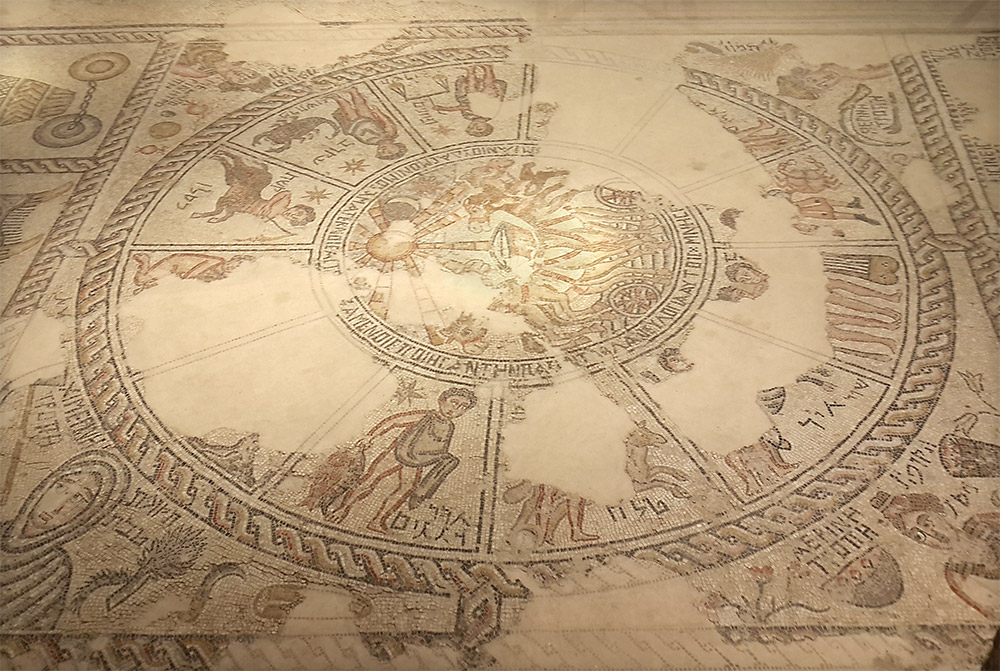
Mosaic of 12-month calendar with zodiac at Tzippori synagogue, 5th c. Y. Haklai / Wikimedia
The Hebrew calendar marks multiple news year’s days to express different values: nature and history, universal and particular.
Mosaic of 12-month calendar with zodiac at Tzippori synagogue, 5th c. Y. Haklai / Wikimedia
Published January 14, 2016
The traditional interpretation is that the commandment is to sanctify the new moon and to intercalate the leap year and fix the ensuing holidays by the recognized highest authority, Sefer Hahinnukh, mitzvah 4. Editor’s Note: For an analysis of verse, see Jonathan Ben-Dov, “The First Month of the Year,” TheTorah (2013).
Editor’s Note: For more on the Akitu festival, see Uri Gabbay, “Babylonian Rosh Hashanah: Battle, Creation, Enthronement, and Justice,” TheTorah (2014).
This innovation was taken up by the other monotheistic religions, incorporating the historical principle in their calendars, as is evidenced by the celebration of Christmas, by observance of the millennium in the Christian world, and by the Moslems reckoning the years from Muhammad’s Hegira to Mecca.
Note that the Mishnah uses the Babylonian month names adopted in early Second Temple times. This nomenclature replaced the ordinal month names, i.e. the First Month, the Second Month, etc.
For example, if a king died in the month of Sivan, two months after the beginning of Nisan, the son who succeeded him would rule the remaining ten months of that year as a transitional period (beshnat molkho, II Kings 25, 27; Akkadian resh sharruti), and start counting the first year of his rule from the upcoming Nisan.
This date was subject to controversy; Rabbi Eleazar and Rabbi Simeon said that the tax year for such tithes should begin on the first of Tishre, after the last calving of the summer.
See, for example, j. Rosh Hashanah 1:1, b. Rosh Hashanah 8a, Genesis Rabbah 22:4, and many other places.
But see Lev 25:9, where the date is the 10th of the month.
כה:ט וְהַעֲבַרְתָּ שׁוֹפַר תְּרוּעָה בַּחֹדֶשׁ הַשְּׁבִעִי בֶּעָשׂוֹר לַחֹדֶשׁ בְּיוֹם הַכִּפֻּרִים תַּעֲבִירוּ שׁוֹפָר בְּכָל-אַרְצְכֶם. כה:י וְקִדַּשְׁתֶּם אֵת שְׁנַת הַחֲמִשִּׁים שָׁנָה וּקְרָאתֶם דְּרוֹר בָּאָרֶץ לְכָל-יֹשְׁבֶיהָ יוֹבֵל הִוא תִּהְיֶה לָכֶם וְשַׁבְתֶּם אִישׁ אֶל-אֲחֻזָּתוֹ וְאִישׁ אֶל-מִשְׁפַּחְתּוֹ תָּשֻׁבוּ.
Also Ezek. 40:1 where the term Rosh Hashanah is explicitly mentioned.
מ:א בְּעֶשְׂרִים וְחָמֵשׁ שָׁנָה לְגָלוּתֵנוּ בְּרֹאשׁ הַשָּׁנָה בֶּעָשׂוֹר לַחֹדֶשׁ בְּאַרְבַּע עֶשְׂרֵה שָׁנָה אַחַר אֲשֶׁר הֻכְּתָה הָעִיר בְּעֶצֶם הַיּוֹם הַזֶּה הָיְתָה עָלַי יַד-יְהוָה וַיָּבֵא אֹתִי שָׁמָּה.
On the transition from a 50 year jubilee cycle to a 49 year one, as well as other calendrical issues, see my paper “Who Came First Ezra or Nehemiah? The Synchronistic Approach,” Hebrew Union College Annual 65 (1994), pp. 1-19.
If a tree is planted one month before the first of Tishre, on that date the tree is considered to be one year old and begins its second year.
The School of Shammai holds that this date determines the beginning of the year for taking tithes of fruit to the Temple and for the priests. The School of Hillel, however, maintains that the date is the fifteenth of Shevat, when the winter rainy season is more than half over. The halakhah sides with the School of Hillel.
Editor’s Note: For more on how Shavuot became associated with the Sinai revelation, see Norman Solomon, “How the Festival of Shavuot Grew,” TheTorah (2014); Michael Segal, “The Festival of Covenants,” TheTorah (2014); Evan Hoffman, “Ezekiel’s Failure to Mention Shavuot,” TheTorah (2014).
Editor’s Note: For some speculation on how this idea developed, see David Frankel, “How and Why Sukkot Was Linked to the Exodus,” TheTorah (2015).