


 Edit article
Series
Prayer: A Courtroom Appeal to God


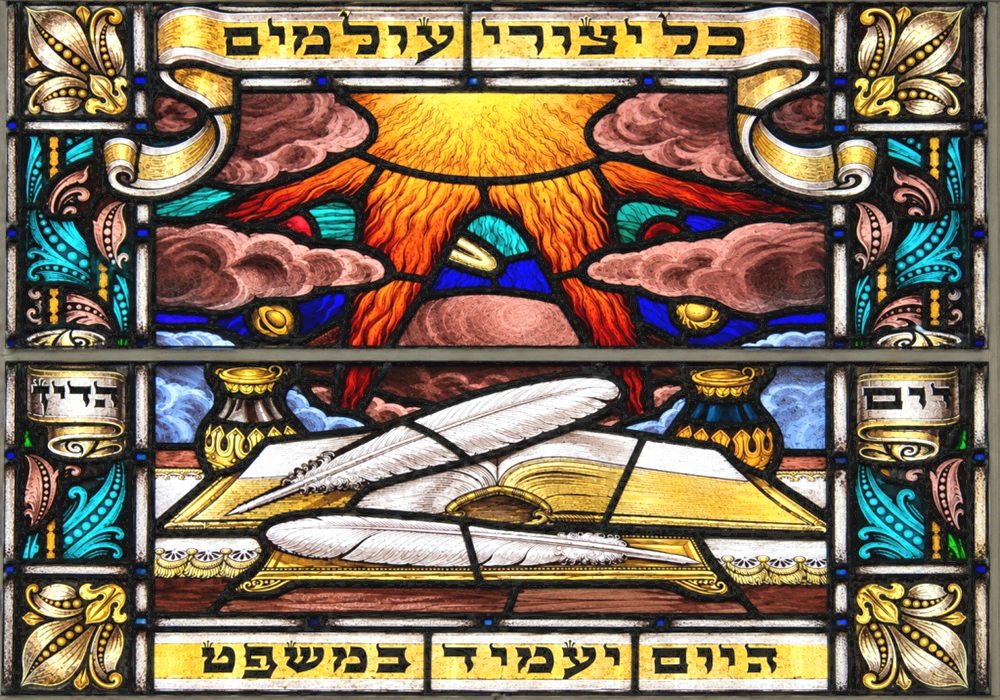
Top: “All the creatures of the worlds.” Bottom: “On this day, He brings [us] to judgment.” A Rosh Hashanah stained-glass window, Heichal Shlomo, Renanim Synagogue, Jerusalem,
What is the purpose of prayer?[1] One answer evokes a broader theological system of thought that connects prayer to the world of the courtroom. It is found throughout the liturgy for the High Holidays, but is on full display in the famous Byzantine-era piyyut Unetaneh Tokef,[2] where angels proclaim הִנֵּה יוֹם הַדִּין, “Behold, the day of judgment,” and where God plays numerous legal roles as דַיָּן וּמוֹכִֽיחַ וְיוֹדֵֽעַ וָעֵד, וְכוֹתֵב וְחוֹתֵם, “judge, and prosecutor, and knower (of all), and witness, and recorder and sealer.”
In the poem, an almighty God pronounces judgment upon humanity: מִי יִחְיֶה וּמִי יָמוּת, “who shall live and who shall die.” Humans, faced with the possibility of an unfavorable divine decree, respond with prayer to counteract God’s adverse ruling:
ותשובה ותפילה וצדקה מעבירין את רוע הגזירה
But repentance (teshuva), prayer (tefilla), and charity (tsedaka) make the severity of the decree pass.[3]
Prayer, in this procedural drama, is the defendants’ speech or appeal.
Moses’s Prayer and the Heavenly Courts
Deuteronomy Rabbah (9th century C.E.) offers an example of the legal-procedural significance of prayer in its retelling of the events preceding the death of Moses. The narrative begins when Moses realizes that God has sealed a גְּזַר דִּין, “legal decision,” against him. In response, Moses takes his stand in protest and prays:
דברים רבה יא וְכֵיוָן שֶׁרָאָה משֶׁה שֶׁנֶּחְתַּם עָלָיו גְּזַר דִּין גָּזַר עָלָיו תַּעֲנִית וְעָג עוּגָה קְטַנָּה וְעָמַד בְּתוֹכָהּ וְאָמַר אֵינִי זָז מִכָּאן עַד שֶׁתְּבַטֵּל אוֹתָהּ גְּזֵרָה.
Deut. Rab. 11 When Moses saw that the decree had been sealed against him, he began a fast, drew a small circle, stood inside, and said: “I am not moving from here until You rescind that decree!”
בְּאוֹתָהּ שָׁעָה מֶה עָשָׂה משֶׁה, לָבַשׁ שַׂק וְנִתְעַטֵּף שַׂק וְנִתְפַּלֵּשׁ בָּאֵפֶר וְעָמַד בִּתְפִלָּה וּבְתַחֲנוּנִים לִפְנֵי הַקָּדוֹשׁ בָּרוּךְ הוּא, עַד שֶׁנִּזְדַּעְזְעוּ שָׁמַיִם וָאָרֶץ וְסִדְּרֵי בְּרֵאשִׁית....
At that time, what did Moses do? He wore sackcloth and wallowed in ashes, and stood in prayer and supplication before God, so that Heaven and earth—the entire order of creation, shook!...
We can see in Moses’s reaction a literary expression of Unetaneh Tokef’s quasi-theoretical statement that prayer can overturn an adverse decree. In theory, at least, Moses’s prayer is his way of appealing God’s sentence, even though, in this particular instance, the appeal never achieves its goal:
דברים רבה יא מֶה עָשָׂה הַקָּדוֹשׁ בָּרוּךְ הוּא בְּאוֹתָהּ שָׁעָה, הִכְרִיז בְּכָל שַׁעַר וְשַׁעַר שֶׁל רָקִיעַ וְרָקִיעַ בְּכָל בֵּית דִּין וּבֵית דִּין שֶׁלֹא יְקַבְּלוּ תְּפִלָּתוֹ שֶׁל משֶׁה וְלֹא יַעֲלוּ אוֹתָהּ לְפָנָיו, מִפְּנֵי שֶׁנֶּחְתַּם עָלָיו גְּזַר דִּין.
Deut. Rab. 11 What did God do? At that time, He declared, at each and every gate of each and every firmament, at each and every court of law, that they must not accept Moses’s prayer, and not bring it before Him, for the decree against Moses had been sealed.
Apart from the connection between divine decree and its antidote, prayer, note how the story also incorporates courtroom imagery. Concerned that Moses’s prayer might be too effective, God takes preventative action: God paralyzes the lower courts.
This narrative detail exposes a rather concrete conception of prayer’s connection to the adjudicatory process. Petitionary prayer is a form of legal communication that, under normal circumstances, makes its way through the heavenly bureaucracy of justice. If the tribunals at every gate of heaven would have remained in operation, Moses’s prayer would have reached the highest court and changed the adverse ruling. Here, however, God puts a monkey wrench in the machinery of justice, as it were. In heaven, as on earth, if courts shut down, pleas are not heard.[4]
Legal Procedure in Solomon’s Prayers
King Solomon, in his lengthy inaugural prayer dedication of the temple in Jerusalem (1 Kgs 8:23–53), imagines numerous situations in which people will use the temple to pray, and uses legally resonant language—עָשִׂיתָ מִשְׁפָּטָם, “render their judgment”—to describe God’s responses to the nation’s prayers. For example, during war:
מלכים א ח:מד כִּי יֵצֵא עַמְּךָ לַמִּלְחָמָה עַל אֹיְבוֹ בַּדֶּרֶךְ אֲשֶׁר תִּשְׁלָחֵם וְהִתְפַּלְלוּ אֶל יְ־הֹוָה דֶּרֶךְ הָעִיר אֲשֶׁר בָּחַרְתָּ בָּהּ וְהַבַּיִת אֲשֶׁר בָּנִתִי לִשְׁמֶךָ. ח:מה וְשָׁמַעְתָּ הַשָּׁמַיִם אֶת תְּפִלָּתָם וְאֶת תְּחִנָּתָם וְעָשִׂיתָ מִשְׁפָּטָם.
1 Kgs 8:44 “When Your people take the field against their enemy by whatever way You send them, and they pray to YHWH in the direction of the city which You have chosen, and of the House which I have built to Your name, 8:44 from heaven, You will hear their prayer and supplication and render their judgment.”[5]
And during captivity:
מלכים א ח:מו כִּי יֶחֶטְאוּ לָךְ כִּי אֵין אָדָם אֲשֶׁר לֹא יֶחֱטָא וְאָנַפְתָּ בָם וּנְתַתָּם לִפְנֵי אוֹיֵב וְשָׁבוּם שֹׁבֵיהֶם אֶל אֶרֶץ הָאוֹיֵב רְחוֹקָה אוֹ קְרוֹבָה. ח:מט וְשָׁמַעְתָּ הַשָּׁמַיִם מְכוֹן שִׁבְתְּךָ אֶת תְּפִלָּתָם וְאֶת תְּחִנָּתָם וְעָשִׂיתָ מִשְׁפָּטָם.
1 Kgs 8:46 “When they sin against You—for there is no man who does not sin—and You are angry with them and deliver them to the enemy, and their captors carry them off to an enemy land, near or far... 8:49 from heaven, Your abode, You will hear their prayer and supplication and render their judgment.
Likewise, after his prayer addressed to God, Solomon blesses the nation (8:55–60) and includes the following wish:
מלכים א ח:נט וְיִהְיוּ דְבָרַי אֵלֶּה אֲשֶׁר הִתְחַנַּנְתִּי לִפְנֵי יְ־הֹוָה קְרֹבִים אֶל יְ־הֹוָה אֱלֹהֵינוּ יוֹמָם וָלָיְלָה לַעֲשׂוֹת מִשְׁפַּט עַבְדּוֹ וּמִשְׁפַּט עַמּוֹ יִשְׂרָאֵל דְּבַר יוֹם בְּיוֹמוֹ.
1 Kgs 8:59 And may these words of mine, which I have offered in supplication before YHWH, be close to YHWH our God, day and night, to render the judgment of his servant and the judgment of his people, Israel, according to each day's need.
The Hebrew phrase combines the verbal root ע.ש.ה/י, which commonly means “to do,” with the noun מִשְׁפָּט, meaning “judgment” or “justice,” as its object. Elsewhere, this combination refers to the actions of human adjudicators, including Solomon himself after his famous judgment in the case of the two prostitutes:
מלכים א ג:כח וַיִּשְׁמְעוּ כׇל יִשְׂרָאֵל אֶת הַמִּשְׁפָּט אֲשֶׁר שָׁפַט הַמֶּלֶךְ וַיִּרְאוּ מִפְּנֵי הַמֶּלֶךְ כִּי רָאוּ כִּי חׇכְמַת אֱלֹהִים בְּקִרְבּוֹ לַעֲשׂוֹת מִשְׁפָּט.
1 Kgs 3:28 When all Israel heard the decision that the king had rendered, they stood in awe of the king; for they saw that he possessed divine wisdom to render judgment.
Solomon’s prayer thus asserts that in responding to prayer, God acts as a just judge.
By describing God’s response to prayer in terms that evoke the courtroom, these biblical examples underscore the legal concept that we have seen at work in Unetaneh Tokef and in the midrashic account of Moses’s last prayer. Prayers of supplication or petition are at home in the divine courtroom, where God, the presiding judge, hears petitions. Humans have the opportunity to make their case and even reverse a ruling.
A “Prayer” in a Human Court: Psalm 109
In the overwhelming majority of cases in the Bible, תְּפִלָּה, “prayer,” refers to something spoken by humans to God. There is, however, one example in which תְּפִלָּה apparently occurs in the context of litigation between humans. Psalm 109 contains a list of imprecations that a speaker utters against an enemy (vv. 6–20).[6] In one verse, the speaker prays for his enemy to enter litigation and lose the case:
תהלים קט:ז בְּהִשָּׁפְטוֹ יֵצֵא רָשָׁע וּתְפִלָּתוֹ תִּהְיֶה לַחֲטָאָה.
Ps 109:7 In his lawsuit, may he come out in the wrong; may his plea be a miss.
In the second half of the verse, the words תְּפִלָּה, “prayer,” and חֲטָאָה, “sin”—both familiar theological terms in the sphere of relationships between humans and God—must signify something else that makes sense in the realm of a human-to-human lawsuit.
Here תְּפִלָּה refers to a plea or an appeal not before God-the-Judge, but before a human adjudicator. As for חֲטָאָה, the medieval commentators Radak (Rabbi David Kimhi; 1160–1235) and Meiri (Rabbi Menachem ben Solomon Meiri; 1249–1306) refer to the description of the slingshot accuracy of Benjaminite warriors:
שופטים כ:טז מִכֹּל הָעָם הַזֶּה שְׁבַע מֵאוֹת אִישׁ בָּחוּר אִטֵּר יַד יְמִינוֹ כׇּל זֶה קֹלֵעַ בָּאֶבֶן אֶל הַשַּׂעֲרָה וְלֹא יַחֲטִא.
Judg 20:16 Of all this force—700 picked men—were left-handed. Every one of them could sling a stone at a hair and not miss.
The Hebrew verb יַחֲטִא, “miss,” is from the same root as the noun חֲטָאָה. Putting all of this together, I would translate the phrase וּתְפִלָּתוֹ תִּהְיֶה לַחֲטָאָה as something like “may his plea miss its mark” or, perhaps, “may his plea be a miss.” We might even read the whole verse sequentially, with an imagined adverse verdict in the first part of the verse, followed by a failed appeal in the second.
In sum, seeing the word תְּפִלָּה as a term for a plea to a human judge confirms our sense that prayer is modeled on the particular human experience of adjudication and courtroom trials. Prayer is built on what Moshe Greenberg calls a “social analogy;” it imagines the encounter with God in terms familiar from encounters between humans.[7] Locating the terminology of prayer in a human courtroom exposes the human-to-human analogue.
A Hittite Parallel
Writings in Hittite show a similar development of the human-to-human courtroom experience into a fundamental conception of the human-divine encounter of prayer. In Hittite, the word for prayer is arkuwar, which is linguistically related to the English word “argument.”[8] According to Hittitologist Itamar Singer (1946–2012), the word describes not only communication with gods, but also describes, like English “argument,” communication in a courtroom:
Arkuwar (cf. Latin arguo, argumentum) is a juridical term, referring to the presentation of a plea, an argumentation, or a defense against an accusation. The same word is used when a servant justifies himself before his master, when a vassal king argues his case before his suzerain, or when two Great Kings take their dispute before the Divine Court. The structure of rationale of a Hittite prayer is best understood as the enacting of a case in a divine court.[9]
To illustrate this general point, here is part of a prayer by the Hittite king Mursili II (late 14th century B.C.E.). The king presents his prayer as a plea to the storm-god to end a plague:
CTH 378.II §1 (Ci 1-18) O Storm-god of Hatti, my lord! [O gods], my lords! Mursili, your servant, has sent me saying: “Go speak to the Storm-god of Hatti, my lord, and to the gods, my lords”: What is this that you have done? You have allowed a plague into Hatti, so that Hatti has been very badly oppressed by the plague.[10]
With the hope of fixing the problem, Mursili attempts to discern the god’s reason for the plague, mentioning several specific sins as possible causes, and defending himself by showing actions he has taken to correct them.[11] He continues his plea with the argument that the plague has already provided sufficient restitution for whatever sins may have been committed:
§9 (rev. 20'-36') I am now continuing to make my plea to the Storm-god, my lord, concerning the plague. Hear me, O Storm-god, my lord and save my life!... I have confessed the sin of my father. It is so. I have done it.... [And] since Hatti has made restitution through the plague, it [has made restitution] for it twenty-fold.[12]
Thus, just beneath the surface of this plea lies the same idea that we have seen elsewhere in the biblical and rabbinic texts: prayer is an argument in response to an adverse ruling.
A Courtroom Plea
The basic words for prayer, Hebrew תְּפִלָּה and Hittite arkuwar, encapsulate a theology of prayer shared between Israelite and Hittite cultures.[13] In both ancient languages, the words themselves belong to the vocabulary of the human courtroom, where they signify a litigant’s plea. And, as the basic terms for prayer, they signal how, in both cultures, legal petition is fundamental to the conception of prayer.
This fundamental idea of prayer is tailor-made for the Jewish High Holidays, conceived as days of judgment. If this is the time during which God judges the world and rules on its future, then humans have their part to play, too. Unlike the angels in Unetaneh Tokef, who are stunned into silence, humans are empowered to speak up. Through prayer, they can have their day in court and appeal the ruling and even overturn it.
TheTorah.com is a 501(c)(3) nonprofit organization.
We rely on the support of readers like you. Please support us.
Published
August 20, 2026
|
Last Updated
October 2, 2026
Previous in the Series
Next in the Series
Before you continue...
Thank you to all our readers who offered their year-end support.
Please help TheTorah.com get off to a strong start in 2025.
Footnotes


Prof. Shalom E. Holtz is David A. and Fannie M. Denenberg Chair in Biblical Studies at Yeshiva University He did his Ph.D. at the University of Pennsylvania. He is the author of Neo-Babylonian Court Procedure (Cuneiform Monographs 38; Leiden: Brill, 2009) and Neo-Babylonian Trial Records (Society of Biblical Literature, 2014) and Praying Legally (Brown Judaic Studies, 2019).
Essays on Related Topics: