


 Edit article
Series
The Ketef Hinnom Amulets: Wearing the Priestly Blessing for Protection


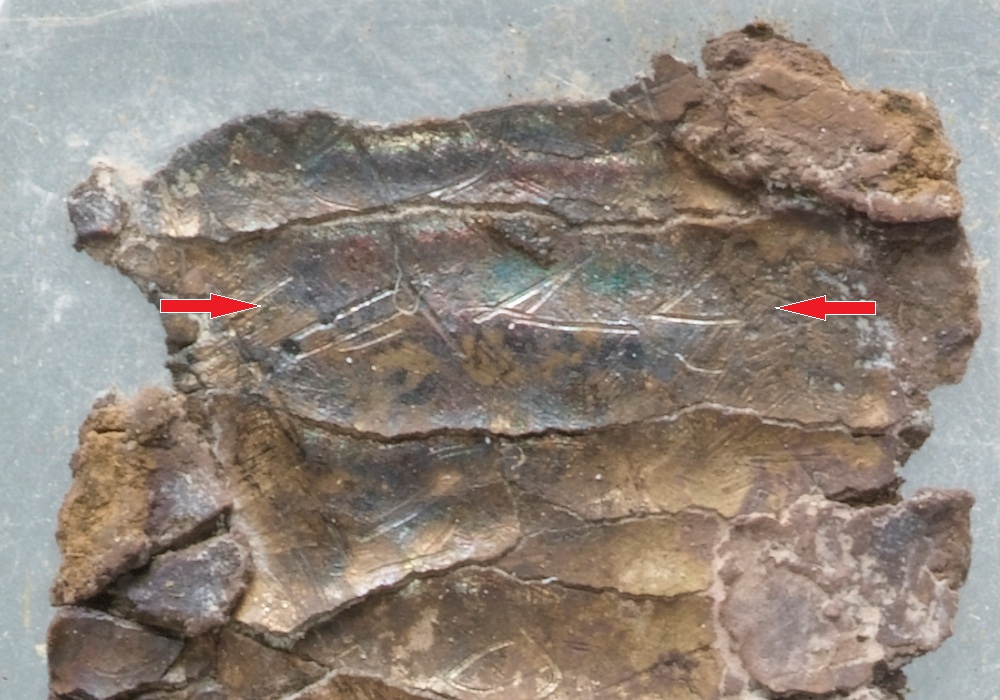
Top of KH2 Ketef Hinnom Silver Scroll with part of line 2 visible—the letter lamed and the first two letters of YHWH, yod and he. Wikimedia
In ancient Israel, religious life unfolded not only at temples and shrines. The house also functioned as a ritual space,[1] populated by objects that mediated divine presence and protection: figurines, incense altars, amulets, jewelry, seals, bowls, and inscribed media that circulated blessing.[2]
Within this environment, protective strategies focused on both places and people. Some objects were fixed or semi-fixed, placed in corners, niches, or near thresholds, while others were portable and worn on the body. Together, these objects created a system of protection throughout the household, guarding vulnerable areas and activities associated with fertility, healing, food production, and protection from harm.
The Ketef Hinnom amulets, two inscribed silver scrolls discovered in 1979 by Gabriel Barkay and Judith Hadley, offer a rare window into a dimension of Israelite religion that is only partially visible in the biblical texts: the everyday religious practices through which families sought to secure divine protection for bodies, homes, and lineages.
|
|
The Discovery of the Amulets
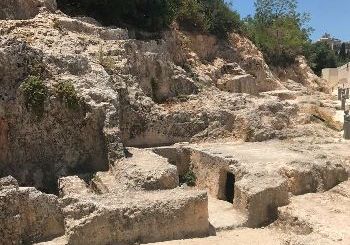
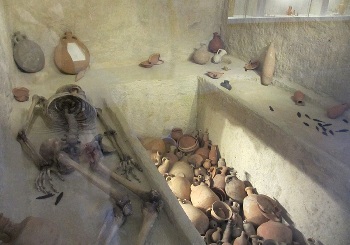
The amulets were found during excavations of a mortuary complex at Ketef Hinnom, just southwest of ancient Jerusalem.[3] The pottery assemblage recovered from the tomb indicates two primary phases of use: an initial phase dating to the late 7th or early 6th century B.C.E. and a later phase dating to the late 6th or early 5th century B.C.E.[4]
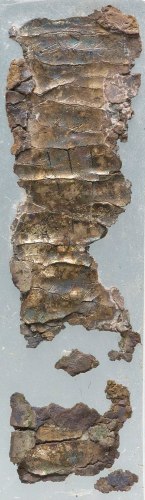
Following the discovery, scholarly attention quickly focused on the delicate task of unrolling the silver sheets without destroying them.[5] When conservation efforts finally succeeded, it became clear that these texts are among the earliest Hebrew inscriptions to preserve the divine name YHWH, and they are the earliest known witnesses to a form of the Priestly Blessing outside of the biblical manuscripts (Num 6:24–26; more on this later).[6]
The amulets did not exist in isolation; they were found in a repository containing other protective items, including amulets bearing Egyptianizing motifs such as a figure of the protective goddess Bastet, who was associated with domestic concerns such as illness, pregnancy, and childbirth, and an Eye of Horus, a symbol of healing and protection.[7]
This constellation of objects points to the pragmatic strategies by which families sought protection, continuity, and stability in the face of death. Within this layered ritual environment, the Ketef Hinnom inscriptions stand out for the way they embed Israelite blessing within precious metal, transforming words normally spoken in cultic contexts into durable, portable, and bodily forms of protection.[8]
Family Identity and the Language of Blessing
The inscriptions do not present YHWH as a distant national deity or as a god encountered only through temple ritual. Rather, they portray YHWH as a guardian of the household, concerned with individual well-being, family stability, and the integrity of domestic space.[9] The larger of the two amulets is known as KH 1, and the smaller as KH 2.[10]
The damaged state of the initial lines of the text make it difficult to reconstruct them with any confidence. The visible letters may have formed part of the divine name, YHWH, or they may represent the theophoric element of a personal name: PN-yah (or PN-iah, in the translation).[11] Because of the personal nature of the objects, reconstructing the lines to read a personal name is preferable:
KH1, 1 ...יהו
KH1, 1 [For PN]-iah...
The second, at least, possibly includes a genealogical formula identifying the wearer as the child of a named parent:
KH2, 1 ה/ו ברך ה
KH2, 1 [For PN, (the son/daughter of) PN-ia]h. May h[e]/
2 [א] לי־הו[ה]
2 sh[e] be blessed by YHWH.
Naming practices were integral to Israelite family religion. Personal names—for example, יִשְׁמָעֵאל (Ishmael), “El hears,” or יְהוֹשֻׁעַ (Yehoshuaʿ), “YHWH is salvation”—often encode moments of crisis, gratitude, or deliverance, embedding memory and devotion within family lineage.[12] By inscribing names onto amulets, households anchored divine protection not in abstraction but in specific lives and relationships.[13]
Ketef Hinnom 2
The inscriptions in both amulets follow a similar structure, but the shorter inscription, KH2, is less broken and thus easier to read. The inscriptions display a common feature in ancient texts: the lines do not divide neatly into phrases, and even individual words may be broken up across more than one line.
A striking feature of this inscription is its specific cluster of divine epithets:
KH2, 3 העזר ו
KH2, 3 the warrior and
4 הגער ב
4 the expeller of
5 [ר]ע יברכך
5 [e]vil. May bless
The psalmist also uses the verb גער, meaning “rebuke” or “expel,” to offer a similar conception of YHWH:[14]
תהלים ט:ו גָּעַרְתָּ גוֹיִם אִבַּדְתָּ רָשָׁע שְׁמָם מָחִיתָ לְעוֹלָם וָעֶד.
Ps 9:6 You rebuke the nations; You destroy the wicked; You blot out their name forever.[15]
Elsewhere in biblical literature, גער is associated with YHWH’s mastery over chaotic or threatening forces:
ישׁעיה יז:יג לְאֻמִּים כִּשְׁאוֹן מַיִם רַבִּים יִשָּׁאוּן וְגָעַר בּוֹ וְנָס מִמֶּרְחָק וְרֻדַּף כְּמֹץ הָרִים לִפְנֵי רוּחַ וּכְגַלְגַּל לִפְנֵי סוּפָה.
Isa 17:13 Nations raging like massive waters! But He rebukes them, and they flee far away, driven like chaff before winds in the hills, and like tumbleweed before a gale.
These titles are not randomly assembled. They form rhythmic and semantically charged chains that concentrate divine power through repetition and accumulation. This literary strategy mirrors the spatial logic of household protection: just as multiple objects might be arranged together to fortify a vulnerable area of the home, divine names are gathered to reinforce the efficacy of the blessing.
The inscription ends with a blessing that is closely related to the blessing YHWH commands that the priests—Aaron and his sons—speak over Israel:
במדבר ו:כד יְבָרֶכְךָ יְ־הוָה וְיִשְׁמְרֶךָ. ו:כה יָאֵר יְ־הוָה פָּנָיו אֵלֶיךָ וִיחֻנֶּךָּ. ו:כו יִשָּׂא יְ־הוָה פָּנָיו אֵלֶיךָ וְיָשֵׂם לְךָ שָׁלוֹם.
Num 6:24 May YHWH bless you and guard you. 6:25 May YHWH make his face shine upon you and be gracious to you. 6:26 May YHWH lift up his face toward you and grant you peace.
The amulet includes the core sequence of blessing verbs—ברך, “bless,” שמר, “guard,” and אור, “shine”—along with the distinctive imagery of the divine פָּנִים, “face,” and the climactic gift of שָׁלוֹם, “peace.”
KH2, 5 [ר]ע יברכך
KH2, 5 [e]vil. May bless you
6 י־הוה י
6 YHWH,
7 שמרך
7 may he guard you.
8 יאר י־ה
8 May YHWH make
9 [ו]ה פניו
9 his face shine
10 [א]ליך וי
10 upon you and
11 שם לך ש
11 give you
12 [ל]ם
12 p[ea]ce.
It does not, however, include the phrases וִיחֻנֶּךָּ, “may He be gracious to you” (Num 6:25) and יִשָּׂא יְ־הוָה פָּנָיו אֵלֶיךָ, “may YHWH lift up his face toward you” (v. 26).
The amulets predate the final composition of the Torah, and thus the blessing should not be understood as reflecting a fragment of a biblical manuscript. Rather, the inscription attests to the independent circulation of the blessing as a ritual text that was later incorporated into the longer version preserved in Numbers.
The amulets also reveal something that the biblical text alone does not: how this blessing functioned beyond the sanctuary. In Numbers, the words are spoken aloud by priests over the people; at Ketef Hinnom, the same language is inscribed, sealed, and worn on the body.
What unites both contexts is not the mode of delivery but ritual logic. In each case, divine protection is activated through authorized words placed in proximity to human vulnerability. At Ketef Hinnom, however, the blessing takes material form as an inscribed object worn on the body, transforming a verbal invocation of divine favor into a portable medium of protection.
The culmination of the blessing in the invocation of ש[ל]ם (shalom) encompasses physical health, safety, and wholeness—especially within family contexts. Blessings that invoke shalom frequently address the well-being of individuals, houses, and property together.[16] For example, David sends the following greeting to Nabal before he requests Nabal’s aid:
שׁמואל א כה:ו וַאֲמַרְתֶּם כֹּה לֶחָי וְאַתָּה שָׁלוֹם וּבֵיתְךָ שָׁלוֹם וְכֹל אֲשֶׁר לְךָ שָׁלוֹם.
1 Sam 25:6 Say as follows: “To life! Shalom to you and shalom to your household and shalom to all that is yours!”
Inscribing this term onto a wearable object transformed the ideal of holistic well-being into a portable safeguard, capable of accompanying the wearer beyond the boundaries of the home.
Ketef Hinnom 1
KH 1 follows a similar structure, but differs in its details. After naming the recipient of the amulet (line 1), the inscription begins to speak of YHWH:
KH1, 2 …
KH1, 2 ...
3 גד[ל שמר]
3 the grea[t...who keeps]
4 הברית ו
4 the covenant and
5 [ה]חסד לאהב
5 [g]raciousness toward those who love [him] and
6 [ו] ושמרי [מצ
6 those who keep [his commandments...
7 ות]ו...
7 ...
These lines parallel well-known biblical passages. For example, Moses declares:
דברים ז:ט וְיָדַעְתָּ כִּי יְ־הוָה אֱלֹהֶיךָ הוּא הָאֱלֹהִים הָאֵל הַנֶּאֱמָן שֹׁמֵר הַבְּרִית וְהַחֶסֶד לְאֹהֲבָיו וּלְשֹׁמְרֵי מצותו [מִצְוֹתָיו] לְאֶלֶף דּוֹר.
Deut 7:9 Know, therefore, that only YHWH your God is God, the steadfast God who keeps the covenant and graciousness toward those who love Him and keep His commandments, to the thousandth generation (cf. Exod 20:6; Deut 5:10).
Here again we seem to have a similar formula used in two different contexts, rather than literary dependence between the texts. The formula’s meaning differs, however, when embedded in jewelry worn on the body: In this context, “love” is not merely a juridical term denoting loyalty,[17] but an affective posture that blends devotion, attachment, and practice.
KH 1 describes YHWH as העלם, “the Eternal,”[18] whose blessing is more than any snare or evil:
KH1, 8 [.] והעלם
KH1, 8 the Eternal [...]
9 [ה]ברכה מכל [פ]
9 [the?] blessing more than any
10 ח ומהרע
10 [sna]re and more than evil.
11 כי בו גאל
11 For redemption is in him.
The text adds two more epithets:
KH1, 12 ה כי י־הוה
KH1, 12 For YHWH
13 [מ]שיבנו [ו]
13 is our restorer [and]
14 צור יבר
14 rock. May bles[s]
The Priestly Blessing is only partially preserved in the final lines of this amulet. The text of KH 1 is broken at this point, but the preserved portion corresponds closely to the parallel passage on KH 2, supporting the reconstruction of the remainder of the blessing:
KH1, 15 כ י־הוה [ו
15 you YHWH and
16 י]שמרך [י]
16 [may he] guard you.
17 [א]ר י־הוה
17 [May] YHWH make shine
18 פנ[יו]
18 [his face]…
Ritual Binding by Word and Form
A feature of the amulets deserves special attention: Crafted from thin sheets of silver and inscribed with minute letters, they reflect specialized knowledge of metallurgy and writing.[19] But beyond their silver materiality and tiny dimensions, the act of rolling the sheets into compact cylinders was itself a ritual strategy.
Comparative work on amulets across the ancient Near East helps clarify what is at stake here. In Mesopotamian protective traditions, threats were often named, depicted, or otherwise summoned into the ritual field precisely so that they could be constrained.[20] Once a hostile force was identified—through titles, epithets, or direct designation—it could be adjured, bound, expelled, or confined to an object.[21]
These strategies appear in a variety of media: plaques, figurines, small tablets, and later, the Jewish incantation bowls of Late Antiquity, which often trap hostile forces by writing their names inside spiraling, enclosing scripts.[22] In several bowls, the demoness Lilith appears bound at the center of the vessel while spiraling inscriptions surround her, transforming the written text itself into a mechanism of confinement. For instance, one such example contains the following formula:
JBA 91 You are bound and sealed, you, Lilith and evil mevakkalta demon and voice, who dwells in the house of Pāpā…[23]
The Ketef Hinnom amulets represent a Judahite implementation of this ritual concept. The inscriptions in both amulets place a named danger under divine authority. KH 1 describes YHWH’s blessing as: מכל [פ]ח ומהרע, “more than any [sna]re and more than evil” (ll. 9–10). KH 2 asks for the wearer: ברך ה[א] ליהו[ה] העזר והגער ב[ר]ע, “May h[e]/sh[e] be blessed by Yahweh, the warrior and the expeller of [e]vil” (ll. 1–5).
Inscribing these words in silver and rolling them up then acts as a non-verbal analogue to the blessing itself: enclosing, restricting, and immobilizing the danger. The amulet thus creates a double protection—the inscription on the inside binds linguistically; the rolled silver on the outside binds materially, like a shield. The amulet thereby becomes a miniature ritual event in metal—a portable performance of protection.[24]
Concealed Writing
The inscriptions’ concealment within the amulets also reframes how we think about writing. Recent work on protective objects across cultures has stressed that concealment can be a deliberate strategy: hidden devices counter hidden dangers.[25]
Protective objects are frequently placed in liminal, vulnerable spaces—under thresholds, in walls, near doorways, in corners—precisely because danger was imagined to move through such unseen pathways. Likewise, the human body can be understood as a vulnerable threshold requiring divine guarding.
Once inscribed and rolled, the amulets’ words were likely never meant to be read again. Their efficacy did not depend on human sight, because they were addressing divine or otherworldly agents. Their hiddenness was part of the point: hidden words confront hidden dangers.[26]
From Ketef Hinnom to Later Jewish Practice
For much of the twentieth century, scholarship tended to maintain a strong boundary between “legitimate” Israelite religion and magical practice. Activities such as using inscribed objects, invoking divine names for protection, or deploying ritualized gestures were frequently treated as foreign intrusions, popular superstitions, or deviations from an otherwise ethical, covenant, and monotheistic faith. Textual studies reinforced this picture by emphasizing prophetic, priestly, and legal condemnations of divination and related practices (Deut 18:10–12; Lev 19:26; Ezek 13:17–23), as though these critiques proved that protective rituals were not genuinely integrated into Israelite religious life.
The Ketef Hinnom finds make that tidy division impossible to sustain, since their form—portable, tactile, intended to be worn on the body—aligns precisely with the sort of practice that older scholarship would have categorized as “magical.” Indeed, the amulets belong to a continuum of Yahwistic practice in which words, objects, bodies, and divine names worked together in the religious lives of families.
The amulets also illuminate a recurring logic in Jewish religious life: sacred words protect not only by being interpreted, but by being placed where vulnerability is imagined to be greatest. The mezuzah locates passages about divine unity, covenant loyalty, and divine safeguarding on the doorpost—the threshold where household space meets the outside world. The tefillin place Torah passages onto the body itself—bound to arm and head—turning scriptural words into a daily, embodied attachment.[27]
This is not a claim that a straightforward genealogical line exists from Ketef Hinnom to later Jewish rituals. Yet the amulets make newly intelligible why later Jewish practice would so powerfully emphasize the protective and boundary-marking placement of scriptural words.[28] Read alongside Ketef Hinnom, these later practices appear not merely as “symbolic reminders,” but as disciplined and regulated ways of staging a long-recognized intuition: that certain words, especially divine names and covenantal declarations, can guard by being physically located.
TheTorah.com is a 501(c)(3) nonprofit organization.
We rely on the support of readers like you. Please support us.
Published
June 4, 2026
|
Last Updated
October 7, 2026
Previous in the Series
Next in the Series
Before you continue...
Thank you to all our readers who offered their year-end support.
Please help TheTorah.com get off to a strong start in 2025.
Footnotes


Dr. Jeremy D. Smoak is a scholar of Hebrew Bible and ancient Israelite religion in the Department of Near Eastern Languages and Cultures at UCLA, where he completed his PhD in Hebrew Bible and Northwest Semitics. His research focuses on the relationship between texts, ritual practices, and material culture in the ancient Near East. Smoak has participated in archaeological excavations in Egypt and Israel, including Wadi el-Natrun, Tel Dor, and Tel Dan. He is the author of The Priestly Blessing in Inscription and Scripture (Oxford University Press, 2015), and was honored with UCLA’s Distinguished Teaching Award in 2016.
Essays on Related Topics: