


 Edit article
Series
“A Voice Cries Out in the Wilderness”—Isaiah, Translated and Improved


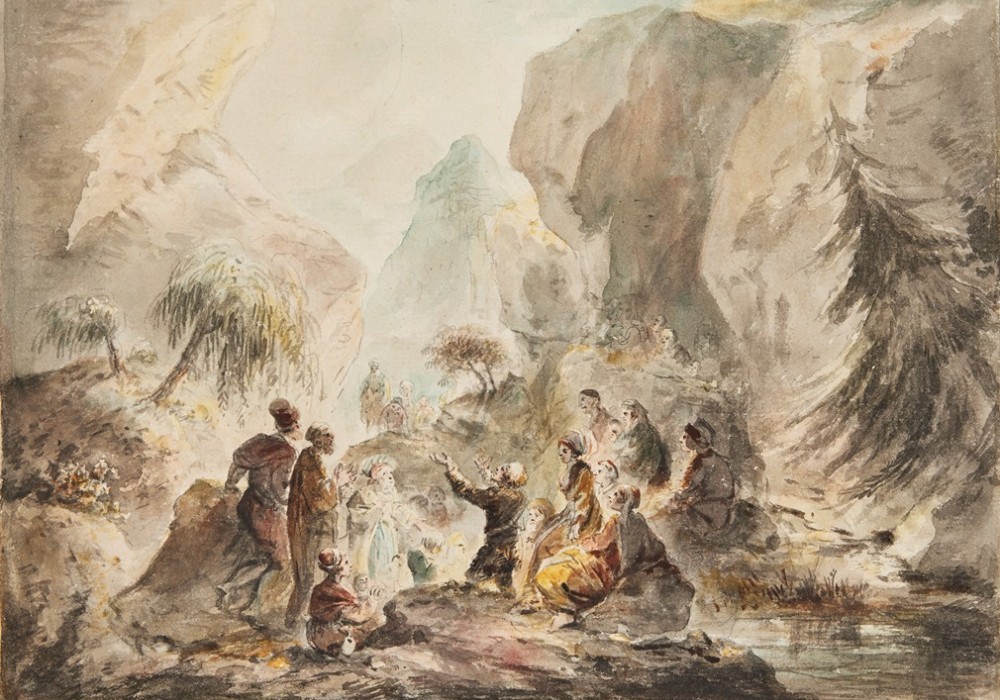
John the Baptist Preaching in the Wilderness, Elias Martin (1739-1818). Wikimedia
On Shabbat Nachamu (Comfort), which immediately follows Tisha B’Av—the fast for the destruction of the Jerusalem Temple—we read for the haftarah (prophetic reading) Isaiah’s words of comfort (40:1–26).[1] The opening verses of this haftarah also begin George Frideric Handel’s Messiah (1741), a masterpiece of Western music whose lyrics consist entirely of biblical verses, primarily as they appear in the King James Version:
Isa 40:1 Comfort ye, comfort ye my people, saith your God.
40:2a Speak ye comfortably to Jerusalem, and cry unto her,
that her warfare is accomplished, that her iniquity is pardoned. […]
40:3 The voice of him that crieth in the wilderness,
prepare ye the way of the Lord,
make straight in the desert a highway for our God.
Charles Jennens, Handel’s lyricist, was not the first to introduce a text about Jesus with Isaiah’s reference to the voice in the wilderness (v. 3). The Gospel of Mark, the oldest work devoted to the life and teachings of Jesus, does the same:
Mark 1:1 The beginning of the good news of Jesus Christ. 1:2 As it is written in the prophet Isaiah, “See, I am sending my messenger ahead of you, who will prepare your way, 1:3 the voice of one crying out in the wilderness: ‘Prepare the way of the Lord; make his paths straight,’” 1:4 so John the baptizer[2] appeared in the wilderness, proclaiming a baptism of repentance for the forgiveness of sins.[3]
The Gospels of Matthew, Luke, and John likewise declare not only that the voice in the wilderness was John the Baptist’s, but also that John the Baptist “is the one of whom the prophet Isaiah spoke” (Matt 3:3).[4] Isaiah, however, does not speak of a “voice crying out in the wilderness” at all.
Crying Out: “In the Wilderness...”
According to the Bible, Isaiah son of Amoz prophesied in the 8th century B.C.E. (Isa 1:1). Isaiah 40–55, however, refers to people and events from the mid-6th century, and chapters 56–66 may be later still. For that reason, scholars refer to the author of Isaiah 40–55 as Second Isaiah, and many refer to the author of chapters 56–66 as Third Isaiah.[5]
Here is what Second Isaiah actually says about the voice that cries out, according to all surviving Hebrew texts:
ישעיהו מ:ג קוֹל קוֹרֵא
Isa 40:3 A voice cries out:
בַּמִּדְבָּר פַּנּוּ דֶּרֶךְ יְ־הֹוָה
“In the wilderness prepare the way of YHWH;
יַשְּׁרוּ בָּעֲרָבָה מְסִלָּה לֵאלֹהֵינוּ.
make straight in the desert a highway for our God.”
The quotation in this verse is a banner example of parallelism, a feature of biblical poetry in which the same idea is expressed in two successive lines using different words that deepen the text’s meaning:
יַשְּׁרוּ, “make straight,” in the second line of the quotation is more specific than פַּנּוּ, “prepare,” in the first;
מְסִלָּה, “a highway,” is both more specific and more impressive than a דֶּרֶךְ, “way”;
אלֹהֵינוּ, “our God,” emphasizes the community’s relationship with the deity whose proper name is יְ־הֹוָה, YHWH.
The word בַּמִּדְבָּר, “in the wilderness,” must be part of what the voice cries out, as it stands in parallel with the word בָּעֲרָבָה, “in the desert,” in the second line.
This punctuation is confirmed by the Masoretic cantillation notes: ק֣וֹל קוֹרֵ֔א בַּמִּדְבָּ֕ר. When two zaqef signs appear in the same half of a verse, the first (here, over קוֹרֵ֔א, “cries out”) calls for a more significant pause than the second (over בַּמִּדְבָּ֕ר, “in the wilderness”).[6] Thus, the cantillation corresponds to punctuating the opening words as: “A voice cries out: In the wilderness,....” With some exaggeration, one might say that “A voice cries out in the wilderness” does as much violence to the Hebrew text as omitting the comma in the exclamation “Let’s eat, Grandma!”
The New Testament’s Source
The authors of the Gospels, however, did not misrepresent the Hebrew text of Isaiah. Rather, they accurately represented the Greek translation known as the Septuagint:
LXX Isa 40:3 (NETS) A voice of one crying out in the wilderness:
“Prepare the way of the Lord;
Make straight the paths of our God.”[7]
The Septuagint’s version of Isaiah lacks an equivalent for the word בָּעֲרָבָה, “in the desert.” In this text, the only way to preserve the parallelism of Isaiah’s poetry is to punctuate the verse so that בַּמִּדְבָּר, “in the wilderness,” describes the location of the voice rather than that of the highway.
This version of the verse is, arguably, an improvement: “the way of the Lord” and “the paths of our God” can now refer not only to a literal highway in the desert but also, metaphorically, to a way of life. In fact, Greek-speaking Jews used the terms דֶּרֶךְ and ὁδὸς (“way”) to describe the manner in which God wants them to live.
John the Baptist as a Source of Inspiration
Scholars believe that the historical figure known as John the Baptist in fact preached his message of repentance in the wilderness.[8] It comes as no surprise, then, that New Testament authors familiar with the Greek text of Isaiah 40:3 would associate this verse with someone so important to them. Even so, it is noteworthy that this is the only biblical verse that all four Gospels quote directly: Jesus’ followers clearly found value in their conviction that Isaiah himself foretold the coming of John the Baptist.
For the same reason, the King James translators could not resist retaining the New Testament’s Greek-derived punctuation when they translated the Hebrew text of Isaiah. This punctuation, after all, makes it easier for Christian audiences to recognize the links between the Old and New Testaments, as Handel’s Messiah exemplifies.
Thanks to the Septuagint, the Gospels, and the King James Bible, the phrase “a voice crying in the wilderness” continues to serve as an English-language idiom to describe those who proclaim truths that most people prefer not to hear. The current generation of Christian Bibles, however, uniformly punctuate Isaiah 40:3 in accordance with its Hebrew text. Because they prioritize fidelity to Second Isaiah’s original words, these Bibles let an important aspect of the Christian interpretive tradition get lost in translation or, at best, they relegate it to a footnote.
God Lost Israel in the Wilderness
Some Jewish interpreters criticized Christians for misreading Isaiah’s words in order to support their claims about Jesus.[9] Others chose to employ the same reading—“A voice cries out in the wilderness”—within an interpretive framework that focuses on the people of Israel. Consider, for example, the following passage from Aggadat Bereshit, a collection of rabbinic midrashim compiled in the 10th century C.E.:
אגדת בראשית סח קול קורא [במדבר]. א"ר [לוי] למה במדבר, אלא בנוהג שבעולם מי שהיה בידו מרגלית ואיבדה, היכן הוא מבקשה לא במקום שאיבדה, כך הקב"ה איבד את ישראל במדבר, שנאמר במדבר הזה יתמו ושם ימותו (במדבר יד לה), ולשם הוא הולך ומבקש, קול קורא במדבר.
Aggadat Bereshit 68 “A voice cries out [in the wilderness].” Rabbi Levi said, “Why in the wilderness? For this reason: It is common practice that when someone had a pearl in their hand and lost it, where would they seek it [if] not in the place where they lost it? So too the Holy Blessed One lost Israel in the wilderness—as it is said, ‘In this wilderness they shall come to a full end, and there they shall die’ (Num 14:35)—so there is where God goes and seeks them—‘A voice cries out in the wilderness.’”[10]
It is more common within the Jewish interpretive tradition, however, to reinterpret another phrase within Isaiah 40:3: פַּנּוּ דֶּרֶךְ יְ־הֹוָה, “prepare the way of YHWH.” This interpretive tradition was heavily influenced by Targum Jonathan, the Aramaic translation of the Prophets, traditionally ascribed to Hillel’s pupil Jonathan ben Uzziel, that emerged in the Land of Israel during and after the destruction of the Second Temple in 70 C.E.[11]
Targum Jonathan: Isaiah Speaks to Jerusalem under Roman Rule
Like the Gospels, which were composed during approximately the same time period, Targum Jonathan does not hesitate to read events of its own era into the words of Isaiah. For example, Second Isaiah metaphorically describes Zion as a once barren woman whom YHWH will bless with children:
ישעיהו נד:א רׇנִּי עֲקָרָה לֹא יָלָדָה פִּצְחִי רִנָּה וְצַהֲלִי לֹא חָלָה כִּי רַבִּים בְּנֵי שׁוֹמֵמָה מִבְּנֵי בְעוּלָה אָמַר יְ־הֹוָה.
Isa 54:1 Shout for joy, O barren one who has borne no children; burst into song and shout, you who have not been in labor! For the children of the desolate woman will be more than the children of the one who is married, says YHWH.
The Targum explicitly connects this prophecy to Jerusalem under Roman rule. (Here and below, the italicized words in English are present in the Aramaic translation but not in the Hebrew base text.)
תרגום יונתן על ישעיהו נד:א אֲרֵי סַגִיאִין יְהוֹן בְּנֵי יְרוּשְׁלֶם צְדִיתָא מִבְּנֵי רוֹמֵי יְתִיבְתָּא אֲמַר יְיָ.
Tg. Jon. Isa 54:1 For the children of desolate Jerusalem will be more than the children of inhabited Rome, says the Lord.[12]
The Roman Empire’s destruction of Jerusalem—along with the subsequent expulsion of Jerusalem’s Jews in 135 C.E., after the failure of the Bar Kochba revolt—was still fresh in the minds of Targum Jonathan’s authors and audience. Living under Roman domination, these Jews must have found comfort in the notion that God spoke explicitly about their current predicament.
Clear the Way before the People of the Lord
This background can help us better understand Targum Jonathan’s “improvements” to Second Isaiah’s speech. In the targum, Isaiah speaks of what we might call “interstate highways” intended not for God but rather for the return of God’s people who have been sent into exile:
תרגום יונתן על ישעיהו מ:ג קַל דְמַכְלֵי
Tg. Jon. Isa 40:3 A voice of one who cries:
בְּמַדְבְּרָא פַּנוּ אוֹרַח מִן קֳדָם עַמָא דַייָ
“In the wilderness clear the way before the people of the Lord,
כְּבִישָׁא בְּמֵישְׁרָא כִּבְשִׁין קֳדָם כְּנִשְׁתָּא דֶאֱלָהָנָא.
level in the desert highways before the congregation of our God.”[13]
Long-distance roads of this nature, however, were just beginning to emerge during the era of Second Isaiah, and they certainly did not exist in the hill country surrounding Jerusalem. In most biblical texts, the word מְסִלָּה, “highway,” refers to the much shorter road that ascends to and proceeds through a city’s gates.[14] As biblical scholar Joseph Blenkinsopp (1927–2022) explains:
There is no mention here [in Isa 40:3–5] of preparing a route for return from exile in Babylon. It is, rather, that a processional way is to be prepared for the return of Yahveh to his people. Given what we imagine to be the state of roads at the time, this would have been normal procedure in preparation for the visit, the parousia, of a dignitary.[15]
By the time of Targum Jonathan, however, the vast Roman road network had transformed the ways in which people thought about highways.
Targum Jonathan’s version of Second Isaiah (40:3)—which describes a long-distance highway for God’s people rather than a ceremonial road for God’s own entry into Jerusalem—“improves” the original in three ways.
Non-Anthropomophic God
First, it sidesteps Second Isaiah’s anthropomorphic depiction of God as a physical being who might use a road. Similar edits occur throughout the targum.[16] For example, the original depiction of God’s hands in Second Isaiah reads:
ישעיהו מ:יב מִי מָדַד בְּשׇׁעֳלוֹ מַיִם וְשָׁמַיִם בַּזֶּרֶת תִּכֵּן...
Isa 40:12 Who has measured the waters of the sea in the hollow of his hand and marked off the heavens with a span… ?[17]
The targum’s translation changes שׇׁעֳלוֹ, “the hollow of his hand,” to שְׁעוֹלָא, “the hollow of a hand”:
תרגום יונתן על ישעיהו מ:יב מַן אֲמַר אִלֵין קַיָם אֲמַר וַעֲבֵד דְכָל מֵי עַלְמָא חֲשִׁיבִין קֳדָמוֹהִי כְּטִפָּא בִשְׁעוֹלָא וּמִשְׁחַת שְׁמַיָא כְּאִלוּ בְּזֵירְתָא מְתַקְנִין.
Tg. Jon. Isa 40:12 Who says these things? One who lives, speaks and acts, before whom all the waters of the world are reckoned as the drop in the hollow of a hand and the length of the heavens as if with the span established…
Second Isaiah presumably did not intend for anyone to take his poetic depiction of God literally, but Targum Jonathan took no chances.
Return of the Exiles
Targum Jonathan also adds to Isaiah 40:3 a reference to the ingathering of the exiles: the way is prepared for עַמָא, “the people,” and כְּנִשְׁתָּא, “the congregation,” of God. Similar additions occur throughout the targum, including in the opening phrase of the preceding verse, where Second Isaiah declares that Jerusalem’s term of punishment “has been filled” (מָלְאָה):
ישעיהו מ:ב דַּבְּרוּ עַל לֵב יְרוּשָׁלַ͏ִם וְקִרְאוּ אֵלֶיהָ כִּי מָלְאָה צְבָאָהּ...
Isa 40:2 Speak tenderly to Jerusalem, and cry to her that she has served [lit. filled] her term...
Targum Jonathan transforms this declaration into a prophecy that Jerusalem will soon “be filled” again—and, in the process, employs a completely different meaning of the same verb:
תרגום יונתן על ישעיהו מ:ב מַלִילוּ עַל לִבָּא דִירוּשְׁלֵם וְאִתְנַבּוּ עֲלָהּ אֲרֵי עֲתִידָא דְתִתְמְלֵי מֵעַם גַלְוָתָהָא.
Tg. Jon. Isa 40:2 Speak to the heart of Jerusalem and prophesy to her that she is about to be filled with people of her exiles.
The highways that the targum describes in the following verse provide the means for this dearly awaited ingathering to occur.
Unifying Isaiah
Finally, Targum Jonathan’s translation of Second Isaiah strengthens the thematic unity of the book of Isaiah—a compilation of prophecies by multiple authors—by bringing this verse into alignment with other passages. Although Second Isaiah makes no reference to the return of exiles in 40:3, Third Isaiah (chs. 56–66) uses similar language to depict the people’s reentry into Jerusalem. Consider, for example, the following verse that appears in the last haftarah of consolation for the seven weeks that follow Tisha B’Av:[18]
ישעיהו סב:י עִבְרוּ עִבְרוּ בַּשְּׁעָרִים פַּנּוּ דֶּרֶךְ הָעָם סֹלּוּ סֹלּוּ הַמְסִלָּה סַקְּלוּ מֵאֶבֶן הָרִימוּ נֵס עַל הָעַמִּים.
Isa 62:10 Go through, go through the gates; prepare the way for the people; build up, build up the highway; clear it of stones; lift up an ensign over the peoples.
In effect, Targum Jonathan reads Third Isaiah’s reentry of the people (62:10) into Second Isaiah’s way in the wilderness (40:3).[19]
There is good reason to speculate that the customary practice of reciting Isaiah 40:1–26 as the first of the seven haftarot of consolation was informed by Targum Jonathan’s translation. The original version of this text is anomalous among these haftarot because it does not explicitly address the fate of Jerusalem’s people. By inserting language to this effect, Targum Jonathan arguably improves upon Second Isaiah’s work. Its translation of Isaiah 40:3, moreover, makes this verse the perfect counterpart to the Hebrew text of Isaiah 62:10 as bookends that frame all seven haftarot of consolation.
Targum Jonathan’s version of Second Isaiah (40:3) has had a lasting impact, not least because it underpins Rashi’s influential explanation of this verse: פנו דרך י"י—לשוב גליותיה לתוכה, “prepare the way of the Lord—so [Jerusalem’s] exiles can return to her.” This explanation also appears, for example, in the popular 17th-century Yiddish commentary Tze’enah u-Re’enah.
Improving the Bible
Legend has it that New York’s Yiddish theater companies advertised works like Der yidisher Hamlet (1899) and Der yidisher Kenig Lir (1892) as “Shakespeare, translated and improved!”[20] The authors of these plays probably did not make such a claim in those very words, but they clearly believed that their audiences wanted timeless classics to speak directly to their own concerns and experiences.
The notion that Shakespeare can be improved upon is commonly understood to be a humorous expression of Jewish chutzpah.[21] The joke rests not only on Shakespeare’s place within the literary canon but also on the notion that translations are inherently inferior, that things always get “lost in translation.”
This joke, however, also conveys an important truth. Jewish (and Christian) communities have long recognized that translations provide opportunities to find—or create—new meaning precisely because they differ from the original.[22] To appreciate the lives and afterlives of biblical texts and other literary classics, we need to consider not only their original words but also subsequent efforts to improve upon them.
Postscript
When No Improvement Is Necessary
Roman highways transformed the ways in which people thought not only about travel but also about power, because roads played crucial roles in Rome’s ability to control its far-flung territory and project military might. When describing the troops that Vespasian assembled for his invasion of the Galilee, for example, Josephus includes as a matter of course “road-makers to straighten out bends in the highway, level rough surfaces, and cut down obstructive woods, so that the army would not be exahusted by laborious marching.”[23] Roads also played important roles in imperial propaganda: milestones in the Roman East often referred to the emperor as pontifex maximus, literally “the greatest bridge-builder.”[24]
Read in this political context, Second Isaiah portrays God as an even more impressive civil engineer than the emperor:
ישעיהו מ:ד כׇּל גֶּיא יִנָּשֵׂא וְכׇל הַר וְגִבְעָה יִשְׁפָּלוּ וְהָיָה הֶעָקֹב לְמִישׁוֹר וְהָרְכָסִים לְבִקְעָה.
Isa 40:4 Every valley shall be lifted up, and every mountain and hill be made low; the uneven ground shall become level, and the rough places a plain.
New Testament scholar Edward Meadors (Taylor University) proposes that citations of Isaiah 40:3 in the Gospels (and of 40:4, quoted in Luke 3:5) implicitly challenge imperial rhetoric by insisting that God, as the ultimate road-builder, is superior to the emperor in power and authority.[25] The same argument also applies to Targum Jonathan which, we have seen, foretells Jerusalem’s future triumph over Rome.
There is, however, no substantive difference between the Hebrew of Isaiah 40:4 and its Aramaic and Greek translations—nor is there any need for these translations to improve upon the original. Perhaps the mark of a true literary classic is that it can speak for itself in new historical contexts even as it also inspires fresh interpretations of its words.
TheTorah.com is a 501(c)(3) nonprofit organization.
We rely on the support of readers like you. Please support us.
Published
July 21, 2026
|
Last Updated
October 3, 2026
Previous in the Series
Next in the Series
Before you continue...
Thank you to all our readers who offered their year-end support.
Please help TheTorah.com get off to a strong start in 2025.
Footnotes


Dr. Rabbi David M. Freidenreich is the Pulver Family Professor of Jewish Studies at Colby College, where he also serves as deputy director of the Center for Small Town Jewish Life. He earned his Ph.D. at Columbia University and rabbinic ordination from the Jewish Theological Seminary. He is the author of the award-winning book, Foreigners and Their Food: Constructing Otherness in Jewish, Christian, and Islamic Law. His most recent book is Jewish Muslims: How Christians Imagined Islam as the Enemy.
Essays on Related Topics: