


 Edit article
Series
Exalting Jesus—Did Early Christians Abandon Monotheism?


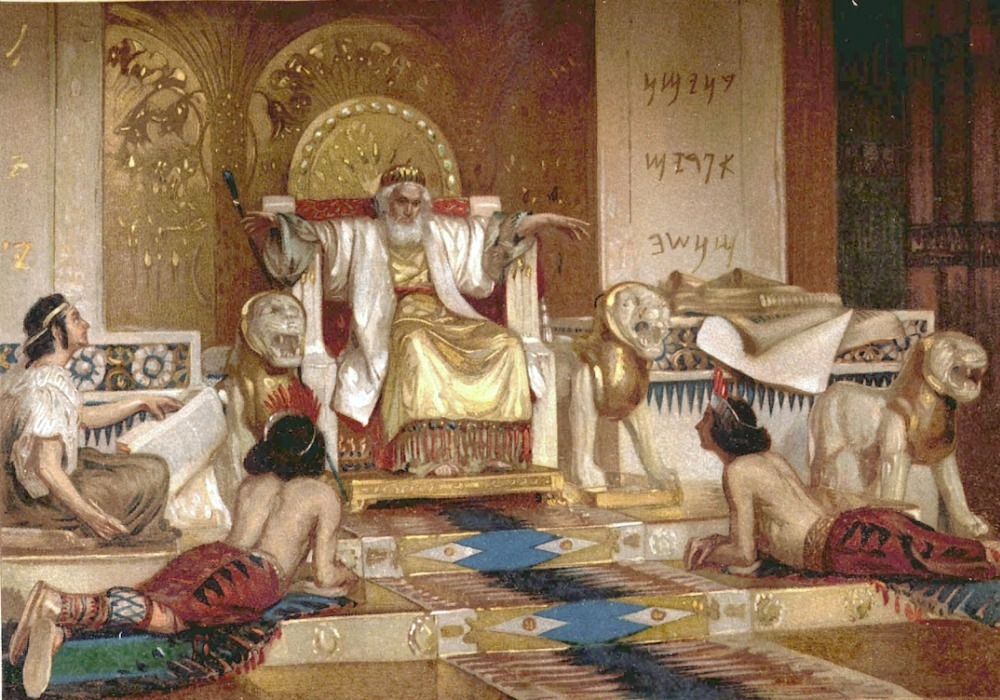
Ecclesiastes, Isaak Asknaziy, 1856– 1902. Brockhaus and Efron Jewish Encyclopedia
Israel Bows Before God and King David
After David recounts to an assembled crowd how YHWH informed him that Solomon will succeed him as king and will be the one to build the temple, and the crowd responds with generous freewill offerings to help build the temple, David gives a thanksgiving prayer (1 Chr 29:10-19), and then tells the assembled crowd to bless YHWH:
דברי הימים א כט:כ וַיֹּאמֶר דָּוִיד לְכׇל הַקָּהָל בָּרְכוּ נָא אֶת יְ־הֹוָה אֱלֹהֵיכֶם וַיְבָרְכוּ כׇל הַקָּהָל לַיְ־הֹוָה אֱלֹהֵי אֲבֹתֵיהֶם וַיִּקְּדוּ וַיִּשְׁתַּחֲווּ לַיְ־הֹוָה וְלַמֶּלֶךְ.
1 Chr 29:20 Then David said to the whole assembly, “Bless YHWH your God.” And all the assembly blessed YHWH, the God of their ancestors, and bowed their heads and prostrated themselves before YHWH and the king.[1]
A single verb, וַיִּשְׁתַּחֲווּ, wayishtachawu, is used to describe the prostration of the gathered crowd before both YHWH and the king.[2] Although the Bible prohibits prostration before figures that could be understood to be competitors with God, rivals to God’s authority and honor,[3] the king was considered YHWH’s agent, and thus it was permissible to bow to him.[4]
The King Rules Seated on YHWH’s Throne
After a celebratory meal, Solomon is proclaimed king and anointed (v. 22). The description of his enthronement that follows, especially the use of the term כִּסֵּא יְ־הֹוָה, the throne of YHWH, implies that the king, as God’s human agent, was expected to share the divine throne:
דברי הימים א כט:כג וַיֵּשֶׁב שְׁלֹמֹה עַל כִּסֵּא יְ־הֹוָה לְמֶלֶךְ תַּחַת דָּוִיד אָבִיו וַיַּצְלַח וַיִּשְׁמְעוּ אֵלָיו כׇּל יִשְׂרָאֵל.
1 Chr 29:23 Then Solomon sat on the throne of YHWH, succeeding his father David as king; he prospered, and all Israel obeyed him.
While other texts, such Psalm 110, envision the king sitting on a throne to the right of YHWH:
תהילים קי:א ... נְאֻם יְ־הֹוָה לַאדֹנִי שֵׁב לִימִינִי עַד אָשִׁית אֹיְבֶיךָ הֲדֹם לְרַגְלֶיךָ. קי:ב מַטֵּה עֻזְּךָ יִשְׁלַח יְ־הֹוָה מִצִּיּוֹן רְדֵה בְּקֶרֶב אֹיְבֶיךָ.
Ps 110:1 YHWH said to my lord, “Sit at My right hand, till I make your enemies your footstool.” 110:2 YHWH shall send the rod of your strength out of Zion. Rule in the midst of your enemies!
Chronicles calls the Davidic king’s throne YHWH’s throne. The imagery of Chronicles reflects the notion that the Davidic king is God’s adopted son who rules by virtue of the power of his God.[5]
The Book of Chronicles was likely composed around the end of the 4th century B.C.E., when there was no king, Davidic or otherwise, on the throne.[6] While it depicts the Davidic dynasty, especially the reigns of David and Solomon, in an idealized light,[7] at the very least it provides a sense of what an author in that time envisaged as involved in the coronation of a king. Chronicles’ depiction reflects a belief that exclusive allegiance to the one God is required, and prostration before the king who shares God’s throne is compatible with this.
Prostrating to the “Son of Man”: Enoch
First century C.E. Jewish eschatological writings from the time of Jesus preserve some of these ideas about the relationship between God and the Davidic king. For example, the Parables of Enoch (ca. 1st century C.E.),[8] describes how all of humanity will prostrate themselves before a messianic figure referred to as the “that son of man”:
1 Enoch 48:5 All who dwell on the earth will fall down and worship before him, and they will glorify and bless and sing hymns to the name of the Lord of Spirits.[9]
While there is some ambiguity about whether the blessing and glorifying are aimed at the Lord of spirits (God) or the human messianic figure, by the time we reach the offering of song, God is the focus. Prostration, on the other hand, is offered to the human figure, “that son of man.” As in Chronicles, so too here; the ruler was to serve as God’s agent in governing the people, and submission to the human ruler was submission to the one on whose behalf he ruled.
Paul’s Letter to the Philippians: Jesus as Exalted Ruler
It is within this context[10] that we should consider Paul’s letter to the Christian community at Philippi (mid-1st century C.E.),[11] where he says of Jesus:
Phil 2:9 God exalted him even more highly and gave him the name that is above every other name, 2:10 so that at the name given to Jesus every knee should bend, in heaven and on earth and under the earth, 2:11 and every tongue should confess that Jesus Christ is lord,[12] to the glory of God the Father.[13]
Paul claims here that Jesus has been exalted to a status of universal reign. While this might appear to be a departure from first-century Jewish monotheism,[14] Paul’s inclusion of a reference to Deutero-Isaiah in this statement indicates that is not his intent:
ישעיהו מה:כא ... וְאֵין עוֹד אֱלֹהִים מִבַּלְעָדַי אֵל צַדִּיק וּמוֹשִׁיעַ אַיִן זוּלָתִי. מה:כב פְּנוּ אֵלַי וְהִוָּשְׁעוּ כׇּל אַפְסֵי אָרֶץ כִּי אֲנִי אֵל וְאֵין עוֹד. מה:כג בִּי נִשְׁבַּעְתִּי יָצָא מִפִּי צְדָקָה דָּבָר וְלֹא יָשׁוּב כִּי לִי תִּכְרַע כׇּל בֶּרֶךְ תִּשָּׁבַע כׇּל לָשׁוֹן.
Isaiah 45:21 …There is no other god besides Me, a righteous God and a Savior; there is no one besides Me. 45:22 Turn to Me and be saved, all the ends of the earth! For I am God, and there is no other. 45:23 By myself I have sworn; from My mouth has gone forth in righteousness a word that shall not return: “To Me every knee shall bow, every tongue shall swear.”
The use of this verse from Isaiah in Paul’s letter to the Philippians is striking precisely because its original context is emphatically about the uniqueness of the one God and exclusive allegiance to the one God.[15]
Paul also quotes this same verse from Deutero-Isaiah (v. 23) in Romans.[16] Paul was surely aware of the text’s declaration of God’s oneness and supremacy and the need for exclusive allegiance. The use of the text in Philippians, rather than departing from that allegiance, would have made clear to those who knew the source of the words that the status to which God has highly exalted Jesus is the status of supreme agent.
Jesus as Lord, Not God
When God’s agent receives prostration, it is ultimately a recognition of God’s authority. The knees that bow may recognize the lordship of Jesus, according to Paul, but they do so “to the glory of God, the Father.” That is not “God the Father” as opposed to “God the Son” as in later Trinitarian thought, but the one God, who is the Father.[17] This passage in Philippians is thus a text that fits squarely within the framework of Jewish monotheism of that time.
Paul’s Letter to the Corinthians: Jesus as God’s Supreme Agent
Paul makes a clear distinction between God and Jesus in his letter to the community in Corinth,[18] when he speaks about Jesus’s role as God’s agent and mediator of judgment at the end time:
1 Cor 15:24 Then comes the end, when he [Jesus] hands over the kingdom to God the Father, after he has destroyed every ruler and every authority and power. 15:25 For he [Jesus] must reign until he has put all his enemies under his feet. 15:26 The last enemy to be destroyed is death.[19]
Yet even though Jesus reigns over everything else on God’s behalf, he is still subject to God[20]:
1 Cor 15:27 For “God has put all things in subjection under his feet.”[21] But when it says, “All things are put in subjection,” it is plain that this does not include the one [God] who put all things in subjection under him. 15:28 When all things are subjected to him [Jesus], then the son himself will also be subjected to the one who put all things in subjection under him, so that God may be all in all.[22]
The son’s ultimate subjection to God is an affirmation of the son’s status as agent, subordinate to the one God who is over all, and who brings all things into subjection to God through His appointed agent.
Paul in this passage (v. 27) quotes Psalms:
תהילים ח:ה מָה אֱנוֹשׁ כִּי תִזְכְּרֶנּוּ וּבֶן אָדָם כִּי תִפְקְדֶנּוּ. ח:ו וַתְּחַסְּרֵהוּ מְּעַט מֵאֱלֹהִים וְכָבוֹד וְהָדָר תְּעַטְּרֵהוּ. ח:ז תַּמְשִׁילֵהוּ בְּמַעֲשֵׂי יָדֶיךָ כֹּל שַׁתָּה תַחַת רַגְלָיו.
Ps 8:5 What are humans (אֱנוֹשׁ, enosh) that you are mindful of them, mortals (בֶן אָדָם, ben adam, “son of man”)[23] that you care for them? 8:6 Yet you have made them a little lower than God and crowned them with glory and honor. 8:7 You have given them dominion over the works of your hands; you have put all things under their feet.[24]
Psalm 8 transfers royal imagery to human beings in general.[25] The status that human beings in general (ben adam, the son of man) were supposed to have, according to the Psalm, is to be a little lower than God or the gods (אֱלֹהִים is ambiguous here)[26] with dominion over creation. But the New Testament often understands Psalms as a prophetic book, referring to Jesus, and thus interprets this verse in reference to him.[27] Thus Paul describes Jesus as messiah: a little lower than God, all else subjected to him, with a view to God’s righteous reign being established once more over creation.
Jesus Reverses the Damage that Adam Caused
Paul also views Jesus as the “last Adam” (1 Cor 15:45),[28] and he contrasts Adam and Jesus in his letter to the Christian community in Rome:[29]
Rom 5:18 Therefore just as one man’s (e.g., Adam) trespass led to condemnation for all, so one man’s (e.g., Jesus) act of righteousness leads to justification and life for all. 5:19 For just as through the one man’s disobedience the many were made sinners, so through the one man’s obedience the many will be made righteous.
Paul viewed Jesus as the Davidic ruler who is at the same time the “last Adam,” the one who obeyed where Adam disobeyed, and receives and restores humankind to its originally-intended status – the one that humankind lost through the first Adam’s act of disobedience.[30]
Close attention to what Paul is doing with these texts and how he is interpreting them is crucial not only for understanding the views of early Christians, but also for determining whether developing Christianity was at this stage still firmly within the context of Jewish allegiance to one God alone, as it was understood in this era, or had already begun to depart from it.
Paul, Early Christianity, and Monotheism
The earliest written sources we have for views of God held by early Christians are Paul’s letters, the earliest of which date to the 50s C.E. We have no writings preserved from Jesus. What we know about Jesus is largely from the Gospels, the earliest of which, Mark, likely dates from the late 60s or early 70s C.E. Thus, the early Christian texts preserved in the New Testament reflect not only accounts from the time of Jesus by those who knew him, but also beliefs held by Christians in the time these works were written, a generation or so later.
Since Paul is our earliest Christian author, those who claim that there was something new present in this movement from the outset, something that made it inevitable that Christianity and Judaism would eventually part ways over the oneness of God, point to Paul as evidence.[31] Yet what we find him asserting that the one God exalted Jesus to a status as God’s royal viceroy, second only to God, appointed to rule over everything in order to subject all things to the one God, who remains supreme. This outlook was thoroughly permissible within the framework of Jewish exclusive allegiance to the one God in this era.
In surveying the apparent tensions between the practice of prostration in some instances, and the refusal to offer it in another, I offered an explanation in terms of how the recipient of prostration related to the one God. The same person might have no qualms about bowing before God’s appointed king or high priest, yet refuse to bow before a pagan king or his emissary.[32]
In view of this, we can conclude that the disagreement between members of the earliest Christian movement and other Jews who did not view Jesus as they did was not about monotheism. They did not disagree about the fact that one God alone deserved allegiance, nor did they disagree that it was in principle appropriate to bow before God’s appointed agents, such as the Davidic king. What they disagreed about was whether Jesus was that sort of figure.
Later Christian Trinitarianism represents a departure from the affirmations of divine oneness in the Bible, including the New Testament.[33] Nevertheless, it is relevant for dialogue and mutual understanding that the earliest Christians were themselves Jews, as was Jesus himself, and they did not abandon the required exclusive allegiance to the one God. They disagreed about whether Jesus was sent by God and thereafter whether he was exalted by God to a place of honor. Disagreements about who represented God were nothing new in Judaism, and recognizing this as a disagreement within Judaism rather than about Judaism clears the way for understanding early Christianity as a movement in that context.[34]
TheTorah.com is a 501(c)(3) nonprofit organization.
We rely on the support of readers like you. Please support us.
Published
September 17, 2026
|
Last Updated
September 18, 2026
Previous in the Series
Next in the Series
Before you continue...
Thank you to all our readers who offered their year-end support.
Please help TheTorah.com get off to a strong start in 2025.
Footnotes


Dr. James F. McGrath is the Clarence L. Goodwin Professor of New Testament Language and Literature, and Chair of the Department of Philosophy and Religious Studies, at Butler University in Indianapolis. His PhD is from Durham University in England, and his dissertation became his first book, John's Apologetic Christology. He is also the author of The Only True God: Early Christian Monotheism in Its Jewish Context; What Jesus Learned from Women; The A to Z of the New Testament; Christmaker: A Life of John the Baptist; and John of History, Baptist of Faith: The Quest for the Historical Baptizer. The latter volume was judged the Best Book Relating to the New Testament in the Biblical Archaeology Society’s 2025 Publication Awards.
Essays on Related Topics: