


 Edit article
Series
Shabbat, Mid-Fifth Century B.C.E.


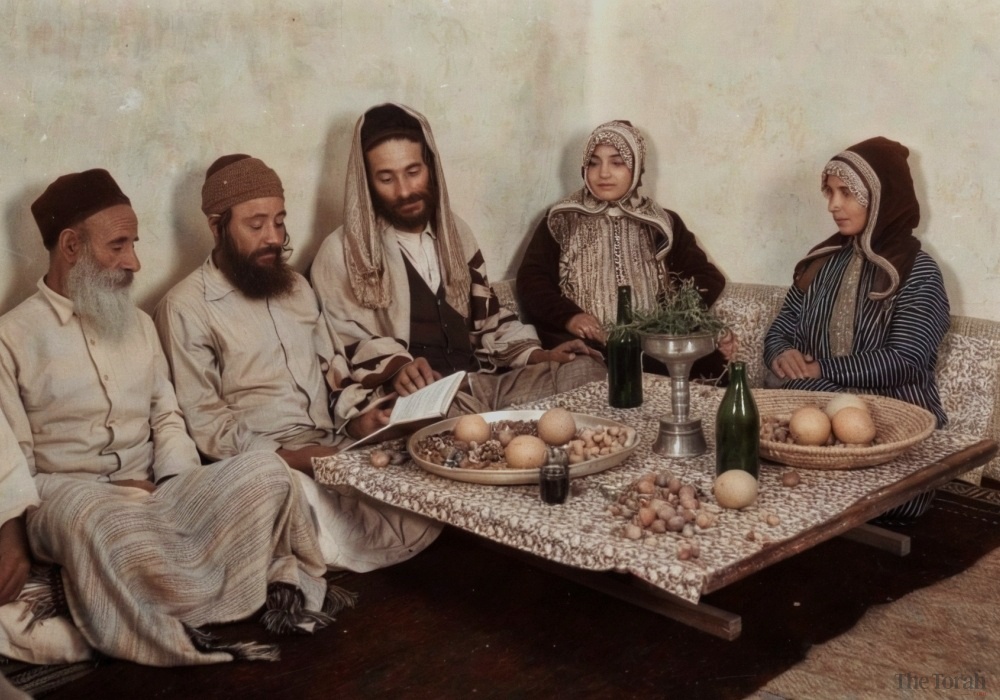
A Yemenite family reading from the psalms on Shabbat after lunch (colorized), 1 February 1947. Israel, Photography Department. Wikimedia
While the names of the months adopted by the Judean exiles in Babylonia (Nisan, Iyar, Sivan, Tammuz, etc.) are Babylonian in origin, the biblical Shabbat has no Babylonian equivalent.[1]
Some scholars have drawn parallels between the Babylonian šapattu/šabattu and the Hebrew שבת (šbt), Shabbat,[2] yet establishing a certain connection between these terms remains elusive.[3] The Akkadian word šapattu refers almost exclusively to the fifteenth day of the month (associated with a full moon) or the phenomenon of lunar alignment, i.e., both conjunction and opposition of the moon to the sun.[4]
Thus it seems that Shabbat, occurring every seventh day,[5] along with its customs and observances, is uniquely Judean in origin and developed independently of Babylonian cultic and calendrical practices.
When Did Shabbat Become Significant?
While the Torah speaks of Shabbat in many places, a fuller description of its communal observance emerges in Ezra-Nehemiah, which relates attempts in the mid-5th century B.C.E. to enforce Shabbat observance. This reflects a period where the observance of Shabbat is undergoing a change within Jerusalem’s Judean community.
These reforms do not mean that Shabbat was suddenly observed; rather, they constitute responses to an ongoing discourse on how to mark Shabbat.[6]
At a public gathering on the 24th of the first month, the Levites begin a long confessional account (Neh 9:5) that starts with creation (v.6), moves on to Abraham (v. 7-8), and then to the Exodus from Egypt (v. 9-12). After Sinai (v. 13), they highlight the importance of Shabbat:[7]
נחמיה ט:יד וְאֶת שַׁבַּת קׇדְשְׁךָ הוֹדַעְתָּ לָהֶם...
Neh 9:14a You made known to them Your holy Shabbat.[8]
The confession continues, describing Israel’s disobedience in the wilderness (v. 16-21), the conquest of the land (v. 22-25), and the repeated transgressions of the people during the period of judges and kings (v. 26-30). In response to this account (10:1), the Levites, priests, and Judean community in Jerusalem pledge to follow the commandments (v. 30), not to intermarry (v. 31), and to observe Shabbat:
נחמיה י:לב וְעַמֵּי הָאָרֶץ הַמְבִיאִים אֶת הַמַּקָּחוֹת וְכׇל שֶׁבֶר בְּיוֹם הַשַּׁבָּת לִמְכּוֹר לֹא נִקַּח מֵהֶם בַּשַּׁבָּת וּבְיוֹם קֹדֶשׁ...
Neh 10:32 The peoples of the land who bring their wares and any grain on Shabbat day for sale,[9] we will not buy from them on Shabbat or a holy day...
Despite their oath, Shabbat observance remains lax among the people. When Nehemiah returns from Persia to Judah for a second term as governor several years later, he finds that the community, including the priests, have neglected their religious obligations.[10] The struggle for Shabbat observance, as well as Shabbat’s desecration, is vividly described:
נחמיה יג:טו בַּיָּמִים הָהֵמָּה רָאִיתִי בִיהוּדָה דֹּרְכִים גִּתּוֹת בַּשַּׁבָּת וּמְבִיאִים הָעֲרֵמוֹת וְעֹמְסִים עַל הַחֲמֹרִים וְאַף יַיִן עֲנָבִים וּתְאֵנִים וְכׇל מַשָּׂא וּמְבִיאִים יְרוּשָׁלַ͏ִם בְּיוֹם הַשַּׁבָּת וָאָעִיד בְּיוֹם מִכְרָם צָיִד.
Neh 13:15 At that time I saw men in Judah treading winepresses on Shabbat, and others bringing heaps of grain and loading them onto asses, also wine, grapes, figs, and all sorts of goods, and bringing them into Jerusalem on Shabbat. I admonished them there and then for selling provisions.[11]
Moreover:
נחמיה יג:טז וְהַצֹּרִים יָשְׁבוּ בָהּ מְבִיאִים דָּאג וְכׇל מֶכֶר וּמוֹכְרִים בַּשַּׁבָּת לִבְנֵי יְהוּדָה וּבִירוּשָׁלָ͏ִם.
Neh 13:16 Tyrians who lived there brought fish and all sorts of wares and sold them on Shabbat to the Judahites in Jerusalem.
Nehemiah actively opposes all commercial activity on Shabbat. Buying is considered a form of commerce, and, according to the form of observance emphasized by him, prohibited.
Nehemiah explicitly connects the desecration of Shabbat to the Temple’s destruction.[12] In order to enforce its observance, he implements the closure and guarding of Jerusalem’s gates on Shabbat:
נחמיה יג:יט וַיְהִי כַּאֲשֶׁר צָלְלוּ שַׁעֲרֵי יְרוּשָׁלַ͏ִם לִפְנֵי הַשַּׁבָּת וָאֹמְרָה וַיִּסָּגְרוּ הַדְּלָתוֹת וָאֹמְרָה אֲשֶׁר לֹא יִפְתָּחוּם עַד אַחַר הַשַּׁבָּת וּמִנְּעָרַי הֶעֱמַדְתִּי עַל־הַשְּׁעָרִים לֹא יָבוֹא מַשָּׂא בְּיוֹם הַשַּׁבָּת.
Neh 13:19 When shadows filled the gateways of Jerusalem at the approach of Shabbat, I gave orders that the doors be closed, and ordered them not to be opened until after Shabbat. I stationed some of my servants at the gates, so that no goods should enter on Shabbat.
When merchants and vendors from outside Jerusalem start to camp outside the gate on Shabbat, he warns them away, since he sees this as contributing to its desecration:
נחמיה יג:כ וַיָּלִינוּ הָרֹכְלִים וּמֹכְרֵי כׇל מִמְכָּר מִחוּץ לִירוּשָׁלָ͏ִם פַּעַם וּשְׁתָּיִם. יג:כא וָאָעִידָה בָהֶם וָאֹמְרָה אֲלֵיהֶם מַדּוּעַ אַתֶּם לֵנִים נֶגֶד הַחוֹמָה אִם תִּשְׁנוּ יָד אֶשְׁלַח בָּכֶם מִן הָעֵת הַהִיא לֹא בָאוּ בַּשַּׁבָּת.
Neh 13:20 Once or twice the merchants and the vendors of all sorts of wares spent the night outside Jerusalem, 13:21 but I warned them, saying, “What do you mean by spending the night alongside the wall? If you do so again, I will lay hands upon you!” From then on they did not come on Shabbat.
Finally, Nehemiah’s efforts to enforce Shabbat observance in Jerusalem involve appointing Levites to serve as permanent guards at the city gates:
נחמיה יג:כב וָאֹמְרָה לַלְוִיִּם אֲשֶׁר יִהְיוּ מִטַּהֲרִים וּבָאִים שֹׁמְרִים הַשְּׁעָרִים לְקַדֵּשׁ אֶת יוֹם הַשַּׁבָּת...
Neh 13:22a I gave orders to the Levites to purify themselves and come and guard the gates, to preserve the sanctity of Shabbat.
By appointing Levites, Nehemiah deliberately shifts from the political realm to the religious domain, emphasizing the significance of maintaining Shabbat sanctity.
While this account of reforms reflects attempts to motivate Jerusalem’s Judean community to observe Shabbat and appreciate its sanctity, it is difficult to tell how successful these attempts were. Did Judeans start to place increasing importance on Shabbat as a sacred time?
Shabbethai in Ezra-Nehemiah
Ezra-Nehemiah and Chronicles, written in the Persian period, are the only biblical books to contain names that derive from the word “Shabbat.” This supports the possibility that the Judean community underwent a shift in this period in its attitude to Shabbat.
Ezra describes the response of some named individuals to his plan to identify those who have taken foreign wives and arrange for their separation:
עזרא י:טו אַךְ יוֹנָתָן בֶּן עֲשָׂהאֵל וְיַחְזְיָה בֶן תִּקְוָה עָמְדוּ עַל זֹאת וּמְשֻׁלָּם וְשַׁבְּתַי הַלֵּוִי עֲזָרֻם.
Ezra 10:15 “Indeed Jonathan son of Asahel and Jahzeiah son of Tikvah opposed this, and Meshullam and Shabbethai the Levite supported them.”[13]
Nehemiah, too, refers to Shabbethai later as a Levitical administrator (Neh 8:7 and 11:16). Also, in a list of those returning exiles who settled in Jerusalem (11:15–16), the Levites are represented by three leaders: Shemaiah, Shabbethai, and Jozabad.[14]
It is unclear what the name Shabbethai means. It is possible that it means “born on Shabbat.”[15] Alternatively, the name may mark a broader significance associated with Shabbat, not necessarily tied to the individual’s birthdate.
Either way, this name derived from “Shabbat” is only found during the Persian Achaemenid period[16] and it reflects the emerging importance of Shabbat within Judean identity. Indeed, a similar name derived from Shabbat, Shabbataya, is absent in earlier Assyrian- and Babylonian-period sources.
Shabbataya in Babylonia, Nippur, and Susa
Out of 101 Hebrew names identified in Assyrian sources (732–602 B.C.E.), the name Shabbataya never appears.[17] In the so-called Āl-Yāḫūdu (Judahtown) corpus,[18] the name Shabbataya does not appear in any cuneiform tablets that date to the neo-Babylonian time period (626-539 B.C.E.), before the return of some exiles from Babylonia to Yehud (Judea).
Only in the Achaemenid period (from 539 B.C.E.) does the name appear. Evidence of this name spans from 506 to 419 B.C.E., mainly appearing in the 420s. It appears in fifteen cuneiform tablets in three locations: Āl-Yāḫūdu (Judahtown), Nippur, and Susa.[19] In these tablets, the name Shabbataya refers to at least six different individuals; six distinct patronyms are given.[20] The following table summarizes the various family relationships, dates, and locations where the cuneiform tablets were written, as well as the name’s various orthographies.[21]
|
# |
Family Relationship |
Years (B.C.E.) |
Location |
Orthography |
|
1 |
son of Banā-Yawa |
509 |
Āl-Yāhūdu |
Šá-ab-ba-ta-a-a |
|
2 |
son of Bēl-ab-uṣur, brother of Minyamen |
421 |
Nippur |
Šab-ba-ta-a-a |
|
3 |
son of Ḫaggai |
423 420 |
Nippur |
Šab-ba-ta-a-a Šab-ba-ta-a-a |
|
4 |
son of Ḫillumutu |
420 |
Nippur |
Šab-ba-ta-a-a |
|
5 |
son of Nabû-šarru-bulliṭ |
493 |
Susa |
Šá-ab-ba-ta-a-a |
|
6 |
son of Širkaya, brother of Libbluṭ |
423 |
Nippur |
Šá-ba-ta-a-a |
|
7 |
son of [broken] |
423 |
Nippur |
Šab-ba-ta-a-a |
|
8 |
f. of Abī-Yawa |
423 419 |
Nippur |
Šab-ba-ta-a-a Šab-ba-ta-a-a |
|
9 |
f. of Gadal-Yawa |
425 424 423 |
Nippur |
Šab-ba-ta-a-a Šab-bat-a-a Šab-ba-ta-a-a |
|
10 |
f. of Satturu |
429 429 |
Nippur |
Šab-ba-ta-a-a Šá-ab-ba-ta-a-a |
Notably, most Judeans in Mesopotamia with the name Shabbataya, most prevalent in the 420s, likely received their names around 450, assuming that these documents refer to a person about thirty years old.[22] This timing aligns with Nehemiah’s active period in the mid-fifth century B.C.E., implying that Nehemiah’s accounts regarding Shabbat may have played a significant role in the renewed status attributed to Shabbat in the diaspora.[23]
Shabbethai in Elephantine
Names evoking Shabbat may also appear in ostraca and papyri from Elephantine in Egypt and nearby regions during the Achaemenid period. Biblical Scholar Gard Granerød concludes that “the name Shabbethai that appears in the vicinity of Elephantine should be explained as a Babylonian name, formed on the basis of the word šapattu, the Akkadian name of the day of the full moon.”[24]
But we suggest the name should primarily be interpreted as Judean. Support for this position can be seen in the fact that although thousands of Akkadian names are known and documented,[25] the name Šabbatāya first appears in the Judean town of Āl-Yāhūdu. Moreover, the name only appears in areas where there was a large Judean presence.
If the name were related to the Babylonian šapattu, one would expect the form of the name in Akkadian to be Šapattāya, but such a name does not exist. The name is never found among traditional Babylonian family names or connected with scribal or cultic families to whom the šapattu would be of importance. Further, Shabbataya son of Banā-Yawa and father of Abī-Yawa and Gadal-Yawa can most certainly be considered Judean based on the Yawa element, reflecting the tetragrammaton.[26]
Shabbat in Correspondence from Elephantine
Six ostraca (potsherds with writing) from Elephantine[27] contain noticeable references to Shabbat,[28] but only four are preserved well enough to discern whether specific activities were undertaken or anticipated on Shabbat.[29] Of the four, two are instances in which Judeans are documented performing labor on Shabbat:
הושרי לי זעיר לחמא יומא זנה וכענת היתיו לי בש◦תא.
TAD D7.48:5 Dispatch to me a little bread this day. And now, bring (or: they brought) to me on the Sabbath.[30]
In this case, a man is either being brought or requesting that he be brought a little bread. The implication is that he would have nothing at all to eat if someone else did not bring him food on Shabbat.
שלם יסלח כענת הא בקלא אושר מחר ערקי אלפא מחר בשבה למה הן יאבד חיליהה הן לא נפשכ[י] אלקח.
TAD D7.16:1-4 Greetings Yislah. Now, behold, I shall dispatch tomorrow. Meet the boat tomorrow on Shabbat, Lest, if they get lost, by the life of YHH, if not (surely) yo[ur] life I shall take.[31]
In the second instance, a woman, Yislah, is told she must work on Shabbat or be killed—indicating that she would not otherwise work on that day.[32]
Both cases of working on Shabbat, then, take place under severe duress.[33] Additionally, out of twenty-two papyri from Elephantine dated using the Babylonian calendar, not a single one was written on Shabbat.[34] Yigal Bloch argues based on this evidence that the Judeans in the community of Elephantine in Egypt maintained a distinct communal identity by refraining from concluding transactions on Shabbat.[35]
But in Babylonia, Such Evidence is Lacking
Yet Bloch notes that Babylonia’s Judeans did not exhibit similar scruples to Elephantine’s, leaving unclear the extent to which they perceived Shabbat as a marker of their communal identity. He identifies three cuneiform tablets in which Judeans are documented performing labor or monetary transactions on Shabbat in the city of Āl-Yāhūdu, seven instances in Bīt-Našar, and three instances in Achaemenid Nippur.[36]
Shabbat 5th Century B.C.E.
The mid-fifth century B.C.E. saw a noticeable shift with regard to the importance the Judean communities attributed to Shabbat. This transformation is evident in Ezra-Nehemiah and corroborated by new evidence: archival sources and biblical ones demonstrate that names relating to Shabbat began to appear. With archival sources suggesting that Shabbat was a part of life for the Judeans, and contemporaneous biblical sources telling the tale of a directive to return to Shabbat observance, the Judean names invoking Shabbat appear to indicate a rise in the importance attributed to Shabbat at the time.
TheTorah.com is a 501(c)(3) nonprofit organization.
We rely on the support of readers like you. Please support us.
Published
February 4, 2026
|
Last Updated
September 9, 2026
Previous in the Series
Next in the Series
Before you continue...
Thank you to all our readers who offered their year-end support.
Please help TheTorah.com get off to a strong start in 2025.
Footnotes


Prof. Tova Ganzel is an Associate Professor in the Multidisciplinary Department of Jewish Studies and serves as the head of Olamot, the School of Jewish and Israeli Culture, at Bar-Ilan University. Within the Multidisciplinary Department, she founded the Cramim Honors Program in Jewish Studies. Her research focuses on the Hebrew Bible within the broader context of the ancient Near Eastern world, with special emphasis on prophetic literature and temple-centered communities, and also explores the Book of Ezekiel in light of Neo-Babylonian culture, and the temple and its community during the Persian period, especially in the books of Ezra and Nehemiah. Her work also examines the development of biblical criticism in Jewish thought from the eighteenth century onward, and the role of women as Halakhic professionals.

Jan Safford is a post-doctoral researcher at the Hebrew University of Jerusalem, specializing in the Bible and its Ancient Near Eastern context. His research focuses on Israelites and Judeans in Assyrian and Babylonian sources.
Essays on Related Topics: