


 Edit article
Series
The Rape of Tamar, King David’s (Grand?)Daughter


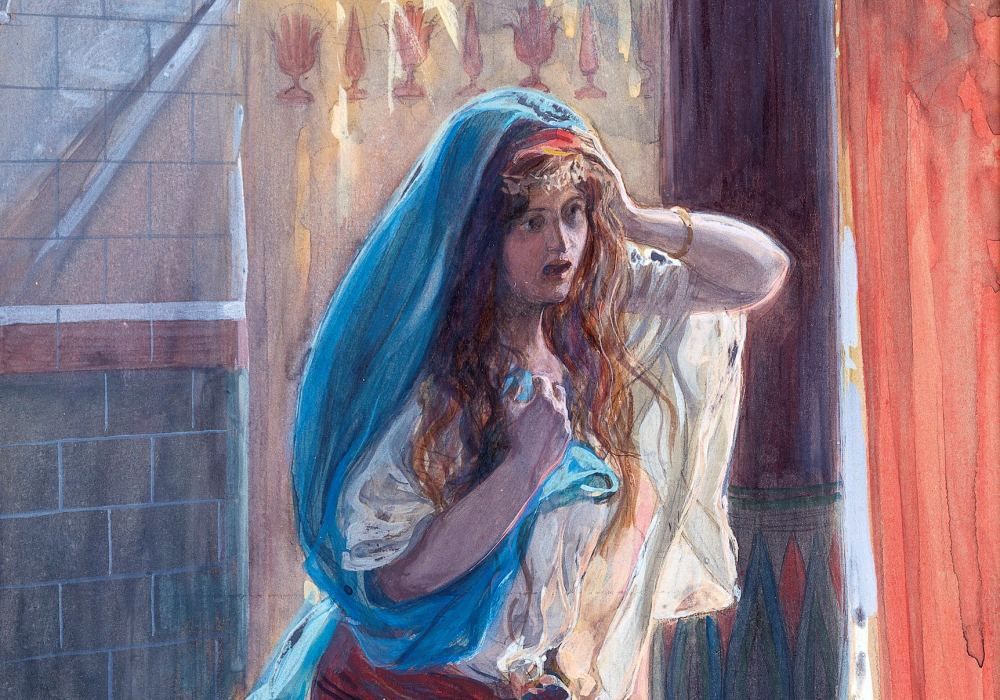
Desolation of Tamar (detail), James Tissot, ca. 1896-1902. The Jewish Museum
Three women called Tamar appear in the Bible. The name, meaning “Date-Palm,” is given in the hope that a daughter will grow up graceful and sweet.[1] The first Tamar cleverly secures her place in Judah’s lineage by outwitting her callous father-in-law (Gen 38). The other “two” Tamars are found in the turbulent narratives surrounding King David and his sons.
David’s Daughter
The story of the second Tamar, David’s daughter, opens on the ominous note that her half-brother Amnon, David’s eldest son by Ahinoam, is lusting after her:
שׁמואל ב יג:א וַיְהִי אַחֲרֵי כֵן וּלְאַבְשָׁלוֹם בֶּן דָּוִד אָחוֹת יָפָה וּשְׁמָהּ תָּמָר וַיֶּאֱהָבֶהָ אַמְנוֹן בֶּן דָּוִד.
2 Sam 13:1 This happened sometime afterward: Absalom son of David had a beautiful sister named Tamar, and Amnon son of David lusted after her.[2]
Amnon feigns illness and persuades David to send Tamar to care for him. She prepares food for him, but he refuses to eat until all but Tamar have left the room.[3] Once he is alone with her, Amnon urges her into his bed:
שׁמואל ב יג:יא וַתַּגֵּשׁ אֵלָיו לֶאֱכֹל וַיַּחֲזֶק בָּהּ וַיֹּאמֶר לָהּ בּוֹאִי שִׁכְבִי עִמִּי אֲחוֹתִי.
2 Sam 13:11 But when she served them to him, he caught hold of her and said to her, “Come lie with me, sister.”
Tamar begs him not to force himself on her, suggesting instead that he ask the king to arrange their marriage:
שׁמואל ב יג:יג וַאֲנִי אָנָה אוֹלִיךְ אֶת חֶרְפָּתִי וְאַתָּה תִּהְיֶה כְּאַחַד הַנְּבָלִים בְּיִשְׂרָאֵל וְעַתָּה דַּבֶּר נָא אֶל הַמֶּלֶךְ כִּי לֹא יִמְנָעֵנִי מִמֶּךָּ.
2 Sam 13:13 “Me? Where will I carry my shame? And you, you will be like any of the scoundrels in Israel! Please, speak to the king; he will not keep me from you.”
This is a shocking proposal, given that unions between siblings were forbidden everywhere in the ancient Near East other than the ruling lines of Egypt, Elam, and a few tribes in Anatolia.[4] Does Tamar really imagine that Amnon is foolish enough to believe such a marriage possible? In any case, he rejects her suggestion:
שׁמואל ב יג:יד וְלֹא אָבָה לִשְׁמֹעַ בְּקוֹלָהּ וַיֶּחֱזַק מִמֶּנָּה וַיְעַנֶּהָ וַיִּשְׁכַּב אֹתָהּ.
2 Sam 13:14 But he would not hear her plea; he overpowered her and lay with her by force.
After this outrage, Amnon cruelly orders her cast out:
שׁמואל ב יג:יז וַיִּקְרָא אֶת־נַעֲרוֹ מְשָׁרְתוֹ וַיֹּאמֶר שִׁלְחוּ נָא אֶת זֹאת מֵעָלַי הַחוּצָה וּנְעֹל הַדֶּלֶת אַחֲרֶיהָ.
2 Sam 13:17 He summoned his attendant and said, “Get her out of my presence, and bar the door behind her.”
Shamed and with her future in ruin, Tamar ends her days in the home of her full-brother, Absalom.
Absalom’s Daughter
The third Tamar appears years after this tragic episode, in a passage describing Absalom’s children—three unnamed sons, about whom we learn nothing, and a beautiful daughter named Tamar:
שׁמואל ב יד:כז וַיִּוָּלְדוּ לְאַבְשָׁלוֹם שְׁלוֹשָׁה בָנִים וּבַת אַחַת וּשְׁמָהּ תָּמָר הִיא הָיְתָה אִשָּׁה יְפַת מַרְאֶה.
2 Sam 14:27 Three sons were born to Absalom, and one daughter, and her name was Tamar—she was a beautiful woman.
The formula שְׁמָהּ X, “her name was X,” occurs about ten times in the Bible, introducing women who are either featured in subsequent narrative or assigned a number of children.[5] In this case, however, except for the praise of her beauty, this Tamar has no story attached to her.[6] The narrative simply shifts to Absalom’s failed rebellion against his father (2 Sam 14:28–18:18).
Scholars frequently interpret the naming of Absalom’s daughter as a tribute to his cherished and wronged sister.[7] While plausible, it is uncommon in the Bible for immediate family members to share the same name, though Absalom does name another daughter, Maacah, after his mother (2 Sam 3:3; 1 Kings 15:2).
One Tamar in Absalom’s Home
It is more likely that the seemingly gratuitous and undeveloped reference to Tamar in this passage is vestigial,[8] a remnant from a fuller exposition that once followed on it: the story of the rape of Tamar, in which Tamar was Absalom’s daughter rather than sister.[9] Once we realize that the two princesses refer to a single figure, Tamar’s entreaties to deflect Amnon’s assault become more cogent and Absalom’s motivation for revenge more coherent. Here, then, is a hypothetical retelling of this sordid tale in its “original” context.
Absalom, second in line to David’s throne, stands as a paragon of royal splendor—handsome beyond compare:
שׁמואל ב יד:כה וּכְאַבְשָׁלוֹם לֹא הָיָה אִישׁ־יָפֶה בְּכָל יִשְׂרָאֵל לְהַלֵּל מְאֹד מִכַּף רַגְלוֹ וְעַד קָדְקֳדוֹ לֹא הָיָה בוֹ מוּם.
2 Sam 14:25 No one in all Israel was so admired for his beauty as Absalom; from the sole of his foot to the crown of his head he was without blemish.
When we first encounter him, Absalom is married, with three sons and a daughter named Tamar (v. 27). As a beautiful princess and David’s granddaughter, Tamar is a prime candidate for a prestigious marriage alliance, whether tribal or national.[10] Until such a match is arranged, she resides in the palace, and is distinguished by a garment (as was Joseph, Gen 37:3) that proclaims her special status:
שׁמואל ב יג:יח וְעָלֶיהָ כְּתֹנֶת פַּסִּים כִּי כֵן תִּלְבַּשְׁןָ בְנוֹת הַמֶּלֶךְ הַבְּתוּלֹת מְעִילִים....
2 Sam 13:18 She was wearing an ornamented tunic, for maiden princesses were customarily dressed in such garments....[11]
Amnon, her uncle and the heir apparent, becomes fixated on her. He could have sought her hand in marriage—uncle-niece marriages are never prohibited in the Bible[12]—though marrying the daughter of a potential rival for the throne could carry political risks. Instead, Amnon’s cunning cousin Jonadab devises a scheme to bring his “sister Tamar” to him:
שׁמואל ב יג:ה וַיֹּאמֶר לוֹ יְהוֹנָדָב שְׁכַב עַל מִשְׁכָּבְךָ וְהִתְחָל וּבָא אָבִיךָ לִרְאוֹתֶךָ וְאָמַרְתָּ אֵלָיו תָּבֹא נָא תָמָר אֲחוֹתִי וְתַבְרֵנִי לֶחֶם וְעָשְׂתָה לְעֵינַי אֶת הַבִּרְיָה לְמַעַן אֲשֶׁר אֶרְאֶה וְאָכַלְתִּי מִיָּדָהּ.
2 Sam 13:5 Jonadab said to him, “Lie down in your bed and pretend you are sick. When your father comes to see you, say to him, ‘Let my sister Tamar come and give me something to eat. Let her prepare the food in front of me, so that I may look on, and let her serve it to me.’”
The repeated references to “sister” and “brother”—almost 20 times in the narrative—do not necessarily refer to biological siblings: these terms were conventional among close kin and even suitors.[13] At the same time, the cumulative effect of this surfeit of familial references highlights that the royal family is about to become dysfunctional.
Summoned to Amnon’s bedchamber under the pretense of caring for his feigned illness, Tamar’s innocent moves in preparing healing food for her uncle—kneading, shaping and baking—only fuel his erotic desire. Raised to obey, she approaches to feed Amnon even when he has dismissed his servants. Ignoring her pleas, Amnon rapes her. Perhaps troubled by guilt, Amnon soon switches from lust to revulsion and wants Tamar out of his sight:
שׁמואל ב יג:טו וַיִּשְׂנָאֶהָ אַמְנוֹן שִׂנְאָה גְּדוֹלָה מְאֹד כִּי גְדוֹלָה הַשִּׂנְאָה אֲשֶׁר שְׂנֵאָהּ מֵאַהֲבָה אֲשֶׁר אֲהֵבָהּ וַיֹּאמֶר לָהּ אַמְנוֹן קוּמִי לֵכִי.
2 Sam 13:15 Then Amnon felt a very great loathing for her; indeed, his loathing for her was greater than the lust he had felt for her. And Amnon said to her, “Get out!”
Tamar tries to preserve her dignity:
שׁמואל ב יג:טז וַתֹּאמֶר לוֹ אַל אוֹדֹת הָרָעָה הַגְּדוֹלָה הַזֹּאת מֵאַחֶרֶת אֲשֶׁר עָשִׂיתָ עִמִּי לְשַׁלְּחֵנִי וְלֹא אָבָה לִשְׁמֹעַ לָהּ.
2 Sam 13:16 She pleaded with him, “Please don’t commit this wrong; to send me away would be even worse than the first wrong you committed against me.” But he would not listen to her.
Had she remained in Amnon’s household—as wife or even as concubine—the offense might have been resolved, for even after such violence, marriage was considered an appropriate remedy (Exod 22:15; Deut 22:28–29). Yet Amnon compounds his crime by heartlessly casting her out. He may have expected Tamar to bear her shame in silence, as so many violated women have done, both then and now. Doubly victimized, however, Tamar goes public, making her outrage both visible and audible:
שׁמואל ב יג:יט וַתִּקַּח תָּמָר אֵפֶר עַל רֹאשָׁהּ וּכְתֹנֶת הַפַּסִּים אֲשֶׁר עָלֶיהָ קָרָעָה וַתָּשֶׂם יָדָהּ עַל רֹאשָׁהּ וַתֵּלֶךְ הָלוֹךְ וְזָעָקָה.
2 Sam 13:19 Tamar put dust on her head and tore the ornamented tunic she was wearing; she put her hand on her head and walked away, screaming loudly as she went.
She also leaves the palace, returning to her father Absalom’s house:
שׁמואל ב יג:כ וַיֹּאמֶר אֵלֶיהָ אַבְשָׁלוֹם אָחִיהָ הַאֲמִינוֹן אָחִיךְ הָיָה עִמָּךְ וְעַתָּה אֲחוֹתִי הַחֲרִישִׁי אָחִיךְ הוּא אַל תָּשִׁיתִי אֶת לִבֵּךְ לַדָּבָר הַזֶּה וַתֵּשֶׁב תָּמָר וְשֹׁמֵמָה בֵּית אַבְשָׁלוֹם אָחִיהָ.
2 Sam 13:20 Her brother Absalom said to her, “Was it your brother Amnon who did this to you? For the present, sister, keep quiet about it; he is your brother. Don’t brood over the matter.” And Tamar remained in her brother Absalom’s house, forlorn.[14]
As a result of Amnon’s assault, Tamar must live her life beyond the palace, in utter humiliation if not also isolation. But by moving into her father’s home instead of returning to the palace, she brings the scandal into the open—her “disgrace” now becomes her father Absalom’s as well.
David fails either to punish Amnon or to compel his marriage to Tamar, and this drives Absalom to plot revenge:
שׁמואל ב יג:כא וְהַמֶּלֶךְ דָּוִד שָׁמַע אֵת כָּל הַדְּבָרִים הָאֵלֶּה וַיִּחַר לוֹ מְאֹד. יג:כב וְלֹא דִבֶּר אַבְשָׁלוֹם עִם אַמְנוֹן לְמֵרָע וְעַד טוֹב כִּי שָׂנֵא אַבְשָׁלוֹם אֶת אַמְנוֹן עַל דְּבַר אֲשֶׁר עִנָּה אֵת תָּמָר אֲחֹתוֹ.
2 Sam 13:21 When King David heard about all this, he was greatly upset. 13:22 Absalom didn’t utter a word to Amnon, good or bad; but Absalom hated Amnon because he had violated his sister Tamar.
It takes two years for Absalom to arrange Amnon’s murder (vv. 28–29), and several more before he challenges David for the throne (chs. 15–18). For Absalom, his father’s moral compass had become so compromised that he would let a reprehensible crime go unpunished, and his judgment so clouded that he would forgive fratricide. Ironically, this act makes the murderer, Absalom, heir to the throne.
Signaling David’s Fall
The passage describing Absalom as a paragon originally served as prologue to a sequence of Absalom tales: the rape of his daughter, the patiently plotted murder of Amnon, an exile in Geshur (all in ch. 13), the return to court, a king tolerating fratricide (ch. 14), and finally a failed coup against his father (chs. 15–18).
In the received biblical text, however, in addition to the introduction of Tamar as Absalom’s sister (2 Sam 13:1), two other verses unmistakably also identify her as his sister, not his daughter. First, when Amnon explains his distress to Jonadab, he emphasizes the sibling relationship:
שׁמואל ב יג:ד וַיֹּאמֶר לוֹ מַדּוּעַ אַתָּה כָּכָה דַּל בֶּן הַמֶּלֶךְ בַּבֹּקֶר בַּבֹּקֶר הֲלוֹא תַּגִּיד לִי וַיֹּאמֶר לוֹ אַמְנוֹן אֶת תָּמָר אֲחוֹת אַבְשָׁלֹם אָחִי אֲנִי אֹהֵב.
2 Sam 13:4 He asked him, “Why are you so dejected, O prince, morning after morning? Tell me!” Amnon replied, “I am obsessed with Tamar, the sister of my brother Absalom!”
The sibling relationship is reaffirmed at the end of the narrative:
שׁמואל ב יג:כב וְלֹא דִבֶּר אַבְשָׁלוֹם עִם אַמְנוֹן לְמֵרָע וְעַד טוֹב כִּי שָׂנֵא אַבְשָׁלוֹם אֶת אַמְנוֹן עַל דְּבַר אֲשֶׁר עִנָּה אֵת תָּמָר אֲחֹתוֹ.
2 Sam 13:22 Absalom didn’t utter a word to Amnon, good or bad; but Absalom hated Amnon because he had violated his sister Tamar.
These passages suggest that the frequent brother-sister references between Amnon and Tamar in the story misled a later tradent: Two relatives in David’s family—an uncle and his niece—came to be explicitly cited as siblings.
Still, this faulty conversion allows us to draw an unexpected insight: By portraying the crime as one against David’s daughter (Amnon and Absalom’s sister) rather than his granddaughter (Absalom’s daughter), the narrator has relied on a hallmark of Hebrew biographical style: a single dramatic event signals a reversal in the fortunes of a once-successful figure.[15]
In this case, the transfer in Tamar’s identity starkly exposes the rot at the heart of the royal family. Her rape as well as her father’s revenge set off a cascade of calamities for David: mental and physical decline, rebellions, plagues, tribal unrest, and the murder of Adonijah, once a likely heir to David’s throne—all ominous moments in the unraveling of David’s kingship.[16]
TheTorah.com is a 501(c)(3) nonprofit organization.
We rely on the support of readers like you. Please support us.
Published
December 17, 2025
|
Last Updated
September 5, 2026
Previous in the Series
Next in the Series
Before you continue...
Thank you to all our readers who offered their year-end support.
Please help TheTorah.com get off to a strong start in 2025.
Footnotes


Prof. Jack M. Sasson was the Mary Jane Werthan Professor (Emeritus) of Judaic and Biblical Studies at Vanderbilt University as well as Kenan Professor (Emeritus) of Religious Studies at the University of North Carolina. He holds a Ph.D. in Mediterranean Studies from Brandeis University. Sasson’s publications include commentaries on the biblical books of Ruth (1979), Jonah (1991), Judges 1–12 (2014), and Judges 13–21 (2025). Among his assyriological contributions is From the Mari Archives: An Anthology of Old Babylonian Letters (Eisenbrauns, 2015).
Essays on Related Topics: