


 Edit article
Series
Deuteronomy or the Priestly Text: Which Is the Later Torah Source?


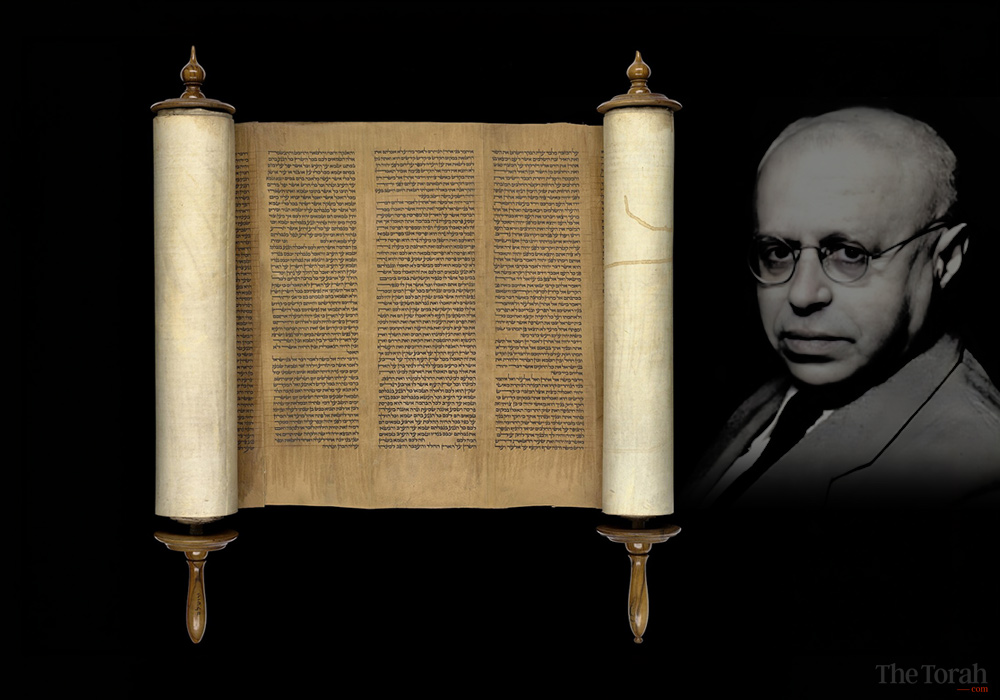
Yehezkel Kaufmann alongside a Torah scroll. Wikimedia adapted
Concomitant with the emergence of the Documentary Hypothesis[1]—the theory that the Torah was composed by combining four documents: J (Yahwist), E (Elohist), D (Deuteronomist), and P (Priestly)—biblical scholars debated the order and time periods in which the documents were authored.
For a long time, scholars assumed that the Priestly text was the oldest document, upon which others were layered, since it was a continuous narrative from the creation of the world to Israel’s presence in the Transjordan, and contains the Torah’s genealogies and many of its laws.[2] The big change came with the Graf-Wellhausen Hypothesis—named for Karl Graf and Julius Wellhausen[3]—which argued that the Priestly text is actually the latest of the documents and dates P to the Second Temple period.
The dating of the Priestly texts, with its vast array of laws about cultic matters, to the latest period, came together with a portrayal of biblical religion as having deteriorated into legalism, akin to the Christian portrayal of Judaism as a Pharisaic/legalistic religion without a soul. This antinomian perspective made it quite difficult for Jewish scholars to adopt the Documentary Hypothesis, which they felt to be tainted by antisemitism.[4]
Kaufmann Challenges the Graf-Wellhausen Hypothesis
Enter Yehezkel Kaufmann (1889–1963), a Russian-Jewish scholar, with a doctorate in Philosophy from the University of Bern. Kaufmann moved to Mandatory Palestine in 1928, and spent much of his later years teaching and writing on biblical Israel.[5] In his magnum opus תולדות האמונה הישראלית מימי קדם עד סוף בית שני [The Religion of Israel: From Its Beginnings to the Babylonian Exile], Kaufmann argued, among other things, for the antiquity of the Priestly Torah,[6] not as the first Pentateuchal source, but as a product of the First Temple period, predating Deuteronomy.
Kaufmann’s arguments were welcomed by those who felt that they could not entertain the Documentary Hypothesis in any way as long as the Graf-Wellhausen hypothesis remained regnant.[7] Over the decades since Kaufmann published his argument, several important scholars built on his dating of P before D.[8]
Both Wellhausen and Kaufmann remain influential in many respects, as noted by Aly Elrefaei in his 2016 monograph, Wellhausen and Kaufmann:
Although advances in knowledge in the field of biblical studies since Wellhausen and Kaufmann’s day have challenged much of their thinking, scholarship today still builds on the foundations laid by them.[9]
The Priestly Text Does Not Know of Centralization: Kaufmann
Wellhausen had several key arguments or pillars for his claim of P as the latest source, one of which was cult centralization. One of the major features of the Deuteronomic Law Collection is the requirement that all sacrifices be offered in the central Temple in the place that YHWH will choose, generally understood as a reference to Jerusalem.[10] In fact, beginning with Wilhelm M.L. de Wette (1780–1849), scholars have long connected the Deuteronomic laws with Josiah’s reform, and the Torah found in the Temple with the core of Deuteronomy.
After the promulgation of Deuteronomy, tolerance of high places and ubiquitous cultic activity would have been inconceivable. And yet, in Kaufmann’s estimation, P seems oblivious to this requirement, and its laws do not prohibit worship at high places (bamot). If true, this would be a strong indication that P is not aware of D and likely predates it. But is this indeed the case? In other words, is P really oblivious to centralization and working with the assumption that Israelites will be offering sacrifices at multiple sites?[11]
P’s “Sanctuaries”
Kaufmann points to a Priestly verse in the curses towards the end of Leviticus that ostensibly expresses positive approval of multiple shrines:
ויקרא כו:לא וְנָתַתִּי אֶת עָרֵיכֶם חׇרְבָּה וַהֲשִׁמּוֹתִי אֶת מִקְדְּשֵׁיכֶם וְלֹא אָרִיחַ בְּרֵיחַ נִיחֹחֲכֶם.
Lev 26:31 I will lay your cities in ruin and make your sanctuaries desolate, and I will not savor your pleasing odors.
In the Samaritan Pentateuch, the word appears as מקדשכם “your temple” in the singular, though this could be an ideological correction to avoid the implication that Israel had multiple temples. In any case, the Masoretes have been kind to Kaufmann inasmuch as they supplied P with additional temples by vocalizing the consonantal lemma מקדשי as a plural (my temples). As Kaufmann puts it, referring to this verse:
[T]he multiplicity of sanctuaries is taken for granted… there are many temples in the land at which pleasing odors are offered … Significantly enough, the post-Deuteronomic parallel to this passage in Ezek 6 omits “temples.”
And yet the book of Jeremiah, which postdates Deuteronomy, also uses the term:
ירמיה נא:נא בֹּשְׁנוּ כִּי שָׁמַעְנוּ חֶרְפָּה כִּסְּתָה כְלִמָּה פָּנֵינוּ כִּי בָּאוּ זָרִים עַל מִקְדְּשֵׁי בֵּית יְ־הֹוָה.
Jer 51:51 We were shamed, we heard taunts; Humiliation covered our faces, when aliens entered the temples (=sacred areas) of YHWH’s House.[12]
Scholars draw attention to an analogous use of the plural form for a dwelling or temple in Ugaritic as a reference to one structure. But even granting Kaufmann his plural understanding of מקדשיכם, it seems ironic that his best, nay his sole, positive proof of multiple shrines in P comes from a threat of their destruction. If anything, the context implies that the passage is wishing these temples good riddance, along with the other problematic worship places:
ויקרא כו:ל הִשְׁמַדְתִּי אֶת בָּמֹתֵיכֶם וְהִכְרַתִּי אֶת חַמָּנֵיכֶם וְנָתַתִּי אֶת פִּגְרֵיכֶם עַל פִּגְרֵי גִּלּוּלֵיכֶם וְגָעֲלָה נַפְשִׁי אֶתְכֶם.
Lev 26:30 I will destroy your cult places and cut down your incense stands, and I will heap your carcasses upon your lifeless fetishes. I will spurn you.
Notably, Kaufmann’s verse follows immediately after this one.
Pilgrimage Festivals
Before cult centralization, pilgrimage festivals were to local shrines, where the Israelites could offer sacrifices and appear before YHWH:
שמות כג:יד שָׁלֹשׁ רְגָלִים תָּחֹג לִי בַּשָּׁנָה. כג:טו אֶת חַג הַמַּצּוֹת תִּשְׁמֹר... לְמוֹעֵד חֹדֶשׁ הָאָבִיב כִּי בוֹ יָצָאתָ מִמִּצְרָיִם וְלֹא יֵרָאוּ פָנַי רֵיקָם. כג:טז וְחַג הַקָּצִיר בִּכּוּרֵי מַעֲשֶׂיךָ אֲשֶׁר תִּזְרַע בַּשָּׂדֶה וְחַג הָאָסִף בְּצֵאת הַשָּׁנָה בְּאׇסְפְּךָ אֶת מַעֲשֶׂיךָ מִן הַשָּׂדֶה. כג:יז שָׁלֹשׁ פְּעָמִים בַּשָּׁנָה יֵרָאֶה כׇּל זְכוּרְךָ אֶל פְּנֵי הָאָדֹן יְ־הֹוָה.
Exod 23:14 Three pilgrimages (or “times”) a year you shall hold a festival for Me: 23:15 You shall observe the Feast of Matzot… at the set time in the month of Abib, for in it you went forth from Egypt; and none shall appear before Me empty-handed; 23:16 and the Feast of the Harvest, of the first fruits of your work, of what you sow in the field; and the Feast of Ingathering at the end of the year, when you gather in the results of your work from the field. 23:17 Three times a year all your males shall appear before the Sovereign, YHWH.
Deuteronomy, in repeating this law, clarifies that the reference is to the one and only sanctuary in the chosen place:
דברים טז:טו שָׁלוֹשׁ פְּעָמִים בַּשָּׁנָה יֵרָאֶה כׇל זְכוּרְךָ אֶת פְּנֵי יְ־הֹוָה אֱלֹהֶיךָ בַּמָּקוֹם אֲשֶׁר יִבְחָר בְּחַג הַמַּצּוֹת וּבְחַג הַשָּׁבֻעוֹת וּבְחַג הַסֻּכּוֹת וְלֹא יֵרָאֶה אֶת פְּנֵי יְ־הֹוָה רֵיקָם.
Deut 16:15 Three times a year—on the Feast of Unleavened Bread, on the Feast of Weeks, and on the Feast of Booths—all your males shall appear before the YHWH your God in the place that [God] will choose. They shall not appear before YHWH empty-handed
P, however, never refers to the festivals as pilgrimage festivals per se, or specifies a place Israelites must go. Thus, Kaufmann argues:
P’s festival laws unmistakably betray a pre-Deuteronomic viewpoint… That P fails to take notice of the pilgrimage is understandable from a pre-Deuteronomic viewpoint; the pilgrimage law is just another of several laws found elsewhere but omitted by P. Not that P intended to abrogate the custom of appearing before YHWH; it merely overlooked what to it was not a fundamental aspect of festival rites. Is such an oversight credible after the Deuteronomic reform had made the pilgrimage an indispensable part of proper celebration?[13]
While P certainly does eschew the terminology of “seeing YHWH’s face,” perhaps for theological reasons,[14] P was not lost for alternative ways of ordaining or at least approving pilgrimage. It is generally agreed that ח.ג.ג “celebrate” and its cognate noun חג “festival” denote going on pilgrimage and pilgrim-feast respectively.[15] P applies these terms to Passover or the Feast of Matzot and to the Feast of Sukkoth,[16] but, at least in theory, this could be referring to local sites, as Kaufmann assumes.[17]
Does Silence Signal Ignorance or Agreement?
Admittedly, cult centralization is nowhere promulgated in so many words by P; and nowhere does P ban high places explicitly, but what is the implication of this reticence? Could it not just as well be indicative of a time when centralization and the concomitant decline of high places had become axiomatic? Kaufmann argues that such an interpretation is an impossibility given how P treats other examples where its laws and the Deuteronomic laws are in agreement, such as the exclusive right of priests to offer sacrifice, the expulsion of lepers from the camp, idolatry, Molekh offerings, and adultery. But this claim is imprecise, since P only repeats laws from D when it has something substantial to add:
Priests—P limits priesthood to one clan called Aaronides, and it harps on the monopoly of the Aaronides and the concomitant disqualification of all non-Aaronides with enough emphasis and repetitiveness to create the impression that it is polemicizing with Deuteronomy, which recognizes the entire tribe of Levi as legitimate priests.[18]
Lepers—P’s management of people with skin ailments diverges from earlier paradigms:[19] skin ailments now require priestly inspection, those suffering from them are banned from the camp until the priest determines they are no longer afflicted,[20] and their ultimate purging is tied to lustrations and sacrifices (Lev 14:9-32). All this suggests that P’s elaborate treatment of leprosy was probably unprecedented, and this is what it was advocating.
Molekh—While Deuteronomy condemns child sacrifice unequivocally (Deut 12:31, 18:10), it never refers to Molekh,[21] a word which appears five times in Leviticus;[22] the urgency of these texts suggests that the allure of Molekh was a contemporary problem, posing a real and palpable danger.
Idolatry and Adultery—These two persistent stumbling blocks would have been threats of which P needed to warn its readers.
None of these are comparable to centralization because, if P postdated D as is widely maintained, there would have been no competing sanctuaries or high places enticing P’s original readership away from the central shrine.
Where Is the Sacrificial Offering Consumed?
Deuteronomy states that sacrifices must be consumed only at the chosen site where (and when) the Temple will be built:
דברים יב:יז לֹא תוּכַל לֶאֱכֹל בִּשְׁעָרֶיךָ מַעְשַׂר דְּגָנְךָ וְתִירֹשְׁךָ וְיִצְהָרֶךָ וּבְכֹרֹת בְּקָרְךָ וְצֹאנֶךָ וְכׇל נְדָרֶיךָ אֲשֶׁר תִּדֹּר וְנִדְבֹתֶיךָ וּתְרוּמַת יָדֶךָ. יב:יח כִּי אִם לִפְנֵי יְ־הֹוָה אֱלֹהֶיךָ תֹּאכְלֶנּוּ בַּמָּקוֹם אֲשֶׁר יִבְחַר יְ־הֹוָה אֱלֹהֶיךָ בּוֹ...
Deut 12:17 You may not partake in your settlements of the tithes of your new grain or wine or oil, or of the firstlings of your herds and flocks, or of any of the votive offerings that you vow, or of your freewill offerings, or of your contributions. 12:18 These you must consume before YHWH your God in the place that YHWH your God will choose…
The Priestly legislation, Kaufmann argues, is unaware of this rule, and says nothing about where sacrifices should be consumed:
In all the detailed laws of P ... there is no reference to the place where the sacrificial meal is to be eaten … P thus fails to take notice of a basic consequence of the centralization law, that sacred meals may be partaken of only at the chosen site.[23]
Of course, Kaufmann concedes that P does state that priests must consume their share of a shelamim offering in a pure place, as Moses tells Aaron and his sons explicitly:
ויקרא י:יג וַאֲכַלְתֶּם אֹתָהּ בְּמָקוֹם קָדוֹשׁ כִּי חׇקְךָ וְחׇק בָּנֶיךָ הִוא מֵאִשֵּׁי יְ־הֹוָה כִּי כֵן צֻוֵּיתִי. י:יד וְאֵת חֲזֵה הַתְּנוּפָה וְאֵת שׁוֹק הַתְּרוּמָה תֹּאכְלוּ בְּמָקוֹם טָהוֹר אַתָּה וּבָנֶיךָ וּבְנֹתֶיךָ אִתָּךְ כִּי חׇקְךָ וְחׇק בָּנֶיךָ נִתְּנוּ מִזִּבְחֵי שַׁלְמֵי בְּנֵי יִשְׂרָאֵל.
Lev 10:13 You shall eat it in the sacred precinct, since it is your due, and that of your sons, from YHWH’s offerings by fire; for so I have been commanded. 10:14 But the breast of elevation offering and the thigh of gift offering you, and your sons and daughters with you, may eat in any pure place, for they have been assigned as a due to you and your sons from the Israelites’ sacrifices of well-being.
While P never says explicitly where lay people must consume their share of the shelamim, one can deduce that P assumes that the rule for priests and lay people is the same in this respect, from the passage describing where Levites may consume their tithe:
במדבר יח:לא וַאֲכַלְתֶּם אֹתוֹ בְּכׇל מָקוֹם אַתֶּם וּבֵיתְכֶם כִּי שָׂכָר הוּא לָכֶם חֵלֶף עֲבֹדַתְכֶם בְּאֹהֶל מוֹעֵד.
Num 18:31 You may eat it anywhere, you and your households, since it is your wages for your service in the Tent of Meeting.
The word “anywhere,” Sifrei Numbers (§122) interprets, quite logically, as אפילו בקבר “even in a cemetery,” a site of maximum impurity by P’s reckoning. Notably, P articulates no parallel relaxation for sacrificial meals, and the pretext to sanction its license for Levites to enjoy the tithe anywhere implies that without such a pretext, we would have assumed that Levites were required to eat their tithes in a holy place. And yet, P rates the holiness of sacrificial offerings to be greater than that of tithes; were sacrificial meat being enjoyed “anywhere” as a matter of course, the laxity vis-à-vis tithes would scarcely merit explanation.
Required Purity
The Priestly laws also require anyone who consumes the shelamim to be in a state of ritual purity:
ויקרא ז:כ וְהַנֶּפֶשׁ אֲשֶׁר תֹּאכַל בָּשָׂר מִזֶּבַח הַשְּׁלָמִים אֲשֶׁר לַי־הֹוָה וְטֻמְאָתוֹ עָלָיו וְנִכְרְתָה הַנֶּפֶשׁ הַהִוא מֵעַמֶּיהָ. ז:כא וְנֶפֶשׁ כִּי תִגַּע בְּכׇל טָמֵא בְּטֻמְאַת אָדָם אוֹ בִּבְהֵמָה טְמֵאָה אוֹ בְּכׇל שֶׁקֶץ טָמֵא וְאָכַל מִבְּשַׂר זֶבַח הַשְּׁלָמִים אֲשֶׁר לַי־הֹוָה וְנִכְרְתָה הַנֶּפֶשׁ הַהִוא מֵעַמֶּיהָ.
Lev 7:20 But the person who, in a state of impurity, eats flesh from YHWH’s sacrifices of well-being—that person shall be cut off from kin. 7:21 When a person touches anything impure, be it human impurity or an impure animal or any impure creature, and eats flesh from YHWH’s sacrifices of well-being—that person shall be cut off from kin.
Having threatened with excision the defiled person who partakes of the meat, it is unlikely that P should care not at all where that same meat is eaten. Instead, P likely omits legislation about where the laity may eat their holy viands, because it is already legislated in D, and P had nothing to add.
To sum up so far: P does not overtly preach centralization, but doesn’t contradict it either, and appears to be assuming it, as we shall see.
One Rightful Sanctuary
The Priestly text speaks of the Tent of Meeting as the only lawful place to slaughter a domesticated animal:
ויקרא יז:ג אִישׁ אִישׁ מִבֵּית יִשְׂרָאֵל אֲשֶׁר יִשְׁחַט שׁוֹר אוֹ כֶשֶׂב אוֹ עֵז בַּמַּחֲנֶה אוֹ אֲשֶׁר יִשְׁחַט מִחוּץ לַמַּחֲנֶה. יז:ד וְאֶל פֶּתַח אֹהֶל מוֹעֵד לֹא הֱבִיאוֹ לְהַקְרִיב קׇרְבָּן לַי־הֹוָה לִפְנֵי מִשְׁכַּן יְהֹוָה דָּם יֵחָשֵׁב לָאִישׁ הַהוּא דָּם שָׁפָךְ וְנִכְרַת הָאִישׁ הַהוּא מִקֶּרֶב עַמּוֹ.
Lev 17:3 Regarding anyone of the house of Israel who slaughters an ox or sheep or goat in the camp, or does so outside the camp, 17:4 and does not bring it to the entrance of the Tent of Meeting to present it as an offering to YHWH, before YHWH’s Tabernacle: bloodguilt shall be imputed to them; having shed blood, that person shall be cut off from among their people.
The rule is explained as necessary to avoid sacrifices in the open:
ויקרא יז:ה לְמַעַן אֲשֶׁר יָבִיאוּ בְּנֵי יִשְׂרָאֵל אֶת זִבְחֵיהֶם אֲשֶׁר הֵם זֹבְחִים עַל פְּנֵי הַשָּׂדֶה וֶהֱבִיאֻם לַי־הֹוָה אֶל פֶּתַח אֹהֶל מוֹעֵד אֶל הַכֹּהֵן וְזָבְחוּ זִבְחֵי שְׁלָמִים לַי־הֹוָה אוֹתָם.
Lev 17:5 This is in order that the Israelites may bring the sacrifices that they have been making in the open—that they may bring them before YHWH, to the priest, at the entrance of the Tent of Meeting, and offer them as sacrifices of well-being to YHWH.
If this exclusive and unrivaled wilderness sanctuary of Leviticus is read as prototypical for sanctuaries, requiring them all to be exclusive and unrivaled, then P’s endorsement of centralization is a done deal. Kaufmann, however, argues that the wilderness sanctuary was exceptional:
Since P contains no law concerning a new kind of central sanctuary to succeed the tent when Israel comes into its land, it evidently regards the single desert sanctuary as no more than a phenomenon of the past.[24] For the present and future the multiplicity of sanctuaries is taken for granted.[25]
Kaufmann can make this argument since he treats the Tabernacle texts as historical memory but even so, it seems counterintuitive to assume that this rule applied only to the years of wilderness wandering. In any event, the passage itself belies such an interpretation as it ends with חֻקַּת עוֹלָם תִּהְיֶה זֹּאת לָהֶם לְדֹרֹתָם “This shall be to them a law for all time, throughout the ages.”[26]
Moreover, the next passage specifies that all offerings must be brought to the Tent of Meeting to be legitimate, and applies this even to sojourners:
ויקרא יז:ח וַאֲלֵהֶם תֹּאמַר אִישׁ אִישׁ מִבֵּית יִשְׂרָאֵל וּמִן הַגֵּר אֲשֶׁר יָגוּר בְּתוֹכָם אֲשֶׁר יַעֲלֶה עֹלָה אוֹ זָבַח. יז:ט וְאֶל פֶּתַח אֹהֶל מוֹעֵד לֹא יְבִיאֶנּוּ לַעֲשׂוֹת אֹתוֹ לַי־הֹוָה וְנִכְרַת הָאִישׁ הַהוּא מֵעַמָּיו.
Lev 17:8 Say to them further: Regarding anyone of the house of Israel, or of the strangers who reside among them, who offers a burnt offering or a sacrifice and does not bring it to the entrance of the Tent of Meeting to offer it to YHWH: that person shall be cut off from their people.
The phenomenon of sojourners reads naturally as a reference to non-Israelites living in Israel, highlighting again that this rule is not wilderness specific, but relevant for all time.
The Second Pesach for Those Far Away
Further evidence that P assumes that a central offering site is a given for posterity is in its law about the second or makeup paschal offering, which contains the provision that it applies also to those who are far away from a/the sacred site:
במדבר ט:י ...אִישׁ אִישׁ כִּי יִהְיֶה טָמֵא לָנֶפֶשׁ אוֹ בְדֶרֶךְ רְחֹקָהׄ לָכֶם אוֹ לְדֹרֹתֵיכֶם וְעָשָׂה פֶסַח לַי־הֹוָה. ט:יא בַּחֹדֶשׁ הַשֵּׁנִי בְּאַרְבָּעָה עָשָׂר יוֹם בֵּין הָעַרְבַּיִם יַעֲשׂוּ אֹתוֹ...
Num 9:10 …Regarding anyone—whether you or your posterity—who is defiled by a corpse or is on a long journey and would offer a paschal sacrifice to YHWH: 9:11 They shall offer it in the second month, on the fourteenth day of the month, at twilight…
Prior to Deuteronomy’s centralization, cultic shrines proliferated so that geographical distance is unlikely to have prevented people reaching a shrine in timely fashion. Moreover, the contingency contemplated in Numbers makes little sense in the wilderness, since how could anyone be far from the camp? Moreover, again the passage specifically notes that this applies לְדֹרֹתֵיכֶם “for posterity.”
Permanent Offerings
Another example that contradicts Kaufmann’s theory that P “evidently regards the single desert sanctuary as no more than a phenomenon of the past” is the way the Priestly text describes the tamid “perpetual” offering:
שמות כט:מב עֹלַת תָּמִיד לְדֹרֹתֵיכֶם פֶּתַח אֹהֶל מוֹעֵד לִפְנֵי יְהֹוָה אֲשֶׁר אִוָּעֵד לָכֶם שָׁמָּה לְדַבֵּר אֵלֶיךָ שָׁם.
Exod 29:42 A perpetual burnt-offering throughout your generations at the entrance of the Tent of Meeting.
Similarly, P describes the required tithe to the Levites as חֵלֶף עֲבֹדָתָם אֲשֶׁר הֵם עֹבְדִים אֶת עֲבֹדַת אֹהֶל מוֹעֵד “wages for their service in the Tent of Meeting” (Num 18:21, 31). In Kaufmann’s thinking, how is that possible? No agriculture was practiced in the wilderness.[27]
Therefore, it seems clear that the Priestly text takes for granted that once established on the land, the Israelites will have a central worship site as they did in the wilderness. Thus, rather than being unaware of D’s program of centralization, it seems that P simply takes it for granted.
TheTorah.com is a 501(c)(3) nonprofit organization.
We rely on the support of readers like you. Please support us.
Published
July 16, 2026
|
Last Updated
October 8, 2026
Previous in the Series
Next in the Series
Before you continue...
Thank you to all our readers who offered their year-end support.
Please help TheTorah.com get off to a strong start in 2025.
Footnotes


Dr. Hacham Isaac S. D. Sassoon is a rabbi and educator and a founding member of the ITJ. He studied under his father, Rabbi Solomon Sassoon, Hacham Yosef Doury, Gateshead Yeshivah and received his semicha from the Chief Rabbinate of Israel. He holds a Ph.D. in literature from the University of Lisbon. He is the author of The Status of Women in Jewish Tradition (Cambridge University Press 2011), a commentary on chumash An Adventure in Torah: A Fresh Look Through a Traditional Lens (KTAV 2023), and most recently the co-editor with Rabbi Steven H. Golden of the Siddur 'Alats Libbi (Ktav 2023).
Essays on Related Topics: