


 Edit article
Series
Fertility and Birth: God Is in Control, But Humans Have Agency


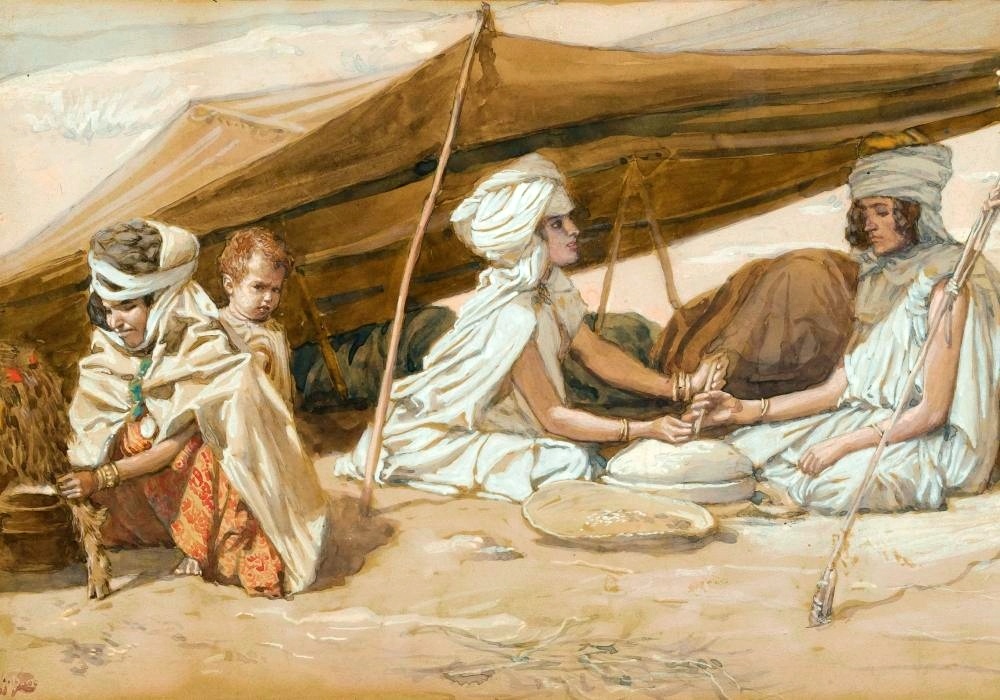
Rachel and Leah, James Tissot, c. 1896-1902. The Jewish Museum
The Bible explicitly states that YHWH determines conception; YHWH either opens the womb, as with Leah:
בראשית כט:כא וַיַּרְא יְ־הֹוָה כִּי־שְׂנוּאָה לֵאָה וַיִּפְתַּח אֶת־רַחְמָהּ.
Gen 29:31 When YHWH saw that Leah was unloved, he opened her womb.[1]
Or closes it, as with Hannah:
שמואל א א:ה ...וַיְ־הֹוָה סָגַר רַחְמָהּ.
1 Sam 1:5 ...YHWH had closed her womb.[2]
God also chooses the mothers who will bear sons who grow up to be the forefathers of the people. For example, despite the fact that he already has a child with her maidservant, Hagar, God informs Abraham that Sarah’s son, Isaac, will bear the covenant:
בראשית יז:יט וַיֹּאמֶר אֱלֹהִים אֲבָל שָׂרָה אִשְׁתְּךָ יֹלֶדֶת לְךָ בֵּן וְקָרָאתָ אֶת־שְׁמוֹ יִצְחָק וַהֲקִמֹתִי אֶת־בְּרִיתִי אִתּוֹ לִבְרִית עוֹלָם לְזַרְעוֹ אַחֲרָיו.
Gen 17:19 God said, “No, but your wife Sarah shall bear you a son, and you shall name him Isaac. I will establish my covenant with him as an everlasting covenant for his offspring after him.”[3]
Yet despite this claim, women throughout the ages have utilized a variety of practices, including folk medicine, ritual, and magic, to exercise agency over their reproductive lives.
Fertility
Rachel, frustrated that her sister Leah has already had four children while she has had none, demands that Jacob give her children or she will die. Jacob denies responsibility, giving voice to the biblical idea that God is the ultimate arbiter of fertility:
בראשית ל:ב וַיִּחַר־אַף יַעֲקֹב בְּרָחֵל וַיֹּאמֶר הֲתַחַת אֱלֹהִים אָנֹכִי אֲשֶׁר־מָנַע מִמֵּךְ פְּרִי־בָטֶן.
Gen 30:2 Jacob became very angry with Rachel and said, “Am I in the place of God, who has withheld from you the fruit of the womb?”
When Leah’s son Reuben brings his mother mandrakes he has collected in the field, Rachel, believing the mandrakes are the answer to her infertility challenges,[4] immediately attempts to gain some for herself:
בראשית ל:יד ...וַתֹּאמֶר רָחֵל אֶל־לֵאָה תְּנִי־נָא לִי מִדּוּדָאֵי בְּנֵךְ. ל:טו וַתֹּאמֶר לָהּ הַמְעַט קַחְתֵּךְ אֶת־אִישִׁי וְלָקַחַת גַּם אֶת־דּוּדָאֵי בְּנִי וַתֹּאמֶר רָחֵל לָכֵן יִשְׁכַּב עִמָּךְ הַלַּיְלָה תַּחַת דּוּדָאֵי בְנֵךְ.
Gen 30:14 ...Then Rachel said to Leah, “Please give me some of your son’s mandrakes.” 30:15 But she said to her, “Is it a small matter that you have taken away my husband? Would you take away my son’s mandrakes also?” Rachel said, “Then he may lie with you tonight for your son’s mandrakes.”
Rachel is so desperate that she is even willing to trade away a night with Jacob for some of the mandrakes, and Leah agrees to her proposition.
The Power of Mandrakes
In the context of describing fertile fruits, the Song of Songs describes how “the mandrakes give forth fragrance”:
שיר השירים ז:יג נַשְׁכִּימָה לַכְּרָמִים נִרְאֶה אִם־פָּרְחָה הַגֶּפֶן פִּתַּח הַסְּמָדַר הֵנֵצוּ הָרִמּוֹנִים שָׁם אֶתֵּן אֶת־דֹּדַי לָךְ. ז:יד הַדּוּדָאִים נָתְנוּ־רֵיחַ וְעַל־פְּתָחֵינוּ כׇּל־מְגָדִים חֲדָשִׁים גַּם־יְשָׁנִים דּוֹדִי צָפַנְתִּי לָךְ.
Song 7:13 Let us go out early to the vineyards; let us see whether the vines have budded, whether the grape blossoms have opened and the pomegranates are in bloom. There I will give my love to you. 7:14 The mandrakes give forth fragrance, and over our doors are all choice fruits, new as well as old, which I have kept, my beloved, for you.
Mandrakes are also associated with aphrodisiacal properties, reflected in the description by Theophrastus, an ancient Greek philosopher and botanist (371–287 B.C.E.), of how they are harvested:
Enquiry into Plants 9:8 Thus it is said that one should draw three circles round mandrake with a sword and cut it with one's face towards the west; and at the cutting of the second piece one should dance around the plant and say as many things as possible about sexual pleasures.[5]
Nachmanides (1194-1270 C.E.) explicitly refers to the belief in the aphrodisiac power of the mandrake:
רמב"ן בראשית ל:טו וְיֵשׁ אוֹמְרִים הַדּוּדָאִים עֲשָׂבִים יוֹסִיפוּ הַתַּאֲוָה לַנָּשִׁים, נִגְזַר מִלְּשׁוֹן "עֵת דּוֹדִים" (יחזקאל טז ח), וְלָכֵן אָמְרָה לֵאָה הַמְעַט קַחְתֵּךְ אֶת אִישִׁי כַּאֲשֶׁר הִזְכַּרְתִּי.
Nahmanides Gen 30:15 Some say that mandrakes (duda’im) are plants that increase the desire [of a man] for women, the word being derived from the expression, “the time of love (dodim)” (Ezek 16:8).[6] Therefore Leah said, “Is it a small matter that you have taken away my husband?” (Gen 30:15) as I have mentioned.[7]
Unfortunately, though Rachel procures the mandrakes, it is Leah who conceives (Gen 30:17). It is possible that this is a “subtle Israelite rebuke” of Rachel’s practice of folk medicine, reinforcing the idea that fertility is in God’s hands alone.[8] Yet just a few verses later, Rachel does conceive:
בראשית ל:כב וַיִּזְכֹּר אֱלֹהִים אֶת־רָחֵל וַיִּשְׁמַע אֵלֶיהָ אֱלֹהִים וַיִּפְתַּח אֶת־רַחְמָהּ.
Gen 30:22 Then God remembered Rachel, and God heeded her and opened her womb.
The timing of this suggests that Rachel’s action, which she herself believes will be efficacious, is a necessary step for her conception. As Jewish Studies scholar Rachel Havrelock observes, “In the stories of barren women, the occasion of divine remembrance signals that their actions have led to acknowledgment and the reversal of their situation.”[9]
Fertility Practices in the ANE
In the ancient Near East, humans frequently utilized magico-medical approaches to address health concerns, including fertility and birth. Mesopotamian recipes, amulets, and incantations preserve many examples of ways which women could attempt to make themselves fertile and conceive.
One medical text found at Assur (in modern day Iraq) provides instruction for creating an amulet:
BAM 3 250 Silver, gold, iron, copper, in total 21 (amulet) stones, in order that a woman who is not pregnant becomes pregnant: you string it on a linen yarn, you put it on her neck.[10]
In addition to amulets, plants were also used to assist in conception. One Babylonian manual directs a woman “who does not bear” to consume the imhur-lim plant (probably in a potion made with beer), and one “who does not get pregnant” to either consume the ankinutu (lotus) plant or the seed of the haluppu tree (BAM 4 380).[11] The use of these plants for fertility blurs the line between medicine and magic.
Aramaic Incantation Bowls
Over 2,000 inscribed clay bowls dating from the 5th–7th centuries C.E. have been unearthed in former Sasanian[12] Babylonia (now modern-day Iraq) when Jews, Christians, and polytheists inhabited the land together.[13] These bowls contain incantations, many of them in Jewish Babylonian Aramaic, which ask for healing, help, or protection for individuals, and invoke various supernatural forces like demons and angels, as well as YHWH.[14]
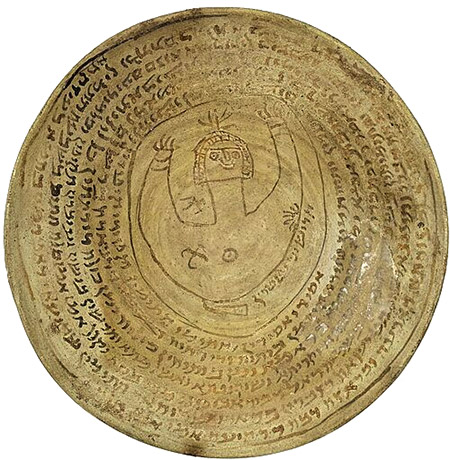
A number of these bowls ask for reproductive aid on behalf of women. One bowl, now at the Museu da Farmacia in Lisbon, Portugal, requests:
אסותא מן שמיא תיהוי לה למיהרנהיד...דתיתנון יין חיין בימעי מיהרנהיד בת אחת.
May there be healing from heaven for Mihranahid…that you will place the wine of life in the bowels of Mihranahid, daughter of Aḥat.[15]
Mihranahid seems to be suffering from amenorrhea, or the lack of a menstrual period, which is causing her infertility. The incantation ends by quoting Genesis (30:22):
אמן אמן סלה ויזכר אלהים את רחל וישמע אליה אלהים ויפתח את רחמה ויזכר.
Amen, Amen, Selah. “And God remembered Rachel, and God listened to her, and He opened her womb.” And He remembered.[16]
While we do not know exactly how they were used, we can reasonably deduce that Mihranahid would have visited a scribe to request an incantation bowl for her particular ailment.[17] Most bowls were found buried in the earth in the corners or thresholds of domestic spaces; it is likely that the bowl she commissioned would have been buried either by the woman or someone on her behalf.
The language on the bowls, including several nonsense syllables, suggests that there was an important oral component to their efficacy.[18] Perhaps the scribe recited the incantation for the woman, or perhaps she or a member of her household recited it themselves before burying it in their home. In using an incantation bowl which invoked Rachel, women like Mihranahid appealed to their biblical ancestors in the hopes that the power of their narratives would bring them fertility and fortune in their own time.
Birth
We know very little about the process of birth from biblical texts. Most often, births are announced as a matter of course:
בראשית ד:כה וַיֵּדַע אָדָם עוֹד אֶת־אִשְׁתּוֹ וַתֵּלֶד בֵּן...
Gen 4:25 Adam knew his wife again and she bore a son...[19]
Sometimes birth is generically referred to by “when the time of her delivery came” (Gen 38:27)[20] or “Rachel was in childbirth, and she had hard labor” (Gen 35:16).[21]
However, in other biblical texts, God is explicitly credited for delivering babies from the womb:
ישעיהו סו:ט הַאֲנִי אַשְׁבִּיר וְלֹא אוֹלִיד יֹאמַר יְ־הֹוָה אִם־אֲנִי הַמּוֹלִיד וְעָצַרְתִּי אָמַר אֱלֹהָיִךְ.
Isa 66:9 Shall I open the womb and not deliver? says YHWH; shall I, the one who delivers, shut the womb? says your God.
תהלים כב:ט כִּי־אַתָּה גֹחִי מִבָּטֶן מַבְטִיחִי עַל־שְׁדֵי אִמִּי.
Ps 22:9 Yet it was you who took me from the womb; you kept me safe on my mother’s breast.[22]
The Role of Midwives
At the same time, human beings, typically women, partnered with God in a sense to facilitate a healthy and safe birth. We know that midwives (מְיַלְּדֹת, meyaldot) attended births as support professionals. For example, with Tamar:
בראשית לח:כח וַיְהִי בְלִדְתָּהּ וַיִּתֶּן־יָד וַתִּקַּח הַמְיַלֶּדֶת וַתִּקְשֹׁר עַל־יָדוֹ שָׁנִי לֵאמֹר זֶה יָצָא רִאשֹׁנָה.
Gen 38:28 While [Tamar] was in labor, one [neonate] put out a hand; and the midwife took and bound on his hand a crimson thread, saying, “This one came out first.”
Midwives played a role not only in assisting the laboring mother but in announcing the sex of the newborn (as in Gen 35:17, when the midwife declares to Rachel while she is laboring, “Do not be afraid; for now you will have another son!”), and birth order (in the case of twins), recognizing their place in the family.[23]
Ancient “Birth Stools”
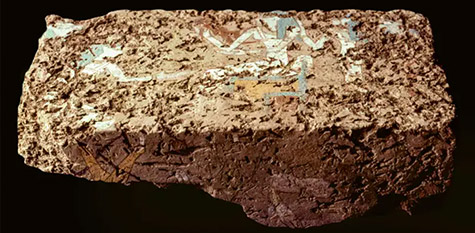
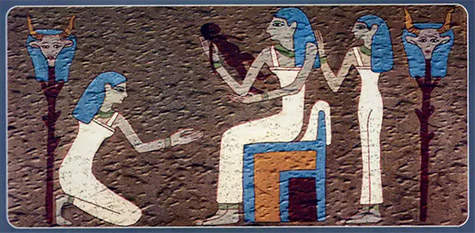
As in other ancient Near Eastern cultures, midwives likely used a variety of tools of their trade. Exodus (1:16) explicitly mentions the אָבְנָיִם (’obnayim) on which the Hebrew women deliver; this is most accurately translated as “birth stool.”[24] This was likely a stool on which the birthing woman squatted or stood on in order to utilize gravity to aid her in the delivery of the baby.
An image of how a birthstool may have been used is depicted on this second-millennium B.C.E. brick from the Egyptian Middle Kingdom.
Postpartum Care
After the birth of a child, midwives performed rituals to care for the newborn and newly postpartum mother. Ezekiel drops a tantalizing tidbit of information about postpartum care in describing the mistreatment of the personified Jerusalem on the day of her birth. YHWH says to Jerusalem:
יחזקאל טז:ד וּמוֹלְדוֹתַיִךְ בְּיוֹם הוּלֶּדֶת אוֹתָךְ לֹא־כׇרַּת שׇׁרֵּךְ וּבְמַיִם לֹא־רֻחַצְתְּ לְמִשְׁעִי וְהׇמְלֵחַ לֹא הֻמְלַחַתְּ וְהׇחְתֵּל לֹא חֻתָּלְתְּ.
Ezek 16:4 As for your birth, on the day you were born your navel cord was not cut, nor were you washed with water to cleanse you, nor rubbed with salt, nor wrapped in cloths.[25]
The Placenta: Healing Properties
The Talmud describes the placenta[26] as having medicinal properties and it is given special ritual treatment after it is birthed:
תלמוד בבלי שבת קכט: וְטוֹמְנִין הַשִּׁלְיָא כְּדֵי שֶׁיֵּחַם הַוָּלָד. אָמַר רַבָּן שִׁמְעוֹן בֶּן גַּמְלִיאֵל: בְּנוֹת מְלָכִים — טוֹמְנוֹת בִּסְפָלִים שֶׁל שֶׁמֶן, בְּנוֹת עֲשִׁירִים — בִּסְפוֹגִים שֶׁל צֶמֶר, בְּנוֹת עֲנִיִּים בְּמוֹכִין.
b. Shabbat 129b And one may cover the placenta so as to warm the newborn.[27] Rabban Shimon ben Gamliel said: Daughters of kings cover the placenta in mugs of oil; the daughters of the wealthy [do so] in combed wool; the daughters of the poor in soft rags.[28]
Abaye (late 3rd–early 4th century C.E.) describes a practice of “Em” (possibly his nurse or foster mother)[29] which reports her instructions on how to use the placenta for medical care of a newborn baby:
תלמוד בבלי שבת קלד. וְאָמַר אַבָּיֵי, אֲמַרָה לִי אֵם: הַאי יָנוֹקָא דְּלָא מְעַוֵּי — לַיְתוֹ סִילְתָּא דְאִימֵּיהּ וְלִישְׁרְקֵיהּ עִילָּוֵיהּ, וּמְעַוֵּי. וְאָמַר אַבָּיֵי, אֲמַרָה לִי אֵם: הַאי יָנוֹקָא דְּקַטִּין, לַיְיתוֹ לְסִילְתָּא דְאִימֵּיהּ, וְלִישְׁרְקֵיהּ עִילָּוֵיהּ מִקּוּטְנָא לְאוּלְמָא. וְאִי אַלִּים — מֵאוּלְמָא לְקוּטְנָא.
b. Shabbat 134a Abaye said: Em told me: If a baby is not breathing, let them [presumably the midwives] bring his mother’s placenta and place [the placenta] on him, and the baby will breathe. And Abaye said that Em told me: If a baby is too small, let them bring his mother’s placenta and rub the baby with it from the narrow end to the wide end [of the placenta]. And if the baby is strong (i.e., too large), [let them rub the baby] from the wide end [of the placenta] to the narrow end.[30]
Placing the placenta on the baby or rubbing the baby with the placenta likely stimulates the baby to cry, which helps clear any amniotic fluid from their mouth or respiratory tract, opens their lungs, and allows them to breathe on their own.[31] Abaye’s nurse, or foster mother, thus represents the possibility of women’s specialized knowledge intervening in rabbinic discourse and even being treated as authoritative.
Cutting the Cord
Midrash Tanchuma (mid-1st millennium C.E.) indicates that it is typically the mother who cuts the umbilical cord after the baby is born:
מדרש תנחומא, תזריע ה אָמַר לוֹ רַבִּי עֲקִיבָא, וְלָמָּה שׁוֹרְרוֹ יוֹצֵא עִמּוֹ וְהוּא תָּלוּי בְּבִטְנוֹ וְאִמּוֹ חוֹתְכוֹ וּמַה שֶׁאַתָּה אוֹמֵר לָמָּה אֵינוֹ יוֹצֵא מָהוּל, לְפִי שֶׁלֹּא נָתַן הַקָּדוֹשׁ בָּרוּךְ הוּא אֶת הַמִּצְוֹת לְיִשְׂרָאֵל אֶלָּא לְצָרֵף אוֹתָם בָּהֶם. וּלְכָךְ אָמַר דָּוִד, אִמְרַת ה' צְרוּפָה (תהלים יח, לא).
Midrash Tanchuma, Tazria 5 R. Aqiva said to him, “And why does his umbilical cord come out with him? Does not it hang on his belly, and his mother cuts it? So why do you say, he does not come out circumcised? Because the Holy One, blessed be He, only gave Israel the commandments in order to purify them. Therefore, David said [in II Sam. 22:31 = Ps. 18:31], ‘the word of the Lord is pure.’”[32]
Cutting the umbilical cord is a skill that requires some knowledge or training. One cannot simply cut the cord or the baby will hemorrhage; the cord must be clamped first and then cut.
In addition, there are different practices surrounding when to cut the cord. The cord may be cut immediately, or one may wait until it stops “pulsing” and turns limp and white, signaling that blood has stopped flowing through it. The benefit of waiting until the cord stops pulsing is that the blood returns to the baby’s body, potentially increasing their iron levels.[33] Though the birthing mother may perform this task herself, at some point, she was presumably taught by a midwife or other knowledgeable professional, or learned how to do so from watching others.
Divine Will and Human Agency
While the ultimate fate of a mother or child was undoubtedly considered to lie in the divine hands, both textual and material Jewish tradition allow for a reasonable amount of human agency in swaying that fate in one direction or another. The tradition leaves room for ritual behaviors and technologies, most often practiced and utilized by women, that could help ensure fertility and a safe and healthy birth.
TheTorah.com is a 501(c)(3) nonprofit organization.
We rely on the support of readers like you. Please support us.
Published
March 20, 2026
|
Last Updated
October 3, 2026
Previous in the Series
Next in the Series
Before you continue...
Thank you to all our readers who offered their year-end support.
Please help TheTorah.com get off to a strong start in 2025.
Footnotes


Dr. Sarah (Sari) E.G. Fein is Visiting Assistant Professor in Jewish Studies at Smith College in Northampton, MA. She received her PhD in Near Eastern and Judaic Studies from Brandeis University and an MTS in Hebrew Bible from Harvard Divinity School. Her book Conceiving Motherhood: Biblical Mothers and the Birth of the Jewish People is forthcoming from Oxford University Press.
Essays on Related Topics: