


 Edit article
Series
It’s Tradition! How Deuteronomy’s Reform Permits Non-Sacrificial Slaughter


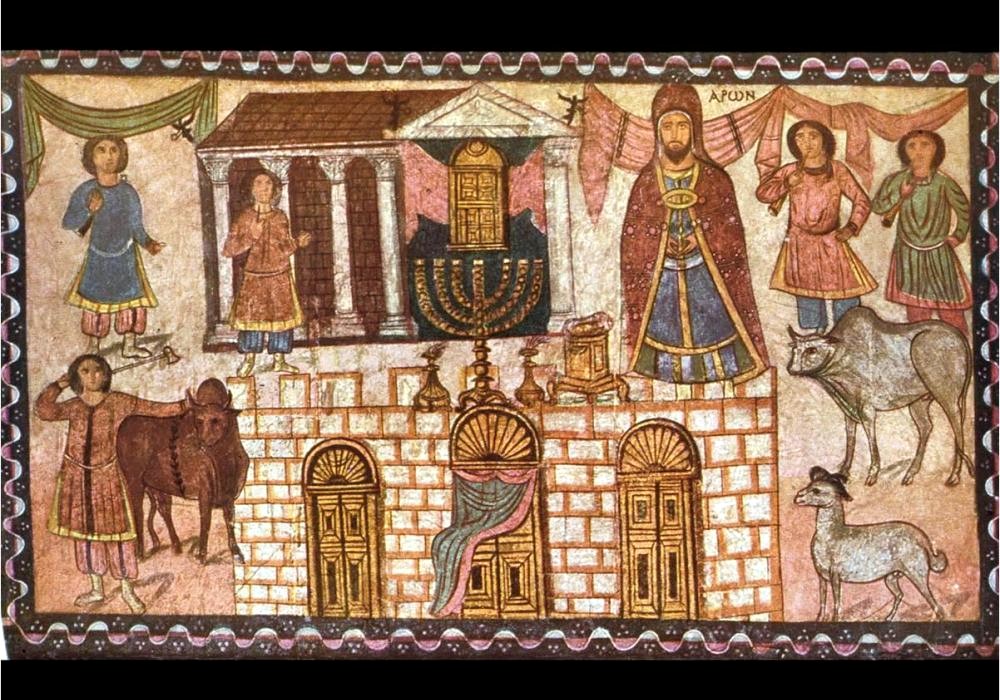
Painting of the Temple of Herod in the Dura-Europos synagogue. 3rd c. Wikimedia
The worship of YHWH at multiple altar sites is specifically sanctioned in Exodus’ altar law:
שׁמות כ:כד מִזְבַּח אֲדָמָה תַּעֲשֶׂה לִּי וְזָבַחְתָּ עָלָיו אֶת עֹלֹתֶיךָ וְאֶת שְׁלָמֶיךָ אֶת צֹאנְךָ וְאֶת בְּקָרֶךָ בְּכָל הַמָּקוֹם אֲשֶׁר אַזְכִּיר אֶת שְׁמִי אָבוֹא אֵלֶיךָ וּבֵרַכְתִּיךָ.
Exod 20:24 An earthen altar shall you make for me, and you shall sacrifice upon it your burnt offerings and your whole offerings, your sheep and your cattle. In every place that I proclaim my name I shall come to you and bless you.[1]
By contrast, Deuteronomy prohibits all sacrificial worship at the local altars, restricting legitimate sacrifice to a single, exclusive site, “the place that YHWH shall choose,” which is Deuteronomy’s circumlocution for Jerusalem and its Temple.[2]
דברים יב:ה כִּי אִם אֶל הַמָּקוֹם אֲשֶׁר יִבְחַר יְ־הוָה אֱלֹהֵיכֶם מִכָּל שִׁבְטֵיכֶם לָשׂוּם אֶת שְׁמוֹ שָׁם לְשִׁכְנוֹ תִדְרְשׁוּ וּבָאתָ שָׁמָּה. יב:ו וַהֲבֵאתֶם שָׁמָּה עֹלֹתֵיכֶם וְזִבְחֵיכֶם וְאֵת מַעְשְׂרֹתֵיכֶם וְאֵת תְּרוּמַת יֶדְכֶם וְנִדְרֵיכֶם וְנִדְבֹתֵיכֶם וּבְכֹרֹת בְּקַרְכֶם וְצֹאנְכֶם.
Deut 12:5 But rather seek out only the site that YHWH your God will choose amidst all your tribes as His habitation, to establish His name there. There you are to go, 12:6 and there you are to bring your burnt offerings and other sacrifices, your tithes and contributions, your votive and freewill offerings, and the firstlings of your herds and flocks.[3]
The precedent of the law in Exodus posed a problem for the authors of Deuteronomy. Not only was it attributed to YHWH as the speaker, it also carried the prestige of antiquity, and it likely circulated with the Covenant Collection, a text that would have been part of the curriculum of scribal schools, even if it did not yet have the status of actual public law. In addition, it represented normative practice for the community, as demonstrated in the earliest literary strata of the Pentateuch, as well as the narratives of Joshua through 2 Kings. For example, Abraham sacrifices at Shechem and Beth El, Jacob at Beth El, Samuel at Shiloh and Ramah, and Elijah upon Mount Carmel.[4]
Thus, Exodus’ law could not simply be ignored, dispensed with, or bypassed. Instead, the authors of Deuteronomy used the law itself to justify their new religious insights, even as they departed from precedent. By citing selected key words and phrases (technically: lemmas) and giving them new contexts and meanings, they appropriated its very wording to express their own innovative agenda. We call this technique, found elsewhere in the Bible and in Second Temple literature, “lemmatic citation and reformulation.”[5]
Deuteronomy Reformulates Exodus
Deuteronomy’s centralization law (ch. 12) is conventionally divided into four originally independent laws, each concerned with cultic centralization (vv. 2–7, 8–12, 13–19, 20–28), and a concluding paragraph, concerned with cultic purity (vv. 29–31).[6]
The opening imperative of the earliest section of the chapter (vv. 13–19) curiously does not directly address restricting the common practice: under normal circumstances, sacrificial worship took place at familiar and established local altars or sanctuaries.[7] Instead Deuteronomy erects a rhetorical straw man against a practice that does not exist—promiscuously making sacrifices anywhere the people please:
דברים יב:יג הִשָּׁמֶר לְךָ פֶּן תַּעֲלֶה עֹלֹתֶיךָ בְּכָל מָקוֹם אֲשֶׁר תִּרְאֶה.
Deut 12:13 Take heed lest you offer your burnt offerings in every place that you see.
The authors then shunt the requirements that do concern them into dependent clauses,[8] thus obscuring their importance as the essential points of Deuteronomy’s agenda.
Restricting Sacrificial Slaughter to One Cult Site
First, they restrict sacrifice to a single cult site, using the phrase כִּי אִם, “but rather,” indicating that the purpose is to replace the multiple cult sites:
דברים יב:יד כִּי אִם בַּמָּקוֹם אֲשֶׁר יִבְחַר יְ־הוָה בְּאַחַד שְׁבָטֶיךָ שָׁם תַּעֲלֶה עֹלֹתֶיךָ וְשָׁם תַּעֲשֶׂה כֹּל אֲשֶׁר אָנֹכִי מְצַוֶּךָּ.
Deut 12:14 But rather in the place that YHWH shall choose in one of your tribes—there shall you offer your burnt offerings and there shall you do all that I command you.
This rhetorical strategy camouflages the real point of the exercise: functionally to abrogate Exodus’ affirmation of multiple altar sites as legitimate for sacrifice by instead presenting cultic centralization as a rejection of prohibited cultic practices.
Introducing Secular Animal Slaughter
Second, a new innovation, the institution of secular slaughter at multiple sites, qualifies the previous two commands:
דברים יב:טו רַק בְּכָל אַוַּת נַפְשְׁךָ תִּזְבַּח וְאָכַלְתָּ בָשָׂר כְּבִרְכַּת יְ־הוָה אֱלֹהֶיךָ אֲשֶׁר נָתַן לְךָ בְּכָל שְׁעָרֶיךָ הַטָּמֵא וְהַטָּהוֹר יֹאכְלֶנּוּ כַּצְּבִי וְכָאַיָּל.
Deut 12:15 But whenever you desire you may slaughter and eat meat in all your city-gates, according to the blessing of YHWH your God; the impure and the pure may eat it, as of the gazelle and the hart.
For the first time in the history of Israelite religion a distinction has now been forged between cultic sacrifice (at an altar) and secular slaughter (not at an altar). Prior to Deuteronomy, all slaughter of domestic animals—even for the purposes of food—was a ritual activity necessarily carried out at an altar,[9] with no functional distinction between the sacrifice of sheep and cattle for cultic purposes and the slaughter of the same animals for food.[10]
Ironically, Deuteronomy exploits the absence of this distinction to justify its innovations. In Exodus’ law and elsewhere in the Bible, even in Deuteronomy, the verb זבח always refers to sacrifice at an altar (quoting Exodus again to highlight the original wording):[11]
שׁמות כ:כד מִזְבַּח אֲדָמָה תַּעֲשֶׂה לִּי וְזָבַחְתָּ עָלָיו אֶת עֹלֹתֶיךָ וְאֶת שְׁלָמֶיךָ אֶת צֹאנְךָ וְאֶת בְּקָרֶךָ בְּכָל הַמָּקוֹם אֲשֶׁר אַזְכִּיר אֶת שְׁמִי אָבוֹא אֵלֶיךָ וּבֵרַכְתִּיךָ.
Exod 20:24 An earthen altar shall you make for me, and you shall sacrifice upon it your burnt offerings and your whole offerings, your sheep and your cattle. In every place that I proclaim my name I shall come to you and bless you.
Deuteronomy 12, however, deliberately transforms the conventional meaning of זבח to give it a new meaning, so that it now sanctions secular slaughter: רַק בְּכָל אַוַּת נַפְשְׁךָ תִּזְבַּח וְאָכַלְתָּ בָשָׂר כְּבִרְכַּת יְ־הוָה אֱלֹהֶיךָ, “But whenever you desire you may slaughter and eat meat according to the blessing of YHWH your God” (v. 15; also in v. 21). Consequently, it must also use an alternative expression for cultic sacrifice at the place YHWH will choose: שָׁם תַּעֲלֶה עֹלֹתֶיךָ, “there shall you offer your burnt offerings” (v. 14).[12]
Finally, Exodus’ first-person divine promise of blessing at the local cult sites, וּבֵרַכְתִּיךָ, “and I shall bless you,” is paraphrased by Deuteronomy’s secular slaughter law in the third person construct phrase כְּבִרְכַּת יְ־הוָה, “according to the blessing of YHWH” (12:15). Deuteronomy thus deftly manages both to restrict the divine cultic presence to the central sanctuary (by eliminating local sanctuaries) and to maintain a mediated divine presence in the local, secular sphere: the land and its produce constitute divine gifts.
The radically disruptive nature of that transformation of religious language and routine should not be underestimated. Deuteronomy’s repeated emphasis on the “joy” to be experienced at the central sanctuary might well represent an attempt to provide compensation for the loss of the traditional local cultic sites, where the people would more conventionally have gained easy, joyful access to the deity.[13]
Recasting בְּכָל הַמָּקוֹם, “in every place”
Deuteronomy’s authors also exploit the range of meanings of the very word, מָקוֹם (maqom), “place,” that stands as the focus of attention in these laws. In Hebrew, Phoenician, Aramaic, and Arabic, the word also carries the more technical sense of a “cult site” or “altar,” as Deuteronomy itself makes explicit:[14]
דברים יב:ב אַבֵּד תְּאַבְּדוּן אֶת כָּל הַמְּקֹמוֹת אֲשֶׁר עָבְדוּ שָׁם הַגּוֹיִם אֲשֶׁר אַתֶּם יֹרְשִׁים אֹתָם אֶת אֱלֹהֵיהֶם עַל הֶהָרִים הָרָמִים וְעַל הַגְּבָעוֹת וְתַחַת כָּל עֵץ רַעֲנָן.
Deut 12:2 You must destroy all the sites (meqomot, pl. of maqom) at which the nations you are to dispossess worshiped their gods, whether on lofty mountains and on hills or under any luxuriant tree.[15]
The Deuteronomic authors skillfully break up and recast the syntax of בכל המקום (bekhol hammaqom) in the older Exodus altar law—בְּכָל הַמָּקוֹם אֲשֶׁר אַזְכִּיר אֶת שְׁמִי, “in every place that I proclaim my name…”[16]—to turn the law against itself and propound their own innovations.
The distributive pronoun כל (kol) which, depending on context, means “every” or “all,” is first recast to refer negatively to the prohibited multiple altar sites, which were formerly legitimate for sacrifice:
- בְּכָל מָקוֹם אֲשֶׁר תִּרְאֶה, “in every place that you see” (v. 13) → prohibited random sacrifice at multiple sites
Deuteronomy then joins the preposition בְּ (be), “in,” to the definite noun הַמָּקוֹם (hammaqom), “the place” to designate the chosen site to which all sacrifice must be directed:
- כִּי אִם בַּמָּקוֹם אֲשֶׁר יִבְחַר יְ־הוָה, “But rather in the place that YHWH shall choose” (v. 14) → prescribed cultic centralization at a single site
Next, כל is again recast, this time to refer to the multiple sites for secular slaughter, which activity was previously inconceivable:[17]
- וְאָכַלְתָּ בָשָׂר כְּבִרְכַּת יְ־הוָה אֱלֹהֶיךָ אֲשֶׁר נָתַן לְךָ בְּכָל שְׁעָרֶיךָ, “you may eat meat according to the blessing of YHWH your God in all your city-gates” (v. 15) → permitted secular slaughter at multiple sites
This literary structure is quite sophisticated. It does not propound a simple binary opposition: Do not do X but rather Y. Instead, the structure is tripartite, and the logic is dialectical.[18]
 Balancing and rehabilitating the prohibited action X—sacrifice “in every place”—is the newly permitted action Y—noncultic slaughter in the plural settlements. At the focal point between them stands Deuteronomy’s key requirement of cultic centralization at a single site, for which the authors revamp the terminology of what was prohibited to formulate what they prescribe: “not in every place...but in the place.”
Deuteronomy’s Chiastic Citation of Exodus
Drawing on a literary technique used by ancient scribes, Deuteronomy also chiastically cites Exodus’ altar law, with the original text AB, cited in reverse order B′A′.[19] For example Exodus reads:
שׁמות כ:כד וְזָבַחְתָּ עָלָיו אֶת עֹלֹתֶיךָ...
Exod 20:24 A: You shall sacrifice upon it your burnt offerings...
בְּכָל הַמָּקוֹם אֲשֶׁר אַזְכִּיר אֶת שְׁמִי...
B: in every place where I proclaim My name…
Deuteronomy takes up those two elements in reverse order, with a focus on the site of sacrifice:
דברים יב:יד בַּמָּקוֹם אֲשֶׁר יִבְחַר יְ־הוָה ...
Deut 12:14 B′: in the place that YHWH shall choose…
שָׁם תַּעֲלֶה עֹלֹתֶיךָ...
A′: there you shall offer your burnt offerings…
Deuteronomy thus limits Exodus’s אֲשֶׁר clause “in every place where I proclaim My name,” which refers to multiple cult sites, to now restrictively describe the one central cult cite: “the place that YHWH shall choose.”
New Literary Support for Secular Slaughter
To address the problem that the innovation of local secular slaughter lacked support or precedent in literary history, later Deuteronomic authors use techniques similar to those employed in the previous section (vv. 13–19), breaking up and reformulating a key phrase from Exodus’ altar law: וְזָבַחְתָּ עָלָיו אֶת עֹלֹתֶיךָ וְאֶת שְׁלָמֶיךָ אֶת צֹאנְךָ וְאֶת בְּקָרֶךָ, “you shall sacrifice upon it [an earthen altar] your burnt offerings and your well-being offerings, your sheep and your cattle” (Exod 20:24).[20]
The phrase אֶת צֹאנְךָ וְאֶת בְּקָרֶךָ, “your sheep and your cattle,” stands in apposition to אֶת עֹלֹתֶיךָ וְאֶת שְׁלָמֶיךָ, “your burnt offerings and your well-being offerings.” Thus, “sheep and cattle” specify the possible sacrificial animals for the burnt and whole offerings. Deuteronomy disconnects the two pairs of terms.
Deuteronomy first repurposes, in reverse order, Exodus’ sheep and cattle:
דברים יב:כא כִּי יִרְחַק מִמְּךָ הַמָּקוֹם אֲשֶׁר יִבְחַר יְ־הוָה אֱלֹהֶיךָ לָשׂוּם שְׁמוֹ שָׁם וְזָבַחְתָּ מִבְּקָרְךָ וּמִצֹּאנְךָ אֲשֶׁר נָתַן יְ־הוָה לְךָ כַּאֲשֶׁר צִוִּיתִךָ וְאָכַלְתָּ בִּשְׁעָרֶיךָ בְּכֹל אַוַּת נַפְשֶׁךָ.
Deut 12:21 When the place that YHWH your God shall choose to establish his name is too distant from you, you may slaughter any of your cattle and your sheep, which YHWH has given you, as I have commanded you; you may eat within your settlements whenever you have the desire.
When it subsequently takes up cultic slaughter, Deuteronomy also repurposes Exodus’ mention of עֹלֹתֶיךָ, “burnt offerings”:
דברים יב:כז וְעָשִׂיתָ עֹלֹתֶיךָ הַבָּשָׂר וְהַדָּם עַל מִזְבַּח יְ־הוָה אֱלֹהֶיךָ....
Deut 12:27 You shall offer your burnt offerings, both the flesh and the blood, upon the altar of YHWH your God….
The omission of Exodus’ שְׁלָמֶיךָ, “your well-being offerings,” from Deuteronomy’s law is not surprising: with one exception, the word is never used in Deuteronomy and is not part of its vocabulary.[21]
“Citing” Exodus
Moreover, by asserting that this law is given כַּאֲשֶׁר צִוִּיתִךָ, “as I [YHWH] have commanded you” (v. 21), Deuteronomy presents the new concession of secular slaughter merely as a citation of Exodus’ altar law, when it is actually substantially reinterpreting and in effect abrogating that law.[22] The hermeneutical richness of Deuteronomy is that it should subvert the force of its own innovation by presenting that innovation as a citation of what YHWH originally required at Sinai. Citation thereby becomes pseudocitation: no such law was commanded at Sinai.
Through their transformation of the Exodus law, the authors of Deuteronomy create legal and literary history anew. Not only do they function as the authors of their new legal composition, but they also become sole mediators and arbiters of the authoritative tradition from which they depart and with which they claim consistency.[23]
But Do Not Change the Law!
It is particularly striking that these innovations are followed immediately by the so-called “canon formula” that prohibits any alteration of the given text:[24]
דברים יג:א אֵת כָּל הַדָּבָר אֲשֶׁר אָנֹכִי מְצַוֶּה אֶתְכֶם אֹתוֹ תִשְׁמְרוּ לַעֲשׂוֹת לֹא תֹסֵף עָלָיו וְלֹא תִגְרַע מִמֶּנּוּ.
Deut 13:1 Be careful to observe only that which I enjoin upon you: you shall neither add to it nor diminish it.[25]
The verse functions as a colophon to the systematic reworking of the Exodus altar law in Deuteronomy 12.[26] The sudden importuning of textual fidelity in this context suggests that the text’s Deuteronomistic editors were fully aware of the chapter’s radical transformation of Israelite cultic and legal history.[27] They attempted to camouflage those innovations by feigning a cunning piety with respect to the very authoritative texts that they had reinterpreted and radically transformed to say something entirely new.
Centralization Requires Revising Other Laws
The Deuteronomic proscription of local cultic activity and restriction of cultic action to the central sanctuary required revising essentially the entire apparatus of cultic rituals and institutions that governed local cultic activity: tithes and firstlings, the festival calendar with its pilgrimages to local sanctuaries, and the Passover as an apotropaic blood rite involving a home slaughter.
The authors of Deuteronomy also had to transform some institutions of public life. Judicial procedure, for example, had to be reorganized—because the local sanctuary had played a crucial role in the resolution of ambiguous civil and criminal legal cases.[28]
These revisions provide an important insight into the composition and structure of Deuteronomy’s legal corpus. At key points where cultic centralization conflicts with norms and with texts that presuppose local cultic activity, the authors work systematically to drain the local sphere of any connection with cultic action and establish new procedures.[29] In doing so, the authors of Deuteronomy formulate a distinctive lexicon that distinguishes between action בַּמָּקוֹם, “in the place” and action בְּכָל שְׁעָרֶיךָ,”in all your city-gates”—which is to say, between the central and the local spheres, or between cultic and secular activity.
Deuteronomy Presents Itself As Tradition
Deuteronomy is, on one hand, among the most radically innovative literary units in the Bible, and on the other, among those that most loudly silence the suggestion of innovation. At issue is a problem in legal and religious history. In a culture with a curriculum of prestigious and authoritative texts, how are legal innovation and religious transformation possible? The solution is to disclaim authorship and to deny originality.
Such maneuvers are widely recognized in postbiblical literature. The Temple Scroll (11 QTemple), for example, presents its compilation of sectarian law as the original Sinaitic Torah.[30] Similarly, the Amoraim of the third through the sixth centuries C.E. authorize the Oral Law by claiming a rather ex post facto Sinaitic pedigree for it and by presenting their new legal system as merely the interpretation of older texts.[31]
Employing the technique of lemmatic citation and transformation, Deuteronomy’s authors harness the lexemes of older texts, wherever possible, to formulate their own religious and legal agenda. They never speak in their own belated, seventh-century B.C.E. scribal voice. Instead, they defer to the voice of authoritative antiquity. Looking at the material this way suggests that familiar postbiblical and Second Temple techniques of religious and literary creativity find a sophisticated precedent in Deuteronomy.
TheTorah.com is a 501(c)(3) nonprofit organization.
We rely on the support of readers like you. Please support us.
Published
August 4, 2026
|
Last Updated
September 4, 2026
Previous in the Series
Next in the Series
Before you continue...
Thank you to all our readers who offered their year-end support.
Please help TheTorah.com get off to a strong start in 2025.
Footnotes


Prof. Bernard M. Levinson holds the Berman Family Chair in Jewish Studies and Hebrew Bible at the University of Minnesota, with an affiliated appointment to the Law School. He holds a Ph.D. in Near Eastern and Judaic Studies from Brandeis University. His research focuses on biblical and cuneiform law, intertextuality, and the Bible’s relation to Western intellectual history. Levinson is the author of Deuteronomy and the Hermeneutics of Legal Innovation (1997); “The Right Chorale”: Studies in Biblical Law and Interpretation (2008); Legal Revision and Religious Renewal in Ancient Israel (2009); and A More Perfect Torah: At the Intersection of Philology and Hermeneutics in Deuteronomy and the Temple Scroll (2013). He has published a number of well-received edited volumes, including, most recently, The Betrayal of the Humanities: The University during the Third Reich (2022). The interdisciplinary significance of his work has been recognized with appointments to the Institute for Advanced Study (Princeton), the Wissenschaftskolleg zu Berlin, the National Humanities Center, and the Israel Institute for Advanced Studies, where he co-led a research group on the formation of the Pentateuch. He is an elected member of the American Academy for Jewish Research. For more, see http://levinson.umn.edu/.
Essays on Related Topics: