


 Edit article
Series
Jonah the Anti-Prophet


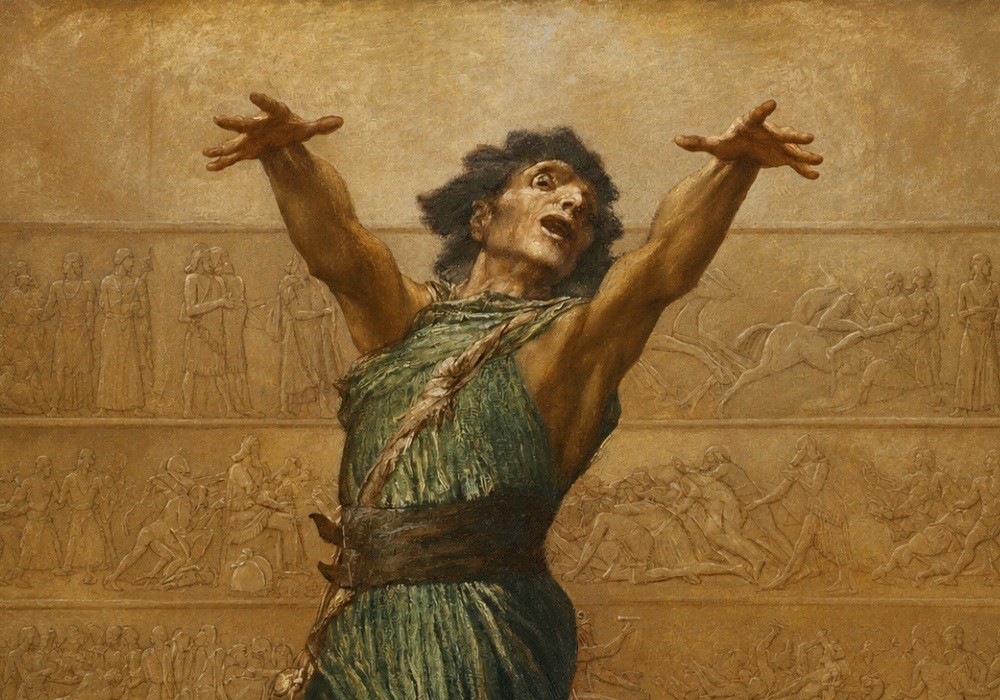
Jonah (adapted), George Frederic Watts, 1894. Tate Britain
Jonah is one of the strangest books in the Bible. A prophet hears YHWH’s word and immediately sails in the opposite direction. Pagan sailors pray more sincerely to God than he does, and even a giant fish heeds God’s command more obediently than the prophet. And when the people of Nineveh repent, Jonah is furious—not because his mission failed, but because it succeeded.[1]
Most scholars place Jonah in the Second Temple period, from the fifth century B.C.E. onward, because of its late linguistic features and its didactic, almost fable-like character.[2] The author takes the name of a northern prophet mentioned in Kings (2 Kgs 14:25), but the figure who appears in this book is not a conventional prophet. He is a literary creation, designed to be read against other biblical characters.
The book of Jonah sets up these comparisons through the use of inner-biblical allusions, in which a later biblical text echoes, reuses or adapts the language, imagery, themes, plot points, and/or theological questions of earlier texts.[3] In doing so, the later text engages with the earlier one by explaining, revising, reinterpreting, or challenging it.
Evidence of such allusions is strongest when it is not based on one word alone, but on clusters of language, theme, structure, and characterization. Criteria to look for include rare words used in both texts, repeated semantic fields, shared narrative patterns, and similar depictions of a character’s actions.[4]
Cain: Fleeing from before YHWH
Cain and Jonah are the only two individuals in the Bible said to leave or flee from before YHWH:
בראשית ד:טזוַיֵּצֵא קַיִן מִלִּפְנֵי יְ־הֹוָה וַיֵּשֶׁב בְּאֶרֶץ נוֹד קִדְמַת עֵדֶן.
Gen 4:16 Cain went out from before YHWH and settled in the land of Nod, east of Eden.[5]
יונה א:גוַיָּקׇם יוֹנָה לִבְרֹחַ תַּרְשִׁישָׁה מִלִּפְנֵי יְ־הֹוָה...
Jonah 1:3 Jonah arose to flee to Tarshish from before YHWH…
Rashi explains Jonah’s flight as an attempt to escape prophecy by leaving the land of Israel to go to a place where the Shekhinah (Divine Presence) does not reveal itself:
רש"י יונה א:ג לִבְרֹחַ תַּרְשִׁישָׁה. יָם שֶׁשְּׁמוֹ תַּרְשִׁישׁ, וְהוּא בְּחוּצָה לָאָרֶץ. אָמַר: אֶבְרַח לִי הַיָּם, שֶׁאֵין הַשְּׁכִינָה שׁוֹרָה בְּחוּץ לָאָרֶץ.
Rashi Jonah 1:3 To flee to Tarshish—to a sea named Tarshish, which is outside the (holy) land. He said, “I will flee to the sea, because the Shekhinah does not dwell outside the land.”[6]
Rashi’s midrash introduces Jonah as the man who runs “from before YHWH.”
Questioning Their Anger
Both stories deal with the theme of human anger. After YHWH accepts Abel’s offering but pays no heed to Cain’s, YHWH asks Cain why he is angry and warns him that he must master his anger, or it will lead to sin:
בראשית ד:ו וַיֹּאמֶר יְ־הֹוָה אֶל קָיִן לָמָּה חָרָה לָךְ וְלָמָּה נָפְלוּ פָנֶיךָ. ד:ז הֲלוֹא אִם תֵּיטִיב שְׂאֵת וְאִם לֹא תֵיטִיב לַפֶּתַח חַטָּאת רֹבֵץ וְאֵלֶיךָ תְּשׁוּקָתוֹ וְאַתָּה תִּמְשׇׁל בּוֹ.
Gen 4:6 YHWH said to Cain, “Why are you angry (לָמָּה חָרָה לָךְ , lamah charah lakh), and why is your face fallen? 4:7 Surely, if you do right (אִם תֵּיטִיב, im tetib), there is uplift. But if you do not do right, sin couches at the door; its urge is toward you, yet you can be its master.”
YHWH asks Jonah almost the same question after Nineveh is spared:
יונה ד:ד וַיֹּאמֶר יְ־הֹוָה הַהֵיטֵב חָרָה לָךְ.
Jonah 4:4 YHWH asked, “Are you so deeply angry (הַהֵיטֵב חָרָה לָךְ, haheteb charah lakh)?”
YHWH asks this question a second time in response to Jonah’s anger over the withered qiqayon plant (v. 9).
The shared roots ח.ר.ה., ch-r-h (“to burn, be angry”) and י.ט.ב., y-t-b (“to do well”) appear together in only these two scenes.[7] In Genesis, YHWH’s question gives Cain one last chance to master his destructive anger. In Jonah, the same verbal cluster exposes a prophet who has allowed that anger to define him.
Abraham Stands, Jonah Flees
Jonah’s running from God contrasts with Abraham. When YHWH prepares to judge Sodom, Abraham עוֹדֶנּוּ עֹמֵד לִפְנֵי יְ-הֹוָה, odenu omed lipne YHWH, “remains standing before YHWH” (Gen 18:22). While Cain and Jonah leave God’s presence, Abraham stays and argues.[8]
Standing Before God
The 5th century midrash Bereshit Rabbah, bothered by Abraham’s posture, counts this verse among the “scribal corrections,”[9] suggesting that the original wording had YHWH standing before Abraham and was reverently reversed:
בראשית רבה מט וְאַבְרָהָם עוֹדֶנּוּ עֹמֵד לִפְנֵי ה', אָמַר רַבִּי סִימוֹן תִּקּוּן סוֹפְרִים הוּא זֶה, שֶׁהַשְּׁכִינָה הָיְתָה מַמְתֶּנֶת לְאַבְרָהָם.
Bereshit Rabbah 49 “And Abraham was still standing before the Lord” – Rabbi Simon said: This is a scribal correction, as it was [actually] the Shekhina that was waiting for Abraham.[10]
The point is not merely grammatical. Abraham dares to stand before God on behalf of the wicked; Jonah refuses to do so.
Abraham Argues Mercy, Jonah Wants Nineveh “Overthrown”
Abraham and Jonah both face wicked cities, but they respond in opposite ways. Abraham pleads for Sodom, asking whether the Judge of all the earth will destroy the righteous with the wicked (Gen 18:23). Jonah delivers his warning to Nineveh, but when the city repents and is spared, he is enraged. Abraham argues for mercy; Jonah resents it.[11]
Mekhilta de-Rabbi Yishmael (ca. 3rd century C.E.) critiques Jonah for prioritizing the honor of “the son”—Israel—rather than the honor of “the Father,” God,[12] because he feared that Nineveh’s repentance would result in an accusation against Israel for its failure to repent:
מכילתא, מַסֶּכְתָּא דְפִסְחָא א אֶלָּא אָמַר יוֹנָה, אֵלֵךְ לִי חוּצָה לָאָרֶץ, מָקוֹם שֶׁאֵין שְׁכִינָה נִגְלֵית, שֶׁהַגּוֹיִם קְרוֹבֵי תְּשׁוּבָה הֵן, שֶׁלֹּא לְחַיֵּב אֶת יִשְׂרָאֵל.
Mekhilta de-Rabbi Yishmael, Pischa 1 But Jonah said: I will go outside the land, a place where the Shekhinah is not revealed, because the gentiles are close to repentance — so that they do not make Israel liable (by contrast).
In this reading, Jonah’s loyalty to his people becomes resistance to God’s mercy toward outsiders.[13]
Sodom vs. Nineveh: Overturning a City
The term ה.פ.ך., h-p-kh, “to overturn” or “overthrow,” links the two city stories. In the destruction of Sodom:
בראשית יט:כה וַיַּהֲפֹךְ אֶת הֶעָרִים הָאֵל וְאֵת כׇּל הַכִּכָּר וְאֵת כׇּל יֹשְׁבֵי הֶעָרִים וְצֶמַח הָאֲדָמָה.
Gen 19:25 “He overthrew those cities and the entire plain, and all the inhabitants of the cities and the vegetation of the ground.”
And the planned destruction of Nineveh:
יונה ג:ד עוֹד אַרְבָּעִים יוֹם וְנִינְוֵה נֶהְפָּכֶת.
Jonah 3:4 “Forty days more, and Nineveh shall be overthrown!”
The phrase “the overthrow of Sodom” became biblical shorthand for total catastrophe, and Radak (R. David Kimhi; 1160-1235) reads Jonah’s warning accordingly:
רד"ק יונה ג:ד ...ובלכתו בעיר היה קורא ואומר עוד ארבעים יום ונינוה נהפכת רוצה לומר כמהפכת סדום ועמורה כי מעשיה היו כמעשיהם.
Radak Jonah 3:4 …And as he walked in the city, he would call out and say: "Forty days more and Nineveh is overturned!" That is, [it is overturned] like the overturning of Sodom and Gomorrah, for its deeds were like theirs.
But Jonah’s word nehpakhet is wonderfully ambiguous. A city can be overturned in destruction; it can also be turned around in repentance.[14] Jonah’s five-word sermon means more than he wants it to mean.
Noah: The Flood Turned Inside Out
Jonah’s allusions to Noah work differently. Jonah is not simply the opposite of Noah. Rather, the flood story provides a vocabulary that Jonah reuses on a smaller and more ironic scale, often involving reversals from the original.
The Offence of Lawlessness
God brings a flood (Gen 6:11) because וַתִּמָּלֵא הָאָרֶץ חָמָס, “the earth is filled with lawlessness (chamas)”. In Jonah, the king declares:
יונה ג:ח וְיָשֻׁבוּ אִישׁ מִדַּרְכּוֹ הָרָעָה וּמִן הֶחָמָס אֲשֶׁר בְּכַפֵּיהֶם.
Jonah 3:8 “Let everyone turn back from their wicked ways and from the lawlessness of their hands.”
Nineveh is spared when its people turn away from lawlessness.
God Sends a Wind
After eradicating all living things from the earth except those on Noah’s ark, God sends a wind to clear the waters:
בראשית ח:א וַיַּעֲבֵר אֱלֹהִים רוּחַ עַל הָאָרֶץ וַיָּשֹׁכּוּ הַמָּיִם.
Gen 8:1 God caused a wind to pass over the earth, and the waters subsided.
In contrast, God uses a wind to stir up the waters in Jonah:
יונה א:דוַיְ־הֹוָה הֵטִיל רוּחַ גְּדוֹלָה אֶל הַיָּם.
Jonah 1:4 YHWH cast a great wind upon the sea.
God’s Regret
At the beginning of the flood story, God regrets making humans:
בראשית ו:ווַיִּנָּחֶם יְ־הֹוָה כִּי עָשָׂה אֶת הָאָדָם בָּאָרֶץ.
Gen 6:6YHWH felt sorry that He had made humankind.
The same verb is used to describe God’s change of heart about the destruction of Nineveh:
יונה ג:יוַיִּנָּחֶם הָאֱלֹהִים עַל הָרָעָה אֲשֶׁר דִּבֶּר לַעֲשׂוֹת לָהֶם.
Jonah 3:10 God felt sorry about the punishment He had planned to bring upon them.
Another ironic reversal is that Noah preserves the lives of his family and all the animals on the ark when God sends the flood, while Jonah endangers the lives of everyone on the ship he is on when God sends a terrible storm. The only way to calm the waters is to throw Jonah off the ship.
Additionally, both stories include a period of forty days (Gen 7:4, 12, 17 and Jonah 3:4)[15] and references to dry land (יַבָּשָׁה, yabashah). After the flood, the survivors return to dry ground, where they will begin again (Gen 8:14). After his time in the belly of the fish, Jonah is spat onto dry ground and must also begin again (Jonah 2:11). The language of cosmic destruction has been turned into the language of reluctant rescue.[16]
Elijah and Jonah: Prophets Who Want to Die
Jonah also has some significant commonalities with Elijah. Both prophets succeed, collapse, flee, sit alone, and ask to die (1 Kings 18-19 and Jonah 3-4). The strongest parallel is their death-wish beneath a solitary plant.
Elijah, exhausted from his flight from Jezebel and feeling hopeless, asks God to take his life:
מלכים א יט:ד ...וַיֵּשֶׁב תַּחַת רֹתֶם (אחת) [אֶחָד] וַיִּשְׁאַל אֶת נַפְשׁוֹ לָמוּת וַיֹּאמֶר רַב עַתָּה יְ־הֹוָה קַח נַפְשִׁי כִּי לֹא טוֹב אָנֹכִי מֵאֲבֹתָי.
1 Kgs 19:4 …he sat under a broom bush and prayed that he might die: “Enough! Now, YHWH, take my life, for I am no better than my fathers.’”
Jonah, aggrieved because God destroyed the plant that had provided him shade in the spot where he sat sulking and is now uncomfortably hot, also asks God to take his life:
יונה ד:ח ... וַיִּשְׁאַל אֶת נַפְשׁוֹ לָמוּת וַיֹּאמֶר טוֹב מוֹתִי מֵחַיָּי.
Jonah 4:8 …he begged for death, saying, “I would rather die than live.”[17]
Once the larger scene is in view, a smaller echo becomes significant. An angel wakes Elijah with קוּם אֱכוֹל, qum ekhol, “Arise and eat” (1 Kgs 19:5), while the ship’s captain wakes Jonah with:
יונה א:ו מַה לְּךָ נִרְדָּם קוּם קְרָא אֶל אֱלֹהֶיךָ.
Jonah 1:6 “How can you sleep so soundly! Arise, call upon your god!”
The word “arise” is common, so this is not proof by itself. But it fits the pattern: both prophets have to be awakened back into a mission they would rather abandon.[18]
Moses: The Attributes of Mercy, Weaponized
After the golden calf episode and again after the incident with the spies, Moses intercedes for Israel by invoking YHWH’s merciful character:
במדבר יד:ח יְ־הֹוָה אֶרֶךְ אַפַּיִם וְרַב חֶסֶד נֹשֵׂא עָוֺן וָפָשַׁע...
Num 14:18 “YHWH, slow to anger and abounding in kindness, forgiving sin and transgression…
Jonah quotes the same language, but he turns it upside down, explaining why he fled in the opposite direction when YHWH told him to go to Nineveh to prophecy:
יונה ד:ב ...כִּי יָדַעְתִּי כִּי אַתָּה אֵל חַנּוּן וְרַחוּם אֶרֶךְ אַפַּיִם וְרַב חֶסֶד וְנִחָם עַל הָרָעָה.
Jonah 4:2 “…for I know that You are a compassionate and gracious God, slow to anger, abounding in kindness, renouncing punishment.”
The reversal is startling. Moses cites God’s compassion to plead for forgiveness. Jonah cites God’s compassion as the reason he ran away. The prophet who should be interceding for Nineveh instead resents the God who has forgiven it.[19]
An Anti-Prophet for the Day of Atonement
The biblical scholar Hyun Chul Paul Kim has argued that Jonah, in its use of inner-biblical allusion, functions as a kind of prophetic parody: an anti-Abraham, anti-Moses, anti-Elijah, anti-Noah, and, by extension, an anti-Cain.[20] These allusions do more than decorate the book. They teach us how to read Jonah.
Jonah flees “from before YHWH” like Cain; he refuses the mercy Abraham seeks; he borrows Elijah’s death-wish, but over a plant; he passes through a Noah-like storm that saves rather than destroys; and he uses Moses’ language of divine mercy as an accusation. Each further allusion to an earlier story makes Jonah look smaller.
This may explain why Jonah is read on Yom Kippur.[21] The book is not only about repentance; it is about our resistance to other people’s repentance. Jonah wants a world in which mercy is carefully bounded, where God’s compassion stays with the deserving and the familiar. The book pushes against that instinct. It asks whether we can stand before God like Abraham, arguing for mercy, or whether we will flee like Cain and Jonah from a God whose compassion is wider than our own.
TheTorah.com is a 501(c)(3) nonprofit organization.
We rely on the support of readers like you. Please support us.
Published
August 25, 2026
|
Last Updated
October 5, 2026
Previous in the Series
Next in the Series
Before you continue...
Thank you to all our readers who offered their year-end support.
Please help TheTorah.com get off to a strong start in 2025.
Footnotes


Prof. Jonathan Rabinowitz, is professor emeritus at Bar Ilan University where he directs the Wellness Research Lab. His lab seeks simple, sustainable changes to everyday life that slow biological aging and reduce the risk of chronic age-related illness.
Essays on Related Topics: