


 Edit article
Series
Moses the Lawgiver? Not For the Rabbis


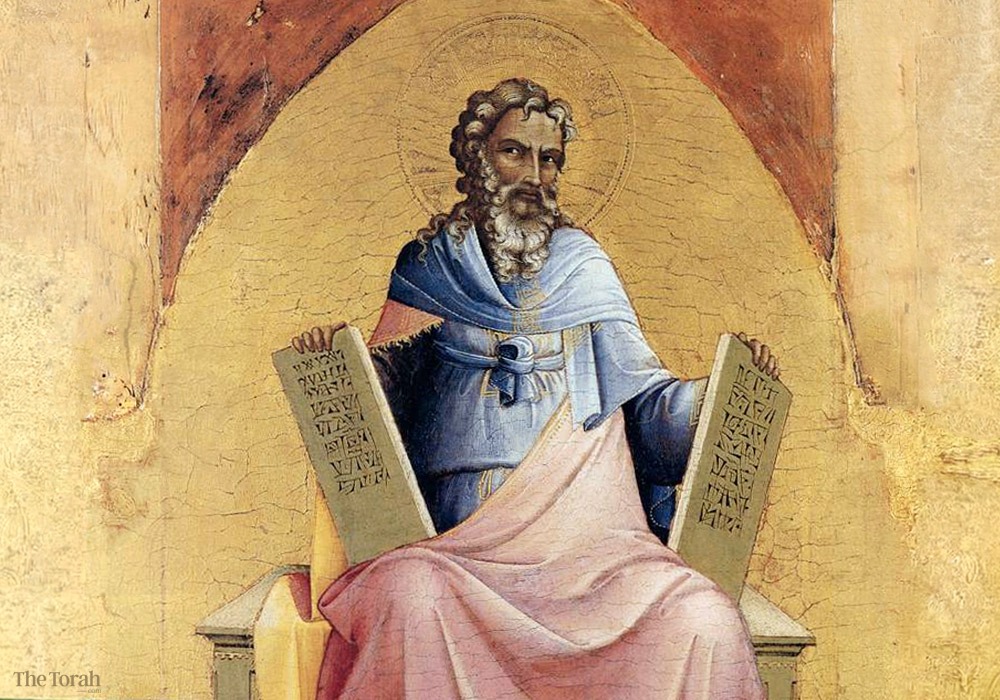
Moses, by Lorenzo Monaco, ca. 1370–1425 (adapted). Wikimedia
No passage in the Torah implies that it was written entirely by Moses.[1] Although several biblical texts outside of the Torah refer to “the Torah of Moses,” none of these specify exactly what this Torah is and what it encompasses. For example:
יהושע כג:ו וַחֲזַקְתֶּם מְאֹד לִשְׁמֹר וְלַעֲשׂוֹת אֵת כׇּל הַכָּתוּב בְּסֵפֶר תּוֹרַת מֹשֶׁה לְבִלְתִּי סוּר מִמֶּנּוּ יָמִין וּשְׂמֹאול...
Josh 23:6 But be most resolute to observe faithfully all that is written in the scroll of the Teaching of Moses, without ever deviating from it to the right or to the left…[2]
The earliest references, in the Former Prophets (Joshua-Kings), seem to use the term to refer specifically (and solely) to content in Deuteronomy.[3] Later references use the term to refer to the laws in the Torah more generally.[4]
Even these, however, often clarify that this is God’s Torah, delivered via Moses:
נחמיה ח:א וַיֵּאָסְפוּ כׇל הָעָם כְּאִישׁ אֶחָד אֶל הָרְחוֹב אֲשֶׁר לִפְנֵי שַׁעַר הַמָּיִם וַיֹּאמְרוּ לְעֶזְרָא הַסֹּפֵר לְהָבִיא אֶת סֵפֶר תּוֹרַת מֹשֶׁה אֲשֶׁר צִוָּה יְהֹוָה אֶת יִשְׂרָאֵל.
Neh 8:1 the entire people assembled as one in the square before the Water Gate, and they asked Ezra the scribe to bring the scroll of the Teaching of Moses with which GOD had charged Israel.
Only in later Second Temple texts does it become clear that some writers think of Moses as the author of the Torah.
Attributions of Biblical Citations to Moses in Second Temple Texts
Late Second Temple Jewish sources attribute direct quotations of the Torah to Moses, whom they see as a lawgiver and historian.[5] This is true even when this seems to contradict the plain meaning of the Torah itself.
Philo and Josephus: Moses, Author of the Torah
Philo of Alexandria, the first-century Egyptian Jewish philosopher, attributes quotations to Moses which are either unattributed or explicitly attributed to God in the text of the Torah. For instance, he describes the first verse of Genesis thus:
On the Creation, VII.26 Moses says also, “In the beginning God created the heaven and the earth.”[6]
The first verse of Genesis gives no indication of its speaker in the biblical text itself:
בראשית א:א בְּרֵאשִׁית בָּרָא אֱלֹהִים אֵת הַשָּׁמַיִם וְאֵת הָאָרֶץ.
Gen 1:1 When God began to create heaven and earth...
Philo can attribute this verse to Moses because he sees him as the author of the entire Torah.
Flavius Josephus, the first-century Jewish historian, begins his Antiquities of the Jews by, among other things, citing the beginning of the Torah as precedent for his own choice to begin the Antiquities with creation. He, too, believes that Moses is the author of the Torah.
Antiquities 1.21 Moses… did not begin the establishment of his laws after the same manner that other legislators did… but by raising their minds upwards to regard God, and his creation of the world.[7]
Both Philo and Josephus also name Moses as the legislator of laws which are explicitly said to be spoken by God in the Torah. For instance, Philo says:
On the Special Laws, I IV.25 Moses says, in another passage, “You shall not follow images, and you shall not make to yourselves molten Gods.”
The full verse he quotes reads:
ויקרא יט:ד אַל תִּפְנוּ אֶל הָאֱלִילִם וֵאלֹהֵי מַסֵּכָה לֹא תַעֲשׂוּ לָכֶם אֲנִי יְ־הֹוָה אֱלֹהֵיכֶם.
Lev 19:4 Do not turn to idols or make molten gods for yourselves: I YHWH am your God.
Similarly, Josephus states that:
Antiquities of the Jews 1.81 Moses appointed that Nisan… should be the first month for their festivals, because he brought them out of Egypt in that month.
The corresponding biblical passage reads:
שמות יב:א וַיֹּאמֶר יְ־הֹוָה אֶל מֹשֶׁה וְאֶל אַהֲרֹן בְּאֶרֶץ מִצְרַיִם לֵאמֹר׃ יב:ב הַחֹדֶשׁ הַזֶּה לָכֶם רֹאשׁ חֳדָשִׁים...
Exod 12:1 YHWH said to Moses and Aaron in the land of Egypt. 12:2 This month shall mark for you the beginning of the months…
Damascus Document: Moses the Lawgiver
A similar case of attributing a commandment to Moses which is ascribed to God in the Torah is found in the Damascus Document (a sectarian document discovered both in the Cairo Genizah and among the Dead Sea Scrolls, from approximately the first century B.C.E.[8]):
מגילת ברית דמשק ה:ח-ט ומשה אמר אל אחות אמך לא תקרב שאר אמך היא.
CD 5:8-9 But Moses said, To the sister of your mother you shall not approach for she is your mother’s close relation.[9]
The verse quoted is attributed to God in the Torah:
ויקרא יח:ו אִישׁ אִישׁ אֶל כׇּל שְׁאֵר בְּשָׂרוֹ לֹא תִקְרְבוּ לְגַלּוֹת עֶרְוָה אֲנִי יְ־הֹוָה...יח:יג עֶרְוַת אֲחוֹת אִמְּךָ לֹא תְגַלֵּה כִּי שְׁאֵר אִמְּךָ הִוא.
Lev 18:6 None of you shall come near anyone of his own flesh to uncover nakedness: I am YHWH… 18:13 Do not uncover the nakedness of your mother’s sister; for she is your mother’s flesh.
For these Second Temple Jewish sources, Moses is the author of the Torah: quotations from it can be given in his name, and laws from it can be said to be the product of his legislative genius. That is to say, he is a lawgiver. This is true even when this understanding of individual verses directly contradicts the text of the Torah itself.
Moses and the Writing of the Torah in Rabbinic Literature
Rabbinic texts[10] regularly and explicitly say that Moses wrote the Torah. For example:
ספרי דברים א אלה הדברים אשר דבר משה (דברים א:א), וכי לא נתנבא משה אלא אלו בלבד? והלא הוא כתב כל התורה כולה, שנאמר: ויכתב משה את התורה הזאת (דברים לא:ט)…
Sifrei Devarim 1 “These are the things which Moses spoke” (Deuteronomy 1:1) - and did Moses only prophesy these alone? Did he not write the entire Torah, as it is said, “And Moses wrote this Torah” (Deuteronomy 31:9)...[11]
Another midrash depicts Moses as a scribe:
מדרש תנחומא כי תשא לז:ג רב שמואל אמר, עד שמשה כותב את התורה, נשתיר בקלמוס קמעא והעבירו על ראשו, וממנו נעשו לו קרני ההוד...
Midrash Tanhuma Ki Tisa 37:3 Rav Shmuel said: After Moses wrote the Torah, some ink was left on the pen, and he passed it over his head, and from it the beams of glory were formed for him…[12]
Unlike the Second Temple writers quoted above, when the rabbis refer to Moses as writing the Torah, they seem to have meant something more like “wrote down” rather than “authored.”[13]
For the rabbis, God, and not Moses, was the author of Genesis. For instance, the following account deals with the problem of the plural verb used for God’s creation of man:
בראשית רבה ח:ח ר' שמואל בר נחמן בשם ר' יונתן: בשעה שהיה משה כותב התורה, היה כותב מעשה כל יום ויום. כיון שהגיע לפסוק, ויאמר אלהים נעשה אדם וגו', אמר: רבונו שלעולם, מה אתה נותן פתחון פה למינים? אמר לו: כתוב. הרוצה לטעות, יטעה…
Bereishit Rabbah 8:8 R. Shmuel bar Nahman in the name of R. Yonatan said: When Moses was writing the Torah, he was writing the events of each day. When he got to this verse, “And God said: Let us make man etc.” (Genesis 1:26), he said: Master of the universe, why are you giving an opening to the heretics? He said to him: Write. Whoever wishes to err, let him err...[14]
Although Moses is writing the Torah in this narrative, he is not determining its text. He is merely copying down a text dictated to him by God, as made clear by his (overruled) objection to the text given him.
Indeed, when the rabbis cite what many would call the “Torah of Moses,” they never do so in his name.[15] The rabbis do not introduce quotations from the Torah as, “Moses says,” but rather as “it is said” or the equivalent.[16]
Depictions of Moses as Failing to Understand Aspects of the Torah
Not only was Moses not the one to determine the text of the Torah, but rabbinic narratives also depict Moses as failing to even understand or remember various laws. One particularly prominent midrash (with many versions)[17] depicts his failure to understand the making of the Tabernacle menorah. For example:
מנחות כט תנא דבי ר' ישמע': שלשה דברים הוו קשין לו למשה עד שהראה לו הק"ב באצבעו, ואלו הן: מנורה, וראש חדש, ושרצים… וי"א אף הלכות שחיטה...[18]
b. Menahot 29a A teaching of the house of R. Yishmael: Three things were difficult for Moses, such that the Holy One, Blessed Be He, showed him with His finger, and these are they: menorah, and the new moon, and creeping things… and there are those who say: Also the laws of ritual slaughter…[19]
Different versions of this story end with either God Himself making the menorah[20] or with God ordering Moses to delegate the task to Bezalel who, to Moses’s awe, makes it immediately:
מדרש תנחומא, בהעלותך ו התחיל משה תמה ואומר: אני כמה פעמים הראה לי הקדוש ברוך הוא ונתקשיתי לעשותה, ואתה שלא ראית אותה עשית מדעתך.
Tanhuma Behaalotekha 6 Moses began to wonder and say, ‘In my case, how many times did the Holy One, blessed be He, show it to me; yet I had difficulty in making it. Yet you, without seeing it, have made it from your own knowledge.[21]
Moses’s Poor Memory
Other rabbinic stories see Moses failing to understand or forgetting a law:
ויקרא רבה יג:א אמ' רבי הונא: בשלשה מקומות כעס משה ונתעלמה הלכה ממנו, ואילו הן: בשבת, ובכלי מתכות, ובאונן…
Vayikra Rabbah 13:1 R. Huna said: In three places Moses got angry and the law escaped him, and these are they: On Shabbat, and with regard to metal vessels, and an acute mourner…[22]
Midrash Tanhuma describes Moses learning and forgetting the Torah each day for the forty days he spends on Mount Sinai, until finally God is forced to give it to him as a gift:
מדרש תנחומא כי תשא טז:ג אמר רבי אבהו: כל ארבעים יום שעשה משה מלמעלן, היה לומד תורה ושוכח. לסוף, אמר לו: רבונו של עולם, הרי באו ארבעים יום ואיני יודע דבר. מה עשה הקדוש ברוך הוא? משהשלים ארבעים יום נתן לו את התורה במתנה, שנאמר: ויתן אל משה ככלתו.
Midrash Tanhuma Ki Tisa 16:3 R. Abbahu said: All forty days that Moses spent above them [on Mt. Sinai], he would learn Torah and forget. In the end, he said to him: Master of the Universe, it’s been forty days and I [still] know nothing! What did the Holy One, Blessed be He do? At the end of forty days, he gave him the Torah as a gift, as it says, “And he gave to Moses when he finished [speaking with him]” (Exodus 31:8).[23]
Aaron Corrects Moses
A key aspect of many of these stories is the way in which they emphasize the fallibility of Moses, sometimes contrasted with the superior memory or understanding of other biblical figures. For instance, a midrash on Leviticus describes Aaron’s defense of his sons Eleazar and Itamar for failing to eat a sacrifice on the eighth day of installation, immediately after the death of their brothers Nadav and Avihu (Lev 10):
ויקרא רבה יג:א מיד דרש אהרן קל וחומר למשה: ומה אם מעשר הקל הרי הוא אסור לאונן, חטאת שהיא חמורה אינו דין שהיא אסורה לאונן?
Vayikra Rabbah 13:1 Aaron immediately made an a fortiori argument to Moses: If the tithe, which is lenient, is forbidden to an acute mourner, is it not logical that the sin-offering, which is stringent, should be forbidden to an acute mourner?[24]
Moses admits his mistake:
ויקרא רבה יג:א מיד וישמע משה (ויקרא י:כ) - הוציא כרוז בכל המחנה ואמ': אני טעיתי את ההלכה ואהרן אחי למדני.
Vayikra Rabbah 13:1 Immediately, “Moses listened” (Leviticus 10:20) – he issued a proclamation to the entire camp and said: I erred in the law and Aaron my brother taught me.
אלעזר ידע את ההלכה ושתק, איתמר ידע את ההלכה ושתק. זכו שנתייחד הדיבור עליהן ועל אביהן ועל אחי אביהן בחייהן...
Eleazar knew the law and was silent; Itamar knew the law and was silent. They merited that the divine speech was directed specifically towards them, their father, and their father’s brother in their lifetimes…
The story has Moses himself directly acknowledge his error and Aaron’s superior knowledge of the law,[25] and adds that while Moses did not know this, in fact he was the only one involved who did not know this particular law – the sons of Aaron whom he had been accusing likewise knew that he was mistaken, but did not correct him out of respect. They were rewarded for this by becoming direct recipients of divine speech—like their father and uncle.
Bezalel Corrects Moses
A similar contrast appears in various versions of the story explaining the name of Bezalel, chief builder of the Tabernacle. In this account, Bezalel is named for his wisdom, because when God instructed Moses to tell Bezalel עשה לי משכן ארון וכלים, “Make me a tabernacle, an ark, and vessels,” Moses reversed it, and instead instructed Bezalel, עשה ארון וכלים ומשכן “Make an ark and vessels and a tabernacle.”[26]
Bezalel catches Moses’s error:
ברכות נה א אמר לו: משה רבינו, מנהגו של עולם אדם בונה בית ואחר כך מכניס לתוכו כלים, ואתה אומר עשה לי ארון וכלים ומשכן! כלים שאני עושה להיכן אכניסם? שמא כך אמר לך הקדוש ברוך הוא עשה משכן ארון וכלים.
b. Berakhot 55a He (Bezalel) said to him: “Moshe Rabbeinu,[27] the way of the world is that a man builds a house and then brings vessels into it, and you are telling me to make for me an ark and vessels and a tabernacle! The vessels which I make - where will I bring them in? Maybe this is what the Holy One, Blessed be He, said to you: ‘Make a tabernacle, an ark, and vessels.’
אמר לו: שמא בצל אל היית וידעת.
He (Moses) said to him: Perhaps you were in the shadow of God (Betzel El) and [that is how] you knew.[28]
This account goes even further in giving Bezalel superior knowledge of commands issued directly to Moses, but not yet shared with others; in other words, not only is Moses not the originator of these commandments, but he does not even possess superior knowledge of them compared with his subordinate Israelite leaders.
In other words, far from serving as an undisputed authority on biblical law, Moses in fact struggles to understand the Torah, has a poor memory, and even gets it wrong.
Undermining Moses’s Authority
Some midrashim even undermine explicit claims of Mosaic authority in the biblical text. In Deuteronomy, Moses instructs the Israelites:
דברים א:יז לֹא־תַכִּירוּ פָנִים בַּמִּשְׁפָּט כַּקָּטֹן כַּגָּדֹל תִּשְׁמָעוּן לֹא תָגוּרוּ מִפְּנֵי־אִישׁ כִּי הַמִּשְׁפָּט לֵאלֹהִים הוּא וְהַדָּבָר אֲשֶׁר יִקְשֶׁה מִכֶּם תַּקְרִבוּן אֵלַי וּשְׁמַעְתִּיו.
Deut 1:17 “You shall not be partial in judgment: hear out low and high alike. Fear no man, for judgment is God’s. And any matter that is too difficult for you, you shall bring to me and I will hear it.”
The Sifrei connects this verse to the story of the daughters of Zelophehad (Num 27), in which Zelophehad, a man of the tribe of Manasseh, has died without sons, and his five daughters come to Moses and ask to be allowed to inherit the share of land he would have received in the Promised Land. Moses, unsure how to decide this case, brings it before God:
ספרי דברים יז הדבר אשר יקשה מכם - אמר לו הקדוש ברוך הוא למשה: אתה דן דין קשה? חייך שאני מודיעך שאי אתה דן דין קשה! אני מביא עליך דין שתלמיד תלמידך יכול לשמעו ואתה אי אתה יכול לשמעו. ואיזה זה? זה דינן של בנות צלפחד, וכן הוא אומר: ויקרב משה את משפטן לפני ה'.
Sifrei Devarim 17 “Any matter that is too difficult for you” (Deut 1:17)– the Holy One, Blessed Be He said to Moses, “You judge a difficult judgment? By your life, I will show you that you do not judge a difficult judgment! I am bringing to you a judgment that the student of your student could hear, and you will not be able to hear it.” And what is this? This is the judgment of the daughters of Zelophehad, and thus it says, “And Moses brought their judgment before the Lord” (Num 27:5).[29]
The Sifrei’s question is likely: Why was this law not delivered by God to Moses in the first place? Why did Moses need to ask?
The answer given by this midrash is that this was a punishment meted out to Moses for his presumptuousness in claiming to be able to judge difficult cases in Deuteronomy 1:17. Not only is Moses not able to judge difficult cases, God says, but he will in this instance not even be able to judge a simple one.
Significantly, each of these narratives is built around direct biblical quotations, none of which are themselves attributed to Moses. In other words, verses to which Philo or Josephus would ascribe Mosaic authorship are not only not attributed to Moses by the rabbis, but are used to undermine his authority without any reference to his role in writing them.
Why Downplay Moses’s Authority?
For the rabbis, as with the late Second Temple Jewish authors, Moses was the one who wrote the entirety of the five books of the Torah. Unlike Philo, Josephus, and the author of the Damascus Document, however, the rabbis did not think that this gave Moses any special authority (or even knowledge) of those books. For them, God was the author of the Torah, with Moses merely the first link in the chain transmitting these bodies of work to human beings.
Portraying Moses as the uncomprehending, forgetful, and at times mistaken tradent emphasizes the divine origin of the Torah. It also highlights the rabbis’ own superior competence in interpreting that Torah, competence which puts them on the same level as – or, sometimes, even higher than – Moses.
TheTorah.com is a 501(c)(3) nonprofit organization.
We rely on the support of readers like you. Please support us.
Published
May 19, 2026
|
Last Updated
September 15, 2026
Previous in the Series
Next in the Series
Before you continue...
Thank you to all our readers who offered their year-end support.
Please help TheTorah.com get off to a strong start in 2025.
Footnotes


Tzipporah Machlah Klapper is a PhD Candidate in the Department of Near Eastern Languages and Civilizations at Harvard University. She holds an MA in Near Eastern Languages and Civilizations from Harvard University, an MA in Jewish Studies from the Rothberg International School at the Hebrew University of Jerusalem, and a BA in English Literature from The City College of New York (CCNY).
Essays on Related Topics: