


 Edit article
Series
Symposium
When Ideals Become Idols


Categories:
One of the enduring dangers of any intellectual, religious, or political tradition is mistaking the path for the destination. The beliefs and practices that help us pursue our highest ends can themselves become the objects of our loyalty and attachment. Yet our intermediate beliefs may be mistaken, and the practices to which we are committed may be ineffective means of achieving our highest ideals.
Scientists and philosophers seek truth through inquiry, experimentation, and scholarship. Clergy seek God through prayer, community, and acts of justice. These pursuits matter profoundly, but they remain means to our ultimate ends.
When means become ends, ideals become idols. We cease to test our convictions against experience and instead force experience to conform to our convictions. In that moment, when we refuse to revise even closely held beliefs, genuine learning becomes impossible, for education and the formation of character require us to examine not only our ultimate commitments but also the beliefs and practices that guide us toward them.
Being ready to learn means being prepared to change our minds. Perhaps an idol is not simply a mistaken ideal, but one that can no longer be revised. That is why revisability—the willingness to change our minds—deserves recognition as its own virtue.
Curiosity asks questions. Humility admits error. Revisability changes course.
One way to identify an ideal that may be becoming an idol is to ask what belief or practice would most surprise us if it changed twenty or thirty years from now, or perhaps “ever.”
I Never Thought I Would Change My Mind About Eating Meat
Had you asked me thirty years ago whether I would ever contemplate giving up meat, I would have laughed. Over the ensuing decades I gradually changed my mind. Perhaps most striking is my increasing discomfort with eating mammals—cows and sheep—because of their cognitive and emotional capacities as living beings. I am already eating them with much less frequency, and I would not be surprised if I excluded them from my diet in the next few years. The same may eventually prove true of chicken and turkey, given the conditions under which poultry is raised. All of which is to say that I believe the eco-kosher movement is on the right track.
So why had I ever been comfortable with eating meat? The idea of human supremacy that would permit domination over all other creatures appears in Genesis—we, not other creatures, are created b’tzelem Elohim, “in God’s image.”[1] This view of human supremacy is reinforced throughout ancient philosophy. During the Enlightenment the exercise of reason entitled us to use the abundance of nature for our ends. This placed humans at the literal top of the food chain.
What made me change my mind? Several developments pushed me in this direction, including scientific research, philosophical argument, and owning a dog. Perhaps most unexpectedly, becoming a parent complicated my assumptions about what makes human beings distinctive.
I assumed that whatever marks human uniqueness or personhood emerged sometime between conception and birth. Holding my newborn daughter, and then spending months caring for her, made me realize how difficult it is to identify a single characteristic that separates humans from all other forms of life, particularly at the time of birth. What I had once regarded as self-evident began to seem far more complex.
What surprises me is not simply the conclusion, but the fact that I changed at all given how central to my world view was the supremacy of human beings. In this I believe I was mistaken and needed to change my mind. The fact that I have not fully committed to being a vegetarian is a ready example of my lack of courage, my own weakness of will, to revise my own practices now that my beliefs have so clearly changed.
As the World Changes, We Need to Change Our Minds
Revisability is not the abandonment of principle. It is the discipline and often the courage, to remain faithful to our purposes while remaining open to different ways of achieving them. Practices endure not for their own sake but to pursue enduring aims embodied by the Source of All Being: The Good and the Sacred, the Beautiful, the Right, and the Just.
This is nothing new. Had the original writers and redactors of the Torah been aware of Jewish life and practices in the 21st century, they would likely have been astonished that male homosexual behavior is mostly accepted, animal sacrifice has disappeared, and that women no longer occupy a diminished status if not full equality (the daughters of Zelophehad notwithstanding). These changes were possible because our predecessors refused to treat particular practices as ends in themselves.
The question, then, is how to identify our contemporary idols. What commitments do we treat as beyond revision today? What beliefs or practices would we regard as almost unthinkable to reconsider? What commitments have become so central that preserving them has become, for us, a measure of meaning itself? What belief or practice would most surprise us if it changed twenty or thirty years from now, or perhaps “ever!”
HUC, Israel, and America
In my years leading Hebrew Union College, I have repeatedly confronted moments when we had to ask whether we were protecting the College’s mission or preserving a particular expression of it. The launch of our virtual pathway to the rabbinate, our closure of our original rabbinical program in Cincinnati, and the acceptance of seminary students in interfaith relationships, each represented departures from the way we had traditionally executed our mission.
This is not to say that I am certain we were right, or that future decisions will be. Such certainty is rarely warranted. Rather, I have come to wonder whether the intensity of the emotional responses (including my own) that often accompanied these changes, and the personalization of disagreements over what are ultimately means to the College’s higher mission, can itself be a signal that something deserving of scrutiny has taken on an importance it was never meant to bear.
I believe our communities are facing a similar struggle as we navigate changing feelings about America and Israel. It is difficult for me to imagine relinquishing my support for the underlying principles of either—democratic constitutionalism or liberal Zionism. Yet I wonder whether some of the anguish, discord, and division within our communities stems from a deeper confusion between means and ends.
Democratic constitutionalism has enabled American Jews and other minorities to enjoy a degree of freedom, security, and belonging unparalleled in Jewish history, however imperfectly those aspirations have been realized in practice. A Jewish and democratic state has enabled the Jewish people to reclaim self-determination in their historic homeland after centuries of exile and powerlessness while affirming the equal dignity and rights of all its inhabitants, however imperfectly that promise has been fulfilled.
Both are historic blessings. Yet neither is identical to the good it serves. Constitutional democracy is not freedom and flourishing itself; it is a framework that protects them. Sovereignty is not Jewish self-determination; it is a political instrument that secures it.[2] When we forget those distinctions, believe they no longer matter, or value democratic constitutionalism and sovereignty as ends in and of themselves, we risk turning instruments into idols.
I still have faith in America and continue to identify as a liberal Zionist. But fidelity to those commitments does not relieve me of the responsibility to ask whether these means are effectively serving the higher ends they were meant to secure. These are large questions, and only time will tell.
Staying True to Our Deepest Commitments Requires Revisiting Beliefs
Revisability does not require abandoning our deepest commitments. It requires acknowledging that our understanding of them is always partial and that the paths we choose to pursue them may need correction. Programs, policies, traditions, historical narratives, and political arrangements deserve our loyalty only insofar as they continue to serve the goods toward which they aim. When they become insulated from reconsideration, means become ends, and ideals become idols.
Every idol begins with something valuable. The Golden Calf was not fashioned out of nothing after all. So too our contemporary idols are often institutions, traditions, beliefs, and practices that have served us well. The danger arises when we can no longer imagine reconsidering them.
TheTorah.com is a 501(c)(3) nonprofit organization.
We rely on the support of readers like you. Please support us.
Published
September 3, 2026
|
Last Updated
October 6, 2026
Previous in the Series
Next in the Series
Before you continue...
Thank you to all our readers who offered their year-end support.
Please help TheTorah.com get off to a strong start in 2025.
Footnotes

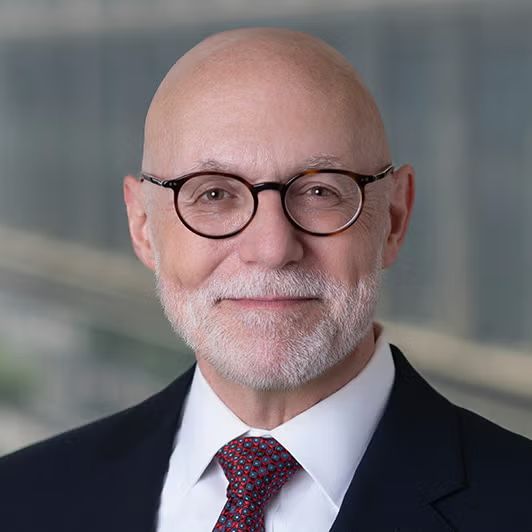
Dr. Andrew Rehfeld is the 10th President of Hebrew Union College-Jewish Institute of Religion (HUC-JIR), a position he has held since 2019. Before becoming president, he was a tenured faculty member in Political Science at Washington University in St. Louis and President and CEO of the Jewish Federation of St. Louis. Rehfeld holds a Masters of Public Policy from the University of Chicago, where he also received his Ph.D. in Political Science. His academic research focuses on the intersection of democracy, human rights, justice, and institutional design, as well as the political uses of the Hebrew Bible. He is the author of The Concept of Constituency (Cambridge University Press, 2005) and a contributor to The Cambridge Companion to the United States Constitution (2018). His work has appeared in leading journals in his field, including the American Political Science Review, the Journal of Politics, and the Journal of Political Philosophy.
Essays on Related Topics: