


 Edit article
Series
A Pit in the Public Domain: How the Talmud Upends Biblical Law


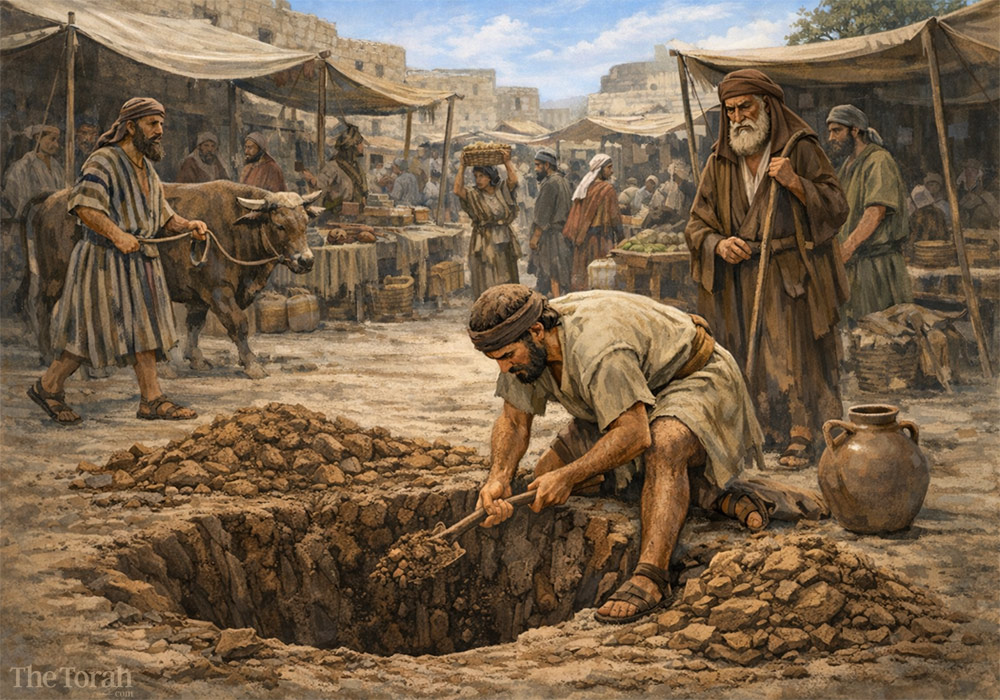
The Torah declares that a person who digs or uncovers a pit, into which an animal falls and is injured or killed, is liable for the damages:
שמות כא:לג וְכִי יִפְתַּח אִישׁ בּוֹר אוֹ כִּי יִכְרֶה אִישׁ בֹּר וְלֹא יְכַסֶּנּוּ וְנָפַל שָׁמָּה שּׁוֹר אוֹ חֲמוֹר: כא:לד בַּעַל הַבּוֹר יְשַׁלֵּם כֶּסֶף יָשִׁיב לִבְעָלָיו וְהַמֵּת יִהְיֶה לּוֹ:
Exod 21:33 Should a person open a (pre-existing covered) pit or should a person dig a (new) pit and not cover it, and an ox or donkey falls in, 21:34 the one responsible for the pit (baʿal ha-bor) must pay, he must restore money to its owner, and the dead animal shall be his.[1]
The phrase בַּעַל הַבּוֹר (baʿal ha-bor) literally means “the owner of the pit.” Nevertheless, the simple meaning here does not seem to imply actual ownership, rather responsibility for having dug or opened it, as already noted by Rashi (R. Solomon Yitzhaki, ca. 1040–1105):
רש"י שמות כא:לד "בעל הבור"—בעל התקלה, אף על פי שאין הבור שלו, שעשאו ברשות הרבים, עשאו הכתוב בעליו, להתחייב בנזקיו.
Rashi Exod 21:34 “Baʿal ha-bor”—the one responsible for the accident, even if the pit is not his, since he made it in a public domain, scripture treats him as the owner, making him liable to pay damages.[2]
This is also the understanding of many modern commentators. Abraham Kahana (1874–1946) makes the point forcefully, על כרחך בחופר ברשות הרבים הכתוב מדבר “by necessity, scripture is speaking about one who digs [a pit] in the public domain.”[3] This also seems to be Thomas Dozeman’s understanding, “Verses 35–36 legislate the fine if a human kills an ox or another animal through negligence, by not covering a pit.”[4]
In contrast, some modern commentators seem to understand the baʿal ha-bor as the actual owner of the pit. For example, Noel Osborn and Howard Hatton write (bold in original): “It is clear that the owner of the pit is the one who is responsible, whether or not he was the one who uncovered it.”[5] Similarly, Brevard Childs writes that “the owner is responsible to make the loss good.”[6]
While such a reading is counterintuitive, in support of this is the fact that, elsewhere in this collection of laws, the word baʿal always refers to someone who has possession of something:
- בַּעַל אִשָּׁה “In possession of a wife” (21:3, 22);
- בַּעַל הַשּׁוֹר “Owner of the ox” (21:28; also [ox or donkey] 21:29, 34, 36, 22:10–14);
- בַּעַל הַבַּיִת “Owner of the house” (22:7);
Indeed, this motivated the rabbis to understand the phrase בַּעַל הַבּוֹר (baʿal ha-bor) literally, as “the person who owns the pit,” and leads them to look for a case where a person who dug a pit on his own property can be charged for negligence. Originally, the rabbis’ interpretation did not preclude also declaring a person liable for digging a pit in the public domain; the Torah was merely emphasizing that even a pit in one’s own property can lead to an act of negligence in certain scenarios.
By the third generation of Amoraim (4th cent. C.E.), however, we arrive at the hyper-literal (and outlandish) understanding of Rav Yosef that, according to Rabbi Akiva, the Torah’s use of בַּעַל הַבּוֹר (baʿal ha-bor) means to limit liability only to the case when the person owns the property on which he is digging the pit.[7] Here is how this idea developed over time.
“His Property”—Mekhilta
One of the earliest rabbinic sources that bears on this issue is Mekhilta De-Rabbi Yishmael (third century C.E.). While not explicitly referencing the words בַּעַל הַבּוֹר (baʿal ha-bor), it takes for granted that the person digging on his own property is liable to pay damages, since the midrash refers to the pit as ממונו “his property”:
מכילתא דרבי ישמעאל, מסכתא דנזיקין יא "וכי יפתח איש בור"—למה נאמר? עד שלא יאמר יש לי בדין: הואיל והשור ממונו והבור ממונו, אם למדת שהוא חייב על ידי שורו אינו חייב על בורו? [8]
Mekhilta De-Rabbi Yishmael, Nezikin §11—“Should a person open a pit”—Why was this said? Even before it was said, I could have deduced it logically: Since an ox is his property and a pit is his property, if you have learned that he is liable for his ox, should he not be liable for his pit?[9]
The Mekhilta ultimately answers this question by saying that the two laws are categorically different: Oxen move around, and that’s one kind of risk, pits remain in place, but an animal may not see one and fall in, which is a different kind of risk. This is why the Torah needed to mention both cases. The Mekhilta neither discusses what happens if the pit is on public property nor in what case it would make sense to find an owner liable for damages done to an intruder on his own property.
Between Public and Private Property: The Mishnah and Tosefta
The Mishnah describes four scenarios as to where the pit may be dug. In all cases, the one who dug the pit is liable:
משנה בבא קמא ה:ה הַחוֹפֵר[10] בּוֹר בִּרְשׁוּת הַיָּחִיד וּפְתָחוֹ לִרְשׁוּת הָרַבִּים,
m. Bava Kama 5:5 One who dug a pit in a private domain and made an entrance to it in the public domain,
אוֹ בִרְשׁוּת הָרַבִּים וּפְתָחוֹ לִרְשׁוּת הַיָּחִיד,
or [if he dug one] in the public domain and made an entrance to it in a private domain,
בִּרְשׁוּת הַיָּחִיד וּפְתָחוֹ לִרְשׁוּת הַיָּחִיד אַחֵר, חַיָּב.
or [if he dug one] in a private domain and made an entrance to it in another private domain, is liable.[11]
הַחוֹפֵר בּוֹר בִּרְשׁוּת הָרַבִּים, וְנָפַל לְתוֹכוֹ שׁוֹר אוֹ חֲמוֹר וָמֵת, חַיָּב.
One who dug a pit in the public domain, and an ox or donkey falls in and dies, is liable.
The first three clauses of the Mishnah address various cases in which the pit is on the private property of the one who dug it, and yet was accessible to the damaged party, such that he could sue for damages and avoid being guilty of trespass. The fourth clause, which appears in various places in different manuscripts but does appear in all traditions of the Mishnah, makes it abundantly clear that guilt is incurred for a pit dug in the public domain.
The scenarios presented here are more than simply theoretical. The realia of pit-digging in the land of Israel in the Tannaitic period was most likely for the purposes of creating a cistern to store water for the spring and summer months, when there is no rainfall. Digging one for the public, therefore, could be considered an act of public benefaction, as Ze’ev Safrai writes:
משנת ארץ ישראל בבא קמא ה:ה כרך ב דף קמו כנראה לא היתה התנגדות של ממש לעצם חציבת הבור מתחת לרשות הרבים, ובלבד שננקטו אמצעי זהירות. כלומר לא עלתה שאלת הבעלות וניצול רשות הרבים. אנו מסיקים זאת מהממצא הארכיאולוגי שבארץ ישראל, שכן בורות מים ומערות נפתחו מתחת לרשות הרבים לכאורה ללא הגבלה. דוגמאות לכך נמצאו בסוסיה ובאתרים רבים אחרים בדרום יהודה ובשפלת בית גוברין.
Mishnat Eretz Yisrael Bava Kamma 5:5, volume 2 p. 146 Apparently there was no real opposition to the act of excavating a pit beneath the public domain, provided that safety measures were taken. That is, the question of ownership and the use of the public domain did not arise. We infer this from the archaeological evidence in Palestine, since water cisterns and caves were opened beneath the public domain, apparently without restriction. Examples of this were found in Susiya and at many other sites in the south of Judah and the lowlands of Beit-Guvrin.
The Tosefta[12] also takes for granted that one who digs in the public domain is liable:
תוספתא בבא קמא (ליברמן) ו:ד חָפַר בִּרְשׁוּת הָרַבִּים וּפָתַח לִרְשׁוּת הָרַבִּים אַפי' הוּא שֶׁל רַבִּים חַיָּב עַד שֶׁיִּמְסֹר לָרַבִּים.
Bava Kama (Lieberman) 6:4 One who dug [a pit] in the public domain and opened it to the public domain—even if it belongs to the public—is liable until he hands it (=control of the pit) over to the public.
The Tosefta only exempts the person once they have turned the pit over to the public, in which case, having fulfilled the role of digging public watering facilities, the digger is obviously exempt. But given that a person digging a pit in the public domain cannot be described as “the owner of the pit,” the Tosefta then asks a question:
אֵי זֶהוּ בּוֹר שֶׁאָמְרָה תּוֹרָה?[13]
What is the pit about which the Torah spoke?
The question is not “what is the only type of pit for which one is liable?” Rather, it is asking “what is the case when an ‘owner [baʿal] of the pit’ can be liable”? In response to this question, the Tosefta presents a series of options relating to public and private domains, by distinguishing between where the body of the pit is and where the opening is:
a. Pit and opening on private property, obviously exempt—The Torah cannot refer to a pit dug completely on one’s own property, since the owner has a right to dig on his own property and no one else has a right to be there:
חָפַר בִּרְשׁוּת הַיָּחִיד וּפָתַח לִרְשׁוּת הַיָּחִיד יֵשׁ לוֹ רְשׁוּת לַחְפֹּר וְיֵשׁ לוֹ רְשׁוּת לִפְתֹּחַ.
If one dug in a private domain and opened it to a private domain, he has permission to dig and he has permission to make an opening.
b. Pit and opening on public property, obviously liable—A pit dug completely in the public domain is obviously forbidden, but this cannot be the referent of the term baʿal in the Torah:
בִּרְשׁוּת הָרַבִּים וּפָתַח לִרְשׁוּת הָרַבִּים אֵין לוֹ רְשׁוּת לַחְפֹּר וְאֵין לוֹ רְשׁוּת לִפְתֹּחַ.
In the public domain, and he made an opening to the public domain: he has no permission to dig and no permission to make an opening.
c. Pit on private, opening on public, the Torah’s case—A pit dug on the person’s property but with an entry point in public property, can fulfill the criteria of the pit stated in the Torah. Such a pit is both a public nuisance, assuming the opening is left uncovered, and at the same time, the digger can properly be called its owner, since the bulk of the pit or cistern is underneath the person’s property:
בִּרְשׁוּת הַיָּחִיד וּפָתַח לִרְשׁוּת הָרַבִּים יֵשׁ לוֹ רְשׁוּת לַחְפֹּר וְאֵין לוֹ רְשׁוּת לִפְתֹּחַ אֲבָל יֵשׁ לָרַבִּים רְשׁוּת לִכָּנֵס לְשָׁם.
In a private domain, and he made an opening to the public domain: he has permission to dig but he has no permission to make an opening; however, the public has permission to enter (the hole) there.
While this may sound like an artificial scenario, invented just to allow for this interpretation of the verse, Saul Lieberman (1898–1983), in his commentary on the Tosefta, explains that people would extend their cisterns underneath the public domain to increase storage capacity. Such a person may also open the cistern to the public as justification for using public resources. The pit would likely also have an opening on his property.[14]
d. Opening on private, pit on public, matter of debate—The inverse case is where the cistern is dug underneath public property, with the opening on the digger’s private property.[15] Even if he allows others to enter his property—assumedly he must do this as compensation for using public land—he is not liable because he did not leave an open pit in a place where people walk freely:
בִּרְשׁוּת הָרַבִּים וּפָתַח לִרְשׁוּת הַיָּחִיד אַפִי[לוּ] הִיא שֶׁל רַבִּים פָּטוּר.
In the public domain, and he made an opening to it in the private domain—even if it belongs to the public—he is exempt.
R. Yosi b’ R. Yehudah argues, however, that leaving an open pit on one’s own property and allowing others to enter is indeed negligent:
ר' יוֹסֵי בֵּי ר' יְהוּדָה מְחַיֵּב עַד שֶׁיַּעֲשֶׂה לוֹ מְחִצָּה גְּבוֹהָה עֲשָׂרָה טְפָחִים אוֹ עַד שֶׁיַּרְחִיק מִן הַכֹּתֶל אַרְבָּעָה טְפָחִים כְּדֵי שֶׁיְּהַלֵּךְ אָדָם אוֹ עַד שֶׁיִּמְסֹר לָרַבִּים.
R. Yosi b. R. Yehudah holds him liable until he makes for it a partition ten handbreadths high,[16] or until he distances it from the wall four handbreadths so that a person can walk there, or until he hands it over to the public.
The Torah’s Pit According to the Talmud
A baraita found only in the Babylonian Talmud[17] has Rabbi Ishmael identify the Torah’s case as a pit dug on private property with an entrance in the public domain, i.e., the third scenario in the Tosefta:
בבלי בבא קמא מט: תָּנוּ רַבָּנַן: הַחוֹפֵר בּוֹר בִּרְשׁוּת הַיָּחִיד[18] וּפְתָחוֹ לִרְשׁוּת הָרַבִּים חַיָּיב, וְזֶהוּ בּוֹר הָאָמוּר בַּתּוֹרָה; דִּבְרֵי רַבִּי יִשְׁמָעֵאל.
b. Bava Kamma 49b Our rabbis taught: One who digs a pit in the private domain and opens it to the public domain is liable, and this is the pit mentioned in the Torah, according to R. Ishmael.
R. Akiva, however, suggests that the Torah’s case is when one digs a pit on his own property but allows others onto his property to use it, what R. Akiva calls הִפְקִיר רְשׁוּתוֹ, declaring one’s domain ownerless.[19] In such a case, he is liable for damages that occur on his property:
רַבִּי עֲקִיבָא אוֹמֵר: הִפְקִיר רְשׁוּתוֹ וְלֹא הִפְקִיר בּוֹרוֹ – זֶהוּ בּוֹר הָאָמוּר בַּתּוֹרָה.
R. Akiva says: “He declared his domain ownerless, but he did not declare his pit ownerless—this is the pit mentioned in the Torah.”[20]
In other words, Rabbi Akiva believes that leaving an open pit on one’s property is negligent if there is public access to it.[21] Notably, no tannaitic disagreement exists over the liability for digging a pit in the public domain; all tannaim agree with the simple reading of the Torah that a person is liable, since liability is related to negligence, not to ownership.
The Invention of a Tannaitic Opinion
In the third generation of Babylonian Amoraim, Rabbah and Rav Yosef debate the nature of Rabbi Ishmael and Rabbi Akiva’s argument in the baraita.[22] Rabbah suggests that it is obvious to everyone that digging a pit on public property makes a person liable; the only question is in what scenarios can a person be liable for digging a pit on his own property:
בבלי בבא קמא מט: אָמַר רַבָּה: בְּבוֹר בִּרְשׁוּת הָרַבִּים – כּוּלֵּי עָלְמָא לָא פְּלִיגִי דְּמִיחַיַּיב... לֹא נֶחְלְקוּ אֶלָּא בְּבוֹר בִּרְשׁוּתוֹ...[23]
b. Bava Kamma 49b Rabbah said: No one disagrees that one is liable for a pit in the public domain… They dispute only a pit on his property…
In contrast, Rav Yosef posits that Rabbi Akiva believed that a person who digs a pit on public property and leaves it open is not liable to pay damages if an animal falls in:
בבלי בבא קמא נ. וְרַב יוֹסֵף אָמַר: בְּבוֹר בִּרְשׁוּת הַיָּחִיד – כּוּלֵּי עָלְמָא לָא פְּלִיגִי דְּמִחַיַּיב מַאי טַעְמָא "בַּעַל הַבּוֹר" אָמַר רַחֲמָנָא בְּבוֹר דְּאִית לֵיהּ בְּעָלִים עָסְקִינַן. כִּי פְּלִיגִי – בְּבוֹר בִּרְשׁוּת הָרַבִּים...
b. Bava Kama 50a And Rav Yosef said: No one disagrees that one is liable for a pit on his property. What is the reason? The Torah says “the owner of the pit”—we are dealing with a pit that has an owner. They disagree about a pit in the public domain.
In other words, as Rashi explains,[24] ברה״ר דלאו ממונו הוא פטור “in the public domain, since it is not his property, he is not liable” for digging the hole, even if an animal falls in.[25] Rav Yosef, therefore, ends up conflicting directly with the simple meaning of a verse by claiming that, according to Rabbi Akiva, someone who digs a pit in a public place is not liable for damages the pit causes to an animal that falls in.[26]
Rav Yosef’s interpretation demonstrates that by the third generation of amoraim, these laws had been completely unhinged from their origins of digging cisterns in Israel and sharing the water with the general public. Instead, the analysis became abstract, and was contextualized into the larger rabbinic project of exploring in which domain one is liable for which categories of damages.[27]
The Amoraic debate between Rabbah and Rav Yosef is the culmination of the transformation of the common-sense damage laws found in the Torah into a legal system governed by archetypes that limit or extend liability. The process began when the midrash (as per Mekhilta De-Rabbi Yishmael) identified the pit as one’s “property” and ended with Rav Yosef saying that according to R. Akiva such a pit is the only type of pit for which one is liable. The odd result is that, according to this opinion, one who recklessly endangers the public by digging a pit in the public domain is exempt because there is no ownership over that pit.
TheTorah.com is a 501(c)(3) nonprofit organization.
We rely on the support of readers like you. Please support us.
Published
February 16, 2026
|
Last Updated
August 26, 2026
Previous in the Series
Next in the Series
Before you continue...
Thank you to all our readers who offered their year-end support.
Please help TheTorah.com get off to a strong start in 2025.
Footnotes


Dr. Rabbi Joshua Kulp is the co-author of The Schechter Haggadah, Reconstructing the Talmud Volume 1 and Volume 2, and the forthcoming Reimagining the Rabbis. He teaches for Hadar, Drisha, the Fuchsberg Jerusalem Center, and the Schechter Institute. He received his Ph.D. in Talmud from Bar-Ilan University and his semicha from the Hadar Institute.
Essays on Related Topics: