


 Edit article
Series
Dance Before the Divine! So Why Did Moses Break the Tablets?


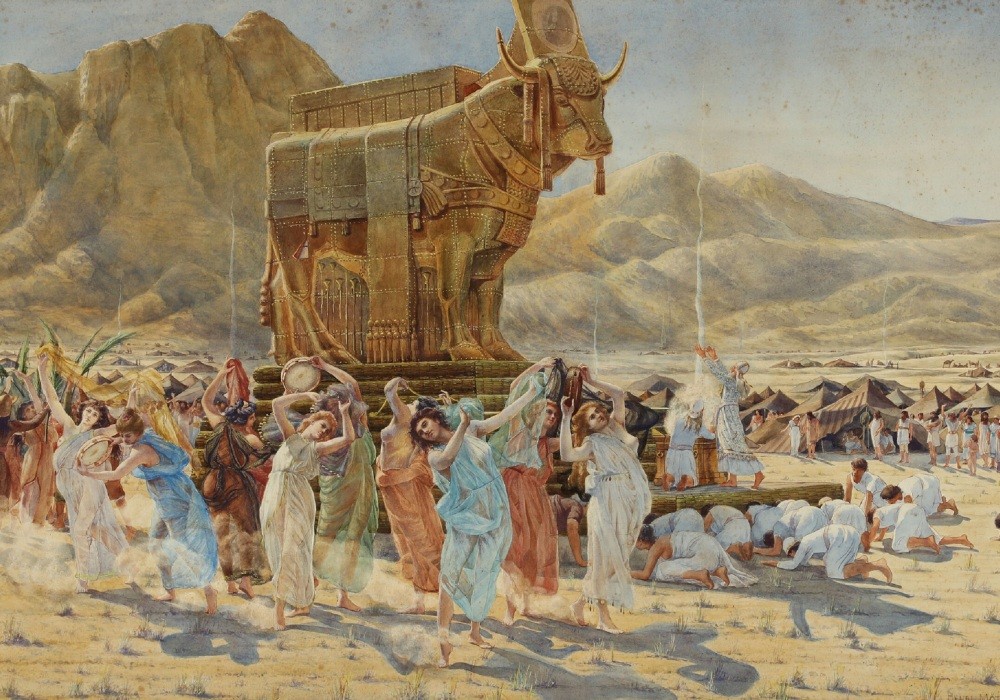
The Israelites Dancing around the Golden Calf, Henri-Paul Motte, 1899. Wikimedia
In Judaism today, it is customary to dance on the fall festival of Simchat Torah, at the ceremony introducing a new Torah scroll to a synagogue, and in some communities, during the lighting of bonfires on Lag Ba-Omer in the spring on Mount Meron.[1]
Indeed, dance performed in religious contexts is well-known in many past and present cultures around the world. Cultic dance is documented in the temples of ancient Egypt[2] and Nubia.[3] In Egypt, evidence from the Middle Kingdom period (ca. 2135–1985 B.C.E.) suggests that most temples employed professional dancers to perform at funerals and religious festivals, including dancing in the processions that accompanied a divine image whenever it was brought out of the temple for a public religious festival.[4]
In Mesopotamia, dance was particularly important in the cult of the war goddess Ishtar. In a second millennium B.C.E. Akkadian myth, the god Ea tells Ishtar that he has commanded the people to commemorate with dance the goddess Saltum’s confrontation of aggressive Ishtar:
Let a whirling dance take place in the...of the year.
Look about at all the people!
Let them dance in the street,
Hear their clamor![5]
Dances likewise took place in cultic ceremonies in ancient Israel.[6] The Bible includes a wealth of words to describe dance activity,[7] including סבב, חגג, רקד, דלג, כרכר, פזז, פסח, חיל/חלל/חול, שחק. For example, David dances (פזז and כרכר) as the ark enters Jerusalem:
שׁמואל ב ו:טז וְהָיָה אֲרוֹן יְ־הוָה בָּא עִיר דָּוִד וּמִיכַל בַּת שָׁאוּל נִשְׁקְפָה בְּעַד הַחַלּוֹן וַתֵּרֶא אֶת הַמֶּלֶךְ דָּוִד מְפַזֵּז וּמְכַרְכֵּר לִפְנֵי יְ־הוָה וַתִּבֶז לוֹ בְּלִבָּהּ.
2 Sam 6:16 As the ark of YHWH came into the city of David, Michal daughter of Saul looked out of the window and saw King David leaping and dancing before YHWH, and she despised him in her heart.[8]
The Impact of Dance in Ritual Activity
Dancing in ritual activity is accompanied by rhythmic music: singing, hand-clapping, or musical instruments such as drums or rattles.[9] In addition, these ceremonies can include eating, drinking, storytelling, elaborate clothing, jewelry, masks and various other accessories. The ceremony may be held in a sacred place, and sometimes involves a statue or a symbol of the divine power. Thus, the religious ceremony is a profound experience that involves all the senses, and the dance is seen as the most important part of the ceremony.
Dance activity is carried out on both the community and the individual level. On the community level, dance creates uniformity, as all participants must be in the same place, at the same time, performing similar body movements. Thus, the dance connects the individual people into one cohesive body, creating social solidarity and bonding.[10] Some scholars even suggest that the origin of dance should be related to the social organization of a community.
On the individual level, dancing believers expresses their worship of the divine with deep religious excitement, with physical strength, vitality, and the investment of much energy.[11] The dance itself has physiological effects on the brain of the performer: Hyperventilation, exhaustion, whirling, turning, and circular rotational movements all affect the sense of balance, eventually causing dizziness and sometimes inducing a trance state.
The individual may then experience such effects as altered thinking, a disturbed sense of time, loss of control, a change in emotional expression and in body image, perceptual distortions, a change in meaning or significance, a sense of the ineffable, feelings of rejuvenation, and hyper-suggestibility.[12]
Trance in Religious Context
For us, the important aspect of trance is its deep association with ritual. A study of 488 societies all over the world found institutionalized altered states of consciousness in 437 of them (90%), the vast majority of which occurred in a sacred context.[13] The trance is understood as a mystical event enabling direct contact between our world and the supernatural.
The desire to enter a trance state and establish direct contact with the divine is also reflected in the archaeological record of the biblical era. Pottery cult vessels from a repository pit of a Philistine temple near Tel Yavneh bear remnants of cannabis.[14] Burnt material on an altar in the Judean temple at Arad included cannabis and frankincense.[15] Priests in temples apparently consumed narcotics to enter a trance state and connect with the gods.
The ritual dance performed by the prophets of the god Baal during their contest with Elijah on Mount Carmel likely serves a similar purpose. After failing to gain Baal’s attention, the prophets intensify their efforts to reach him by dancing (פסח) around the altar:
מלכים א יח:כו וַיִּקְחוּ אֶת הַפָּר אֲשֶׁר נָתַן לָהֶם וַיַּעֲשׂוּ וַיִּקְרְאוּ בְשֵׁם הַבַּעַל מֵהַבֹּקֶר וְעַד הַצָּהֳרַיִם לֵאמֹר הַבַּעַל עֲנֵנוּ וְאֵין קוֹל וְאֵין עֹנֶה וַיְפַסְּחוּ עַל הַמִּזְבֵּחַ אֲשֶׁר עָשָׂה.
1 Kgs 18:26 They took the bull that was given them; they prepared it, and invoked Baal by name from morning until noon, shouting, “O Baal, answer us!” But there was no sound, and none who responded; so they performed a hopping dance about the altar that had been set up.[16]
The Dance Circle
Traditional societies typically performed their dances in a circle. The importance of the dance circle is expressed in the semantic field of the Hebrew word חַג (chag). Though the term is used for holy days and festivals, the original sense of its root, ח.ג.ג, is “to walk or move in a circle.” The cognate term in Arabic is Hajj, the name of the annual pilgrimage to Mecca. In Islam, a person who makes this pilgrimage and encircles the Ka‘aba (Black Stone), bears the title Hajj/Hajjah.
The sense of חגג as circular movement appears in the psalmist’s description of the reeling of intoxicated people:
תהלים קז:כז יָחוֹגּוּ וְיָנוּעוּ כַּשִּׁכּוֹר וְכָל חָכְמָתָם תִּתְבַּלָּע.
Ps 107:27 They reeled and staggered like drunkards and were at their wits’ end.
Mayer I. Gruber (Professor Emeritus, Ben-Gurion University of the Negev) argues that the verb’s meaning likely later developed the sense of “to dance in a circle to celebrate,” a meaning found in the Amalekites’ celebration of their victories over the Philistines and Judeans:[17]
שׁמואל א ל:טז ...וְהִנֵּה נְטֻשִׁים עַל פְּנֵי כָל הָאָרֶץ אֹכְלִים וְשֹׁתִים וְחֹגְגִים בְּכֹל הַשָּׁלָל הַגָּדוֹל אֲשֶׁר לָקְחוּ מֵאֶרֶץ פְּלִשְׁתִּים וּמֵאֶרֶץ יְהוּדָה.
1 Sam 30:16 ...They were spread out all over the ground, eating and drinking and dancing, because of the great amount of spoil they had taken from the land of the Philistines and from the land of Judah.
Similarly, the psalmist’s use of חגג would refer not just to celebrating, but to the people dancing in a circle after they ascend to the Temple in Jerusalem:
תהלים מב:ה אֵלֶּה אֶזְכְּרָה וְאֶשְׁפְּכָה עָלַי נַפְשִׁי כִּי אֶעֱבֹר בַּסָּךְ אֶדַּדֵּם עַד בֵּית אֱלֹהִים בְּקוֹל רִנָּה וְתוֹדָה הָמוֹן חוֹגֵג.
Ps 42:5 These things I remember, as I pour out my soul: how I went with the throng and led them in procession to the house of God, with glad shouts and songs of thanksgiving, a multitude dancing.
In the Bible, חגג almost always refers to celebrating a festival, but the likely development of this sense from a term for dancing suggests that dance was conceived as the major activity preformed in the early holy days.
The Five Advantages of the Dance Circle
There are several notable advantages to the geometry of a circle dance. First, the closed circle stresses that the outside world is excluded. People who do not form part of the community are not allowed to penetrate into the enclosure. This is the source of the term “social circle.”
Second, the circle dance allows the object of worship to be placed in the center. The circling emphasizes the importance of the object. At every point in the circle, a person sees that holy object in front of them. Encircling is an important component in religious rituals and has magical connotations. Sometimes the number of circuits completed is significant.
For example, Jericho was circled once per day for six days, and seven times on the seventh day, before its city wall miraculously collapsed (Josh 6:3–5). In the pilgrimage to Mecca, the Ka‘aba is encircled seven times. In traditional Jewish wedding ceremonies, the bride encircles the bridegroom seven times.
Third, the circle can accommodate a large number of people, and if necessary, it is also possible to dance in several concentric circles, so that the entire community is physically connected in one circle.
Fourth, the circle creates an equal status for all the participants. There is no hierarchy, such as in a religious procession, where the more important participants march at the head. The egalitarian formation creates an atmosphere of unity and social cohesion.
Fifth, rhythmic movement in a circle can alter the state of consciousness and induce trance,[18] as the whirling dervishes of the Sufi order in Islam,[19] and trance parties in western culture.[20]
Dancing at the Golden Calf
While Moses is up on Mount Sinai for 40 days, the Israelites make the golden calf and celebrate a festival before it:[21]
שׁמות לב:ו וַיַּשְׁכִּימוּ מִמָּחֳרָת וַיַּעֲלוּ עֹלֹת וַיַּגִּשׁוּ שְׁלָמִים וַיֵּשֶׁב הָעָם לֶאֱכֹל וְשָׁתוֹ וַיָּקֻמוּ לְצַחֵק.
Exod 32:6 They rose early the next day and offered burnt offerings and brought sacrifices of well-being, and the people sat down to eat and drink and rose up to revel.
The verb לְצַחֵק (a Piel infinitive construct), is translated here as “revel.” Some scholars suggest that the term here refers to sexual or lewd behavior, because the Piel verb צחק is elsewhere used euphemistically to refer to sexual activity (Gen 26:8, 39:14).[22]
More likely, the root צחק is a byform[23] of שׂחק, which in the Piel can mean “to dance.”[24] For example, the account in Chronicles of Michal watching David dance as the ark enters Jerusalem uses the verbs רקד and שחק: וַתֵּרֶא אֶת הַמֶּלֶךְ דָּוִיד מְרַקֵּד וּמְשַׂחֵק, “She saw King David leaping and dancing” (1 Chr 15:29; cf. פזז and כרכר in 2 Sam 6:16, noted above).
In Samuel, when Michal objects to David’s dancing, he responds that he will indeed שחק (dance) before YHWH:
שׁמואל ב ו:כא וַיֹּאמֶר דָּוִד אֶל מִיכַל לִפְנֵי יְ־הוָה אֲשֶׁר בָּחַר בִּי מֵאָבִיךְ וּמִכָּל בֵּיתוֹ לְצַוֹּת אֹתִי נָגִיד עַל עַם יְ־הוָה עַל יִשְׂרָאֵל וְשִׂחַקְתִּי לִפְנֵי יְ־הוָה.
2 Sam 6:21 David said to Michal, “It was before YHWH, who chose me in place of your father and all his household, to appoint me as prince over Israel, the people of YHWH—I will dance before YHWH.
The suggestion that לְצַחֵק in the golden calf story should be understood as referring to dancing is reinforced by the use later of a more common term for dance when Moses descends from Mount Sinai:
שׁמות לב:יט וַיְהִי כַּאֲשֶׁר קָרַב אֶל הַמַּחֲנֶה וַיַּרְא אֶת הָעֵגֶל וּמְחֹלֹת וַיִּחַר אַף מֹשֶׁה וַיַּשְׁלֵךְ מידו [מִיָּדָיו] אֶת הַלֻּחֹת וַיְשַׁבֵּר אֹתָם תַּחַת הָהָר.
Exod 32:19 As soon as he came near the camp and saw the calf and the dancing, Moses’s anger burned hot, and he threw the tablets from his hands and broke them at the foot of the mountain.
In the Bible, מחולות/ מחלת consistently appears in the plural and indicates dancing activity performed by a large number of people and lasting a long time. For example, Miriam leads the women in dance to celebrate when the Egyptian army drowns in the Reed Sea:
שׁמות טו:כ וַתִּקַּח מִרְיָם הַנְּבִיאָה אֲחוֹת אַהֲרֹן אֶת הַתֹּף בְּיָדָהּ וַתֵּצֶאןָ כָל הַנָּשִׁים אַחֲרֶיהָ בְּתֻפִּים וּבִמְחֹלֹת.
Exod 15:20 Then the prophet Miriam, Aaron’s sister, took a tambourine in her hand, and all the women went out after her with tambourines and with dancing.
Likewise, the women of Israel dance after David’s victory over Goliath:
שׁמואל א יח:ו וַיְהִי בְּבוֹאָם בְּשׁוּב דָּוִד מֵהַכּוֹת אֶת הַפְּלִשְׁתִּי וַתֵּצֶאנָה הַנָּשִׁים מִכָּל עָרֵי יִשְׂרָאֵל לשור [לָשִׁיר] וְהַמְּחֹלוֹת לִקְרַאת שָׁאוּל הַמֶּלֶךְ בְּתֻפִּים בְּשִׂמְחָה וּבְשָׁלִשִׁים.
1 Sam 18:6 As they were coming home, when David returned from killing the Philistine, the women came out of all the towns of Israel, singing and dancing, to meet King Saul, with tambourines, with songs of joy, and with musical instruments.[25]
Tal Ilan (Professor Emeritus, Free University of Berlin) has shown that מחולות usually describes women dancing in a circle.[26] Coupled with לצחק (v. 6), however (whose byform, שׂחק, is also used of men dancing), it seems likely that both men and women participate in the dances for the golden calf.[27]
Is the Calf the Problem?
Figurines and ancient Near Eastern texts depict a masculine divine figure standing on a bull, likely one of the warrior gods: Baal, Hadad, or El/YHWH. In this imagery, the calf figure serves as a pedestal for the divine image, and the object of worship is the god and not the beast.[28] In our story, however, the description of the calf is ironic and polemical, reinterpreting it as representing the god, as YHWH tells Moses early on:[29]
שׁמות לב:ח סָרוּ מַהֵר מִן הַדֶּרֶךְ אֲשֶׁר צִוִּיתִם עָשׂוּ לָהֶם עֵגֶל מַסֵּכָה וַיִּשְׁתַּחֲווּ לוֹ וַיִּזְבְּחוּ לוֹ וַיֹּאמְרוּ אֵלֶּה אֱלֹהֶיךָ יִשְׂרָאֵל אֲשֶׁר הֶעֱלוּךָ מֵאֶרֶץ מִצְרָיִם.
Exod 32:8 “They have been quick to turn aside from the way that I commanded them; they have cast for themselves an image of a calf and have worshiped it and sacrificed to it and said, ‘These are your gods, O Israel, who brought you up out of the land of Egypt!’”
Even assuming the Israelites believe that they are worshipping YHWH, they have still violated YHWH’s commandment against making and worshipping idols (Exod 20:4–5).
Yet, despite YHWH telling Moses about the Israelites bowing down to the calf and offering sacrifices, Moses’ initial response is to intercede with YHWH so that he will not punish the Israelites:
שׁמות ל:יב לָמָּה יֹאמְרוּ מִצְרַיִם לֵאמֹר בְּרָעָה הוֹצִיאָם לַהֲרֹג אֹתָם בֶּהָרִים וּלְכַלֹּתָם מֵעַל פְּנֵי הָאֲדָמָה שׁוּב מֵחֲרוֹן אַפֶּךָ וְהִנָּחֵם עַל־הָרָעָה לְעַמֶּךָ׃
Exod 32:12 “Why should the Egyptians say, ‘It was with evil intent that he brought them out to kill them in the mountains and to consume them from the face of the earth’? Turn from your fierce wrath; change your mind and do not bring disaster on your people.”
It is only when Moses approaches the camp and sees הָעֵגֶל וּמְחֹלֹת, “the calf and the dancing” (v. 19) that he becomes enraged. He does not react to other aspects of the ceremony—neither the sacrifices, eating, and drinking (v. 6), nor the bowing down (v. 8). It is specifically the calf and the dancing that anger him.[30]
Why the Dancing Is a Problem
As the discussion above has shown, dancing was common at cultic festivals. Moreover, the dance terms (לצחק and מחולות) used in our story appear in other ritual contexts related to festivals to YHWH, so there is no reason to think that the form of the dance is lewd or objectionable.[31]
Rather, Moses’ anger arises from what the dance is meant to achieve, transforming the dancers’ state of consciousness and thereby enabling them to experience direct contact with the divine. In the Sinai narrative, Moses alone ascends the mountain to speak directly with YHWH. YHWH commands the rest of Israel to remain at a distance:
שׁמות כד:ב וְנִגַּשׁ מֹשֶׁה לְבַדּוֹ אֶל יְ־הוָה וְהֵם לֹא יִגָּשׁוּ וְהָעָם לֹא יַעֲלוּ עִמּוֹ.
Exod 24:2 “Moses alone shall come near YHWH, but the others shall not come near, and the people shall not come up with him.”
The dancers’ attempt to experience the divine presence themselves threatens to break the monopoly that Moses has had as the only Israelite with direct contact with YHWH.
In sum, the dancing before (and presumably around) the golden calf not only involves worship of an unauthorized cult object. It also creates the conditions for a collective ritual experience that infringes upon Moses’ unique role as the intermediary between YHWH and Israel. Witnessing this act is what enrages Moses to the point where he breaks the tablets of the Covenant.
TheTorah.com is a 501(c)(3) nonprofit organization.
We rely on the support of readers like you. Please support us.
Published
March 14, 2026
|
Last Updated
October 9, 2026
Previous in the Series
Next in the Series
Before you continue...
Thank you to all our readers who offered their year-end support.
Please help TheTorah.com get off to a strong start in 2025.
Footnotes

Prof. Yosef Garfinkel is Yigael Yadin Professor of Archaeology of the Land of Israel at the Institute of Archaeology, the Hebrew University of Jerusalem, where he has been the head since 2017. In the early part of his career, he specialized in the late prehistory of the Levant, the Neolithic and Chalcolithic periods. As part of this work, he excavated various Proto-historic sites such as, Yiftahel, Gesher, Tel Ali, Shaar Hagolan, Neolithic Ashkelon, and Tel Tsaf. Since 2007, he has shifted his concentration to the early phases of the Kingdom of Judah in the 10th and 9th centuries B.C.E. As such, he has conducted excavations and surveys at Khirbet Qeiyafa, Socoh, Tel Lachish and Khirbet al-Rai, uncovering new data on the early kings of the kingdom: David, Solomon, and Rehoboam. In addition to his archaeological excavations, analysis, and publication of finds, Garfinkel specializes in ancient dance research. His publications include Dance at the Dawn of Agriculture (Texas University Press 2003), and about ten articles on the history of dance.
Essays on Related Topics: