


 Edit article
Series
Moses’ Radiant Face: Holiness Unveiled


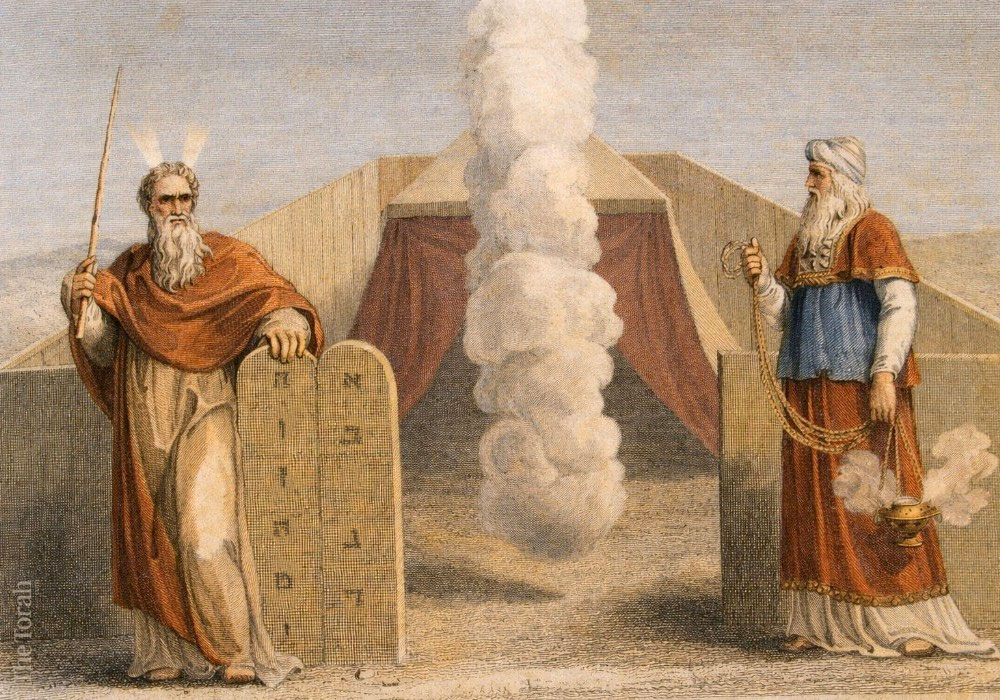
Moses and Aaron (colorized) Phillip Medhurst Bible illustration, Revd. Philip De Vere. Wikimedia
After the golden calf episode, when Moses had shattered the two tablets of the covenant, Moses ascends Mount Sinai with two new tablets in his hands, on which he will inscribe the words of YHWH’s new covenant. He returns forty days later, his face radiating with a glow that makes Aaron and the people terrified to approach him:
שׁמות לד:כט וַיְהִי בְּרֶדֶת מֹשֶׁה מֵהַר סִינַי וּשְׁנֵי לֻחֹת הָעֵדֻת בְּיַד מֹשֶׁה בְּרִדְתּוֹ מִן הָהָר וּמֹשֶׁה לֹא יָדַע כִּי קָרַן עוֹר פָּנָיו בְּדַבְּרוֹ אִתּוֹ. לד:ל וַיַּרְא אַהֲרֹן וְכָל בְּנֵי יִשְׂרָאֵל אֶת מֹשֶׁה וְהִנֵּה קָרַן עוֹר פָּנָיו וַיִּירְאוּ מִגֶּשֶׁת אֵלָיו.
Exod 34:29 When Moses came down from Mount Sinai with the two tablets of the covenant law in his hands, Moses was not aware that the skin of his face radiated when speaking with him. 34:30 When Aaron and all the Israelites saw Moses, behold, the skin of his face radiated, and they were afraid to come near him.[1]
There are four significant difficulties with this story.
Does Moses Cover His Face Before Speaking to the People?
First, interpreters often understand the story as implying that Moses at this point begins covering his face with a veil, and continues to do so each time he leaves the divine presence, so that the people will not be afraid when he relays God’s commandments to them. This would seem to be the obvious purpose of the veil. In the next verses, however, Moses speaks to the Israelites with his face still visible:
שׁמות לד:לא וַיִּקְרָא אֲלֵהֶם מֹשֶׁה וַיָּשֻׁבוּ אֵלָיו אַהֲרֹן וְכָל הַנְּשִׂאִים בָּעֵדָה וַיְדַבֵּר מֹשֶׁה אֲלֵהֶם. לד:לב וְאַחֲרֵי כֵן נִגְּשׁוּ כָּל בְּנֵי יִשְׂרָאֵל וַיְצַוֵּם אֵת כָּל אֲשֶׁר דִּבֶּר יְ־הוָה אִתּוֹ בְּהַר סִינָי.
Exod 34:31 But Moses called to them; so Aaron and all the leaders of the community came back to him, and Moses spoke to them. 34:32 Afterward all the Israelites came near him, and he gave them all the commands YHWH had given him on Mount Sinai.
Only after he has finished speaking does Moses cover his face with the veil:
שׁמות לד:לג וַיְכַל מֹשֶׁה מִדַּבֵּר אִתָּם וַיִּתֵּן עַל פָּנָיו מַסְוֶה.
Exod 34:33 When Moses finished speaking to them, he put a veil over his face.
Likewise, when Moses visits the Tabernacle, he removes the veil to speak with YHWH, but does not put the veil back on until after he has related YHWH’s commands to the people:
שׁמות לד:לד וּבְבֹא מֹשֶׁה לִפְנֵי יְ־הוָה לְדַבֵּר אִתּוֹ יָסִיר אֶת הַמַּסְוֶה עַד צֵאתוֹ וְיָצָא וְדִבֶּר אֶל בְּנֵי יִשְׂרָאֵל אֵת אֲשֶׁר יְצֻוֶּה. לד:לה וְרָאוּ בְנֵי יִשְׂרָאֵל אֶת פְּנֵי מֹשֶׁה כִּי קָרַן עוֹר פְּנֵי מֹשֶׁה וְהֵשִׁיב מֹשֶׁה אֶת הַמַּסְוֶה עַל פָּנָיו עַד בֹּאוֹ לְדַבֵּר אִתּוֹ.
Exod 34:34 Whenever Moses entered YHWH’s presence to speak with him, he removed the veil until he came out. And when he would come out, he would tell the Israelites what he had been commanded. 34:35 When the Israelites would see the face of Moses, that the skin of Moses’ face radiated, Moses would replace the veil over his face until he went in to speak with him.
If Moses indeed speaks to the Israelites directly, then what is the purpose of covering his face?[2]
Why Does Moses’ Face Radiate Only Now?
Second, it is unclear why Moses’ face should begin to radiate specifically at this point, after he descends from the mountain with the second set of tablets, given that he had already met God on the mountain several times beforehand (Exod 19:20; 24:18; 32:31). As the medieval exegete, Don Isaac Abravanel (1437–1508), asks:
אברבנאל, שמות לד:כח למה נעשה זה הנס למשה בזה הזמן רוצה לומר כאשר קבל הלוחות אחרונות ולא נעשה כזה ביום המעמד הנבחר במתן תורתנו או כאשר קבל הלוחות הראשונות או בפעם הב׳ כשעמד בהר להתפלל על עון העגל?
Abravanel, Exod 34:28 Why was this miracle done to Moses at this time, when he received the last tablets, and not done on the great day of the giving of our Torah, or when he received the first tablets, or subsequently, when he stood on the mountain to pray for the sin of the golden calf?”[3]
What Happens to the Tablets?
Third, the story of Moses’ veil never again refers to the second tablets. They are mentioned several times while Moses is on Sinai (34:1, 4, 27, 28), and they are in Moses’ hands when he comes down from the mountain (v. 29), but we do not learn what Moses does with them next. Does he put the veil on with one hand while holding the tablets with the other? The narrator has seemingly and strangely forgotten about them.
The Tabernacle Has Not Yet Been Built
Finally, the story indicates that Moses removes his veil whenever he approaches YHWH to receive divine instructions for the people:
שׁמות לד:לד וּבְבֹא מֹשֶׁה לִפְנֵי יְ־הוָה לְדַבֵּר אִתּוֹ יָסִיר אֶת הַמַּסְוֶה עַד צֵאתוֹ וְיָצָא וְדִבֶּר אֶל בְּנֵי יִשְׂרָאֵל אֵת אֲשֶׁר יְצֻוֶּה.
Exod 34:34 Whenever Moses entered YHWH’s presence to speak with him, he removed the veil until he came out. And when he would come out, he would tell the Israelites what he had been commanded.
The passage implies that Moses is meeting with YHWH in the Tabernacle, where YHWH would announce His commandments for Israel.[4] Yet at this point in the book of Exodus, the Tabernacle is only commanded. Its erection will not be completed until the end of the book.
Moses Sees God Face to Face in His ʾOhel Moʿed
These discrepancies indicate that the story of Moses’ veil (which appears at the end of Exod 34) is not in its original context: It belongs with an earlier report about the אֹהֶל מוֹעֵד, “the tent of meeting,” that Moses set up outside the camp (ch. 33). This story is broadly regarded as the earlier, non-Priestly parallel to the Priestly Tabernacle, or מִשְׁכַּן (which is also called אֹהֶל מוֹעֵד, but is situated inside the camp):[5]
שׁמות לג:ז וּמֹשֶׁה יִקַּח אֶת הָאֹהֶל וְנָטָה לוֹ מִחוּץ לַמַּחֲנֶה הַרְחֵק מִן הַמַּחֲנֶה וְקָרָא לוֹ אֹהֶל מוֹעֵד וְהָיָה כָּל מְבַקֵּשׁ יְ־הוָה יֵצֵא אֶל אֹהֶל מוֹעֵד אֲשֶׁר מִחוּץ לַמַּחֲנֶה.
Exod 33:7 Now Moses would take the Tent and pitch it outside the camp, at some distance from the camp. It was called the Tent of Meeting, and whoever sought YHWH would go out to the Tent of Meeting that was outside the camp.
According to this earlier account, the people would watch when Moses went out to the tent, and they would know that YHWH had come to meet with Moses when a pillar of cloud appeared at the tent’s entrance (vv. 8–10).[6] This story ends by stating that YHWH spoke with Moses face to face:
שׁמות לג:יא וְדִבֶּר יְ־הוָה אֶל מֹשֶׁה פָּנִים אֶל פָּנִים כַּאֲשֶׁר יְדַבֵּר אִישׁ אֶל רֵעֵהוּ וְשָׁב אֶל הַמַּחֲנֶה וּמְשָׁרְתוֹ יְהוֹשֻׁעַ בִּן נוּן נַעַר לֹא יָמִישׁ מִתּוֹךְ הָאֹהֶל.
Exod 33:11 And YHWH would speak to Moses face to face, as a person would speak to his friend. And he would then return to the camp; but his attendant, Joshua son of Nun, a youth, would not stir out of the Tent.
This verse, I suggest, provides the perfect backdrop for the opening words of our story about the veil:
שׁמות לד:כט ...וּמֹשֶׁה לֹא יָדַע כִּי קָרַן עוֹר פָּנָיו בְּדַבְּרוֹ אִתּוֹ.
Exod 34:29b And Moses was not aware that the skin of his face radiated when speaking with him.
In the original non-Priestly account, the fact that Moses speaks with YHWH face to face in the brand new tent of meeting explains why Moses’ face radiates now for the first time and why the people in the camp suddenly fear him.[7] The function of the veil in the original story is thus clear and simple—to allay the people’s fear of approaching Moses:
שׁמות לד:ל וַיַּרְא אַהֲרֹן וְכָל בְּנֵי יִשְׂרָאֵל אֶת מֹשֶׁה וְהִנֵּה קָרַן עוֹר פָּנָיו וַיִּירְאוּ מִגֶּשֶׁת אֵלָיו.
Exod 34:30 When Aaron and all the Israelites saw Moses, behold, the skin of his face radiated, and they were afraid to come near him.
Setting aside verses 31–32, which refer explicitly to Mount Sinai (more on this later) we find the continuation of this narrative in the next verse:
שׁמות לד:לג ...וַיִּתֵּן עַל פָּנָיו מַסְוֶה.
Exod 34:33b And he placed a veil over his face.
In this original non-Priestly story, Moses would always wear the veil, except when he would leave the camp and enter the tent of meeting to speak with YHWH (vv. 34a, 35; see appendix for reconstruction).[8]
Why Was the Account Moved?
Moses’ tent of meeting was set up outside the camp to allow for intimate and direct discourse between Moses and God at a safe distance from the public. The story of this tent makes no mention of Moses receiving laws and commandments there that he would relate to the community.
This explains why Moses, in this account, never speaks to the people: He has nothing to say to them. Whatever God told him was for his ears only. When Moses returns from his first meeting with YHWH, he simply enters the camp and covers his face with the veil.
For the Holiness (H) editors of the Torah, however, who edited the earlier Priestly and non-Priestly materials,[9] meetings with the deity must serve a normative function for the community, guiding the people to live according to YHWH’s will. One of the central functions of the Priestly Tabernacle is to provide the setting where the deity may deliver His commandments for Israel:
שׁמות כה:כב וְנוֹעַדְתִּי לְךָ שָׁם וְדִבַּרְתִּי אִתְּךָ מֵעַל הַכַּפֹּרֶת מִבֵּין שְׁנֵי הַכְּרֻבִים אֲשֶׁר עַל אֲרֹן הָעֵדֻת אֵת כָּל אֲשֶׁר אֲצַוֶּה אוֹתְךָ אֶל בְּנֵי יִשְׂרָאֵל.
Exod 25:22 There I will meet with you, and I will impart to you—from above the cover, from between the two cherubim that are on top of the Ark of the Pact—all that I will command you concerning the Israelite people.
The Holiness editors therefore transposed the setting of the story of the veil to the renewal of the covenant at Mount Sinai and the giving of the second tablets of law, adding the phrase shown in italics (see appendix for full reconstruction):
שׁמות לד:כט וַיְהִי בְּרֶדֶת מֹשֶׁה מֵהַר סִינַי וּשְׁנֵי לֻחֹת הָעֵדֻת בְּיַד מֹשֶׁה בְּרִדְתּוֹ מִן הָהָר וּמֹשֶׁה לֹא יָדַע כִּי קָרַן עוֹר פָּנָיו בְּדַבְּרוֹ אִתּוֹ.
Exod 34:29 When Moses came down from Mount Sinai with the two tablets of the covenant law in his hands, Moses was not aware that the skin of his face radiated when speaking with him.
The expression לֻחֹת הָעֵדֻת, “the tablets of the covenant law,” in this verse was crafted by the Holiness editors, who combined the non-Priestly לֻחֹת (in the expression לֻחֹת הָאֶבֶן, “tablets of stone”; Exod 24:12), with the Priestly term, עֵדֻת (ʿedut) .[10]
Similarly, they added the essential clause that Moses would relay YHWH’s commandments (also in italics):
שׁמות לד:לד וּבְבֹא מֹשֶׁה לִפְנֵי יְ־הוָה לְדַבֵּר אִתּוֹ יָסִיר אֶת הַמַּסְוֶה עַד צֵאתוֹ וְיָצָא וְדִבֶּר אֶל בְּנֵי יִשְׂרָאֵל אֵת אֲשֶׁר יְצֻוֶּה.
Exod 34:34 Whenever Moses entered YHWH’s presence to speak with him, he removed the veil until he came out. And when he would come out, he would tell the Israelites what he had been commanded.
The editors thus align the narrative with YHWH’s instructions for the Tabernacle (Exod 25:22, cited above): Not only would Moses meet with YHWH, he would also receive divine commandments for the people. Indeed, that was the whole purpose of him going there.
Moses’ Face Was Not Dangerous
The original non-Priestly story depicted Moses’ radiance as an outcome of his face-to-face meetings with YHWH. The people’s fear in the story implies that Moses had taken on a hazardous, semi-divine quality. Just as seeing a divine being could be deadly (Exod 33:20; Judg 6:22, 13:22), so seeing Moses posed a threat to the safety of the people. This, however, comes dangerously close to a mythological outlook, which sees humans as capable of becoming semi-divine.
In response to this problematic depiction of Moses, the Holiness School editors took a mediating, yes and no, position: Moses covers his face with a protective veil, but he does so only after bringing the people close to him and speaking with them directly, with his face uncovered:
שׁמות לד:לא וַיִּקְרָא אֲלֵהֶם מֹשֶׁה וַיָּשֻׁבוּ אֵלָיו אַהֲרֹן וְכָל הַנְּשִׂאִים בָּעֵדָה וַיְדַבֵּר מֹשֶׁה אֲלֵהֶם. לד:לב וְאַחֲרֵי כֵן נִגְּשׁוּ כָּל בְּנֵי יִשְׂרָאֵל וַיְצַוֵּם אֵת כָּל אֲשֶׁר דִּבֶּר יְ־הוָה אִתּוֹ בְּהַר סִינָי.
Exod 34:31 But Moses called to them; so Aaron and all the leaders of the community came back to him, and Moses spoke to them. 34:32 Afterward all the Israelites came near him, and he gave them all the commands YHWH had given him on Mount Sinai.
The expression אַהֲרֹן וְכָל הַנְּשִׂאִים בָּעֵדָה, “Aaron and all the leaders of the community,” reflects Priestly language, indicating that the passage is an H supplement to the non-Priestly story.[11] Moses is here separated and exalted by his unique aura, and by his veil, but is at the same time accessible to the people and thoroughly non-hazardous. He does not have divine status.
Not Only the Elites, Can Encounter the Divine
In the original story, Moses encounters the divine presence outside the camp in the tent of meeting, far away from the presence of the community. And though Moses returns to the camp with a residue of the divine aura embedded on his face, it is hidden from the people by Moses’ veil.
This original story reflects a conception, also found elsewhere in the Bible, that visual contact with the divine presence is largely restricted to religious elites. Thus, YHWH instructs Moses at Mt. Sinai to warn the people פֶּן יֶהֶרְסוּ אֶל יְ־הוָה לִרְאוֹת וְנָפַל מִמֶּנּוּ רָב, “lest they break through to gaze at YHWH and many of them perish” (Exod 19:21). Only Moses, Aaron, Nadav and Avihu, and seventy elders of Israel, ascend the mountain and see the God of Israel, and the sky-blue pavement under his feet (24:9–11).
The Holiness School authors sought to offer the broader community a greater share in the experience of encounters with the divine.[12] Thus, the tent of meeting is situated in the center of the camp (not outside it), where God might meet with them (not just with Moses) and dwell in their midst, so that they know that He is their God (Exod 29:43–46).
In addition, H insists that the divine cloud and fire settled above the Tabernacle and were permanently visible to the Israelites, not hidden inside the Tabernacle (cf. Lev 16:2), accessible only to the elect.[13] The rising and setting of the cloud and fire directly signaled to the people when to travel and when to pitch their tents (Exod 40:34–38; Num 9:15–23).
Likewise, in the revised version of the story of the veil, Moses calls Aaron, the chieftains, and then all the Israelites to hear the divine commandments while his face is visible (vv. 31–32). Seeing up close the radiance that Moses received from YHWH allows the people, albeit indirectly, to experience something of the splendor of the divine presence that Moses experiences directly.
YHWH Initiates the Divine-Human Dialogue
The Holiness editors made one final significant change to our story. In the Masoretic Text, we read that YHWH would speak to Moses in his tent and “he” would return to camp:
שׁמות לג:יא וְדִבֶּר יְ־הוָה אֶל מֹשֶׁה פָּנִים אֶל פָּנִים כַּאֲשֶׁר יְדַבֵּר אִישׁ אֶל רֵעֵהוּ וְשָׁב אֶל הַמַּחֲנֶה....
Exod 33:11 And YHWH would speak to Moses face to face, as a person would speak to his friend. And he would then return to the camp...
Naphtali Tur-Sinai (1886–1973) notes that since YHWH is the subject, it should say, וְשָׁב מֹשֶׁה אֶל הַמַּחֲנֶה, “and Moses would return to the camp.” Otherwise, it sounds like YHWH is returning to the camp. The words וְשָׁב אֶל הַמַּחֲנֶה, “he would return to the camp,” without Moses’ name, imply, according to Tur-Sinai, that Moses is the subject of the entire sentence, and that the verse originally stated ודבר משה אל י־הוה פנים אל פנים, “And Moses would speak to YHWH face to face.”[14]
I believe that Tur-Sinai’s intuition is correct, and that we must attribute the present form of the text to the Holiness editors. To avoid the implication that Moses irreverently initiated the dialogue with God—as a person might do with a friend rather than with a deity—the Holiness editors insisted that it was God instead who spoke with Moses. Moses listened, and perhaps responded (cf. Num 27:12–23), but he did not initiate.
In the original non-Priestly account, Moses’ tent of meeting is the place where Moses goes, unannounced, and at the time of his choosing, to address the deity and present him with his queries. This conception of Moses as initiating conversation with YHWH aligns with the non-Priestly theophany at Sinai, where Moses speaks, and God responds with a, or perhaps His, voice:
שׁמות יט:יט וַיְהִי קוֹל הַשּׁוֹפָר הוֹלֵךְ וְחָזֵק מְאֹד מֹשֶׁה יְדַבֵּר וְהָאֱלֹהִים יַעֲנֶנּוּ בְקוֹל.
Exod 19:19 The blare of the horn grew louder and louder. As Moses spoke, God answered him in thunder.
Indeed, the story of Moses’ veil still preserves the idea that Moses addresses YHWH: Moses’ face radiates בדברו אתו, “when speaking with Him” (v. 29b); and Moses would go לדבר אתו, “to speak with Him” (vv. 34a, 35).
The Holiness editors of our story, however, were uncomfortable presenting YHWH as responding to Moses. Thus, they describe Moses as relaying to the people כָּל אֲשֶׁר דִּבֶּר יְ־הוָה אִתּוֹ בְּהַר סִינָי, “all that YHWH had spoken with him on Mount Sinai” (34:32). It was YHWH who spoke to Moses, dictating his commandments, and not the other way around! Moses is chiefly a listener.
We see the Holiness author’s sensitivity to the issue of who takes precedence in divine encounters in their account of YHWH communicating with Moses in the Tabernacle:[15]
במדבר ז:פט וּבְבֹא מֹשֶׁה אֶל אֹהֶל מוֹעֵד לְדַבֵּר אִתּוֹ וַיִּשְׁמַע אֶת הַקּוֹל מִדַּבֵּר אֵלָיו מֵעַל הַכַּפֹּרֶת אֲשֶׁר עַל אֲרֹן הָעֵדֻת מִבֵּין שְׁנֵי הַכְּרֻבִים וַיְדַבֵּר אֵלָיו.
Num 7:89 When Moses entered the tent of meeting to speak with him, he heard the voice speaking to him from above the atonement cover, which is above the ark of the covenant, between the two cherubim, and he spoke with him.[16]
The opening words of this passage are almost exactly those of the original non-Priestly story of Moses’ veil: וּבְבֹא מֹשֶׁה לִפְנֵי יְ־הוָה לְדַבֵּר אִתּוֹ, “Whenever Moses entered YHWH’s presence to speak with him” (Exod 34:34a). The Holiness authors preserve the non-Priestly opening phrase, but then clarify that Moses would not simply enter the tent of meeting and start speaking, but would first be addressed by the divine voice from between the cherubim. Only then would he speak. We may also see Numbers 7:89 as a pointed reversal of the non-Priestly Sinai theophany (Exod 19:19), for here it is the divine voice that speaks, and Moses who responds.
Diminishing Moses’ Status, Enhancing Israel’s
The Holiness editorial transformations of the story of Moses’ veil reflect two complementary concerns. One concern is to diminish the divine-like status of Moses, who in earlier sources initiates conversations with God as a friend (Exod 33:11). The other is to enhance the spiritual stature of the Israelite community, allowing them to gaze freely at the divine radiance on Moses’ face. These concerns work together to bridge the hierarchical gap between the religious elites and the people of Israel.
Appendix
The Redaction of Exodus 34:29–35
In the text below, the Holiness editors’ additions to the original veil story are indented.
שׁמות לד:כט וַיְהִי בְּרֶדֶת מֹשֶׁה מֵהַר סִינַי וּשְׁנֵי לֻחֹת הָעֵדֻת בְּיַד מֹשֶׁה בְּרִדְתּוֹ מִן הָהָר
Exod 34:29 When Moses came down from Mount Sinai with the two tablets of the covenant law in his hands,
וּמֹשֶׁה לֹא יָדַע כִּי קָרַן עוֹר פָּנָיו בְּדַבְּרוֹ אִתּוֹ. לד:ל וַיַּרְא אַהֲרֹן וְכָל בְּנֵי יִשְׂרָאֵל אֶת מֹשֶׁה וְהִנֵּה קָרַן עוֹר פָּנָיו וַיִּירְאוּ מִגֶּשֶׁת אֵלָיו.
Moses was not aware that the skin of his face radiated when speaking with him. 34:30 When Aaron and all the Israelites saw Moses, behold, the skin of his face radiated, and they were afraid to come near him.
לד:לא וַיִּקְרָא אֲלֵהֶם מֹשֶׁה וַיָּשֻׁבוּ אֵלָיו אַהֲרֹן וְכָל הַנְּשִׂאִים בָּעֵדָה וַיְדַבֵּר מֹשֶׁה אֲלֵהֶם. לד:לב וְאַחֲרֵי כֵן נִגְּשׁוּ כָּל בְּנֵי יִשְׂרָאֵל וַיְצַוֵּם אֵת כָּל אֲשֶׁר דִּבֶּר יְ־הוָה אִתּוֹ בְּהַר סִינָי. לד:לג וַיְכַל מֹשֶׁה מִדַּבֵּר אִתָּם
Exod 34:31 But Moses called to them; so Aaron and all the leaders of the community came back to him, and Moses spoke to them. 34:32 Afterward all the Israelites came near him, and he gave them all the commands YHWH had given him on Mount Sinai. 34:33 When Moses finished speaking to them,
וַיִּתֵּן עַל פָּנָיו מַסְוֶה. לד:לד וּבְבֹא מֹשֶׁה לִפְנֵי יְ־הוָה לְדַבֵּר אִתּוֹ יָסִיר אֶת הַמַּסְוֶה עַד צֵאתוֹ
And he put a veil over his face. 34:34 Whenever Moses entered YHWH’s presence to speak with him, he removed the veil until he came out.
וְיָצָא וְדִבֶּר אֶל בְּנֵי יִשְׂרָאֵל אֵת אֲשֶׁר יְצֻוֶּה.
And when he would come out, he would tell the Israelites what he had been commanded.
לד:לה וְרָאוּ בְנֵי יִשְׂרָאֵל אֶת פְּנֵי מֹשֶׁה כִּי קָרַן עוֹר פְּנֵי מֹשֶׁה וְהֵשִׁיב מֹשֶׁה אֶת הַמַּסְוֶה עַל פָּנָיו עַד בֹּאוֹ לְדַבֵּר אִתּוֹ.
34:35 When the Israelites would see the face of Moses, that the skin of Moses’ face radiated, Moses would put the veil back over his face until he went in to speak with him.[17]
TheTorah.com is a 501(c)(3) nonprofit organization.
We rely on the support of readers like you. Please support us.
Published
March 5, 2026
|
Last Updated
October 3, 2026
Previous in the Series
Next in the Series
Before you continue...
Thank you to all our readers who offered their year-end support.
Please help TheTorah.com get off to a strong start in 2025.
Footnotes


Prof. Rabbi David Frankel is Associate Professor of Bible at the Schechter Institute of Jewish Studies in Jerusalem, where he teaches M.A. and rabbinical students. He did his Ph.D. at the Hebrew University of Jerusalem under the direction of Prof. Moshe Weinfeld, and is the author or The Murmuring Stories of the Priestly School (VTSupp 89) and The Land of Canaan and the Destiny of Israel (Eisenbrauns).
Essays on Related Topics: