

 Edit article
Series
The King’s Spear


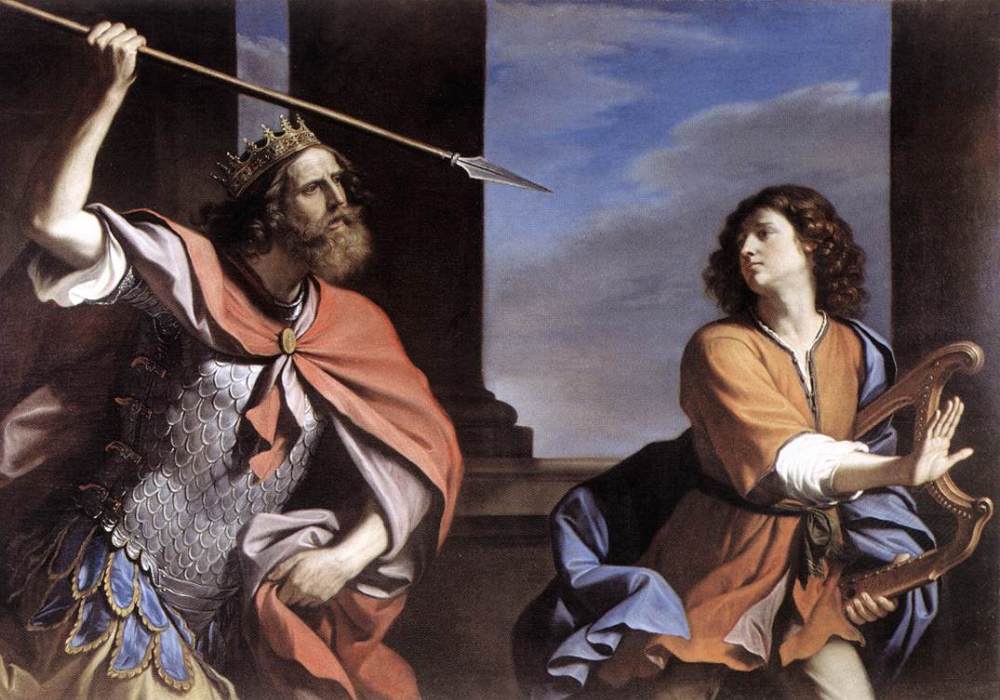
Saul Attacking David, Guercino, 1646. Galleria Nazionale d'Arte Antica, Wikimedia
David’s Spear at the Coronation of King Joash
Upon the death of King Ahaziah of Judah (ca. 842 B.C.E.), his mother, Athalya, seizes the throne in Jerusalem and attempts to eliminate any rivals, including her grandson, Joash. To save Joash’s life, his aunt Jehosheba and her husband Jehoiada, the high priest, conceal him in the Jerusalem temple (2 Kgs 11:1–6; 2 Chron 22:10–12). Athalya was the only queen in the long line of Davidic kings, although the biblical text suggests that she was not a legitimate ruler.[1]
Six years later, Jehoiada organizes the overthrow of Queen Athalya. As part of his plan, he orders the guards to come armed to the Temple (vv. 7–8).[2] Then he brings out King David’s חֲנִית, “spear” and shields, which we are told were kept in the Temple:
מלכים ב יא:י וַיִּתֵּן הַכֹּהֵן לְשָׂרֵי המאיות [הַמֵּאוֹת] אֶת הַחֲנִית וְאֶת הַשְּׁלָטִים אֲשֶׁר לַמֶּלֶךְ דָּוִד אֲשֶׁר בְּבֵית יְ־הוָה.
2 Kgs 11:10 And the priest delivered to the captains the spear and the shields that had been King David’s which were in YHWH’s temple (cf. 2 Chr 23:9).[3]
Their mention is striking, because no biblical narratives about David depict him carrying a spear. Considering that the guards are already armed, and David’s weapons are two hundred years old, the purpose of these relics must be symbolic, rather than military.[4] After the captains receive David’s weapons, the guards station themselves throughout the Temple:
מלכים ב יא:יא וַיַּעַמְדוּ הָרָצִים אִישׁ וְכֵלָיו בְּיָדוֹ מִכֶּתֶף הַבַּיִת הַיְמָנִית עַד כֶּתֶף הַבַּיִת הַשְּׂמָאלִית לַמִּזְבֵּחַ וְלַבָּיִת עַל הַמֶּלֶךְ סָבִיב.
2 Kgs 11:11 The guards stood, every man with his weapons in his hand, from the south side of the house to the north side of the house, around the altar and the house, to guard the king on every side.
Joash (ca. 837–800 B.C.E.) is then crowned king. First, the crown and the עֵדוּת (ʿedut), “testimony,” are placed on Joash, and then he is anointed:
מלכים ב יא:יב וַיּוֹצִא אֶת בֶּן הַמֶּלֶךְ וַיִּתֵּן עָלָיו אֶת הַנֵּזֶר וְאֶת הָעֵדוּת וַיַּמְלִכוּ אֹתוֹ וַיִּמְשָׁחֻהוּ וַיַּכּוּ כָף וַיֹּאמְרוּ יְחִי הַמֶּלֶךְ.
2 Kgs 11:12 And he brought out the son of the king and placed on him the crown and the testimony, and they made him king, anointed him, clapped hands, and said, “May the king live!”
Though the precise nature of the ʿedut is disputed, it appears to be a tangible, material, and symbolic expression of YHWH’s moral and juridical requirements of the king.[5] The coronation is briefly interrupted by the appearance, and execution, of Queen Athalya (vv. 13–16), but the coronation ritual is completed when the king is bound by covenant to YHWH and to the people:
מלכים ב יא:יז וַיִּכְרֹת יְהוֹיָדָע אֶת הַבְּרִית בֵּין יְ־הוָה וּבֵין הַמֶּלֶךְ וּבֵין הָעָם לִהְיוֹת לְעָם לַי־הוָה וּבֵין הַמֶּלֶךְ וּבֵין הָעָם.
2 Kgs 11:17 And Jehoiada solemnized the covenant between YHWH, on the one hand, and the king and the people, on the other—that they should be the people of YHWH—as well as between the king and the people.
David’s weapons are not mentioned again, and their purpose is not explained, but we can extrapolate their significance from a similar sequence of events in the coronation of the Amorite tribal chieftain Zimri-Lim.[6]
The Weapons of Addu at Zimri-Lim’s Enthronement
In a prophetic oracle to Zimri-Lim (ca. 1774–1760 B.C.E.), we learn that his dynastic ancestor, Yahdun-Lim (ca. 1810–1794 B.C.E.), had forfeited his allegiance to the storm-god Addu, and thus the god gave the land and the rule to another chieftain, Shamshi-Addu.[7] After break in the tablet, it takes up again with the god Addu saying that he has now restored Zimri-Lim to the throne and has given him the weapons with which Addu defeated the Sea (in a mythic battle to bring order to the primordial chaos):
Mari A.1968.1ˊ-6ˊ I brought you back to the t[hrone of your father, I brought you back. The weapon[s] with which I fought with the Sea, I gave to you.[8]
Possession of the weapons confirms that the territory and the rule rightfully belong to Zimri-Lim. Addu then states that he anointed Zimri-Lim:
Mari A.1968.1ˊ-6ˊ With the oil of my numinous radiance, I anointed you, and no one before you could sta[nd].
Like Joash with King David’s weapons, Addu’s weapons were present at Zimri-Lim’s coronation.
Indeed, a separate letter from Zimri-Lim’s officer, Sumu-Ila, confirms that weapons were brought from Addu’s temple to Terqa, the religious center of the kingdom of Mari (in modern Syria), where the coronation would have taken place:[9]
ARMT 26/3 3:5–9 = A.1858 The weapons of the god Addu of Aleppo have arrived here. In the temple of the god Dagan in Terqa, I am storing them.[10]
In the prophetic oracle, after reminding Zimri-Lim of his coronation, Addu concludes with a demand that Zimri-Lim rule justly:
Mari A.1968.1ˊ-6ˊ My one word hear! When someone who has a lawsuit cries out to you, saying, “I have been robbed!,” stand up and judge his lawsuit. [Ju]stly ans[wer him].
Again, like Joash with the ʿedut and covenant with YHWH and the people, Zimri-Lim may have committed himself to upholding justice as part of that coronation ritual, and the oracle’s purpose is to remind him of this obligation. Maintaining justice was a major royal responsibility in the ancient Near East.[11]
The role of Addu’s weapons at the coronations was ceremonial and symbolic. They represented his presence and blessing at the event, and they were an ongoing physical reminder of the obligations Zimri-Lim assumed when he was enthroned.[12]
Similarly, the presence of הַחֲנִית וְאֶת הַשְּׁלָטִים אֲשֶׁר לַמֶּלֶךְ דָּוִד, “the spear and shields that were King David’s” (2 Kgs 11:10), at Joash’s coronation are symbolic of Joash’s legitimacy, and perhaps even YHWH’s blessing. Together with the ʿedut, the weapons also represent the new king’s covenantal obligations.
Saul’s Spear
Aside from this single reference to David’s חֲנִית, “spear,” in the Joash narrative, among all of the biblical narratives of the kings of Israel and Judah, only one ruler is depicted as holding a חֲנִית: Saul. Remarkably, his spear is mentioned in five narratives about Saul’s reign.
First Samuel claims that the Philistines held a monopoly on the production of iron weapons and tools (13:19–20),[13] and thus among the Israelite soldiers, only Saul and his son Jonathan possessed iron weapons:
שׁמואל א יג:כב וְהָיָה בְּיוֹם מִלְחֶמֶת וְלֹא נִמְצָא חֶרֶב וַחֲנִית בְּיַד כָּל הָעָם אֲשֶׁר אֶת שָׁאוּל וְאֶת יוֹנָתָן וַתִּמָּצֵא לְשָׁאוּל וּלְיוֹנָתָן בְּנוֹ.
1 Sam 13:22 On the day of the battle [against the Philistines], no sword or spear was to be found in the possession of any of the troops with Saul and Jonathan; only Saul and Jonathan had them.
Yet in most of the episodes in which we see Saul holding a spear, the setting is one in which Saul is acting as ruler, not warrior. In addition, in each case, the weapon is further defined as הַחֲנִית, “the spear,” or חֲנִיתוֹ “his spear”: This is not just an ordinary spear in Saul’s possession, but a specific spear associated with Saul.
In the first two examples, Saul tries to kill David without justification:
שׁמואל א יח:י וַיְהִי מִמָּחֳרָת וַתִּצְלַח רוּחַ אֱלֹהִים רָעָה אֶל שָׁאוּל וַיִּתְנַבֵּא בְתוֹךְ הַבַּיִת וְדָוִד מְנַגֵּן בְּיָדוֹ כְּיוֹם בְּיוֹם וְהַחֲנִית בְּיַד שָׁאוּל. יח:יא וַיָּטֶל שָׁאוּל אֶת הַחֲנִית וַיֹּאמֶר אַכֶּה בְדָוִד וּבַקִּיר וַיִּסֹּב דָּוִד מִפָּנָיו פַּעֲמָיִם.
1 Sam 18:10 The next day an evil spirit of God gripped Saul and he began to rave in the house, while David was playing [the lyre], as he did daily. Saul had the spear in his hand, 18:11 and Saul threw the spear, thinking to pin David to the wall. But David eluded him twice.
A chapter later, a variant account presents an almost identical scene:
שׁמואל א יט:ט וַתְּהִי רוּחַ יְ־הוָה רָעָה אֶל שָׁאוּל וְהוּא בְּבֵיתוֹ יוֹשֵׁב וַחֲנִיתוֹ בְּיָדוֹ וְדָוִד מְנַגֵּן בְּיָד. יט:י וַיְבַקֵּשׁ שָׁאוּל לְהַכּוֹת בַּחֲנִית בְּדָוִד וּבַקִּיר וַיִּפְטַר מִפְּנֵי שָׁאוּל וַיַּךְ אֶת הַחֲנִית בַּקִּיר וְדָוִד נָס וַיִּמָּלֵט בַּלַּיְלָה הוּא.
1 Sam 19:9 Then an evil spirit of YHWH came upon Saul while he was sitting in his house with his spear in his hand, and David was playing [the lyre]. 19:10 Saul tried to pin David to the wall with the spear, but he eluded Saul, so that he drove the spear into the wall. David fled and got away.
The third time, Saul tries to kill his own son when Jonathan objects that Saul’s plan to kill David is unjust:
שׁמואל א כ:לב וַיַּעַן יְהוֹנָתָן אֶת שָׁאוּל אָבִיו וַיֹּאמֶר אֵלָיו לָמָּה יוּמַת מֶה עָשָׂה. כ:לג וַיָּטֶל שָׁאוּל אֶת הַחֲנִית עָלָיו לְהַכֹּתוֹ וַיֵּדַע יְהוֹנָתָן כִּי כָלָה הִיא מֵעִם אָבִיו לְהָמִית אֶת דָּוִד.
1 Sam 20:33 But Jonathan spoke up and said to his father, “Why should he be put to death? What has he done?” 20:33 At that, Saul threw his spear at him to strike him down; and Jonathan realized that his father was determined to do away with David.
The fourth time that we encounter the spear, it is in Saul’s hand as he holds court:
שׁמואל א כב:ו וַיִּשְׁמַע שָׁאוּל כִּי נוֹדַע דָּוִד וַאֲנָשִׁים אֲשֶׁר אִתּוֹ וְשָׁאוּל יוֹשֵׁב בַּגִּבְעָה תַּחַת הָאֶשֶׁל בָּרָמָה וַחֲנִיתוֹ בְיָדוֹ וְכָל עֲבָדָיו נִצָּבִים עָלָיו.
1 Sam 22:6 Saul heard that David and the men with him had been located. Saul was then in Gibeah, sitting under the tamarisk tree on the height, his spear in his hand, with all his courtiers in attendance upon him.
In the narrative that follows, Saul orders the execution of the priests and inhabitants of Nob for aiding David (vv. 16–19). The next time that we hear about the spear, it plays a central role in a confrontation between David and Saul.
David Steals Saul’s Spear
With a troop of 3000 soldiers (1 Sam 26:2), Saul pursues David in the wilderness of Ziph, wanting to kill him. Rather than fleeing, David sneaks into Saul’s camp at night. Finding Saul asleep, one of David’s men urges David to kill Saul, but David refuses:
שׁמואל א כו:ט וַיֹּאמֶר דָּוִד אֶל אֲבִישַׁי אַל תַּשְׁחִיתֵהוּ כִּי מִי שָׁלַח יָדוֹ בִּמְשִׁיחַ יְ־הוָה וְנִקָּה.
1 Sam 26:9 But David said to Abishai, “Don’t do him violence! No one can lay hands on YHWH’s anointed with impunity.”
Instead, David takes away Saul’s spear:
שׁמואל א כו:יב וַיִּקַּח דָּוִד אֶת הַחֲנִית וְאֶת צַפַּחַת הַמַּיִם מֵרַאֲשֹׁתֵי שָׁאוּל וַיֵּלְכוּ לָהֶם וְאֵין רֹאֶה וְאֵין יוֹדֵעַ וְאֵין מֵקִיץ כִּי כֻלָּם יְשֵׁנִים כִּי תַּרְדֵּמַת יְ־הוָה נָפְלָה עֲלֵיהֶם.
1 Sam 26:12 So David took away the spear and the water jar at Saul’s head, and they left. No one saw or knew or woke up; all remained asleep; a deep sleep from YHWH had fallen upon them.[14]
The term חֲנִית appears six times in the episode, underlining its importance (vv. 7, 8, 11, 12, 16, 22). The next morning, David taunts Saul’s troops from a point of observation overlooking the camp, pointing to the missing spear as evidence of their failure to protect the king:
שׁמואל א כו:טז לֹא טוֹב הַדָּבָר הַזֶּה אֲשֶׁר עָשִׂיתָ חַי יְ־הוָה כִּי בְנֵי מָוֶת אַתֶּם אֲשֶׁר לֹא שְׁמַרְתֶּם עַל אֲדֹנֵיכֶם עַל מְשִׁיחַ יְ־הוָה וְעַתָּה רְאֵה אֵי חֲנִית הַמֶּלֶךְ וְאֶת צַפַּחַת הַמַּיִם אֲשֶׁר מראשתו [מְרַאֲשֹׁתָיו].
1 Sam 26:16 You have not given a good account of yourself! As YHWH lives, [all of] you deserve to die, because you did not keep watch over your lord, YHWH’s anointed. Look around, where are the king’s spear and the water jar that were at his head?”
David then confronts Saul about Saul’s duty to uphold justice:
שׁמואל א כו:יח וַיֹּאמֶר לָמָּה זֶּה אֲדֹנִי רֹדֵף אַחֲרֵי עַבְדּוֹ כִּי מֶה עָשִׂיתִי וּמַה בְּיָדִי רָעָה.
1 Sam 26:18 And he went on, “But why does my lord continue to pursue his servant? What have I done, and what wrong am I guilty of?”
David further emphasizes that Saul’s actions are forcing him to leave the land of Israel, and thus to serve other gods:
שׁמואל א כו:יט וְעַתָּה יִשְׁמַע נָא אֲדֹנִי הַמֶּלֶךְ אֵת דִּבְרֵי עַבְדּוֹ אִם יְ־הוָה הֱסִיתְךָ בִי יָרַח מִנְחָה וְאִם בְּנֵי הָאָדָם אֲרוּרִים הֵם לִפְנֵי יְ־הוָה כִּי גֵרְשׁוּנִי הַיּוֹם מֵהִסְתַּפֵּחַ בְּנַחֲלַת יְ־הוָה לֵאמֹר לֵךְ עֲבֹד אֱלֹהִים אֲחֵרִים.
1 Sam 26:19 “Now let my lord the king hear his servant out. If YHWH has incited you against me, let Him be appeased by an offering; but if it is men, may they be accursed of YHWH! For they have driven me out today, so that I cannot have a share in YHWH’s possession, but am told, ‘Go and worship other gods.’”
Saul then admits that he has wronged David:
שׁמואל א כו:כא וַיֹּאמֶר שָׁאוּל חָטָאתִי שׁוּב בְּנִי דָוִד כִּי לֹא אָרַע לְךָ עוֹד תַּחַת אֲשֶׁר יָקְרָה נַפְשִׁי בְּעֵינֶיךָ הַיּוֹם הַזֶּה הִנֵּה הִסְכַּלְתִּי וָאֶשְׁגֶּה הַרְבֵּה מְאֹד.
1 Sam 26:21 Then Saul said, “I have done wrong. Come back, my son David, for I will never harm you again, seeing how you have held my life precious this day. Yes, I have been a fool, and I have made a great mistake.”
Only then does David return the spear:
שׁמואל א כו:כב וַיַּעַן דָּוִד וַיֹּאמֶר הִנֵּה החנית [חֲנִית] הַמֶּלֶךְ וְיַעֲבֹר אֶחָד מֵהַנְּעָרִים וְיִקָּחֶהָ.
1 Sam 26:22 David replied, “Here is Your Majesty’s spear. Let one of the young men come over and get it.”
With that gesture, David publicly acknowledges Saul’s rule. Perhaps like Addu to Zimri-Lim, David reminds Saul of the royal obligations that he took on at the moment of his enthronement. David’s next words acknowledge that Saul is anointed by YHWH, who rewards the righteous, subtly implying that the reverse is also true:
שׁמואל א כו:כג וַי־הוָה יָשִׁיב לָאִישׁ אֶת־צִדְקָתוֹ וְאֶת אֱמֻנָתוֹ אֲשֶׁר נְתָנְךָ יְ־הוָה הַיּוֹם בְּיָד וְלֹא אָבִיתִי לִשְׁלֹחַ יָדִי בִּמְשִׁיחַ יְ־הוָה.
1 Sam 26:23 YHWH rewards everyone for his righteousness and faithfulness—for this day YHWH delivered you into my hands and I would not raise a hand against YHWH’s anointed.
The spear in these narratives is not merely a weapon, but a symbol of Saul’s status, authority, and responsibility as Israel’s king. In the hands of the biblical authors, however, the spear takes on a new role—as a persistent symbol of Saul’s abuse of his royal power and a reminder of his responsibility to rule justly.
Saul Dies with the Spear in Hand
The last time that we hear about Saul’s spear is in a report of his death, recounted to David by an Amalekite. David asks the man how he knows that Saul is dead:
שׁמואל ב א:ו וַיֹּאמֶר הַנַּעַר הַמַּגִּיד לוֹ נִקְרֹא נִקְרֵיתִי בְּהַר הַגִּלְבֹּעַ וְהִנֵּה שָׁאוּל נִשְׁעָן עַל חֲנִיתוֹ וְהִנֵּה הָרֶכֶב וּבַעֲלֵי הַפָּרָשִׁים הִדְבִּקֻהוּ.
2 Sam 1:6 The young man who brought him the news answered, “I happened to be at Mount Gilboa, and I saw Saul leaning on his spear, and the chariots and horsemen closing in on him.
Strikingly, in an earlier account of Saul’s death, Saul falls on his arms-bearer’s sword, and no mention is made of his spear (1 Sam 31:4). The reference to the spear in the Amalekite’s account emphasizes Saul’s identity as ruler, since Saul does not choose to use the spear to take his own life.[15] Instead, the Amalekite reports he ended Saul’s life at Saul’s request (vv. 9–10).
Royal Spears in the Ancient Near East
The only two human kings who possess a spear in the Bible are Saul and David. We do find, however, that YHWH has a spear. In Habakkuk’s vision of YHWH’s coming intervention for the salvation of his people, YHWH fights with arrows and a spear:
חבקוק ג:יא שֶׁמֶשׁ יָרֵחַ עָמַד זְבֻלָה לְאוֹר חִצֶּיךָ יְהַלֵּכוּ לְנֹגַהּ בְּרַק חֲנִיתֶךָ.
Hab 3:11 Sun [and] moon stand still on high as Your arrows fly in brightness, Your flashing spear in brilliance.
In the broader ancient Near East, we find more evidence of spears serving as symbols of the king. A text from a Hittite cult festival (13th c. B.C.E.) mentions the ceremonial use of a divine spear by both the king and two of his guards:
The king goes to the temple of the Tutelary deity. (There are) two palace officials. One royal bodyguard holds a spear of iron; one palace official holds a māri-spear[16] of iron. They march before the king. § The king (also) holds a māri-spear of iron. The king goes to the temple of the tutelary deity.[17]
In iconography, the māri-spear is associated with several city gods in the Hittite tradition, as well as with the storm gods. This divine weapon is used in religious festivals as a demonstration of strength and symbolizes a unique and privileged bond between the king and the gods.[18]
The town of Emar, on the banks of the Euphrates, was the capital of the Hittite vassal state of Ashtata (13th c. B.C.E). In two Emar legal texts, the expression “carrying the spear” is used to describe taking the bond of service to the king.[19] In one, the king’s brothers are “those who carry the bronze spear before the king.”[20] In the other text, the sons of a certain Kitta are enjoined to take their rights to their father’s house, and to “bear the (bronze?) weapon of the king.”[21]
Finally, in a Ugaritic text (ca. 13th–12th c. B.C.E), when King Kirtu falls gravely ill, he wishes to see his daughter Thitmanit, and he sends his son Ilihu to fetch her. Ilihu carries his spear, likely marking his royal status, since this is not a military mission:[22]
Kirta III, col. 1, ll. 46–53 Then the Hero Ilihu took his spear in his hand, his lance in his right hand, and he proceeded on his run. As he arrived, it grew dark; his sister had gone out to draw water. He placed his spear on the hill; he went to meet her at the gate.[23]
The comparative material found at Mari, Emar, and among the Hittites highlights how a symbolic weapon could be used in conjunction with the anointing of a new tribal leader at his coronation. The focus here has been the spear, but other texts reference a mace, an axe, or a divine net.[24] These weapons served as symbols of the leader’s rule and responsibility under divine aegis.
TheTorah.com is a 501(c)(3) nonprofit organization.
We rely on the support of readers like you. Please support us.
Published
February 19, 2026
|
Last Updated
September 15, 2026
Previous in the Series
Next in the Series
Before you continue...
Thank you to all our readers who offered their year-end support.
Please help TheTorah.com get off to a strong start in 2025.
Footnotes


Prof. Daniel Bodi is Professor of History of Religions of Antiquity at Sorbonne University in Paris. He earned his M.A. from Fuller Theological Seminary, M.Phil. and Ph.D. from Union Theological Seminary in N.Y., Ph.D. in Hebrew Bible from the University of Strasbourg, France, and Habilitation-State Doctorate from Sorbonne University, History Department (’96). He published a monograph on each one of King David’s wives, The Michal Affair. From Zimri-Lim to the Rabbis (2005), The Demise of the Warlord. A New Look at the David Story (2010); (ed.), Abigail, Wife of David, and Other Ancient Oriental Women (2013). Abishag as Administrator of King David’s Household (2021) all published with Sheffield Phoenix Press. He also authored a Commentary on the Book of Ezekiel (2009) in the Zondervan Illustrated Bible Backgrounds Commentary, an Akkadian grammar in French, Petite grammaire de l’akkadien à l’usage des débutants (2001) and Israël à l’ombre des Babyloniens et des Perses (2010).
Essays on Related Topics: