


 Edit article
Series
Why the Torah’s Law Is from God


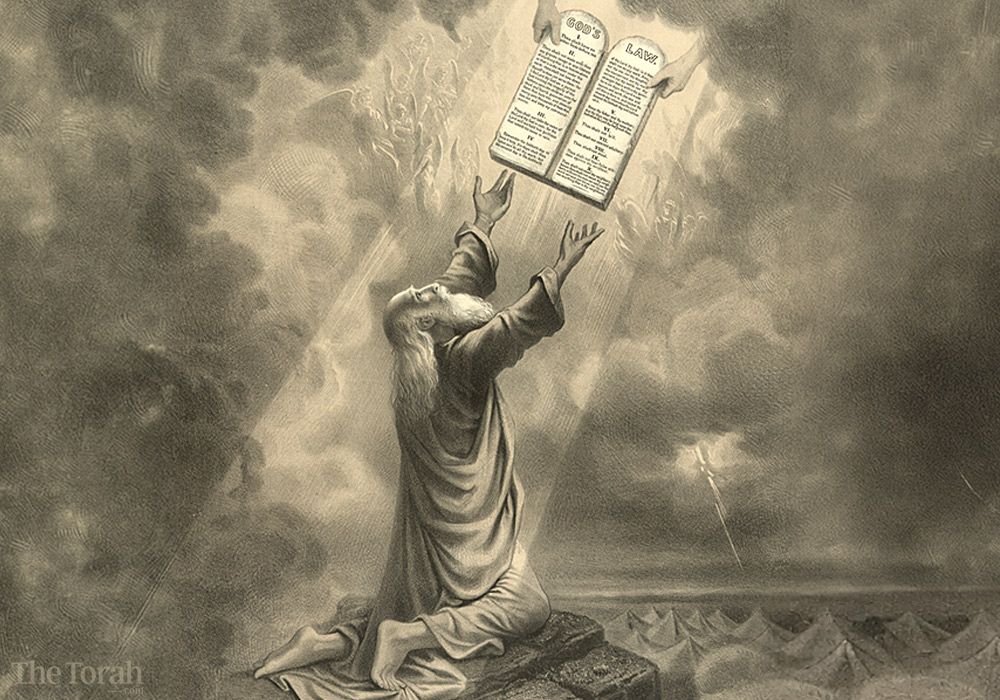
Moses receiving the law (adjusted). Boston, F. W. McCleave & Co, c. 1877. Library of Congress
Law and Authority in the Ancient Near East
Across Mesopotamia, Anatolia, and Egypt, a good king was expected to establish justice, protect the vulnerable, restrain violence, and keep markets fair.[1] Royal inscriptions claimed divine backing: the gods had chosen the monarch and entrusted him with the well-being of the land.
The best-known example of this royal promulgation of the law is the stele of Hammurabi, erected in Babylonia around 1750 B.C.E. At the top of the monument, the sun god of justice, Shamash, extends symbols of authority to Hammurabi, indicating that he has divine approval to rule and create law.[2] In addition, in the prologue to the laws, Hammurabi declares that he established justice at the command of the Babylonian god, Marduk:
LH v 14–24 When the god Marduk commanded me to provide just ways for the people of the land (in order to attain) appropriate behavior, I established truth and justice as the declaration of the land, I enhanced the well-being of the people.[3]
Hammurabi does not present himself as a secretary taking dictation from a deity. The epilogue makes clear that these are Hammurabi’s laws, not Shamash’s or Marduk’s:
LH xlvii 1–8 These are the just decisions which Hammurabi, the able king, has established and thereby has directed the land along the course of truth and the correct way of life.
Other collections—the Laws of Eshnunna, Hittite laws, Middle and Neo-Assyrian decrees—follow the same pattern. Egyptian texts speak less in statutes and more in ideals, focusing on the concept of ma’at (truth, balance, right order), but they celebrate the pharaoh as the one who maintains that order.[4] In all of these literatures, law is religiously framed, but humanly authored.
A common ancient assumption lies beneath this concept that law is divinely sanctioned, but not divinely authored. The world has a right order—Mesopotamian texts speak of “truth” and “justice” (kittum and misharum) as features of reality—and even the gods are merely recipients, not creators, of that order. Thus, a dedication to Shamash in the stele of King Yaḫdun-Lim of Mari (19th c. B.C.E.) declares:
For Šamaš, the king of heaven and earth, the ruler over gods and mankind, who cares for justice (mesherum) and to whom justice (kinatum) has been given as a gift.[5]
The ruler’s role, then, is to align social practice with the legally structured world order. Kings do not invent justice so much as discover it—by observing and complying with the natural and social order—and translate it into legislation. Nowhere in this landscape is a god depicted as writing out a code and handing it to a people.
The Torah’s Different Framing
The Torah participates in the same world of ideas; many of its laws resemble Near Eastern counterparts.[6] But the 58 chapters (Exod 19–Num 10)—comprising several distinct collections[7]—that make up the Torah’s legal core present law in a different key: Israel stands at Mount Sinai and Moses receives from God the laws for his people.
The idea that the Torah is God’s law was once considered to be a basic element of how the Bible fit within its historical context, but in fact, it represents a remarkable innovation in the ancient Near East. Rather than being crafted by a king, the laws are embedded in a revelation drama.
The setting is Sinai; the mediator is Moses;[8] the speaker is God. The Decalogue is given as direct address (Exod 20:2). The first tablets of the law that Moses receives on Mount Sinai are even described as written by the “finger of God” himself:[9]
שׁמות לא:יח וַיִּתֵּן אֶל מֹשֶׁה כְּכַלֹּתוֹ לְדַבֵּר אִתּוֹ בְּהַר סִינַי שְׁנֵי לֻחֹת הָעֵדֻת לֻחֹת אֶבֶן כְּתֻבִים בְּאֶצְבַּע אֱלֹהִים.
Exod 31:18 When He finished speaking with him on Mount Sinai, He gave Moses the two tablets of the Pact, stone tablets inscribed with the finger of God.[10]
The framing is decisive. On the surface, some legal clauses look ordinary enough: an ox that gores, a loan taken on pledge, a dispute over boundary stones (Exod 21:28–32, 22:24–26; Deut 19:14). But by placing such rules inside a revelation narrative, the Torah relocates their source of authority: The rules are not simply the good sense of elders or the prudence of a king; they are commandments revealed by God, and they are addressed to a community bound by commandments, not merely by royal policy. The same subject matter now carries a different weight.
How did this reframing arise?
From Royal Law to Divine Law: Historical Catalysts
Part of the answer lies in the political history of Israel and Judah. For centuries, their kings embodied the usual ancient expectations. The monarch judged disputes, defended the weak, and maintained order, ideally under God’s blessing. These expectations are reflected in the biblical description of King David as maintaining justice during his reign:
שׁמואל ב ח:טו וַיִּמְלֹךְ דָּוִד עַל כָּל יִשְׂרָאֵל וַיְהִי דָוִד עֹשֶׂה מִשְׁפָּט וּצְדָקָה לְכָל עַמּוֹ.
2 Sam 8:15 David reigned over all Israel, and David executed true justice among all his people.
According to the Bible, David’s successor, King Solomon, asks God for wisdom to judge rightly:
מלכים א ג:ט וְנָתַתָּ לְעַבְדְּךָ לֵב שֹׁמֵעַ לִשְׁפֹּט אֶת עַמְּךָ לְהָבִין בֵּין טוֹב לְרָע כִּי מִי יוּכַל לִשְׁפֹּט אֶת עַמְּךָ הַכָּבֵד הַזֶּה.
1 Kgs 3:9 Grant, then, Your servant an understanding mind to judge Your people, to distinguish between good and bad; for who can judge this vast people of Yours?”
Then a series of imperial crises changed everything. The northern kingdom fell to Assyria in 722 B.C.E. A century later, in 586 B.C.E., Babylon destroyed Jerusalem, dismantled the monarchy, and carried its leading families into exile. The credibility of royal institutions collapsed. With no king to legislate or adjudicate, the community still needed law, and had to imagine a new anchor for its norms.
The Torah’s response was to relocate legislative authority in God. By attributing the law to divine revelation, the texts gave it a stability that a toppled dynasty could not provide. A royal decree fades with its author; a divine command, at least as biblical literature portrays it, can endure through political catastrophe. In practical terms, this move allowed norms to be upheld in diaspora settings and under foreign rule. The law no longer depended on a throne in Jerusalem; it could travel with the people as a portable charter.
Deuteronomy Commands Absolute Loyalty to God
Deuteronomy illustrates the historical dynamic with particular clarity. Scholars have long noticed that the book’s rhetoric resembles ancient vassal treaties, especially those used by Assyrian emperors.[11] Such treaties bound subject rulers to absolute loyalty and threatened curses for rebellion. For example, Esarhaddon’s Succession Treaty, which bound Assyrian vassals to support the king’s designated heir, states:
EST 195–197 You shall hearken to whatever he says and do whatever he commands, and you shall not seek any other king or any other lord against him.[12]
Deuteronomy retools the form, commanding the Israelites:
דברים יג:ה אַחֲרֵי יְ־הוָה אֱלֹהֵיכֶם תֵּלֵכוּ וְאֹתוֹ תִירָאוּ וְאֶת מִצְוֹתָיו תִּשְׁמֹרוּ וּבְקֹלוֹ תִשְׁמָעוּ וְאֹתוֹ תַעֲבֹדוּ וּבוֹ תִדְבָּקוּן.
Deut 13:5 Follow none but YHWH your God, and revere none but Him; observe His commandments alone, and heed only His orders; worship none but Him, and hold fast to Him.
The great king in this covenant is not the Assyrian emperor but Israel’s God, who demands absolute loyalty to Him.[13] A political instrument is turned into a religious one, and law becomes the embodied form of covenant allegiance.
Religious Developments: From Storm God to Universal King
For the Torah to present God as a lawgiver, older conceptions of the divine had to stretch. Early poetry about Israel’s God uses imagery common across the region, depicting a storm and warrior deity whose arrival shakes mountains and brings rain:[14]
שׁפטים ה:ד יְ־הוָה בְּצֵאתְךָ מִשֵּׂעִיר בְּצַעְדְּךָ מִשְּׂדֵה אֱדוֹם אֶרֶץ רָעָשָׁה גַּם שָׁמַיִם נָטָפוּ גַּם עָבִים נָטְפוּ מָיִם. ה:ה הָרִים נָזְלוּ מִפְּנֵי יְ־הוָה זֶה סִינַי מִפְּנֵי יְ־הוָה אֱלֹהֵי יִשְׂרָאֵל.
Judg 5:4 O YHWH, when You came forth from Seir, advanced from the country of Edom, the earth trembled; the heavens dripped, yea, the clouds dripped water, 5:5 the mountains quaked—before YHWH, Him of Sinai, before YHWH, God of Israel.[15]
Over time, we also find depictions of YHWH as the sun:[16]
תהלים פד:יב כִּי שֶׁמֶשׁ וּמָגֵן יְ־הוָה אֱלֹהִים חֵן וְכָבוֹד יִתֵּן יְ־הוָה לֹא יִמְנַע טוֹב לַהֹלְכִים בְּתָמִים.
Ps 84:12 For YHWH God is sun and shield; YHWH bestows grace and glory; He does not withhold His bounty from those who live without blame.[17]
The solarization of YHWH brought him close to the sphere of law, since in the ancient Near East, the sun-god—who traversed over the world and saw all that was happening during the day—was traditionally, though not exclusively, responsible for law. Zephaniah explicitly combines solar imagery with the idea of YHWH dispensing justice:
צפניה ג:ה יְ־הוָה צַדִּיק בְּקִרְבָּהּ לֹא יַעֲשֶׂה עַוְלָה בַּבֹּקֶר בַּבֹּקֶר מִשְׁפָּטוֹ יִתֵּן לָאוֹר לֹא נֶעְדָּר וְלֹא יוֹדֵעַ עַוָּל בֹּשֶׁת.
Zeph 3:5 But YHWH in her midst is righteous, He does no wrong; He issues judgment every morning, as unfailing as the light. The wrongdoer knows no shame!
Even this process did not yet elevate YHWH to the position of lawgiver, however, just as the sun-god Shamash did not act as lawgiver in the ancient Near Eastern tradition. Gradually, the portrait of YHWH broadens from a regional deity to a universal sovereign:[18] some psalms speak of a throne above the waters and of a rule that tames chaos:
תהלים צג:ד מִקֹּלוֹת מַיִם רַבִּים אַדִּירִים מִשְׁבְּרֵי יָם אַדִּיר בַּמָּרוֹם יְ־הוָה. צג:ה עֵדֹתֶיךָ נֶאֶמְנוּ מְאֹד לְבֵיתְךָ נַאֲוָה קֹדֶשׁ יְ־הוָה לְאֹרֶךְ יָמִים.
Ps 93:4 Above the thunder of the mighty waters, more majestic than the breakers of the sea is YHWH, majestic on high. 93:5 Your decrees are indeed enduring; holiness befits Your house, O YHWH, for all times.
Prophetic passages describe a God who judges nations and not just Israel:
ישׁעיה לד:א קִרְבוּ גוֹיִם לִשְׁמֹעַ וּלְאֻמִּים הַקְשִׁיבוּ תִּשְׁמַע הָאָרֶץ וּמְלֹאָהּ תֵּבֵל וְכָל צֶאֱצָאֶיהָ. לד:ב כִּי קֶצֶף לַי־הוָה עַל כָּל הַגּוֹיִם וְחֵמָה עַל כָּל צְבָאָם הֶחֱרִימָם נְתָנָם לַטָּבַח.
Isa 34:1 Approach, O nations, and listen, give heed, O peoples! Let the earth and those in it hear; the world, and what it brings forth. 34:2 For YHWH is angry at all the nations, furious at all their host; He has doomed them, consigned them to slaughter.
Those shifts matter for legal imagination. If God is seen not only as a deliverer in battle but as the ruler whose will orders the cosmos, then it is not a large step to speak of divine legislation. In the absence of a human king, the role can be ascribed to the heavenly king.
In terms of the Torah’s literary growth, earlier case laws—which are ancestral and pragmatic in character—are progressively framed by speeches that attribute them to God and tie them to covenant identity. The result is a law that is at once familiar in its content and transformed in its authority.
How the Torah Persuades: Reasons, Memory, and Pedagogy
Another feature in the Torah helps explain how law could function without royal coercion: the habit of giving reasons that often pertain to Israel’s history. Nearly half of the laws in the Pentateuch are accompanied by motivations that appeal to theology, memory, or empathy.[19]
Shabbat is to be observed because God rested after creation (Exod 20:8–11); debt-slaves are to be released because Israel once tasted slavery (Deut 15:12–15); the stranger is to be protected because the people remember what it felt like to be foreigners (Lev 19: 33–34). The Holiness legislation connects conduct to divine character: וִהְיִיתֶם קְדֹשִׁים כִּי קָדוֹשׁ אָנִי, “Be holy, for I am holy” (Lev 11:44–45).
These reasons do practical work. Without a native king or standing army, obedience is not obtained by the threat of immediate state punishment. It must be nurtured by conviction, communal teaching, and shared story.[20] Deuteronomy leans into this motivational pedagogy, urging its audience:
דברים ו:ז וְשִׁנַּנְתָּם לְבָנֶיךָ וְדִבַּרְתָּ בָּם בְּשִׁבְתְּךָ בְּבֵיתֶךָ וּבְלֶכְתְּךָ בַדֶּרֶךְ וּבְשָׁכְבְּךָ וּבְקוּמֶךָ.
Deut 6:7 Impress them upon your children. Recite them when you stay at home and when you are away, when you lie down and when you get up.
The public reading of the law reinforces the same aim (31:10–11). In place of a law enforced from above, the Torah cultivates a law internalized from within.
From Temple to Text
The destruction of the First Temple did more than end a sanctuary and a royal house. It inspired a reimagining of how communal life would be organized. A sanctuary tied to a single city can be destroyed; a text can be carried and copied. In the Persian period, public readings and instructional assemblies begin to appear. Scribal activity—collating, editing, interpreting—shaped how the law was remembered and used. Over time, the written Torah became the backbone of communal practice, and interpretation became a primary mode of devotion.
Calling the Torah a “portable homeland” (Heinrich Heine) may sound modern, but it captures something essential about how law functioned for communities spread across empires. A shared text allowed dispersed populations to teach common norms, adjudicate disputes, and maintain solidarity. Because the law’s authority was traced to God rather than to a vanished dynasty, it could bind communities who no longer shared a government.
Beyond Israel: A Wider Legacy
The idea of divine law did not remain confined to one people. When Christianity emerged, it inherited Israel’s scriptures and the notion that God’s will could be expressed in commandments. Debates arose about how those commandments applied to new circumstances and to non-Jewish adherents. Still, the basic premise—that law could be divine in origin—persisted and shaped Christian moral reflection for centuries.[21]
So too, even as Islam developed in a different linguistic and cultural setting, it placed divine legislation at the very center of its scriptures. The Qur’an presents itself as revelation, and the legal discourse that grew from it understands guidance as God’s gift to the community. In different ways and with different conclusions, both later traditions reflect the long shadow of the Torah’s portrayal of God as lawgiver.
Why This History Matters
Understanding how the Torah came to speak of divine law clarifies more than an ancient curiosity. It illuminates how communities respond to political loss, how religious ideas evolve, and how authority can move from palace to scripture. It shows that laws are not only tools of administration but also vessels of meaning.
A modern reader might ask whether all of this could have developed without exile and imperial pressure. Counterfactuals are hard to test, but the literary evidence suggests that historical rupture accelerated theological creativity. Older case laws were not discarded; they were reframed. The same ancient Near Eastern legal topics—injury, restitution, worship, festivals—remained, but their authority was narrated differently.
That narrative has proved remarkably resilient. By rooting law in revelation and embedding it in a cycle of public reading, instruction, and interpretation, the Torah offered a model of communal life that could survive without kings or armies. In a world where power often passes quickly from one hand to another, that is no small achievement.
This notion that the law is divine can also be misused—to hide human laws behind a metaphysical curtain. From a biblical point of view, however, it is not the individual laws in themselves that are normative, but the laws and their inner-biblical interpretations: the dynamic of the interpretation is already embedded in the Torah itself, and, consequently, points beyond it.[22]
There is no such thing as a timeless law of God in the Bible; even the Law of God—indeed, precisely that form of authority—requires constant exegesis and interpretation.[23]
TheTorah.com is a 501(c)(3) nonprofit organization.
We rely on the support of readers like you. Please support us.
Published
February 11, 2026
|
Last Updated
September 17, 2026
Previous in the Series
Next in the Series
Before you continue...
Thank you to all our readers who offered their year-end support.
Please help TheTorah.com get off to a strong start in 2025.
Footnotes


Prof. Konrad Schmid is Professor of Hebrew Bible and Ancient Judaism at the University of Zurich, Switzerland. He received his Ph.D. and his Habilitation from the University of Zurich. He is the author of Genesis and the Moses Story (2010); The Old Testament: A Literary History (Fortress Press, 2012); and A Historical Theology of the Hebrew Bible (2019), and the co-editor of The Pentateuch: International Perspectives on Current Research [with Thomas B. Dozeman and Baruch J. Schwartz] (2011) and The Formation of the Pentateuch [with Jan C. Gertz, Bernard M. Levinson , and Dalit Rom-Shiloni] (2016). Since 2017, he has served as president of the Wissenschaftliche Gesellschaft für Theologie (Academic Society for Theology) and he is currently also the President of the International Organization for the Study of the Old Testament (IOSOT). In 2018, Schmid was awarded the Humboldt-Forschungspreis, and in 2019 an ERC Advanced Grant for the project How God Became a Lawgiver (www.divlaw.uzh.ch). In the fall of 2022, he served as Lady Davis Visiting Professor at the Hebrew University of Jerusalem.
Essays on Related Topics: