


 Edit article
Series
The Remnant of Jacob Among the Nations: Like Dew and Like a Lion


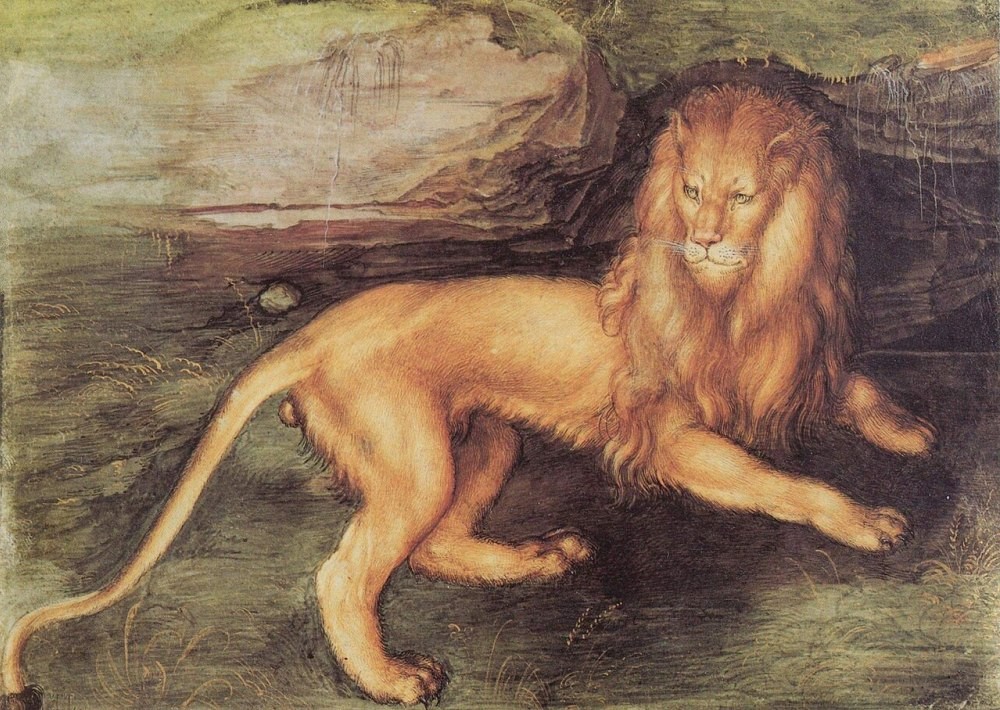
Lion, Albrecht Dürer, 1494. Wikimedia
The remnant of Jacob[1] is compared to dew in the book of Micah, an image often interpreted as representing the refreshing influence of Israel on the nations:
מיכה ה:ו וְהָיָה שְׁאֵרִית יַעֲקֹב בְּקֶרֶב עַמִּים רַבִּים כְּטַל מֵאֵת יְ־הֹוָה כִּרְבִיבִים עֲלֵי עֵשֶׂב אֲשֶׁר לֹא יְקַוֶּה לְאִישׁ וְלֹא יְיַחֵל לִבְנֵי אָדָם.
Mic 5:6 The remnant of Jacob shall be, in the midst of the many peoples, like dew from YHWH, like droplets on grass—which does not wait for any man, nor places hope in mortals.[2]
The very next verse, however, describes the remnant as like a powerful lion, threatening those same nations:[3]
מיכה ה:ז וְהָיָה שְׁאֵרִית יַעֲקֹב בַּגּוֹיִם בְּקֶרֶב עַמִּים רַבִּים כְּאַרְיֵה בְּבַהֲמוֹת יַעַר כִּכְפִיר בְּעֶדְרֵי צֹאן אֲשֶׁר אִם עָבַר וְרָמַס וְטָרַף וְאֵין מַצִּיל.
Mic 5:7 The remnant of Jacob shall be among the nations, in the midst of the many peoples, like a lion in the midst of the wild beasts, like a fierce lion among flocks of sheep, which goes and tramples and rends and with no one saved.
The placement of the two seemingly discordant images alongside one another and their similar structure and phrasing (shown in bold) enhance the tension between them. Is this tension real—do both images depict the remnant’s relations with the nations?[4]
Salvation through Divine Agency
The dew simile could be understood as highlighting the remnant’s direct association with YHWH. Dew is a phenomenon of nature that, in light of its consistent but not obviously explicable appearance, the Bible and ancient Near Eastern literature treat as a divine gift.[5]
Understood this way, the first simile in the first half of the verse, כְּטַל מֵאֵת יְ־הֹוָה, “like dew from YHWH,” elaborates the remnant’s nature, oriented upwards towards the dew’s source:
מיכה ה:ו וְהָיָה שְׁאֵרִית יַעֲקֹב בְּקֶרֶב עַמִּים רַבִּים כְּטַל מֵאֵת יְ־הֹוָה כִּרְבִיבִים עֲלֵי עֵשֶׂב...
Mic 5:6a The remnant of Jacob shall be, in the midst of the many peoples, like dew from YHWH, like droplets on grass...
The second simile,[6] כִּרְבִיבִים עֲלֵי עֵשֶׂב, “like droplets on grass,” is oriented downwards (עֲלֵי) towards the destination. Like the dew, the droplets are assumed to be a function of divine agency.[7] The lack of a verb in either clause heightens the impression that the focus lies on their spatial aspect—lying between heaven and earth, between YHWH and his creation—rather than their activity or the relations they conduct with the peoples among whom they reside.
The second half of the verse is ambiguous:
מיכה ה:ו ...אֲשֶׁר לֹא יְקַוֶּה לְאִישׁ וְלֹא יְיַחֵל לִבְנֵי אָדָם.
Mic 5:6b —which does not wait for any man, nor places hope in mortals.
If the relative pronoun, אֲשֶׁר, refers to the remnant, then the clause describes a future turn to and dependence upon YHWH:[8] the remnant is like dew, “which does not wait for any man, nor places hope in mortals.”
The relative pronoun, however, may also be understood as referring to YHWH, thus presenting YHWH as acting alone, without any human assistance: “Who does not wait for any man, nor places hope in mortals.”[9] Both readings adduce YHWH’s presence and bond with the remnant, not its ties with the surrounding nations.
Since the comparison to dew is focused entirely on the remnant, the opening phrase of the verse may be read as a depiction of the remnant’s situation or place: וְהָיָה שְׁאֵרִית יַעֲקֹב בְּקֶרֶב עַמִּים רַבִּים, “when/while the remnant of Jacob will be in the midst of many nations....”
Human Activity Juxtaposed with Divine Action
The addition of the phrase בַּגּוֹיִם, “among the nations,” in verse 7 indicates that its focus is the remnant’s relationship with the surrounding peoples:[10]
מיכה ה:ז וְהָיָה שְׁאֵרִית יַעֲקֹב בַּגּוֹיִם בְּקֶרֶב עַמִּים רַבִּים כְּאַרְיֵה בְּבַהֲמוֹת יַעַר כִּכְפִיר בְּעֶדְרֵי צֹאן אֲשֶׁר אִם עָבַר וְרָמַס וְטָרַף וְאֵין מַצִּיל.
Mic 5:7 The remnant of Jacob shall be among the nations, in the midst of the many peoples, like a lion in the midst of the wild beasts, like a fierce lion among flocks of sheep, which goes and tramples and rends with no one saved.
Just as the first part of the verse offers two expressions elucidating that relationship—בַּגּוֹיִם בְּקֶרֶב עַמִּים רַבִּים, “among the nations, in the midst of the many peoples”—so the second part twice presents the remnant as a lion and the nations as a group of animals amongst which it resides: כְּאַרְיֵה בְּבַהֲמוֹת יַעַר כִּכְפִיר בְּעֶדְרֵי צֹאן , “like a lion in the midst of the wild beasts,[11] like a fierce lion among flocks of sheep.”[12] The use of the singular remnant/lion and plural nations/animals in both clauses strengthens the parallelism.[13]
The concluding relative clause in this verse describes the situation in which the lion acts: the remnant is like a lion among the animals, אֲשֶׁר אִם עָבַר וְרָמַס וְטָרַף וְאֵין מַצִּיל, “which, when it goes and tramples and rends with no one saved....”
The opening phrase, אֲשֶׁר אִם, indicates that the clause serves as a protasis (an “if/when” clause).[14] The verbs that follow אֲשֶׁר אִם, however, are each linked by the same conjunction, ו (waw), making it difficult to determine which of them belong to the protasis and which to the apodosis—the “then” clause that completes the thought.[15]
One option, that fits well with the way verse 6 was interpreted above, is to view the entire relative clause as the protasis, with the next verse containing the apodosis:
מיכה ה:ח תָּרֹם יָדְךָ עַל צָרֶיךָ וְכׇל אֹיְבֶיךָ יִכָּרֵתוּ.
Mic 5:8 [Then] may Your hand prevail over Your foes, and may all Your enemies be cut down![16]
The addressee is not identified,[17] but the context of the earlier expression of YHWH’s bond with the remnant (v. 6) suggests that the speaker here has turned to YHWH and is expressing the hope that YHWH will respond and intervene.[18] The jussive verb in תָּרֹם יָדְךָ, “may Your hand prevail,” conveys this entreaty or prayer.[19]
The description of YHWH’s hand prevailing, signifying His superior might, corresponds to the earlier emphasis on divine rather than human action (אֲשֶׁר לֹא יְקַוֶּה לְאִישׁ וְלֹא יְיַחֵל לִבְנֵי אָדָם, “which/Who does not wait for any man, nor places hope in mortals”; v. 6). In this reading, צָרֶיךָ, “Your foes,” and אֹיְבֶיךָ, “Your enemies” (v. 8), are not only those who attack the remnant but also those who oppose YHWH.
Taken together, these three verses address a future state in which YHWH is involved with the remnant, helping it cope with the challenges it faces. When the remnant engages upon a series of violent acts, the passage expresses the hope that then YHWH will respond and intervene to ensure the remnant’s victory.[20]
Yet this is not the only way to read this pericope. While verse 8 may be read as an appeal for divine intervention, it does not explicitly identify the addressee. In similar fashion, verse 6 may denote dependence upon YHWH, but the text does not specify precisely what it means to not wait for or place hope in mortals.
A different understanding of the passage can emerge if we begin our reading with the human activity depicted in the lion simile (in verse 7) and pay attention to the violent impression the actions included in verses 7 and 8 create (more on this later).[21]
Independent Destructive Human Agency
Just as the remnant resides at the center of the scene, with the nations surrounding it, so the lion sits amidst the animals:[22]
מיכה ה:ז וְהָיָה שְׁאֵרִית יַעֲקֹב בַּגּוֹיִם בְּקֶרֶב עַמִּים רַבִּים כְּאַרְיֵה בְּבַהֲמוֹת יַעַר כִּכְפִיר בְּעֶדְרֵי צֹאן אֲשֶׁר אִם עָבַר וְרָמַס וְטָרַף וְאֵין מַצִּיל.
Mic 5:7 The remnant of Jacob shall be among the nations, in the midst of the many peoples, like a lion in the midst of the wild beasts, like a fierce lion among flocks of sheep, which when it goes and tramples, and rends, then no one can save.
The scene depicts a violent clash that leads to wrack and ruin.[23] The contrast between the single, powerful lion[24] and the multiple, weaker animals enhances the lion’s destructiveness in the image and highlights the clash between the two groups.
Based on this impression, the relative clause at the end of the verse may include both protasis and apodosis: The remnant is like a lion, אֲשֶׁר אִם עָבַר וְרָמַס וְטָרַף וְאֵין מַצִּיל, “which, when it goes and tramples and rends, then no one can save.”[25] The imagery reflects the future behavior that the remnant will adopt amidst the nations.[26]
A Call to Action
The violence is not presented as one-sided, however. In the next verse, the terms צרים, “foes,” and אויבים, “enemies,” define the surrounding nations as adversaries, completing the image of distinct, opposing groups in conflict:
מיכה ה:ח תָּרֹם יָדְךָ עַל צָרֶיךָ וְכׇל אֹיְבֶיךָ יִכָּרֵתוּ.
Mic 5:8 May your hand prevail over your foes, and may all your enemies be cut down!
In this context, verse 8 can also be understood as focused on human activity—calling on Israel to act, addressing the remnant itself or those in Israel listening to or reading the prophecy.[27]
The phrase תָּרֹם יָדְךָ עַל צָרֶיךָ, “your hand shall prevail over your foes,” parallels the image of the lion overwhelming the other animals, reflecting the attacker’s power in relation to his adversary. This parallel strengthens the plausibility that the two verses refer to the same entities.
Reconsidering the Dew
Reading verses 7 and 8 in this way should also lead us to reconsider our understanding of the image of the remnant as dew and droplets (v. 6).[28] The dew and droplets are light and fine, only lasting a fleeting moment,[29] a fitting image for the remnant—i.e. a minority of the group.
Dew also occurs elsewhere as an aggressive image, as when Absalom’s men plot to overthrow his father, David:
שמואל ב יז:יב וּבָאנוּ אֵלָיו [באחת] בְּאַחַד הַמְּקוֹמֹת אֲשֶׁר נִמְצָא שָׁם וְנַחְנוּ עָלָיו כַּאֲשֶׁר יִפֹּל הַטַּל עַל הָאֲדָמָה וְלֹא נוֹתַר בּוֹ וּבְכׇל הָאֲנָשִׁים אֲשֶׁר אִתּוֹ גַּם אֶחָד.
2 Sam 17:12 When we come upon him in whatever place he may be, we’ll descend on him as dew falling on the ground; and no one will survive, neither he nor any of the men with him.[30]
In Proverbs, dew appears in parallel with כְּפִיר, “lion,” embodying a king’s anger-driven human agency:
משלי יט:יב נַהַם כַּכְּפִיר זַעַף מֶלֶךְ וּכְטַל עַל עֵשֶׂב רְצוֹנוֹ.
Prov 19:12 The rage of a king is like the roar of a lion; his will is like dew upon the grass.[31]
If the simile of the dew and droplets can bear an aggressive meaning, then its appearance (in v. 6) would correspond to the image of the remnant as a lion (v. 7).
In light of the interpretation of verses 7–8 as reflecting human activity, it is possible to interpret the attribute כְּטַל מֵאֵת יְ־הֹוָה, “like dew from YHWH” (v. 6), as simple imagery—depicting YHWH is the source of dew in general, but not expressing any specific relationship between the remnant and YHWH.[32] The parallel image of droplets, which is not directly associated with YHWH, and the fact that YHWH is not explicitly adduced again in the unit reinforces this interpretive option.[33]
The dew coming from YHWH and the droplets falling on grass are thus depicted as natural, predictable, and autonomous—not confined to any particular season, nor brought about by any divine act.[34] Likewise, the remnant and the way in which it behaves are natural and independent.[35]
This reading of the imagery continues in the ambiguous relative clause that ends the verse: אֲשֶׁר לֹא יְקַוֶּה לְאִישׁ וְלֹא יְיַחֵל לִבְנֵי אָדָם, “which does not wait for any man, nor place its hope in mortals.”[36] The clause now expresses the remnant’s autonomy: rather than waiting for someone to move on its behalf, it takes the initiative into its own hands.[37]
The general picture the unit paints in this interpretation addresses the human capacity to resolve difficulties. Read in this context, this pericope presents violent human activity in a positive light—i.e. as taking the initiative to provide relief from the threat posed by the remnant’s enemies.[38]
Deliberate Ambiguity
Micah 5:6–8 contains numerous and varied ambiguities, multivalent components, and unanswered questions:[39]
- The terms “dew” (v. 6) and “remnant” (vv. 6, 7) represent both positive and negative realities.[40]
- The antecedent of the relative אשר (v. 6) is unclear: who does not wait or hope for human action?[41]
- Likewise, the relationship between the verbs that describe the lion—עבר ורמס וטרף ואין מציל—is unclear. Is one of the verbs an apodosis—or is that still to come in verse 8?
- Does the phrase ואין מציל (v. 7) mean “no one can save,”[42] a comparison of power? Or does it mean “with no one saved,” describing the degree of destruction?
- Is the addressee in verse 8 YHWH or the people?[43]
These features allow us to develop parallel themes, with all of the verses bearing fully alternative interpretations. The unit is deliberately ambiguous, its diverse parts existing side by side, with none invalidating another.[44] As the readings presented here show, the central tension is not whether the two images are discordant—peace with the surrounding nations vs. war—but whether the remnant’s violent action is autonomous or dependent on divine activity.[45]
The following two translations reflect these different understandings:
Salvation through Divine Agency:
מיכה ה:ו וְהָיָה שְׁאֵרִית יַעֲקֹב בְּקֶרֶב עַמִּים רַבִּים כְּטַל מֵאֵת יְ־הֹוָה כִּרְבִיבִים עֲלֵי עֵשֶׂב אֲשֶׁר לֹא יְקַוֶּה לְאִישׁ וְלֹא יְיַחֵל לִבְנֵי אָדָם. ה:ז וְהָיָה שְׁאֵרִית יַעֲקֹב בַּגּוֹיִם בְּקֶרֶב עַמִּים רַבִּים כְּאַרְיֵה בְּבַהֲמוֹת יַעַר כִּכְפִיר בְּעֶדְרֵי צֹאן אֲשֶׁר אִם עָבַר וְרָמַס וְטָרַף וְאֵין מַצִּיל. ה:ח תָּרֹם יָדְךָ עַל צָרֶיךָ וְכׇל אֹיְבֶיךָ יִכָּרֵתוּ.
Mic 5:6 When/while the remnant of Jacob will be in the midst of many nations, [it will be] like dew from YHWH, like droplets on grass—which/Who does not wait for any man, nor places hope in mortals. 5:7 The remnant of Jacob shall be among the nations, in the midst of the many peoples, like a lion in the midst of the wild beasts, like a fierce lion among flocks of sheep, which when it goes and tramples and rends with no one saved, 5:8 [then] let Your [YHWH’s] hand prevail over Your foes, and let all Your enemies be cut down!
Independent Destructive Human Agency:
מיכה ה:ו וְהָיָה שְׁאֵרִית יַעֲקֹב בְּקֶרֶב עַמִּים רַבִּים כְּטַל מֵאֵת יְ־הֹוָה כִּרְבִיבִים עֲלֵי עֵשֶׂב אֲשֶׁר לֹא יְקַוֶּה לְאִישׁ וְלֹא יְיַחֵל לִבְנֵי אָדָם. ה:ז וְהָיָה שְׁאֵרִית יַעֲקֹב בַּגּוֹיִם בְּקֶרֶב עַמִּים רַבִּים כְּאַרְיֵה בְּבַהֲמוֹת יַעַר כִּכְפִיר בְּעֶדְרֵי צֹאן אֲשֶׁר אִם עָבַר וְרָמַס וְטָרַף וְאֵין מַצִּיל. ה:ח תָּרֹם יָדְךָ עַל צָרֶיךָ וְכׇל אֹיְבֶיךָ יִכָּרֵתוּ.
Mic 5:6 When/while the remnant of Jacob will be in the midst of many nations, [it will be] like dew from YHWH, like droplets on grass—which does not wait for any man, nor places hope in mortals. 5:7 The remnant of Jacob shall be among the nations, in the midst of the many peoples, like a lion in the midst of the wild beasts, like a fierce lion among flocks of sheep, which when it goes and tramples and rends, then no one can save. 5:8 May your hand prevail over your foes, and may all your enemies be cut down!
Micah’s dual images of the remnant of Israel attest to the circumstances in which the prophecy was delivered. Though we do not have enough information to identify the remnant with a specific historical and geographical context,[46] the content reflects a state wherein the remnant was not the superior force.[47] The pericope also holds out hope for listeners mired in a situation that defines them as a small, weak minority amongst many nations.
In effect, the verses present two alternatives that listeners or readers must compare and contrast in order to determine the most appropriate reality: How does YHWH express Himself in history? What is demanded of us? What are the hoped-for relations between the remnant and the nations?[48]
The ambiguity in Micah also places the power to decide among these alternatives in the readers’ own hands. They must not only decode the text and determine which exegetical path they will follow, but also interpret the reality in which they find themselves. These interpretive moves will directly affect their future.[49]
In this sense, the readers are the lead actors—whether as independent agents or acting on YHWH’s behalf. The hermeneutical sovereignty they possess corresponds to the future independence that the verses attribute to the remnant. Autonomy thus lies at the heart of the hope Micah holds out.
TheTorah.com is a 501(c)(3) nonprofit organization.
We rely on the support of readers like you. Please support us.
Published
June 25, 2026
|
Last Updated
August 21, 2026
Previous in the Series
Next in the Series
Before you continue...
Thank you to all our readers who offered their year-end support.
Please help TheTorah.com get off to a strong start in 2025.
Footnotes


Dr. Yisca Zimran is a senior lecturer in the Department of Biblical Studies at Bar Ilan University, Israel, where she completed her Ph.D. Her research fields are Biblical Narrative, with an emphasis on family narratives, and Biblical Prophecy, with a focus on the books attributed to the 8th century B.C.E. In both fields, she analyzes biblical texts from literary, rhetorical, and theological angles, with specific attention to the mutual reciprocity between the text and the readers and the potential dynamic interpretation of the texts.
Essays on Related Topics: