


 Edit article
Series
Introducing Students to Source Criticism: Cutting up Noah’s Flood Story


Students cut up the flood story in Genesis 6–9 and sort the passages into the J (YHWH, blue) and P (Elohim, yellow) sources, using divine names, language, and narrative details to identify the two accounts.
Professor Marc Brettler explains in “Monopoly and Biblical Studies” (Ancient Jew Review, 2023) how he opens his college courses on biblical texts:
I clarify that the rules we will use in class are predominantly historical-critical ones, and that questions about the Bible, in class, should be answered using historical-critical premises. That is because I do not want my classroom to devolve into the type of chaos that ensues when a new player enters a game of Monopoly and rolls snake-eyes, and has expectations that differ from the other players.[1]
Brettler is explicit about the reading practice (its rules and assumptions) that he is asking his students to use in his course. That choice prioritizes something I care deeply about: inducting students into communities of practice, or, as American literary theorist Stanley Fish calls them, interpretive communities.
By opening his course this way, Brettler tells his students that he will teach them to engage in a particular practice of interpretation, not merely to memorize and regurgitate predetermined readings. As an educator, I hear something crucial in Brettler’s statement: all text classes are reading-method classes.
Having been Brettler’s student years earlier, I took his message to heart when I began teaching Bible at a pluralistic Jewish high school in Boston, and I held his mandate close in my favorite teaching assignment: my 12th-grade Modern Biblical Scholarship course.
Teaching the Historical-Critical Method
In this course, I was tasked with introducing students to source criticism. To do so, I created a unit titled “The Flood Project,” a hands-on exercise designed to immerse them in the method itself.[2] Working in pairs, students’ task was to reconstruct two distinct flood narratives from Genesis 6–9 by applying the “rules-for-reading” of source criticism, which instructed them to look for:
- Different divine names
- Variations in style and language
- Distinct thematic material
- Contradictions in the storyline
They received: a folder with a log sheet to document every decision, creating a tangible record of their interpretive choices; two copies of the Flood narrative—one to remain whole and one ready to be cut apart, reorganized into the two narratives, and ultimately be pasted onto their poster board; scissors; glue; highlighters; an instruction sheet; and the “rules-for-reading” sheet.
Their final assignment was an oral presentation of their two stories divided and a reflection essay narrating their process, their moments of confidence, their moments of doubt, the textual issues they ran into and how they resolved them (referencing their log throughout). The project, from start to finish, including presentations of their division and questions from their classmates, took two weeks.
Part of the project’s appeal for students lay in its blend of conceptual sophistication and aesthetic craft. They were engaged by having to develop their analytical skills and create compelling explanations of their textual divisions while fashioning the two accounts. At the same time, rather than focusing solely on conveying established interpretations, this approach aimed to make abstract methodological principles concrete and accessible to them.
1. Maya and Eitan: “Follow the Names”
Maya and Eitan[3] started with rule for reading 1—look for different divine names—perhaps because it looked the most mechanical. Before touching the scissors, they took the uncut copy and highlighted every YHWH in yellow and every Elohim in blue. The first cuts came easily. The yellow of 6:5–8 (God regrets making humanity and resolves to wipe it out) stood apart from the blue block of 6:9–22 (God tells Noah of the coming destruction and gives the ark’s specifications). Their log sheet entry read:
Cut after 6:8. Name changes. Also the story basically starts over: we get introduced to Noah twice.
Their confidence ran into trouble when they reached a verse that carried both colors:
בראשית ז:טז וְהַבָּאִים זָכָר וּנְקֵבָה מִכׇּל בָּשָׂר בָּאוּ כַּאֲשֶׁר צִוָּה אֹתוֹ אֱלֹהִים וַיִּסְגֹּר יְ־הֹוָה בַּעֲדוֹ.
Gen 7:16 Thus they that entered comprised male and female of all flesh, as God had commanded him. And YHWH shut him in.
Eitan didn’t want to cut: “You can't split a pasuk. It’s one verse.” Maya pulled out the instruction sheet and pointed out that nothing in the rules mentioned verse boundaries. She also reminded him of something from an earlier class I had taught: the verse numbers were added long after the text was written. After ten minutes of back-and-forth, they cut the verse in half. Eitan insisted the log record his objection:
7:16 split mid-verse. E. not fully convinced. The rules say split, but it feels like we’re forcing it.
The bigger surprise came in chapters 7 and 8, where long stretches carry no divine name at all. Maya said, “The names just stop.” With nothing to highlight, they had to switch to the other rules. They noticed that the dove passage (8:8–12) moves in seven-day waits, and they linked it to the seven days in 7:4 and 7:10, both of which sat in their yellow pile. They filed the dove with YHWH. In other words, incredibly, they started to make up new rules for division based on new doubling they encountered and matching it back to their first round of division.
2. Noa and Ari: “Two Calendars”
Noa and Ari were drawn to rule for reading 4—look for contradictions in the storyline. Before cutting anything, they drew two timelines on the back of their log sheet. One timeline included rain for forty days and forty nights, and the waits of seven days. The other timeline had dated entries: the flood begins in Noah’s 600th year, second month, seventeenth day (7:11), the waters flood for 150 days (7:24), and the earth is finally dry on the twenty-seventh day of the second month of the following year (8:14).
Noa said, “One of these is a month and a half. The other is over a year.” Their log read:
Every verse with a date goes in Pile B. Every verse with 40 or 7 goes in Pile A.
These were my math kids.
The animals came next. In 6:19–20, Noah takes one pair of every kind. In 7:2–3, he takes seven pairs of clean animals and one pair of unclean. At first they logged this as a plain contradiction. Then Ari found, the verse where Noah offers burnt offerings from every clean animal (8:20). He said, “If he only had two of each, the sacrifice would make whole species extinct. The seven-pair story needs the extra animals because it ends with a sacrifice.” They moved 8:20–22 into Pile A. Their log for that decision is the longest on the sheet, and they underlined:
The story has to be internally consistent even if the combined version isn’t.
Their hardest moment, according to their reflection essay, was the double boarding: First, Noah and his family enter the ark:
בראשית ז:ז וַיָּבֹא נֹחַ וּבָנָיו וְאִשְׁתּוֹ וּנְשֵׁי בָנָיו אִתּוֹ אֶל הַתֵּבָה מִפְּנֵי מֵי הַמַּבּוּל.
Gen 7:7 Noah, with his sons, his wife, and his sons’ wives, went into the ark because of the waters of the Flood.
They then enter it again בְּעֶצֶם הַיּוֹם הַזֶּה, “on that very day”:
בראשית ז:יג בְּעֶצֶם הַיּוֹם הַזֶּה בָּא נֹחַ וְשֵׁם וְחָם וָיֶפֶת בְּנֵי נֹחַ וְאֵשֶׁת נֹחַ וּשְׁלֹשֶׁת נְשֵׁי בָנָיו אִתָּם אֶל הַתֵּבָה.
Gen 7:13 That same day Noah and Noah’s sons, Shem, Ham, and Japheth, went into the ark, with Noah’s wife and the three wives of his sons.
Noa and Ari assigned 7:13 to the dated story easily. But 7:7 didn’t sit cleanly in the other pile. They decided at first to force it. However, later in their division they made a third, narrower pile that they called “The Glue.” It was for any verses that seemed to stitch the stories together. Without being primed, they had arrived at the idea of a redactor.
3. Talia and Josh: “Un-creation and the Human Heart”
Talia and Josh worked through rules for reading 2 and 3—look for variations in style and language and distinct thematic material. They focused on the biblical Hebrew vocabulary rather than looking at the names. Talia noticed that different verses used different biblical Hebrew words for the same things. One pair of animals is זָכָר וּנְקֵבָה, “male and female” (6:19, 7:16). The other is אִישׁ וְאִשְׁתּוֹ, “a man and his mate” (7:2). One story threatens to שׁחת, “destroy” (6:13, 6:17), and the other to מחה, “wipe out” (6:7, 7:4, 7:23). They highlighted in pink and green.
Josh found the thematic key. One pile (that corresponded to their green highlights) had vocabulary echoing Genesis 1. They titled that story “Un-creation.” They noticed that their other pile (that corresponded to their pink highlights) mentioned twice an inclination of the human heart towards evil (6:5 and 8:21). They were confident in their division so far.
They could not agree, however, on the raven. Talia wanted both birds in the “heart story” as one sequence: first the raven, then the dove. Josh argued that the raven (8:7) belonged to the other story. Neither could convince the other, so their log sheet records it as “UNRESOLVED,” with both arguments written out in full. They presented it the same way.
Is a Bible Class Primarily a Reading-Method Class?
I was particularly proud of this unit and the Flood Project, believing it encouraged critical appreciation for the complexity of textual analysis by asking students to work directly with the text through the interpretive framework of source criticism. I taught them how to read as source critics.
When I presented the unit to my department chair, however, his response was pointedly critical: “Don’t you think you’re putting the cart before the horse?” He argued for a more traditional sequence: first transmitting to students what the two flood narratives are, according to established scholarship, and only then (if time permitted) explaining the rationale behind the divisions.
This moment of professional disagreement highlights a fundamental tension in Jewish education (and perhaps in all education). The prevailing approach, championed by my high-school chair, treats source criticism as a set of authoritative truths to be revealed to students. On this model, the focus is on transmitting knowledge and then helping students reconcile those findings with their religious identities.
As a young teacher just out of college and lacking the academic language to articulate my pedagogical instincts, I found the pushback disheartening. His approach framed contextual orientation, the moment a student first learns where a text came from, as a grand revelation: pulling back the curtain on a hidden truth. After years of traditional instruction, students would learn that the Bible was in fact a composite text with multiple authors. The peculiarities in familiar biblical stories would be explained as reflections of diverse authorial agendas.
On this model, the emphasis falls on delivering this information to students, with their primary intellectual work centered on emotionally processing these new “truths.” Rather than developing their skills in textual interpretation, the method prioritizes conveying what Russian literary critic Mikhail Bakhtin (1895–1975) termed “authoritative discourse.”[4] Curricula with this approach typically include numerous activities dedicated to helping students adjust their Jewish identities in light of these potentially challenging claims. My pedagogical problem was that, as a Bible teacher, I felt my primary obligation was to teach reading and interpretation, not to transmit content.
Teaching the Documentary Hypothesis vs. Source Criticism
Years later, as a college professor, I recounted this experience and had a second, more interesting exchange. My colleague at Brandeis, a leading scholar in biblical studies, frowned as I shared the curricular materials from the Flood Project and spoke of how the Bible classroom, taught through the historical-critical approach, becomes a lesson in reading. Her frown led to a meaningful post-talk exchange, which she has graciously allowed me to share:
The exercise…you summarized yesterday is similar in orientation to a quite famous essay in biblical studies, in which David Clines applies a similar documentary method to the Winnie-the-Pooh stories....[5] I like this piece (and Clines’s work in general), but I do have mixed feelings about teaching with it. I’ve occasionally mentioned the essay to our and other undergraduate students, but usually with some caveats:
(a.) divine-name, lexeme, and style identification never really constituted the evidentiary foundation of documentary hypotheses about the Pentateuch (Joel Baden’s introduction to his The Composition of the Pentateuch: Renewing the Documentary Hypothesis [Yale 2012] has a good summary of this misapprehension and its origins), and parodies like this can cause this misapprehension to persist; and
(b.) “the Documentary Hypothesis” in general is over-represented in introductions to composition histories of the biblical text, and undergraduates (and maybe the 12th graders you mention) can easily fall into thinking that it is an exhaustive model and the consensus norm for explaining the compositional history of the Pentateuch. (Personal communication, March 14, 2024)
Her caveats have left me grappling with a hard pedagogical challenge: How can we prioritize teaching reading practices, so desperately needed in today’s world,[6] while accurately conveying the depth and complexity of source criticism as a scholarly discipline? I ask this question from my current scholarly position in education and literacy, no longer exclusively focused on biblical scholarship.
Is it possible to center the pedagogy of reading without misrepresenting the underlying scholarship? Or does the intricacy of source criticism make the material better suited for a history class than for a reading-focused course? I pose these questions to the field, eager to learn from others who have navigated this delicate balance between pedagogical innovation and scholarly rigor.
TheTorah.com is a 501(c)(3) nonprofit organization.
We rely on the support of readers like you. Please support us.
Published
October 14, 2026
|
Last Updated
October 14, 2026
Previous in the Series
Next in the Series
Before you continue...
Thank you to all our readers who offered their year-end support.
Please help TheTorah.com get off to a strong start in 2025.
Footnotes

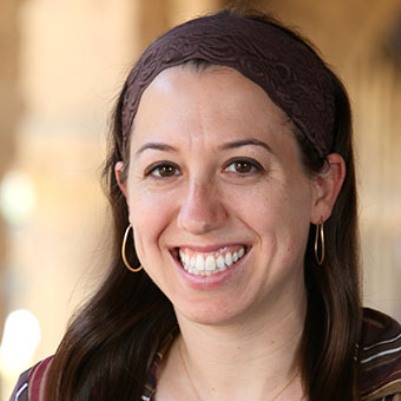
Prof. Ziva R. Hassenfeld is the Jack, Joseph and Morton Mandel Associate Professor of Jewish Education at Brandeis University. She completed her PhD at Stanford University. She studies reading comprehension from a sociocultural perspective, focusing on how children develop interpretations of the Hebrew Bible as a lens on reading development more broadly. Her qualitative methods include ethnographic observation, stimulated recall interviews and think-aloud interviews. This work draws on biblical hermeneutics, both contemporary and rabbinic, as well as literary theory and criticism. Ziva is also a passionate educator who has continued teaching Hebrew Bible throughout her move from high school classroom to academia. Her first book, The Second Conversation: Interpretive Authority in the Bible Classroom (Brandeis University Press, 2024), grew out of a two-year teacher-research project in which she taught seventh-grade Hebrew Bible during her postdoctoral fellowship, supported by the Ettenberg Research Grant in Jewish Education.
Essays on Related Topics: