


 Edit article
Series
Scribes Edited the Bible to Omit Problematic Texts


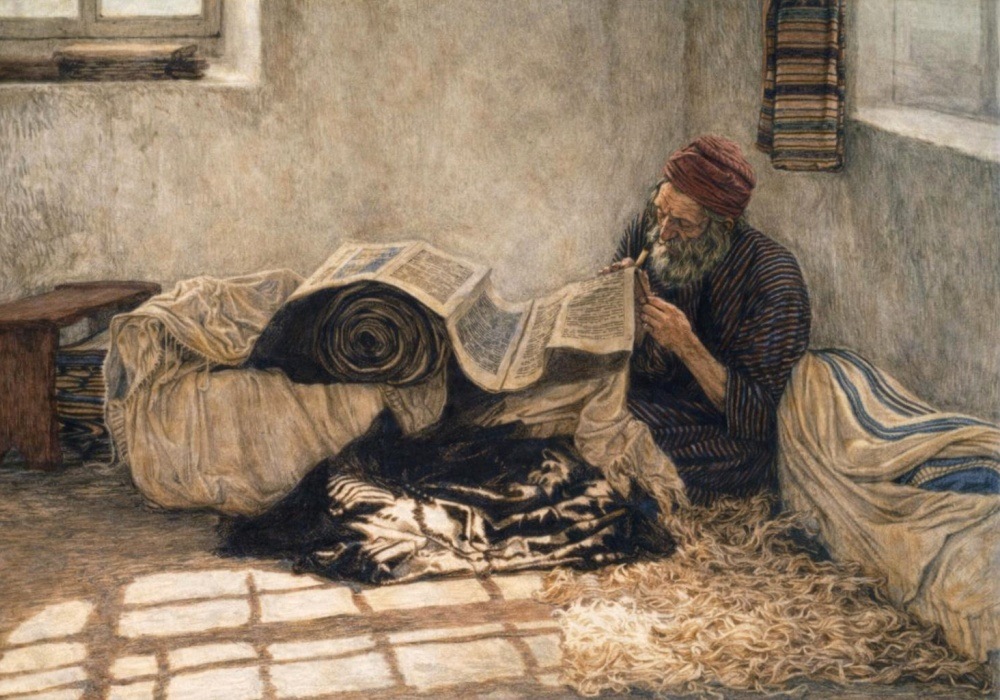
A scribe, wearing a traditional Middle Eastern costume of robe and turban, sews together pieces of parchment of a Torah scroll. Ephraim Moses Lilien, ca. 19th Century.
On the plains of Moab, as Moses begins to recount YHWH’s laws that the Israelites are to follow when they enter the land, Moses exhorts:
דברים ד:ב לֹא תֹסִפוּ עַל הַדָּבָר אֲשֶׁר אָנֹכִי מְצַוֶּה אֶתְכֶם וְלֹא תִגְרְעוּ מִמֶּנּוּ....
Deut 4:2 “You must neither add anything to what I command you nor take away anything from it....”[1]
Despite this explicit prohibition, the texts of the Bible were repeatedly expanded[2]—and scribes also omitted material, above all in cases where the text contained something theologically problematic or offensive.[3]
Hannah before YHWH’s Statue?
Hannah, wife of Elkanah, is unable to conceive, and while the family is at Shiloh, she prays to YHWH for a child. After a family meal at which Hannah was too upset to eat, she rises, though in the Masoretic Text (MT), we are not told why or where she is going:
שמואל א א:ט וַתָּקׇם חַנָּה אַחֲרֵי אׇכְלָה בְשִׁלֹה וְאַחֲרֵי שָׁתֹה וְעֵלִי הַכֹּהֵן יֹשֵׁב עַל הַכִּסֵּא עַל מְזוּזַת הֵיכַל יְ־הֹוָה.
1 Sam 1:9 [MT] After they had eaten and drunk in Shiloh, Hannah rose. Eli the priest was sitting on the seat beside the doorpost of the temple of YHWH.
The reference to Eli the priest sitting on his chair in the temple is disjointed, with no apparent connection to Hannah’s actions.
According to the Septuagint (LXX), the main Greek translation of the Hebrew Bible, however, Hannah rose “and stood before YHWH” (καὶ κατέστη ἐνώπιον κυρίου), placing Hannah inside the temple, with Eli sitting by its doorpost:
1 Sam 1:9 [LXX] After they had eaten in Shiloh, Hannah rose and stood before YHWH. Eli the priest was sitting on the seat beside the doorpost of the temple of YHWH.[4]
The same pattern recurs when Eli, mistaking Hannah’s distressed prayer as drunkenness, rebukes her. In the MT, he simply says to her:
שמואל א א:יד וַיֹּאמֶר אֵלֶיהָ עֵלִי עַד מָתַי תִּשְׁתַּכָּרִין הָסִירִי אֶת יֵינֵךְ מֵעָלָיִךְ.
1 Sam 1:14 [MT] And Eli said to her, “How long will you be drunken? Put away your wine from you.” (RSV)
In the LXX, however, he tells her to “go away from the presence of YHWH” (καὶ πορεύου ἐκ προσώπου κυρίου):
1 Sam 1:14 [LXX] And (the servant of) Eli said to her, “How long will you be drunk? Put away your wine from you and go away from the presence of YHWH.”[5]
The absence of two related phrases in the MT suggests an intentional intervention: having removed the notice that Hannah entered the temple (v. 9), the editor of the text that eventually became the MT also removes her corresponding departure (v. 14).[6]
The motivation is transparent. The older text implied not only that a woman could enter YHWH’s temple, but that she stood in the physical presence of the deity—presumably before a cultic object representing YHWH. Both ideas would have been theologically problematic for later biblical editors during the Second Temple Period.
It is highly implausible that the LXX contains a secondary expansion, precisely because such a scene—a layperson, let alone a female, praying inside the sanctuary before the deity—would have been no less offensive to a later scribe seeking to expand the text.[7] The omissions are therefore best understood as deliberate theological corrections in the proto-MT tradition, while the LXX preserves the more original text in these verses.[8]
Can YHWH Be Seen?
In its oldest form, the festival law in Exodus and Deuteronomy likely required all Israelite men to come and see the face of YHWH three times a year. The consonantal text of the MT in Deuteronomy (16:16) most likely preserves the original reading, but the verb יראה should be vocalized as a qal imperfect, יִרְאֶה (yirʾeh), “shall see”:
שלוש פעמים בשנה יראה כל זכורך את פני י־הוה
Three times a year all your males shall see the face of YHWH....
The anthropomorphic implication—that one could literally see the face of the deity—evidently became a source of theological discomfort, and the textual witnesses show independent attempts to resolve it. In Deuteronomy, the Masoretic text is vocalized as a nifʿal—יֵרָאֶה (yeraʾeh), “shall appear”—so that YHWH is no longer the object of the verb of seeing:
דברים טז:טז שָׁלוֹשׁ פְּעָמִים בַּשָּׁנָה יֵרָאֶה כׇל זְכוּרְךָ אֶת פְּנֵי יְ־הֹוָה אֱלֹהֶיךָ....
Deut 16:16 Three times a year all your males shall appear before YHWH your God....
This vocalization creates a grammatical anomaly. A reflexive nifʿal form would not typically take a direct object. Yet the particle אֵת—before פְּנֵי יְ־הֹוָה, “the face of YHWH”—normally indicates the defined direct object of a verb. Here, אֵת is most likely a vestige that bears witness to the original qal form. The consonantal text was left intact—no letters were added or removed—but the vocalization quietly replaced one verbal stem with another to avoid the idea that humans could see God.[9]
The MT in Exodus resolves the same problem differently, replacing the object marker אֵת with the preposition אֶל, “to, before,” which creates a construction more compatible with the nifʿal יֵרָאֶה:
שמות כג:יז שָׁלֹשׁ פְּעָמִים בַּשָּׁנָה יֵרָאֶה כׇּל זְכוּרְךָ אֶל פְּנֵי הָאָדֹן יְ־הֹוָה.
Exod 23:17 Three times a year all your males shall appear before the Lord YHWH.
The Samaritan Pentateuch (SP) of this verse takes yet another route, substituting האדן י־הוה, “the Lord YHWH,” as the object with ארון י־הוה, “the ark of YHWH.” This creates a peculiar idea that the Israelites should come to Jerusalem to see the ark.
That three independent textual traditions arrive at three distinct solutions to the same issue is significant: They not only corroborate that there was a theological problem in the original text, but they also show three different scribal interventions to solve it.[10]
Omission by Expansion
An offensive idea could also be omitted by an expansion of the text, and this may have been the most common way to avoid something offensive in the older text. For example, when Moses, Aaron, and the elders of Israel ascend the mountain, they see the God of Israel, with a pavement of lapis lazuli, beneath his feet—an unambiguously anthropomorphic depiction in which the deity is directly perceived:
שמות כד:ט וַיַּעַל מֹשֶׁה וְאַהֲרֹן נָדָב וַאֲבִיהוּא וְשִׁבְעִים מִזִּקְנֵי יִשְׂרָאֵל. כד:י וַיִּרְאוּ אֵת אֱלֹהֵי יִשְׂרָאֵל וְתַחַת רַגְלָיו כְּמַעֲשֵׂה לִבְנַת הַסַּפִּיר וּכְעֶצֶם הַשָּׁמַיִם לָטֹהַר.
Exod 24:9 [MT] Moses and Aaron, Nadab, Abihu and seventy of the elders of Israel went up, 24:10 and they saw the God of Israel. Under his feet there was something like a pavement of lapis lazuli stone, like the very heaven for clearness.
The LXX fundamentally altered the sense of the scene by inserting the phrase “the place where stood” (τὸν τόπον, οὗ εἱστήκει ἐκεῖ), so that the object of the men’s vision shifts from God to the place where He stood:
Exod 24:9 [LXX] Moses and Aaron, Nadab, Abihu and seventy of the elders of Israel went up, 24:10 and they saw the place where stood the God of Israel; and there was under his feet as it were a pavement of lapis lazuli stone, like the very heaven for clearness.[11]
The same technique is applied in the next verse. In the MT, the elders behold God:
וְאֶל אֲצִילֵי בְּנֵי יִשְׂרָאֵל לֹא שָׁלַח יָדוֹ וַיֶּחֱזוּ אֶת הָאֱלֹהִים וַיֹּאכְלוּ וַיִּשְׁתּוּ.
Exod 24:11 [MT] And he did not lay his hand on the leaders of the Israelites; they beheld God, and ate and drank.
In the LXX, the elders now behold “in the place of God” (ἐν τῷ τόπῳ):
Exod 24:11 [LXX] And he did not lay his hand on the leaders of the Israelites; they beheld in the place of God, and ate and drank.[12]
Because a closely related editorial variant is found twice, accidental omission in the MT can be excluded. The additions are a deliberate attempt in the LXX to remove the theologically objectionable notion that God could be seen.[13]
The correction was not systematic: the LXX retains the reference to God’s feet, an equally anthropomorphic detail. This incompleteness is instructive, for it suggests that the editor was constrained by a high regard for the text and would not make more extensive alterations.
YHWH’s Temple in Hebron
References that contradicted the unique status of the temple in Jerusalem were also omitted. For example, David’s son, Absalom, asks David’s permission to go to Hebron to fulfill a vow made to YHWH:
שמואל ב טו:ז וַיְהִי מִקֵּץ אַרְבָּעִים שָׁנָה וַיֹּאמֶר אַבְשָׁלוֹם אֶל הַמֶּלֶךְ אֵלְכָה נָּא וַאֲשַׁלֵּם אֶת נִדְרִי אֲשֶׁר נָדַרְתִּי לַי־הֹוָה בְּחֶבְרוֹן.
2 Sam 15:7 After forty years Absalom said to the king, “Let me go to Hebron and pay the vow that I have made to YHWH.”
In the MT, Absalom then says that he will worship YHWH:
שמואל ב טו:ח כִּי נֵדֶר נָדַר עַבְדְּךָ בְּשִׁבְתִּי בִגְשׁוּר בַּאֲרָם לֵאמֹר אִם יָשׁוֹב [ישיב] יְשִׁיבֵנִי יְ־הֹוָה יְרוּשָׁלַ͏ִם וְעָבַדְתִּי אֶת יְ־הֹוָה.
2 Sam 15:8 [MT] “For your servant vowed a vow while I dwelt at Geshur in Aram, saying, ‘If YHWH brings me back to Jerusalem, I will offer worship to YHWH.’”
Unlike the MT, the Lucianic version of the Greek text preserves a reference at the end of the verse to Hebron as the location where Absalom will worship:[14]
2 Sam 15:8 [LXX] For your servant vowed a vow while I dwelt at Geshur in Syria, saying, “If YHWH brings me back to Jerusalem, I will offer worship to YHWH in Hebron.”[15]
Though YHWH’s temple in Hebron is not mentioned elsewhere in the Bible, the Lucianic text probably preserves an old memory of a temple there, directly conflicting with the Deuteronomistic claim that no sanctuary existed before Solomon (cf. 2 Sam 7 and 1 Kgs 5–8). Furthermore, it suggests that Hebron, not Jerusalem, functioned as YHWH’s primary sanctuary during David’s time.
Under the increasing Deuteronomistic influence throughout the Bible, the idea that Jerusalem was the only legitimate place of sacrifice gradually established itself. Thus, a secondary addition of Hebron in the Lucianic tradition would be virtually inexplicable. The omission from the MT narrative is therefore best understood as part of a broader Deuteronomization of Samuel, where a rival royal cult site was removed.
A Temple to Baal or YHWH in Samaria?
According to the MT, King Ahab erected an altar to Baal in Baal’s temple in Samaria:
מלכים א טז:לב וַיָּקֶם מִזְבֵּחַ לַבָּעַל בֵּית הַבַּעַל אֲשֶׁר בָּנָה בְּשֹׁמְרוֹן.
1 Kgs 16:32 He erected an altar to Baal in the temple of Baal which he built in Samaria.
The accusation is peculiar: if Ahab had already built an entire temple for Baal, an altar would be a comparatively minor offense, yet the altar is presented as the primary transgression, while the temple is only mentioned as the location of the altar.[16]
The LXX reading of the verse, “the temple of his abominations” (οἴκῳ τῶν προσοχθισμάτων αὐτοῦ), presupposes a Hebrew Vorlage with בית שקציו rather than בית הבעל.
The Old Latin sources similarly avoid naming the divinity to which the temple was built:
No reference to a temple at all: Sulpicius Severus (363–425) and Ambrose of Milan (ca. 339–397) bypass the temple entirely.[17]
“The temple of his religions” (in domo religionum suarum): Lucifer of Cagliari (d. ca. 370) associates the temple with Ahab rather than a specific deity.[18]
“The temple” (in templo): Eucherius of Lyon (ca. 380–ca. 449) simply refers to an unnamed temple.[19]
If the MT’s reading of בֵּית הַבַּעַל, “temple of Baal,” were original, it is hard to see why so many independent witnesses would depart from a straightforward text in such varied directions. The most probable explanation is that the original text referred to a temple of YHWH in Samaria, and that Ahab’s offense was erecting an altar to Baal within it.
This solution is historically plausible given the reference to YHWH of Samaria in an inscription from Kuntillet Ajrud.[20] The post-exilic rivalry between the Samaritans and the Judean community led to sharpened criticism of the northern cult in later redactions of the Bible, and the idea of a temple to YHWH in Samaria would have been highly problematic.
The variants thus represent independent attempts to suppress a theologically intolerable statement. In the MT, the suppression of a single word—YHWH—and its replacement with Baal solved the problem.
Ancient Scribes Preferred Additions over Omissions
Scholars have generally assumed that when two textual witnesses diverge, the shorter text is more original (lectio brevior potior), and the version containing a plus—a technical term for a segment present in one witness but absent in another—is a secondary expansion.[21]
Underlying this assumption is at least partly the conviction that the text was regarded as too sacred or normative to be subjected to omission.[22] This position is not tenable. Although omissions are inherently difficult to demonstrate beyond reasonable doubt, the examples discussed above represent cases in which the omission, rather than expansion, is the most probable explanation for the variants. They confirm that there was no strict rule that nothing could be omitted.
On the other hand, some examples—such as the account of the Israelite elders seeing God (Exod 24:9–11) and the festival law (Deut 16:16)—also show that it was very difficult for many scribes to remove any part of the consonantal text. Indeed, the textual evidence, taken as a whole, confirms that scribes and editors generally preferred to address a problematic element through supplementation—adding explanatory or corrective material—than through omission.
For most scribes engaged in transmission, removing segments of the text would have been a last resort, undertaken only when no other solution was available. This suggests that the scribes regarded what they were transmitting as highly authoritative. For the Torah in particular, it is probable that they considered the texts to contain divine revelation.
Adding Is an Interpretation, but What about Deleting?
But how could scribes have omitted or altered even a single word, if the text was understood to derive from God? An addition can always be regarded as an explanation or clarification of the divine revelation, but an omission means that divine content is permanently lost to later transmission. Several considerations bear on this problem.
To begin with, we must resist imposing later conceptions of revelation onto ancient scribal culture. The notion that every written word is individually sacrosanct is an idea that developed gradually within Judaism and became standard already in rabbinic and medieval Judaism.[23] Within Christian traditions, it gained particular force in post-Reformation Protestant thought. It is not evident that scribes in the earliest phase of transmission already operated under this assumption.
Furthermore, written texts were transmitted alongside oral traditions and interpretive frameworks that could themselves carry authoritative weight, which would in some cases have reduced the urgency of precise verbal preservation in the texts.
We must also consider the interpretive agency of the scribes themselves. Even those genuinely convinced that they were transmitting a divinely given text approached it through the lens of their own theological conceptions. Where the received text appeared to contradict those conceptions, scribes may well have concluded that the text was corrupted, and that their task was to restore what the divine revelation must originally have said.
Understood in this way, such interventions need not represent deliberate falsification. It is more plausible to assume that most scribes worked in good faith, persuaded that they were correcting an error rather than falsifying the text.
Postscript
The Implications of Omissions for Understanding the Biblical Religion
The religion that emerged following the destruction of Jerusalem in 586 B.C.E.—what may be termed early Judaism—was in fundamental respects discontinuous with the Israelite religion of the monarchic period. Conceptions of the deity, the nature and place of worship, and the relationship between YHWH and other divine beings underwent substantial revision.
The evidence consistently suggests that theological motivations drove scribes to omit material: in most documented cases, such as the ones above, the deleted material was in some sense offensive. Positive references to aspects of the older religion—including the visual representation of Israel’s God (1 Sam 1:9, 14), the possibility of seeing him (Deut 16:6), and cultic sites in “wrong” places at the “wrong” time (2 Sam 15:8)—became theologically untenable and had to be censored.
The question of omissions is thus not merely textual; it has direct consequences for how we understand the Bible as a historical source. If we assume that scribal transmission was exclusively expansive, then implicit traces of the monarchic religion should be easily accessible through the Bible. Additions are interpretive elaborations that build upon and extend this existing tradition without fundamentally displacing it.
Omissions introduce a disruptive possibility: that traces of Israel's monarchic religion were not merely supplemented but actively censored from the textual tradition. If this is so, the Bible may be a considerably less reliable witness to the religion of the monarchic period than has generally been assumed. What we possess is not simply an expanded version of earlier texts but, in some instances, a selectively edited—and at points censored—version, shaped by the theological conceptions of the exilic and post-exilic communities.
The reconstruction of Israel’s monarchic religion would consequently have to rely more heavily on archaeological and epigraphic evidence. Concretely, if the inscriptions from Kuntillet Ajrud and Khirbet el-Qom suggest that YHWH was accompanied by a consort named Asherah, the complete silence over YHWH's consort in the Bible would have to be interpreted not as evidence of her absence from Israelite religion, but as a sign that the textual tradition may have been censored to suppress references to her.
TheTorah.com is a 501(c)(3) nonprofit organization.
We rely on the support of readers like you. Please support us.
Published
August 31, 2026
|
Last Updated
October 4, 2026
Previous in the Series
Next in the Series
Before you continue...
Thank you to all our readers who offered their year-end support.
Please help TheTorah.com get off to a strong start in 2025.
Footnotes


Dr. Juha Pakkala is Docent and Senior University Lecturer in Hebrew Bible at the University of Helsinki. He holds a Ph.D. from the University of Helsinki and completed his Habilitation at the Ludwig-Maximilians-Universität München. His research focuses on editorial techniques in the Hebrew Bible, Ezra–Nehemiah, the historical books, and the history of ancient Israelite religion. He is the author of God's Word Omitted (2013); Ezra the Scribe (2004); and Intolerant Monolatry in the Deuteronomistic History (1999). He is co-author of Editorial Techniques in the Hebrew Bible (2022), Evidence of Editing (2014), and Kinneret II. Results of the Excavations at Tell el-ʽOrēme, 1994–2008: Vol. 1 (2024).
Essays on Related Topics: