


 Edit article
Series
The Chanukah Oil Miracle Never Happened—A 19th Century Heresy


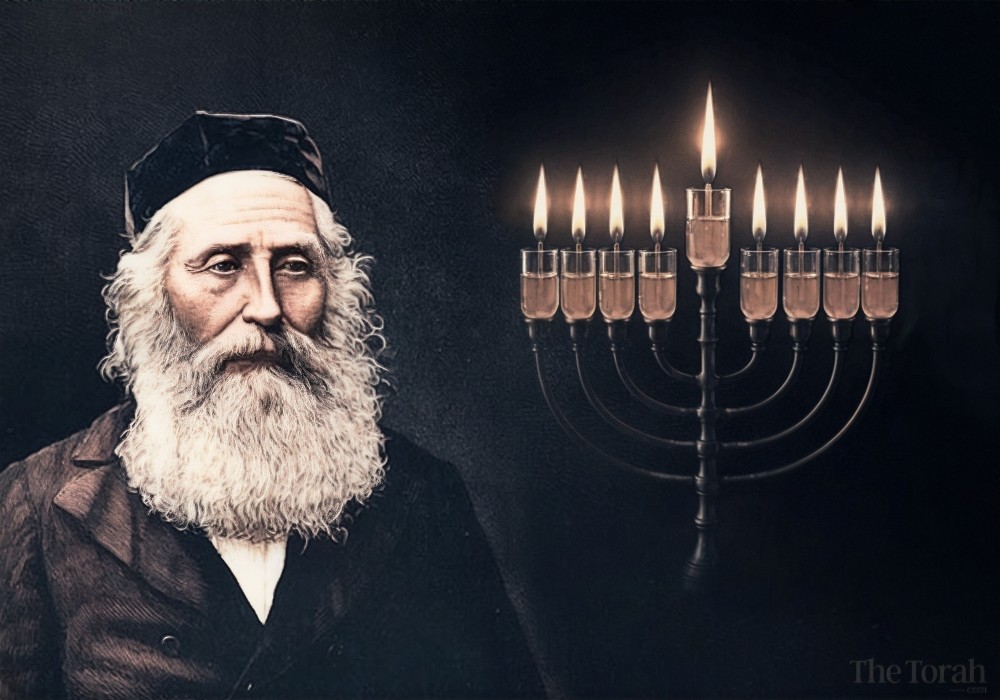
Chaim Zelig Slonimski, March 31, 1810-May 15, 1904. Wikimedia
The miracle of the oil lasting eight days is not mentioned in sources from the first half of the first millennium C.E., such as 1 or 2 Maccabees, ancient liturgy (including Al Hanissim), and Josephus.[1] It first appears out of nowhere in the Babylonian Talmud (ca. 6th century C.E.):
בבלי שבת כא: כשנכנסו יוונים להיכל טמאו כל השמנים שבהיכל וכשגברה מלכות בית חשמונאי ונצחום בדקו ולא מצאו אלא פך אחד של שמן שהיה מונח בחותמו של כהן גדול ולא היה בו אלא להדליק יום אחד נעשה בו נס והדליקו ממנו שמונה ימים.
b. Shabbat 21b When the Greeks entered the Temple, they made all the oil in the Temple impure. When the Hasmonean kingdom became strong and defeated them, they searched and found only one small juglet of oil which still had the seal of the high priest, but it only contained enough oil to light for one day. A miracle occurred and they lit with it for eight days.[2]
In his Mishneh Torah, Maimonides (1138–1204) repeats the story of the Talmud almost verbatim, but omits the words נעשה בו נס “And a miracle occurred”:
רמב"ם משנה תורה, זמנים, "הלכות מגילה וחנוכה" ג:ב וכשגברו ישראל על אויביהם ואבדום בחמשה ועשרים בחדש כסלו היה ונכנסו להיכל ולא מצאו שמן טהור אלא פך אחד ולא היה בו להדליק אלא יום אחד בלבד והדליקו ממנו נרות המערכה שמונה ימים עד שכתשו זיתים והוציאו שמן טהור.
Rambam Mishneh Torah Zemanim Laws of Megillah and Chanukah” 3:2 When the Jews overpowered their foes and removed them, it was the 25th of the month of Kislev, and they entered the Temple and only found one juglet of pure oil, and it only had enough to light for one day, but they lit the candles of the candelabra from it for eight days, until they could crush olives and extract pure oil.
In late 1891, Chaim Zelig Slonimski (1810–1904) published a brief article in his Hebrew language newspaper, Ha-Tsfirah, a pioneering organ of modern Hebrew journalism. In the article, Slonimski claimed that Maimonides’ omission demonstrates that he did not believe in the miraculous nature of the oil lasting eight days:
כוונתו בזה לומר שלא היה בו להדליק נרות המערכה הדולקים תמיד מן הערב עד הבוקר כדין [...] על כן השכילו הכהנים שלא להדליק מפך השמן בפעם אחת, רק חלקו את השמן על שמונה ימים, שידליקו בכל יום רק בתחילת הלילה לפרסום הנס, עד שיכלה רגל מן השוק, ואחר כך יכבו, וכן עשו במשך שמונה ימים עד שמצאו שמן טהור.
His [Maimonides’s] intention was to say that there was not sufficient oil to kindle the perpetual lights, which burn continually from evening until morning. [...] The priests therefore determined not to light the cruse of oil all at once, but rather apportioned the oil over eight days, that they might kindle it each day only at nightfall for the publication of the miracle [of the military victory], until traffic had ceased from the marketplace, and thereafter let it be extinguished. Thus, they did throughout the eight days, until pure oil was found.[3]
Slonimski was already 81 years old and quite famous at the time. A former head of the rabbinical seminary in Zhitomir, celebrated inventor, and prominent figure in Polish Haskalah, Slonimski was mainly known due to his multiple essays and books of popular science, which introduce technological innovation and scientific discoveries to lay Hebrew readers.[4] Although younger Jewish intellectuals described reading Slonimski’s works as transformative moments that led them away from traditional life, yet he remained devoutly observant.[5]
Slonimski’s Modified Maimonideanism
Slominski always described nature’s secrets as reflecting God’s wisdom. He saw scientific inquiry as a religious undertaking, a Maimonidean calling of sorts—learning God’s ways through creation.[6] In an article dedicated to Jewish education, he proposed a reform based on the hermeneutical spirit of Maimonides’ work, while discounting his outdated scientific beliefs.
Slonimski was impressed at how Maimonides reinterpreted canonical texts according to his philosophy, and believed that contemporary thinkers should be able to do the same, but according to the spirit of their time:
וכמה מעלות טובות צפונות בספרו "מורה נבוכים" לכל הרוצה לטהר המחשבה בעיקרי האמונה ולהבין פנימיות התורה! לא נשים לב אל החקירות הפלוסופיות שלו, שכבר נפלו ונתבטלו בימינו, אחרי שחכמת היצירה גילתה לנו כל מצפוניה ומסתוריה, אבל באופן באורו ופירוש המקראות שבתורה ונביאים הנראים כמגשימים את הבורא אשר הראה לנו שהם על דרך דברה תורה כלשון בני אדם.
And how many good virtues are hidden in his book “The Guide for the Perplexed” for all who wish to purify their thought concerning the fundamental principles of faith and to understand the inner meaning of the Torah! We shall not pay attention to his philosophical inquiries, which have already been discredited and nullified in our days, after the wisdom of creation has revealed to us all its secrets and mysteries, but in the manner of his explanation and interpretation of the verses in the Torah and Prophets which seem to anthropomorphize the Creator, he has shown us that they are in the way of “the Torah speaks in the language of men.”[7]
Natural sciences held the importance for Slonimski that medieval philosophy held for Maimonides, and he sought to reinterpret tradition accordingly, as it cannot contradict reason.[8] Yet, rather than neglecting the Talmud, Slonimski’s educational reform proposed using it to teach science.[9]
This project sparked his objection to wild weed like the miracle of Chanukah oil, which might push people away from reason. Exactly because the Chanukah miracle is held in such high esteem, he felt it risks jeopardizing the entire project of modernizing rabbinic tradition.
Slonimski’s Complaint about “Legends that Distort the Mind”
Slonimski’s article drew some support, but much harsh criticism, including vocal threats to boycott the newspaper. A week later—the paper by then was a daily—Slonimski doubled down, arguing that the miracle story is only one example of many other Talmudic tales that should not be understood literally:
נקל להתבונן ולשפוט היות הסיפור הזה מסוג האגדות המפליאות את לב ההמון הבלתי מבינים לשמוע מעשים גדולים וערך פרטיהם [...]
It is easy to observe and judge that this story [of the miracle of Chanukah oil] is of the kind of wondrous tales that amaze the hearts of the masses who understand not the great deeds nor value their details [...]
הרבה השתדל הרמב"ם לשרש האמונה בשדים ורוחות הזרה ונכריה בתורת משה ואמונת ישראל, אבל "האגדות המשבשות את הדעות" נשארו בעמנו ומצאו להם מאמינים עד היום [...] ועד היום השטן הזה מרקד לפני ההולכים לקראת לחשים קמיעות והשבעות, לגרש הקליפות והרוחות ממי שאחזו לילית [...]
Maimonides greatly strove to uproot the belief in demons and spirits, which is foreign and alien to the Torah of Moses and the Jewish faith, but “the legends that distort the minds” have remained among our people and have found believers unto this day [...] And until this day, this Satan dances before those who seek charms, amulets, and incantations, to banish kelipot [husks, evil forces in according to Kabbalah] and [malicious] spirits [...]
אבל מאז נתרחבו המדעים החדשים בעמנו, למדו להשכיל ולהבין עניני האגדות לפי ערכן, מהם מדקירים נפש השכלי כצנינים, ומהם מאירים בעיני השכל כפנינים.
But since the new sciences have become prevalent among our people, they have learned to comprehend and to understand the matters of legends according to their worth, some piercing the intellect like thorns and some illuminating to the mind like pearls.[10]
The phrase האגדות המשבשות את הדעות “legends that distort the minds,” is taken from Ra’abad’s (R. Avraham ben David, ca. 1125–1198) remarks on Maimonides’ Mishneh Torah,[11] in which he notes that the problem of anthropomorphic descriptions of the divine is not limited to scripture but also appear in rabbinic literature.[12]
Slonimski uses this phrase to describe what he sees as a more general problematic with aggadot (rabbinic legends), especially with supernatural tales which, from the perspective of a modern scientific outlook, read as works of magic, spreading superstition and distancing educated people from tradition. The miracle of Chanukah oil is thus only the first of many such stories that should be reinterpreted, or even discarded as part of the Jewish tradition, to accommodate modern criteria.
Pashkevilim Against Slonimski
The response was harsh. Ultra-orthodox organizations published pashkevilim, condemnatory posters, throughout Warsaw, attacking Slonimski and calling to boycott his newspaper Ha-Tsfirah.[13] The first pashkevil focused on what the author perceived as Slonimski’s demeaning expressions towards the Talmud, and did not even mention the miracle of the oil:
Our brethren [of the house of] Israel! Believers, sons of believers! If you have any compassion for yourselves, your sons, and daughters, do not allow moral destruction in your homes. Beware that the harmful tendencies of heretical articles do not corrupt the hearts and minds of your children. We speak here of the newspaper Ha-Tsfirah – may its name be erased. In an article in issue No. 283, on page 4 under the heading “Zot Chanukah,” the newspaper brought many quotations from the Talmud, whose words are great and holy, and not everyone can presume to understand their meaning.
It mocks these quotations, raises its voice against them in blasphemy, claims that these are “legends that distort the minds” and so forth.[14] These words torment the hearts of the righteous. Under such statements, he signs: “HaZaS” [Hayyim Zelig Slonimsky] - may his name be erased (Here appeared several curses, which we have not included [Slonimski’s remark]). And so, every God-fearing person shall take this to heart, to be firm and resolute, and strictly guard himself against this affliction. Let all Jews know so that in no place, in no home, shall this newspaper be found. And thus, many Jewish souls shall be saved. Amen.[15]
The debate sparked a curious range of responses, not limited to the Orthodox or even the Jewish world. At first, the debate was conducted mainly amongst the Jewish and Russian intelligentsia, as few Orthodox voices joined Polish Hasidism in their outrage. It was only a year later, in late 1892, that Lithuanian and Russian Jewish Orthodoxy sought to extinguish this flame of supposed heresy.
Let the Masses Keep Their Faith: Samuel Peltyn’s Critique
Samuel Hirsch Peltyn (1831–1896), the editor of the Polish-language Jewish newspaper Izraelita, was part of the Polish-Jewish enlightenment, Slonimksi’s own circle. Peltyn and his newspaper were the cornerstone of progressive, observant Judaism in Warsaw and broader Poland. They promoted the idea of “Poles of Mosaic faith,” meaning that Judaism is only a religious identity and Jews were otherwise as Polish as their Christian brethren. They made few changes to traditional lifestyle and held religious traditions in high regard, relying on them as the backbone of their Jewish identity.[16]
Though Peltyn had known Slonimski for decades, in the face of the local outrage and the threats to boycott Ha-Tsfirah, he published a series of essays criticizing Slonimski’s contempt for traditional faith.[17] By casting doubt on the Miracle of Chanukah Oil, Peltyn claimed, Slonimski undermined the ritual of lighting candles and by extension, what holds traditional Judaism together:
Religion, with the legends upon which it rests, is essential for the great masses; no philosophy or moral system can replace it. The faith of the Jewish people in the miraculous cruse of oil does not stand isolated in the history of religious beliefs. The fault lies with the human spirit itself, which in its immaturity wishes to be deceived.
For Peltyn, this was exactly the kind of radical enlightenment that diminishes traditions and religious identity in the name of abstract rationalism, pushing Jews toward assimilation and nihilism:
Therefore, “wise men, be cautious with your words,”[18] lest you cast the multitudes, immature for your ideas, into the abyss of moral nothingness! If you wish the masses to cease believing in supernatural occurrences, leave their beliefs in peace, do not touch them! But strive to enlighten dark minds, to acquaint them with the structure of the world, with the eternally unchanging laws governing it, and you shall lead them more swiftly and effectively to the goal you desire than you could accomplish through your direct, most convincing assaults upon their religious notions![19]
Rabbinic tradition, Peltyn argues, was a blanket woven from threads of morals and legends to protect the masses’ faith from the freezing abyss of assimilation. Trying to remove a specific thread was dangerous. It is better to keep tradition intact while educating people until they are ready for modern garments.
Slonimski, of course, insisted that the tradition of one cruse of oil lasting for eight days was historically inaccurate, and that lighting the candles should instead represent the human-led “miracle” of military victory and temple purification. Peltyn, however, could not understand the point of this historical quibbling; people’s faith is what it is, and multiple generations have venerated the miracle story. No historical discoveries can change that, and certainly not a direct attack on what they hold near and dear.[20]
Don’t Give Antisemites Ammunition: Alexander Zederboim’s Critique
Slonimski’s position received another surprising rebuttal, this time from the nascent Jewish nationalist movement. While later authors of secular Zionism hailed the Maccabees’ military victory, putting in their mouths such phrases as נֵס לֹא קָרָה לָנוּ פַּךְ שֶׁמֶן לֹא מָצָאנוּ “no miracle happened to us, we found no cruse of oil,”[21] earlier Zionists were more ambivalent towards the supernatural miracle.
Contributing to this ambivalence was Aleksei Suvorin (1834–1912), the editor of Russia’s bestselling newspaper Novaya Vremia, and one of the most vocal reactionary and antisemitic voices in Russia. Suvorin relied on rumors regarding the debate to claim that Slonimksi admitted what anti-Jewish detractors have been saying for centuries: that the Talmud is full of absurd tales and teaches barbaric hatred and superstitions.[22]
Alexander Zederboim (1816–1893) was the editor of Ha-Melitz and one of the early leaders of the Hovevei Zion, the proto-Zionist movement whose ideas Ha-Melitz promoted since 1882. Zederboim had been fighting Suvorin’s anti-Jewish hate for years. He now chastised Slonimski for providing ammunition to the detractors of Judaism. But his criticism does not stop there.
Though a secular leader, Zederbaum charged Slonimski with undermining a sacred story which, together with lighting the candles, had kept Jewish families and communities together for millennia:
תוצאות מעציבות כאלה הננו רואים לעינינו משגגה שיצאה מחכם דורנו הישיש חז"ס [חיים זליג סלונימסקי], לנגוע בדברים מקודשים ומאומתים בעמנו זה אלפי שנה כנס פך השמן בחנוכה אשר נתאמת בלב כל איש יהודי, ככל הניסים והנפלאות אשר עשה ה' לאבותינו ככתוב בספרי הקודש [...]
Such sad consequences do we behold from an error committed by the venerable sage of our generation, ChaZaS [Ḥayyim Zelig Slonimski], in venturing to touch upon matters sanctified and verified among our people for these thousands of years past, such as the miracle of the cruse of oil during Chanukah, which has been established in the heart of every Jewish person, like all the miracles and wonders which the Lord performed for our forefathers as written in the Holy Scriptures. [...]
ולאו מלתא זוטרתא היא, כי הרגש אשר יעירו בלב כל איש יהודי הנרות והאמונה בנס פך השמן [...] הרגשה הזה היה לעמנו בכל דור ודור לנוחם ולמבטח עוז והתקוה הזאת נחוצה לעמנו מאוד מאוד.
And this is no trifling matter, for the sentiment and faith in the miracle of the cruse of oil awaken in the heart of every Jewish person, [...] this sentiment has been for our people in every generation a comfort and a stronghold of strength, and this hope is exceedingly necessary for our people.
Now, Zederbaum claimed, when Jews are rediscovering their national identity, these elements are more important than ever:
ולמה זה אפוא נחליש כעת את האמונה בניסים ואת העדן והעונג אשר ישבע היהודי בהדליקו את הנרות, ואת יראת הכבוד לעמם ורגש אמונים לאלוהיהם אשר יביאו הנרות בלב הילדים, עד כי בארצות המערב קבעו את לילי חנוכה לחג לילדים להפיח בלבם רוח היהדות.
Wherefore then should we now weaken the faith in miracles and the delight and pleasure which the Jew derives when kindling the lights, and the reverence for their people and the feeling of faithfulness to their God which the lights bring into the hearts of children, to such an extent that in Western lands they have established the nights of Chanukah as a festival for children to instill in their hearts the spirit of Judaism.[23]
Like Peltyn, Zederbaum saw this miracle as akin to those mentioned in scripture, whose sanctity is “established in the heart of every Jewish person,” meaning that they stem from Jewish sentiments and reverence, valued for strengthening Jews’ appreciation of their communal identity and tradition.
Thus, despite some sympathy from the readers of Ha-Tsfirah, Slonimski found himself attacked not only from the ranks of Polish Hasidism, but from the ranks of his Zionist colleagues in Hebrew and by the enlightened, Jewish-Polish press.
Oil Is an Allegory for Torah: Rabbi Shmuel Alexandrov to the Defense
Until late 1892, the Orthodox public in Lithuania and White Russia was somewhat indifferent towards the debate.[24] This relative apathy changed when a young rabbi named Shmuel Alexandrov (1865–1941) unexpectedly came to Slonimski’s defense.
An unconventional thinker, Alexandrov was prone to provocations. A year earlier he published an essay proclaiming Zionism as a new era in Jewish religiosity, one that requires no commandments, only authentic spontaneous action.[25] In late 1892 Alexandrov published an essay titled Agadat Pakh ha-Shemmen or “The Legend of the Cruse of Oil.” The central argument of the essay is that the miracle story is merely an allegory for the power of Torah in Jewish life, and is encapsulated in a single sentence:
פך השמן לא היה ולא נברא, כי אם משל היה[26] לשמנה של תורה.
The cruse of oil never existed but is rather a parable for the oil of Torah.[27]
The Torah supplies Jewish life with ever renewing meaning just like the cruse in the story miraculously kept producing oil. And indeed, the story itself keeps inspiring new ideas and kindles new lights in Jewish tradition,[28] with no need for it to be historically accurate, thus maintaining the cruse of Torah in its purity, holding off modern skepticism.
Ginzberg Attacks Alexandrov: Miracles Are Real!
While ostensibly providing a traditionally-minded defense of Slonimski, Alexandrov’s essay caused a stir in its own right. In the summer of 1892, at the request of Rabbi Shlomo Zalman Schneersohn of Kapust (1830-1900), the leader of Chabad-Kapust Hasidism, Dov Ber Yehuda Leib Ginzburg of Mogilev (1824–1894) published a tractate titled Emunat Chachamin in which he attacked both Slonimski and Alexandrov.
Partially adopting Ramchal’s idea regarding different forms of providence, Ginzburg’s main theological claim is that alongside natural providence, operating within the limits of natural laws, God also established miraculous providence, not constrained by natural forces. It is this providence that explains the supernatural miracles throughout the generations.[29]
Ginzburg devotes considerable effort to demonstrating that Maimonides, like all Jewish sages throughout history, believed in supernatural miracles, in demons, and particularly in the miracle of the cruse of oil. Ginzburg portrays Alexandrov as a manipulator who distorts texts to suit his needs and whose ridiculous views stem from misunderstanding rabbinic and Hasidic sources.[30]
Alexandrov Brings Haskamot
Not one to shy away from controversy, Alexandrov mocked Ginzburg’s Hasidism and textual arguments in his next work, Diverey Shmuel, claiming that:
המחבר שלפנינו העמיד כל התורה כולה רק על האמונה באדמו"ר
This author before us based the entire Torah solely on faith in the (Chasidic) master.[31]
He also brought five letters of approbation—four of whom were communal rabbis acquainted with Alexandrov[32]—testifying to his erudition and rabbinic standing. The letters themselves, however, exhibit very little support to Alexandrov’s main claims regarding the miracle, and some of them explicitly disagreed with it.
In the following months, one after another, all four communal rabbis published clarifications disavowing Alexandrov and his ideas regarding the miracle. Rabbi Isaac Leib Stolyar went so far as to publish his own book attacking Alexandrov’s and Slonimski’s ideas.[33] Others distanced themselves not out of principled disagreement, but as a result of the pressure of Ya’akov Halevi Lifshitz (1838–1921), who joined the polemical fray.
Painting Slonimski and Alexandrov as Priests: Yaakov Lifshitz’s Pamphlets
Lifshitz was the leading conservative publicist and activist of his time. He was known mainly for his struggle against Zionism at the turn of the century, but even earlier he had invested considerable efforts to halt the wheels of modernization in order to shape Jewish traditional life in Eastern Europe in line with a particularly conservative model.[34]
Unlike others, he did not write a detailed work countering Alexandrov’s arguments, but rather spread anonymous, hand-written pamphlets in train stations across the Pale of Settlement, accompanied by pictures of Alexandrov and Slonimski dressed as Christian priests.[35] Some of these pamphlets were sent directly to authors of the letters of approbation, which Alexandrov presented in Diverey Shmuel. Two such pamphlets, kept in the archives of the National Library of Israel, condemn Rabbi Pinchas Rozovsky of Shvinitsyan for supporting Slonimsky and Alexanderov:
שני הכופרים היותר חצופים חיים זעליג סלאנימסקי ושמואל אלכסנדראוו שהעיזו בדור פרוץ כזה לצאת גלוי במ"ע יומי להכחיש את כל הנסים המפורשים בתורה ולהכחיש את התושבע"פ [התורה שבעל פה] ולתלות את כל הבוקי סריקי האלה ברבנו קדוש ישראל הרמב"ם ז"ל
The two most brazen heretics, Ḥayyim Zelig Slonimski and Shmuel Alexandrov, who have dared in this corrupt generation to come forth openly in the daily press to deny all the miracles explicitly stated in the Torah and to deny the Oral Law, and to attach all these empty fabrications to our master, the holy one of Israel, Maimonides of blessed memory.[36]
The letters are signed only by:
בת קול היוצאת מהר חורב מעלבונה של הדת והאמונה
A Heavenly Voice crying out from Mount Horeb at the insult to our religion and faith.
The pressure did its work. Not only did four of the five letter writers retract their moderate support, but Alexandrov himself was forced to (temporarily) leave his city of Bobriusk twice, due to harassment and threats from conservative elements. If we are to believe the words he wrote in 1895 in an open letter, this was due to threats of violence and perhaps even murder:
לקחת את נפשי זממו בחזקת יד! וכ"ז [וכל זה] יעשו לאיש המוכן ומזומן למסור את נפשו על קדושת תורתנו הכתובה והמסורה.
They plotted to take my life by force! and all this they do to a man ready and prepared to give his life for the sanctity of our Written and Oral Torah.[37]
Alexandrov Retracts, at Least Publicly
In this letter, attached to a new essay titled Aggadat Esh min ha-Shamaim [“The Tale of Divine Fire”], Alexandrov retracted his position. He continued to believe in the allegorical meaning of the cruse of oil and even extended the allegory to additional legends in the Bible and Talmud related to fire and oil, but he no longer denied the description of the miracle as historically accurate:
אם קבלה היא נקבל,[38] ואם אולי נמצאו בטויים בספרי אפ"ה [אגדת פך השמן] שפלטה קולמוסי הנוגעים בגוף הקבלה הנני מתחרט ע"ז [על זה] חרטה גמור.
If it is tradition, we shall accept it, and if perhaps there were found expressions in my book Agadat Pakh ha-Shemmen that touch upon the essence of tradition, I retract them with complete repentance.[39]
And yet, in a letter to Rabbi Pinchas Rozovsky—with whom Alexandrov remained friendly even though the latter had publicly disavowed him—Alexandrov clarified that he regretted only having expressed his positions publicly and causing pain to Rozovsky and others.
For the time being, he wrote, it is better to don a mask, letting the wise infer his intention on their own, while refraining from publicly expressing views that would provoke criticism.[40] With this retraction, the storm in the jug of oil ended.[41]
TheTorah.com is a 501(c)(3) nonprofit organization.
We rely on the support of readers like you. Please support us.
Published
December 15, 2025
|
Last Updated
September 5, 2026
Previous in the Series
Next in the Series
Before you continue...
Thank you to all our readers who offered their year-end support.
Please help TheTorah.com get off to a strong start in 2025.
Footnotes


Dr. Isaac (Tsachi) Slater is a Research Associate at the Faculty of Theology, the University of Göttingen, as part of the DFG funded Emmy Noether research group Emancipatio Rabbinica. He holds a Ph.D. in Jewish Thought from Ben-Gurion University of the Negev and served as postdoctoral fellow at the University of Hamburg and the University of Notre Dame. He edited critical editions of Aharon Shmuel Tamares’ (2020, 2022, 2025) and Shmuel Alexandrov’s (2024) writings, as well as the Maimonides Review of Philosophy and Religion (2023). His book In a Guilty Generation: Shmuel Alexandrov and the Redemption of Judaism is forthcoming by Magnes Press.
Essays on Related Topics: