


 Edit article
Series
Egyptians Would Not Dine with Hebrews... or Cow-Eating Greeks


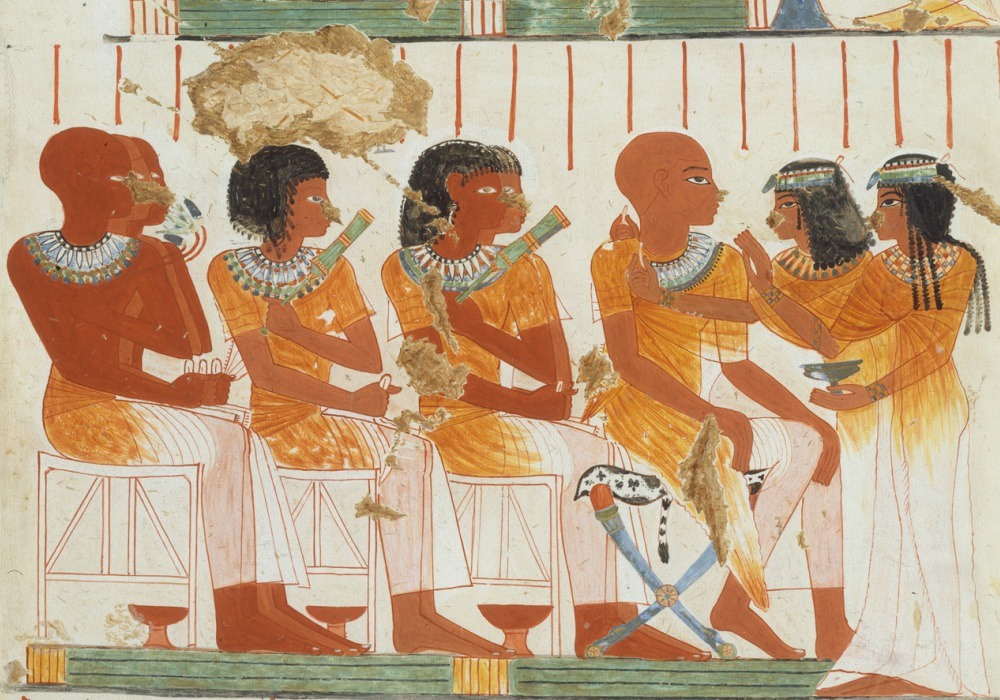
Guests at a Banquet, Nina de Garis Davies 1920–21; original ca. 1390–1349 B.C. Met Museum
Tell me what you eat, and I will tell you what/who you are.[1] —J.-A. Brillat-Savarin
When Joseph’s brothers come to Egypt to buy food, they not only do not recognize Joseph as their brother and are even unaware that the man they are speaking with is a fellow Hebrew. In their eyes, Joseph is an Egyptian, the lord of the Land (Gen 42:30). Once the Pharaoh put him in charge of food distribution (Gen 41:55), Joseph is the man in Egypt to whom everyone came for food (Gen 41:57).
Joseph reinforces his Egyptian identity before his brothers by speaking to them only in Egyptian, using an unnecessary translator:
בראשית מב:כג וְהֵם לֹא יָדְעוּ כִּי שֹׁמֵעַ יוֹסֵף כִּי הַמֵּלִיץ בֵּינֹתָם.
Gen 42:23 They did not know that Joseph understood, for there was an interpreter between him and them.
Joseph is likely very assimilated at this point. Arriving in Egypt at the tender age of 17, he has been in Egypt for twenty years by the time the brothers appear, and is even married to an Egyptian woman, Asenath, daughter of Potiphera, the priest of On (later Heliopolis).[2] If Joseph has a “foreign” or “Hebrew” accent in Egyptian, his brothers do not notice it.
Unsurprisingly, the brothers are terrified of this Egyptian man, who accuses them of being spies (Gen 42:14). This was a standard charge in many societies against merchants, who were regularly assumed to be spies.[3] The brothers’ claims that they have only come to buy food and are all the sons of the same man, therefore, offers them no protection. And on top of this, they are understandably alarmed by the silver returned in their sacks after their first trip (Gen 43:18).
Eating with his Brothers
When Joseph sees that his brothers have brought Benjamin with them, he decides that they will all have lunch together, and tells his steward to prepare the food:
בראשית מג:טז וַיַּרְא יוֹסֵף אִתָּם אֶת בִּנְיָמִין וַיֹּאמֶר לַאֲשֶׁר עַל בֵּיתוֹ הָבֵא אֶת הָאֲנָשִׁים הַבָּיְתָה וּטְבֹחַ טֶבַח וְהָכֵן כִּי אִתִּי יֹאכְלוּ הָאֲנָשִׁים בַּצָּהֳרָיִם.
Gen 43:16 When Joseph saw Benjamin with them, he said to his house steward, “Take the men into the house; slaughter and prepare an animal, for the men will dine with me at noon.”
At the meal, Joseph seats the brothers in their birth order, which, given the closeness of their ages, would have seemed like an act of divination for anyone who did not know them:
בראשית מג:לג וַיֵּשְׁבוּ לְפָנָיו הַבְּכֹר כִּבְכֹרָתוֹ וְהַצָּעִיר כִּצְעִרָתוֹ וַיִּתְמְהוּ הָאֲנָשִׁים אִישׁ אֶל רֵעֵהוּ.
Gen 43:33 As they were seated by his direction, from the oldest in the order of his seniority to the youngest in the order of his youth, the men looked at one another in astonishment.
Perhaps if they had been less scared and astonished, they would have begun to suspect him. Moreover, they do not consider the question of why this powerful so-called Egyptian vizier is having a meal with people that the Egyptians generally refuse to eat with:
בראשית מג:לא ...וַיֹּאמֶר שִׂימוּ לָחֶם. מג:לב וַיָּשִׂימוּ לוֹ לְבַדּוֹ וְלָהֶם לְבַדָּם וְלַמִּצְרִים הָאֹכְלִים אִתּוֹ לְבַדָּם כִּי לֹא יוּכְלוּן הַמִּצְרִים לֶאֱכֹל אֶת הָעִבְרִים לֶחֶם כִּי תוֹעֵבָה הִוא לְמִצְרָיִם. מג:לד ...וַיִּשְׁתּוּ וַיִּשְׁכְּרוּ עִמּוֹ.
Gen 43:31 …And he (Joseph) said: “Serve the meal.” 43:32 They served him by himself, and them (the brothers) by themselves, and the Egyptians who ate with him (Joseph) by themselves; for the Egyptians could not dine with the Hebrews, since it would be abhorrent to the Egyptians. 43:34 …And they (the brothers) feasted and drank with him (Joseph).
The brothers are eating separately because they are Hebrews and Egyptians will not eat prepared food with Hebrews. Did that even include Joseph?
Why Does Joseph Eat on His Own?
When he was a servant to Potiphar, Joseph’s access to his master’s food seems to have been restricted:
בראשית לט:ו וַיַּעֲזֹב כָּל אֲשֶׁר לוֹ בְּיַד יוֹסֵף וְלֹא יָדַע אִתּוֹ מְאוּמָה כִּי אִם הַלֶּחֶם אֲשֶׁר הוּא אוֹכֵל...
Gen 39:6 He left all that he had in Joseph’s hands and, with him there, he paid attention to nothing save the food that he ate...
While rabbinic midrash sees this as a euphemistic reference to his wife,[4] Abraham Ibn Ezra notes that this means that Potiphar does not allow Joseph to touch the food, since he is a Hebrew:
אבן עזרא בראשית לט:ו והנכון בעיני: שכל אשר לו היה בידו, חוץ מהלחם שלא היה אפילו נוגע בו, בעבור היותו עברי, כי הנה מפורש: כי לא יוכלון המצרים לאכל את העברים (בראשית מג:לב). כי פוטיפר ידע שיוסף עברי הוא, וכן אשתו אומרת: ראו הביא לנו איש עברי (בראשית לט:יד).
Ibn Ezra Gen 39:6 What seems correct to me is that he (Joseph) handled everything that was Potiphar’s except the food, which he would not even be permitted to touch, since he was a Hebrew, for it is explicit (Gen 43:32): “Egyptians may not eat with Hebrews.” For Potiphar knew that Joseph was a Hebrew, and so too his wife said to him (Gen 39:14) “look, you have brought a Hebrew man.”
Indeed, Joseph is identified as a “Hebrew” several times in the story:
- As noted, Potiphar’s wife calls him a Hebrew slave (Gen 39:14,17).
- Joseph mentions that he was stolen from the land of the Hebrews (Gen 40:15), i.e., his homeland.
- The cupbearer remembers that Joseph was a young Hebrew prisoner, who was skilled at dream interpretation (Gen 41:12).
Whatever Hebrew may mean exactly,[5] calling Joseph a Hebrew was demeaning and designates him as an alien in Egypt. But by this point, many years later, Joseph had been appointed second to Pharoah, was he still a Hebrew with whom the Egyptians would not eat?
Many commentators argue that Joseph would no longer have been subject to this taboo, and that he sits by himself because of his political importance:
For example, R. Naphtali Tzvi Yehuda Berlin (Netziv 1816–1893) writes:
נצי"ב בראשית מג:לב "לו לבדו"—לא משום "כי תועבה היא למצרים" לא אכל עם המצרים, שהרי נהגו בו בכבוד ובמורא מלך, ואיך יתעבו לאכול עמו חס ושלום. אלא כך דרך המלך שלא לאכול עם עבדיו...
Netziv Gen 43:32 “Him on his own”—not because “it would be abhorrent to the Egyptians” for they treated him with respect and great awe, so how could they abhor eating with him, God forbid! Rather, this is the way of royalty, that their servants do not eat with them [at the same table]…
Nevertheless, R. Samson Raphael Hirsch’s (1808–1888) argues that he eats on his own because he is a Hebrew:
Hirsch Gen 43:32 Joseph did not dine with the Egyptians either. Thus, even as a ruler, he did not deny his Hebrew origins.[6]
As Joseph’s being a Hebrew is integral to the narrative at several points, reading his solo eating as part of this arc seems more persuasive.
Foreigners in Egypt
Why do Egyptians abhor eating with Hebrews?[7] One possibility is because they were shepherds, as we learn from Joseph’s advice to his brothers when they speak with Pharaoh on how they can settle in Goshen, on the outskirts of northern Egypt:
בראשית מו:לג וְהָיָה כִּי יִקְרָא לָכֶם פַּרְעֹה וְאָמַר מַה מַּעֲשֵׂיכֶם. מו:לד וַאֲמַרְתֶּם אַנְשֵׁי מִקְנֶה הָיוּ עֲבָדֶיךָ מִנְּעוּרֵינוּ וְעַד עַתָּה גַּם אֲנַחְנוּ גַּם אֲבֹתֵינוּ בַּעֲבוּר תֵּשְׁבוּ בְּאֶרֶץ גֹּשֶׁן כִּי תוֹעֲבַת מִצְרַיִם כָּל רֹעֵה צֹאן.
Gen 46:33 When Pharaoh calls you, and says, “What is your occupation?” 46:34 you shall say, “Your servants have been keepers of livestock from our youth even until now, both we and our ancestors”—in order that you may settle in the land of Goshen, because all shepherds are abhorrent to the Egyptians.
Whether or not this is accurate, the Egyptians’ reluctance to mix with the Hebrews seems to go well beyond this or any other specific practice, as distinction and self-segregation had a long history in Egypt. The exclusion of foreigners from sacred objects and sacred rites was especially acute in the Late Period, the final era of native Egyptian rule, from the mid seventh century B.C.E. For example, the Hathor Temple in Dendera, built in Greco-Roman times, denies foreigners entry to the crypts:
The hidden place of the mighty in the Sistrum House,
In the event that the destroyers invade Egypt:
The Asiatics [=from Canaan] enter not there, the Bedouins harm it not,
The profane go not around within it.
Whoever recites a spell [?] against it,
May the milk of Sekhmet be in his body.
The place whose secret is concealed,
In the event that the Asiatics penetrate the fortress:
The Phoenicians approach it not, the Aegeans enter it not,
The sand treaders go not around within it.
Let no magician perform his rites there
Its gates open not to the unauthorized.[8]
Food rules were no exception, and here we have a confluence of biblical and other data.
The Abomination of Egypt and Herodotus’ Observation on Cows and Greeks
When the Pharaoh of the exodus tells Moses that, if the Israelites insist on offering sacrifices to YHWH, they can do so in Egypt instead of heading to a three-day march into the wilderness, Moses responds that they cannot do that:
שמות ח:כב וַיֹּאמֶר מֹשֶׁה לֹא נָכוֹן לַעֲשׂוֹת כֵּן כִּי תּוֹעֲבַת מִצְרַיִם נִזְבַּח לַי־הוָה אֱלֹהֵינוּ הֵן נִזְבַּח אֶת תּוֹעֲבַת מִצְרַיִם לְעֵינֵיהֶם וְלֹא יִסְקְלֻנוּ. ח:כג דֶּרֶךְ שְׁלֹשֶׁת יָמִים נֵלֵךְ בַּמִּדְבָּר וְזָבַחְנוּ לַי־הוָה אֱלֹהֵינוּ כַּאֲשֶׁר יֹאמַר אֵלֵינוּ.
Exod 8:22 But Moses replied, “It would not be right to do this, for what we sacrifice to YHWH our God is abhorrent to the Egyptians. If we sacrifice that which is abhorrent to the Egyptians before their very eyes, will they not stone us! 8:23 So we must go a distance of three days into the wilderness and sacrifice to YHWH our God as He may command us.”

What does תּוֹעֲבַת מִצְרַיִם, “that which is abhorrent to the Egyptians,” refer to? We get a hint from the writings of the Greek historian Herodotus, who visited Egypt around 450 B.C.E., and recounted for his readers peculiar rules Egyptians observed concerning Greeks.[9] He begins by explaining the way Egyptians relate to cows:
Herodotus History 2:41 Bulls that are rated for sacrifice and bull calves all Egyptians sacrifice.[10] But cows they are not allowed to sacrifice; these are sacred to Isis. For the image of Isis is female in form but with a cow’s horns, as the Greeks represent Io.[11] Cows, the Egyptians, all alike, hold in reverence more than any other form of herd animals.
Herodotus goes on to explain that this extends beyond refusing to eat cows, to even having no contact with the mouth or food utensils of anyone who eats cows:
Herodotus History 2:41 For this reason, no Egyptian man or woman will kiss a Greek on the mouth or use the knife of a Greek, or spit, or cauldron; nor will they taste the flesh even of a bull that is pure if it has been cut up with a Greek knife.[12]
This would put the Hebrews in the same category as the Greeks, since both cultures eat cows. Indeed, this point was already made by R. Yitzhak Arama (ca. 1420–1494), who suggests that what is recorded here in the Torah is not specific to Hebrews, but to all foreigners:
עקידת יצחק בראשית מג:לב הסבה כי לא יוכלון המצרים לאכל לחם בחברת שום עם ולשון שיאכלו את תועבותם לעיניהם ולא ייחד את העבריים רק מפני היותם כן.
Akeidat Yitzhak Gen 43:32 The reasoning is that Egyptians can’t eat bread in the company of any people or ethnicity who would consume their abomination in front of them, and the verse only specifies Hebrews because they happened to be there.
In general, ancient Greeks and the Jews who lived in Egypt considered Egyptian reverence for sacred animals absurd and beneath contempt. Philo considered the animal gods of Egypt as hardly decent to mention.[13] The Egyptians apparently felt the same about groups who treated their religious views about animals with contempt. Apparently, this Egyptian taboo against sharing food with (cow-eating) foreigners was stark enough—and offensive enough—to cause both the author of the Joseph story and Herodotus to comment on it.
Anthropology of Cooked Food and Foreigners
My personal awareness of the social role of cooked food began on an El-Al flight more than twenty years ago. There were, at the time, six different kinds of special kosher food available to passengers, in addition to the “regular” food, kosher under the Israeli Rabbinate supervision. A passenger who ordered special kosher A got special kosher B. This unlucky passenger avoided the cooked food, eating only the apple, since he only accepted the special kashrut supervision of A, not that of B. This may seem like a very technical or narrow ritual dispute, but something much more universal is at stake.[14]
In his Homo Hierarchicus, French anthropologist Louis Dumont (1911–1998) stressed the social status of cooked food, which is marked with the imprint of those who prepared it. Therefore, people express differences in the social order by their willingness to eat the cooked food of others. A member of one social group at odds with another group will not eat their prepared food.[15]
Another French anthropologist, Claude Levi-Strauss (1908–2009), noted the key difference between people’s relationship to cooked versus raw foods in his The Raw and the Cooked:
The raw/cooked axis is characteristic of culture; the fresh/decayed one of nature, since cooking brings about the transformation of the raw, just as putrifaction is its natural transformation…
We thus begin to understand the truly essential place occupied by cooking in native thought: not only does cooking mark the transition from nature to culture, but through it and by means of it the human state can be defined with all its attributes (emphasis, mine), even those that like mortality, might seem to be the most unquestionably natural.[16]
Such social realities may lie behind such Jewish practices as avoiding food cooked by gentiles (m. Avodah Zarah 2:6). Similarly, the New Testament discusses how Jews are prohibited to have table fellowship with non-Jews (Galatians 2:11–13, Acts 11:2–3).[17]
In the Joseph story, the Torah offers us an inverse example of these Jewish food rules; in this case, it is the Egyptians who are worried about their own food and ritual status being violated by the food practices of cow-consuming Hebrews, and thus force even the “Hebrew” vizier of Egypt and honored guests to eat on their own. If, as noted above, this attitude towards foreigners was especially prominent in the Late Egyptian period, around the time of the Persian conquest, towards the end of the sixth century, the biblical account may be about Joseph and his brothers, well before the exodus, but reflecting the conditions of that later time.[18]
TheTorah.com is a 501(c)(3) nonprofit organization.
We rely on the support of readers like you. Please support us.
Published
December 18, 2025
|
Last Updated
September 10, 2026
Previous in the Series
Next in the Series
Before you continue...
Thank you to all our readers who offered their year-end support.
Please help TheTorah.com get off to a strong start in 2025.
Footnotes


Prof. Albert I. Baumgarten is Professor (Emeritus) at the Department of Jewish History in Bar Ilan University. He holds a B.H.L. in Talmud from JTS and a Ph.D. in History from Columbia University. He was a Fulbright Fellow at the University of Strasbourg and a Principal Investigator at The McMaster Project: Judaism and Christianity in the Graeco-Roman Era. Baumgarten is the author of The Flourishing of Jewish Sects in the Maccabean Era: An Interpretation and Second Temple Sectarianism – A Social and Religious Historical Essay (2000), and more recently “The Preface to the Hebrew Edition of Purity and Danger” (2020), part of his larger effort to present the work of Dame Mary Douglas (1921-2007) to a wider audience.
Essays on Related Topics: