


 Edit article
Series
Transjordan Is Not the Promised Land, Even in Deuteronomy


.jpeg)
Joshua Stops the Sun (adpated), Gustave Doré and Hector Giacomelli, 1866. Met Museum
Transjordan Is Excluded from the Promised Land in Numbers
As the prospect of the Israelite settlement in Canaan draws near, YHWH gives Moses a map in which the borders of the Promised Land are spelled out for the first time (Num 34:1–12).[1] In Genesis, YHWH’s promise of land to Abraham and his descendants is only described in a general way,[2] but here, in Numbers, the generalities in the patriarchal narrative are defined.[3] This map, which the biblical cartographer labels אֶרֶץ כְּנַעַן לִגְבֻלֹתֶיהָ “the Land of Canaan and its borders,” utilizes topographical features (mountains, seas, rivers, wadis), as well as the names of cities and towns, in order to denote points on the border round about.
Beginning with the southern border, the line is drawn from the southeastern tip of the Dead Sea westward to the Mediterranean, on the way touching Kadesh-barnea and then the Wadi of Egypt (modern wadi el-Arish); the western border was the Great Sea that ran from there northward to a point on the central Syrian coast, and then turning to the east to form the northern border passing Mount Hor, Lebo-hamath as far as Hazar-enan; from this location the eastern border is drawn – it proceeds south, passing by Damascus and reaches the eastern slopes of Lake Kinneret, and from there along the Jordan River to the Dead Sea to close the circuit.
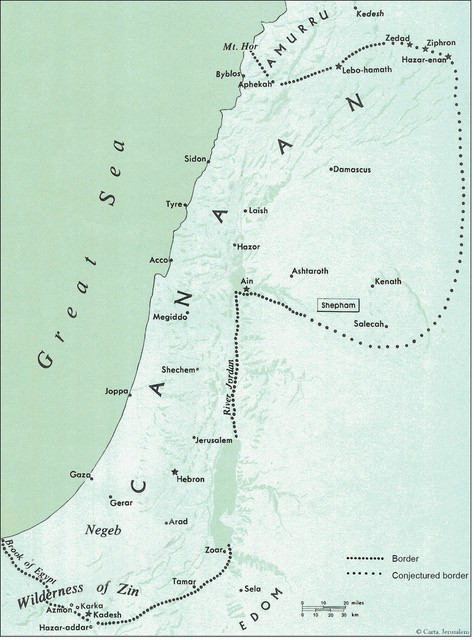 The Land of Canaan: The Promised Land as given in Num 34:1-12 (Courtesy of CARTA Jerusalem)
The status of Transjordan in this map of Canaan is eminently clear:[4] the territory south of the Yarmuk – the Gilead, the kingdoms of the Ammonites and the Amorites – was excluded from the Land of Canaan, the Promised Land.[5] Yet we know that according to the narrative earlier in Numbers, the tribes of Reuben and Gad chose to live in some of this territory, a detail that requires explanation if the land was not part of YHWH’s covenantal promise to the Israelites.
But Israel Conquers and Settles Sihon’s Transjordanian Kingdom in Numbers
The explanation for how this took place is as follows: After travelling north, skirting Edom and Moab by way of the eastern desert,[6] Israel arrives at Wadi Arnon, the border between Moab and the Amorite kingdom of Sihon. To reach the Jordan, they must traverse Amorite territory, so Moses sends a request to Sihon asking permission to cross through his land to the Jordan, promising to do no damage:
במדבר כא:כא וַיִּשְׁלַח יִשְׂרָאֵל מַלְאָכִים אֶל סִיחֹן מֶלֶךְ הָאֱמֹרִי לֵאמֹר. כא:כב אֶעְבְּרָה בְאַרְצֶךָ לֹא נִטֶּה בְּשָׂדֶה וּבְכֶרֶם לֹא נִשְׁתֶּה מֵי בְאֵר בְּדֶרֶךְ הַמֶּלֶךְ נֵלֵךְ עַד אֲשֶׁר נַעֲבֹר גְּבֻלֶךָ.
Num 21:21 Israel now sent messengers to Sihon king of the Amorites, saying, “Let me pass through your country. 21:22 We will not turn off into fields or vineyards, and we will not drink water from wells. We will follow the king's highway until we have crossed your territory.”[7]
Sihon’s belligerent refusal leads to war and Israel’s victory:
במדבר כא:כג וְלֹא נָתַן סִיחֹן אֶת יִשְׂרָאֵל עֲבֹר בִּגְבֻלוֹ וַיֶּאֱסֹף סִיחֹן אֶת כׇּל עַמּוֹ וַיֵּצֵא לִקְרַאת יִשְׂרָאֵל הַמִּדְבָּרָה וַיָּבֹא יָהְצָה וַיִּלָּחֶם בְּיִשְׂרָאֵל. כא:כד וַיַּכֵּהוּ יִשְׂרָאֵל לְפִי חָרֶב וַיִּירַשׁ אֶת אַרְצוֹ מֵאַרְנֹן עַד יַבֹּק עַד בְּנֵי עַמּוֹן כִּי עַז גְּבוּל בְּנֵי עַמּוֹן.
Num 21:23 But Sihon would not let Israel pass through his territory. Sihon gathered all his men (NJPS: people)[8] and went out against Israel in the wilderness. He came to Jahaz and engaged Israel in battle. 21:24 But Israel put them to the sword, and took possession of their land, from the Arnon to the Jabbok, as far as [Az] of the Ammonites, for Az[9] marked the boundary of the Ammonites.
Israel then settles the territory:
במדבר כא:כה וַיִּקַּח יִשְׂרָאֵל אֵת כׇּל הֶעָרִים הָאֵלֶּה וַיֵּשֶׁב יִשְׂרָאֵל בְּכׇל עָרֵי הָאֱמֹרִי בְּחֶשְׁבּוֹן וּבְכׇל בְּנֹתֶיהָ.
Num 21:25 Israel took all those towns. And Israel settled in all the towns of the Amorites, in Heshbon and all its dependencies.
This passage foreshadows the story several chapters later (Numbers 32), in which the tribes of Reuben and Gad are depicted as appealing to Moses to settle in Transjordan—i.e., on the very land they conquered from Sihon—rather than in the Promised Land across the river.[10] Moses’ initial objection is overcome when the Reubenites and Gadites agree to take part in the conquest of Canaan with all the other tribes of Israel, following which they would return to their homes in Transjordan.
Deuteronomy Presents the Conquest of Sihon’s Territory as a Foregone Conclusion
Deuteronomy greatly extends and alters the short informational narrative in Numbers concerning the war with King Sihon.[11] Before the Israelites even send messengers to Sihon, YHWH declares that the plan is for Israel to conquer this territory:
דברים ב:יז וַיְדַבֵּר יְ־הֹוָה אֵלַי לֵאמֹר... ב:כד קוּמוּ סְּעוּ וְעִבְרוּ אֶת נַחַל אַרְנֹן רְאֵה נָתַתִּי בְיָדְךָ אֶת סִיחֹן מֶלֶךְ חֶשְׁבּוֹן הָאֱמֹרִי וְאֶת אַרְצוֹ הָחֵל רָשׁ וְהִתְגָּר בּוֹ מִלְחָמָה. ב:כה הַיּוֹם הַזֶּה אָחֵל תֵּת פַּחְדְּךָ וְיִרְאָתְךָ עַל פְּנֵי הָעַמִּים תַּחַת כׇּל הַשָּׁמָיִם אֲשֶׁר יִשְׁמְעוּן שִׁמְעֲךָ וְרָגְזוּ וְחָלוּ מִפָּנֶיךָ.
Deut 2:17 YHWH spoke to me, saying:[12] … 2:24 Up! Set out across the wadi Arnon! See, I give into your power Sihon the Amorite, king of Heshbon, and his land. Begin the occupation: engage him in battle. 2:25 This day I begin to put the dread and fear of you upon the peoples everywhere under heaven, so that they shall tremble and quake because of you whenever they hear you mentioned.
What is the reason behind Deuteronomy’s rewriting of the Sihon conquest account?
Is the Transjordan Part of the Promised Land in Deuteronomy?
Moshe Weinfeld (1925–2009), the doyen of all things Deuteronomic, understood these changes as evidence that the author of Moses’ address viewed the Transjordan as part of the Promised Land. Indeed, Moses uses the same language here that he does earlier when telling the people, before the sin of the scouts, that it was time to conquer the Promised Land:
דברים א:כ וָאֹמַר אֲלֵכֶם בָּאתֶם עַד הַר הָאֱמֹרִי אֲשֶׁר יְ־הֹוָה אֱלֹהֵינוּ נֹתֵן לָנוּ. א:כא רְאֵה נָתַן יְ־הֹוָה אֱלֹהֶיךָ לְפָנֶיךָ אֶת הָאָרֶץ עֲלֵה רֵשׁ כַּאֲשֶׁר דִּבֶּר יְ־הֹוָה אֱלֹהֵי אֲבֹתֶיךָ לָךְ אַל תִּירָא וְאַל תֵּחָת.
Deut 1:20 I said to you, “You have come to the hill country of the Amorites that YHWH our God is giving to us. 1:21 See, YHWH your God has placed the land at your disposal. Go up, take possession, as YHWH, the God of your fathers, promised you. Fear not and be not dismayed.”
If Sihon’s Amorite territory was also part of the Promised Land, says Weinfeld, the conquest had to be a foregone conclusion:
According to the ancient sources, the land that the Israelites were to conquer did not include Transjordan. Thus, in the border description of “the land of Canaan” in Num 34:1–12… In fact, the whole tradition about the settlement in Transjordan in Num 32 has an apologetic character. It tries to justify the settlement of the tribes on the eastern side of the Jordan…
In contrast to this old tradition, which excludes Transjordan from the borders of the promised land, the author of Deuteronomy considers Transjordan to be an integral part of the promised land and presents here its ideology and full legitimization… What was in Numbers a marginal settlement outside the borders of the promised land becomes in Deuteronomy a legitimate inheritance of land with vast territory…[13]
Despite the adoption of this view by some,[14] historical as well as the literary-ideological perspectives suggest that it should be rejected.
Only When They Cross the Jordan River
Throughout Deuteronomy and Joshua through Kings—known as the Deuteronomistic History (DtrH)—the Promised Land is always referred to in relation to the Jordan River. This begins with Moses, who standing in the Transjordan, repeatedly speaks to the Israelites about when, in the near future, וּבָאתֶם וִירִשְׁתֶּם אֶת הָאָרֶץ אֲשֶׁר נִשְׁבַּע יְ־הֹוָה לַאֲבֹתֵיכֶם “and you will come and inherit the land that YHWH promised on oath to your fathers” (Deut 8:1).
It is this land into which Moses was denied entry:
דברים ד:כא וַי־הֹוָה הִתְאַנַּף בִּי עַל דִּבְרֵיכֶם וַיִּשָּׁבַע לְבִלְתִּי עׇבְרִי אֶת הַיַּרְדֵּן וּלְבִלְתִּי בֹא אֶל הָאָרֶץ הַטּוֹבָה אֲשֶׁר יְ־הֹוָה אֱלֹהֶיךָ נֹתֵן לְךָ נַחֲלָה.
Deut 4:21 Now YHWH was angry with me on your account and swore that I should not cross the Jordan and enter the good land that YHWH your God is assigning you as a heritage.
Instead, YHWH permits Moses to stand upon a mountain in the Transjordan and gaze upon the Promised Land from afar before his demise:
דברים לב:מט עֲלֵה אֶל הַר הָעֲבָרִים הַזֶּה הַר נְבוֹ אֲשֶׁר בְּאֶרֶץ מוֹאָב אֲשֶׁר עַל פְּנֵי יְרֵחוֹ וּרְאֵה אֶת אֶרֶץ כְּנַעַן אֲשֶׁר אֲנִי נֹתֵן לִבְנֵי יִשְׂרָאֵל לַאֲחֻזָּה.
Deut 32:49 Ascend these heights of Abarim to Mount Nebo, which is in the land of Moab facing Jericho, and view the land of Canaan, which I am giving the Israelites as their holding.[15]
This conception was a defining motif for the Deuteronomistic writers.[16] From the beginning of their history, they spoke of the eastern border of the Promised Land at the Jordan; thus in YHWH’s instructions to Joshua:
יהושע א:יא ...כִּי בְּעוֹד שְׁלֹשֶׁת יָמִים אַתֶּם עֹבְרִים אֶת הַיַּרְדֵּן הַזֶּה לָבוֹא לָרֶשֶׁת אֶת הָאָרֶץ אֲשֶׁר יְהֹוָה אֱלֹהֵיכֶם נֹתֵן לָכֶם לְרִשְׁתָּהּ.
Josh 1:11 …For in three days’ time you are to cross the Jordan, in order to enter and possess the land that YHWH your God is giving you as a possession.
Clearly, the Deuteronomic school does not think of the territory of Transjordan, whatever the story of its conquest, as part of the Promised Land.
Historical Context Behind Deuteronomy
Indeed, there was little reason for the Deuteronomic school, which most commentators date to the late 7th-century B.C.E., to have imagined expanding the conception of the Promised Land to encompass even more land. King Josiah, son of Amon and grandson of Manasseh, came to the throne as a pre-teen, just eight years old, and is credited with a 31-year rule (640-609 B.C.E.).[17] When Josiah came of age,[18] the decades-long wars between Babylonia and Media against Assyria were coming to an end with the collapse of the Assyrian Empire in 612 B.C.E.,[19] thereby liberating vassal states, such as Judah, from imperial obligations, at least in theory.
In reality, even before Assyria’s final collapse, Egypt, under Psammetichus I (656-610 BCE), moved to fill the political vacuum. Probably as early as the 630s, Egypt became caretaker and then master of the former Assyrian territories from Philistia north to the Phoenician kingdoms; it took control of the international highway – the via Maris – that ran up the coast from north Sinai, through the Jezreel Valley to Transjordan and then north to Syria.[20] When Neco II (610-595 BCE) took over on the death of his father Psammetichus, he brooked no insubordination from Josiah and dispatched him at Megiddo in 609.[21] In short, it is difficult to imagine a Judean dream of a revived Davidic empire, as so often mentioned in early modern historical studies.[22]
Israel Offers Sihon Peace Because His Territory Is Outside the Land
To understand the purpose of Deuteronomy’s retelling of the story of the conquest of the Transjordan, we must follow what happens next. Despite YHWH’s command to conquer the territory, Moses remarkably begins by requesting safe passage:
דברים ב:כו וָאֶשְׁלַח מַלְאָכִים מִמִּדְבַּר קְדֵמוֹת אֶל סִיחוֹן מֶלֶךְ חֶשְׁבּוֹן דִּבְרֵי שָׁלוֹם לֵאמֹר. ב:כז אֶעְבְּרָה בְאַרְצֶךָ בַּדֶּרֶךְ בַּדֶּרֶךְ אֵלֵךְ לֹא אָסוּר יָמִין וּשְׂמֹאול. ב:כח אֹכֶל בַּכֶּסֶף תַּשְׁבִּרֵנִי וְאָכַלְתִּי וּמַיִם בַּכֶּסֶף תִּתֶּן לִי וְשָׁתִיתִי רַק אֶעְבְּרָה בְרַגְלָי. ב:כט כַּאֲשֶׁר עָשׂוּ לִי בְּנֵי עֵשָׂו הַיֹּשְׁבִים בְּשֵׂעִיר וְהַמּוֹאָבִים הַיֹּשְׁבִים בְּעָר עַד אֲשֶׁר אֶעֱבֹר אֶת הַיַּרְדֵּן אֶל הָאָרֶץ אֲשֶׁר יְ־הֹוָה אֱלֹהֵינוּ נֹתֵן לָנוּ.
Deut 2:26 Then I sent messengers from the wilderness of Kedemoth to King Sihon of Heshbon with an offer of peace, as follows, 2:27 “Let me pass through your country. I will keep strictly to the highway, turning off neither to the right nor to the left. 2:28 What food I eat you will supply for money, and what water I drink you will furnish for money; just let me pass through – 2:29 as the descendants of Esau who dwell in Seir did for me, and the Moabites who dwell in Ar – that I may cross the Jordan into the land that YHWH our God is giving us.”
This peace offer should not be understood as a cynical remark by Moses, who knew ahead of time that his request would be turned down.[23] And it not a simple rewording of the message sent to Sihon mentioned in Numbers. Rather, as specified in Deuteronomy’s laws of war, an “offer of peace” was to be the first step taken when Israel set out to conquer foreign cities:
דברים כ:י כִּי תִקְרַב אֶל עִיר לְהִלָּחֵם עָלֶיהָ וְקָרָאתָ אֵלֶיהָ לְשָׁלוֹם... כ:יב וְאִם לֹא תַשְׁלִים עִמָּךְ וְעָשְׂתָה עִמְּךָ מִלְחָמָה וְצַרְתָּ עָלֶיהָ. כ:יג וּנְתָנָהּ יְ־הֹוָה אֱלֹהֶיךָ בְּיָדֶךָ וְהִכִּיתָ אֶת כׇּל זְכוּרָהּ לְפִי חָרֶב.
Deut 20:10 When you approach a town to attack it, you shall offer it terms of peace…. 20:12 If it does not surrender to you, but would join battle with you, you shall lay siege to it, 20:13 and when the YHWH your God delivers it into your hand, you shall put all its males to the sword.
In contrast, Canaanite kingdoms were not to be offered any terms but attacked and exterminated in a ḥerem (Deut 20:16–18). Surrender was not an option open to native Canaanites, only for foreigners. Thus, as a first move, Sihon was offered peace, since the Amorite kingdom of Sihon is here viewed as a foreign entity and not one of the indigenous peoples in the Land of Canaan who were to be exterminated regardless of what their reaction might be to an offer of peace.
Sihon’s Hardened Heart
While Sihon had the option of allowing the Israelites to pass through, as YHWH already promised that Israel would conquer this land, it is not surprising that Sihon refuses the request and gathers his forces for war. Similar to the story of YHWH hardening Pharaoh’s heart in Egypt,[24] YHWH hardens Sihon’s heart here as well, interfering with his good sense, which explains why the Amorite king refuses the reasonable, peaceful request to which his neighbors acceded without consequence:
דברים ב:ל וְלֹא אָבָה סִיחֹן מֶלֶךְ חֶשְׁבּוֹן הַעֲבִרֵנוּ בּוֹ כִּי הִקְשָׁה יְ־הֹוָה אֱלֹהֶיךָ אֶת רוּחוֹ וְאִמֵּץ אֶת לְבָבוֹ לְמַעַן תִּתּוֹ בְיָדְךָ כַּיּוֹם הַזֶּה.
Deut 2:30 But King Sihon of Heshbon refused to let us pass through, because YHWH had stiffened his will and hardened his heart in order to deliver him into your power – as is now the case.
In Deuteronomy, the encounter with Sihon has become a predestined event: YHWH would see to it that Sihon will stubbornly refuse to grant Israel passage, so that in the end he would lose his land. The purpose of this divine ploy was to put the fear of Israel and its God in the hearts of all who hear of them:[25]
דברים ב:לא וַיֹּאמֶר יְ־הֹוָה אֵלַי רְאֵה הַחִלֹּתִי תֵּת לְפָנֶיךָ אֶת סִיחֹן וְאֶת אַרְצוֹ הָחֵל רָשׁ לָרֶשֶׁת אֶת אַרְצוֹ. ב:לב וַיֵּצֵא סִיחֹן לִקְרָאתֵנוּ הוּא וְכׇל עַמּוֹ לַמִּלְחָמָה יָהְצָה. ב:לג וַיִּתְּנֵהוּ יְ־הֹוָה אֱלֹהֵינוּ לְפָנֵינוּ וַנַּךְ אֹתוֹ וְאֶת בָּנָו וְאֶת כׇּל עַמּוֹ.
Deut 2:31 And YHWH said to me: See, I begin by placing Sihon and his land at your disposal. Begin the occupation; take possession of his land. 2:32 Sihon with all his men took the field against us at Jahaz, and YHWH our God delivered him to us and we defeated him and his sons and all his men.
This Deuteronomic story shows that the lands in Transjordan are God-given, not a chance prize of war.[26]
Ḥerem Upon Sihon’s Cities
The description of the ensuing battle with Sihon and his forces is similarly brought into line with Deuteronomic standards, namely the ḥerem law (Deut 20:16–17) that required the elimination of all Canaanites for fear of their leading Israel astray:[27]
דברים ב:לד וַנִּלְכֹּד אֶת כׇּל עָרָיו בָּעֵת הַהִוא וַנַּחֲרֵם אֶת כׇּל עִיר מְתִם וְהַנָּשִׁים וְהַטָּף לֹא הִשְׁאַרְנוּ שָׂרִיד. ב:לה רַק הַבְּהֵמָה בָּזַזְנוּ לָנוּ וּשְׁלַל הֶעָרִים אֲשֶׁר לָכָדְנוּ.
Deut 2:34 At that time we captured all his towns, and we doomed every town – men, women, and children – leaving no survivor. 2:35 We retained as booty only the cattle and the spoil of the cities that we captured.
Unlike the narrative in Numbers, Deuteronomy claims that Israel doomed the entire population of the Amorite kingdom – “every town – men, women, and children – leaving no survivor” (Deut 2:34), even though they were not residents of Canaan. As a result, not only is the Amorite army pulverized, but all the inhabitants of the Amorite cities are exterminated.
Ḥerem Wherever Israelites Settle, Even Outside the Promised Land
Though the ḥerem law in all other biblical texts is restricted to the Promised Land occupied by Canaanites, in the present instance it is employed in the kingdom of Sihon, a foreign, external territory. The conquest is summarized by a list of some of the conquered cities and a general statement stating that the Israelites did not fail to conquer even a single Amorite settlement in the Transjordan:
דברים ב:לו מֵעֲרֹעֵר אֲשֶׁר עַל שְׂפַת נַחַל אַרְנֹן וְהָעִיר אֲשֶׁר בַּנַּחַל וְעַד הַגִּלְעָד לֹא הָיְתָה קִרְיָה אֲשֶׁר שָׂגְבָה מִמֶּנּוּ אֶת הַכֹּל נָתַן יְ־הֹוָה אֱלֹהֵינוּ לְפָנֵינוּ.
Deut 2:36 From Aroer on the edge of the Arnon valley, including the town in the valley itself, to Gilead, not a city was too mighty for us; YHWH our God delivered everything to us.
This phrasing is reminiscent of the conquest account in Joshua (11:19–20), highlighting that it was YHWH’s will that Transjordan fall into Israel’s hands. Read together with the previous verse, we are to assume that these cities were all subject to the ḥerem.
It seems that the Deuteronomic author viewed ḥerem as a necessary protective practice to be followed wherever Israel settled, not just in the Land of Canaan. If the tribes of Reuben and Gad were to live there, it would need to be without the Amorite inhabitants. From the Deuteronomist’s perspective, idolators and their idolatries that could lead Israel astray have no place, not only in the Promised Land proper, but also in any place Israel chose to live.[28]
TheTorah.com is a 501(c)(3) nonprofit organization.
We rely on the support of readers like you. Please support us.
Published
June 24, 2026
|
Last Updated
September 9, 2026
Previous in the Series
Next in the Series
Before you continue...
Thank you to all our readers who offered their year-end support.
Please help TheTorah.com get off to a strong start in 2025.
Footnotes


Prof. Mordechai Cogan is Professor (emeritus) in the Department of Jewish History at The Hebrew University of Jerusalem. He holds a Ph.D. from the University of Pennsylvania, and has written widely on the political and cultural connections between ancient Israel and the empires of the ancient Near East. Cogan is the author of many studies and books, among them: Imperialism and Religion; The Raging Torrent: Historical Inscriptions from Assyria and Babylonia Relating to Ancient Israel; Bound for Exile: Israelites and Judeans Under Imperial Yoke, Documents from Assyria and Babylonia; commentaries in the Anchor Bible series on 1 Kings; 2 Kings (with Prof. Hayim Tadmor); commentaries in Hebrew in the Mikra Leyisrael (Bible for Israel) series on Obadiah, Joel, Nahum and Kings, and the recently published Under the Yoke Ashur: The Assyrian Century in the Land of Israel. His well-received The Raging Torrent just appeared in its 3rd updated and expanded edition.
Essays on Related Topics: