


 Edit article
Series
When Gehenna Is Not Enough, the Sinner’s Spirit Is Forced to Wander


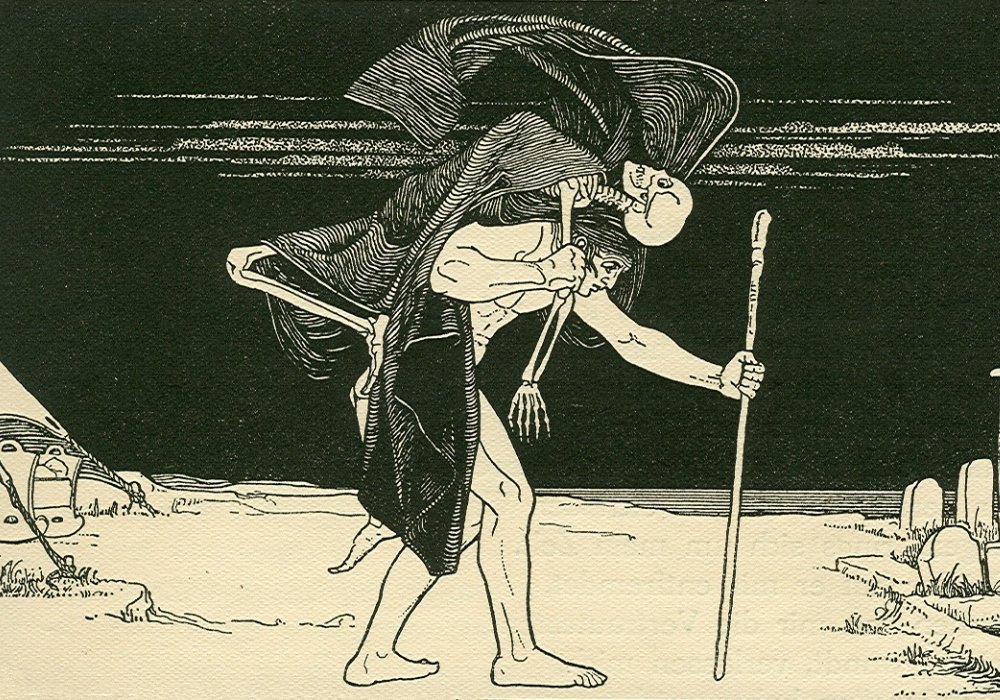
Dybbuk, Ephraim Moshe Lilien (1874–1925).
Saul’s Evil Spirit
After angering God and losing divine support for his dynasty,[1] causing the divine spirit to alight upon David, King Saul is overcome by an evil spirit:
שמואל א טז:יד וְרוּחַ יְ־הֹוָה סָרָה מֵעִם שָׁאוּל וּבִעֲתַתּוּ רוּחַ רָעָה מֵאֵת יְ־הֹוָה. טז:טו וַיֹּאמְרוּ עַבְדֵי שָׁאוּל אֵלָיו הִנֵּה נָא רוּחַ אֱלֹהִים רָעָה מְבַעִתֶּךָ. טז:טז יֹאמַר נָא אֲדֹנֵנוּ עֲבָדֶיךָ לְפָנֶיךָ יְבַקְשׁוּ אִישׁ יֹדֵעַ מְנַגֵּן בַּכִּנּוֹר וְהָיָה בִּהְיוֹת עָלֶיךָ רוּחַ אֱלֹהִים רָעָה וְנִגֵּן בְּיָדוֹ וְטוֹב לָךְ.
1 Sam 16:14 Now the spirit YHWH had departed from Saul, and an evil spirit from YHWH began to terrify him. 16:15 Saul’s courtiers said to him, “An evil spirit of God is terrifying you. 16:16 Let our lord give the order [and] the courtiers in attendance on you will look for someone who is skilled at playing the lyre; whenever the evil spirit of God comes over you, he will play it and you will feel better.”[2]
Saul’s servants find David, and at first, his playing the lyre helps relieve Saul:
שמואל א טז:כג וְהָיָה בִּהְיוֹת רוּחַ אֱלֹהִים אֶל שָׁאוּל וְלָקַח דָּוִד אֶת הַכִּנּוֹר וְנִגֵּן בְּיָדוֹ וְרָוַח לְשָׁאוּל וְטוֹב לוֹ וְסָרָה מֵעָלָיו רוּחַ הָרָעָה.
1 Sam 16:23 Whenever the [evil] spirit of God came upon Saul, David would take the lyre and play it; Saul would find relief and feel better, and the evil spirit would leave him.
Eventually, however, the evil spirit overcomes Saul, and he attempts to murder young David while playing his lyre:
שמואל א יח:י וַיְהִי מִמׇּחֳרָת וַתִּצְלַח רוּחַ אֱלֹהִים רָעָה אֶל שָׁאוּל וַיִּתְנַבֵּא בְתוֹךְ הַבַּיִת וְדָוִד מְנַגֵּן בְּיָדוֹ כְּיוֹם בְּיוֹם וְהַחֲנִית בְּיַד שָׁאוּל. יח:יא וַיָּטֶל שָׁאוּל אֶת הַחֲנִית וַיֹּאמֶר אַכֶּה בְדָוִד וּבַקִּיר וַיִּסֹּב דָּוִד מִפָּנָיו פַּעֲמָיִם.
1 Sam 18:10 The next day an evil spirit of God gripped Saul and he began to rave in the house, while David was playing [the lyre], as he did daily. Saul had a spear in his hand, 18:11 and Saul threw the spear, thinking to pin David to the wall. But David eluded him twice.[3]
The Bible never explains in any detail what this evil spirit is, though the story depicts it as causing or representing paranoid behavior of an aggressive/depressive nature.[4]
Demon Possession in the Second Temple Period
By the late Second Temple and rabbinic periods, this kind of uncharacteristic behavior was often understood to be a result of possession by shedim or mazikin,[5] i.e., “demons.”[6] The gospels tell stories of Jesus exorcising demons,[7] as does Josephus, who claims that this knowledge of exorcism goes back to King Solomon. Josephus describes an exorcism of a demon performed by a Jewish exorcist named Eleazar, in the presence of the future emperor Vespasian:
Josephus, Antiquities of the Jews, 8.45 And God granted him (Solomon) knowledge of the art used against demons for the benefit and healing of men. He also composed incantations by which illnesses are relieved, and left behind forms of exorcisms with which those possessed by demons drive them out, never to return.
8.46 And this kind of cure is of very great power among us to this day, for I have seen a certain Eleazar, a countryman of mine, in the presence of Vespasian, his sons, tribunes, and a number of other soldiers, free men possessed by demons.
8.47 And this was the manner of the cure: he put to the nose of the possessed man a ring which had under its seal one of the roots prescribed by Solomon, and then, as the man smelled it, drew out the demon through his nostrils, and when the man at once fell down, adjured the demon never to come back into him, speaking Solomon’s name and reciting the incantations which he had composed.[8]
Evil Spirit Possession 2.0
In the 16th century, R. Isaac Luria (1534–1572)—known popularly as the Ari or Arizal, the originator of Lurianic kabbalah—and his students applied exorcism to רוחות רעות “evil spirits,” eventually renamed “dybbuk,” i.e., Hebrew for “that which clings.”[9] While this term is familiar from the biblical story of Saul, Luria and his followers understood the “evil spirit” who possesses a person not as its own supernatural being, like a demon, but as the soul of a deceased Jewish man[10] whose sins were so severe that he has been denied entrance to Gehenna for purgation.
Thus, the evil spirit is trapped between this world and the next and has to wander the earth until expiation is found for the sin. Only once it has suffered enough, can the soul be judged and sent to Gehenna for its official, 12-month punishment and then on to the Garden of Eden for its reward. While it wanders the earth, the soul can only find rest by possessing or joining with another entity or being, animate or inanimate.
A look at one such story in depth—when R. Hayyim Vital (1542–1620), the chief student of R. Isaac Luria, exorcises an evil spirit from a widow in Safed—clarifies how Luria and his followers exorcised such evil spirits from their hosts, and how they would also learn much about the nature of punishment and the soul from them.[11]
Vital’s own record of this story in his Sefer Hezyonot [Book of Visions], his mystical diary,[12] is quite terse (see appendix). Nevertheless, a more expansive version, rich in detail, was written up by Rabbi Shloimel Dresnitz, a kabbalist from Moravia, in an appendix to the third of a set of three letters he sent to Rabbi Issachar Baer of Krementz,[13] describing what he had learned in Safed. These three letters were published by Joseph Solomon Delmedigo (1591–1655)—known as Yashar of Candia—in his תעלומות חכמה [Mysteries of Wisdom].[14]
Luria Sends a Possessed Woman to Vital
The story begins by describing the pain that the widow was feeling under the evil spirit’s possession:
תעלומות חכמה מט:–נ: מעשה היה בימי הרב הקדוש והטהור המקובל האלהי כמוהר״ר יצחק לוריה אשכנזי ז״ל, בצפת תוב״ב, באשה אחת אלמנה שנכנס רוח א׳ בה וציער אותה צער גדול ורב עד למאד. ונכנסו בני אדם הרבה אצלה, ודיברו עמה. והרוח השיב לכל אחד ואחד הודיע נגעי לבבו ודי מחסורו אשר יחסר לו.
Mysteries of Wisdom 49b–50b A story occurred in the days of the holy and pure Rabbi and divine kabbalist, our teacher, Rabbi Isaac Luria Ashkenazi, of blessed memory, in Safed, may it speedily be rebuilt, concerning a widow into whom a Spirit entered. She had great pains and torments. Many people came to her and spoke with her. The Spirit responded to each one and told them the afflictions of their heart and what deficiencies they had.
Luckily for the widow, among the many rabbinic visitors was a rabbi who knew the spirit from when he was alive:
ובתוך הבאים נכנס חכם א׳ אצלו, ושמו החכם מוהר״ר יוסף אשכנזי זצ״ל. מיד אמר לו הרוח, ברוך הבא אדוני ומורי ורבי. אני זוכר אדוני שהייתי תלמידו במצרים זמן רב ושמי פלוני ושם אבי פלוני.
Among those who came was a sage by the name of Rabbi Joseph Ashkenazi, of blessed memory. The Spirit immediately said to him: “Welcome my teacher and master. Does not my master remember that I was his student for a long time in Egypt? My name is so and so, and my father’s name is so and so.”
The family members then take the case to Luria, who recommends that Vital perform the exorcism:
והנה כראות קרובי האשה את כאיבה וצערה כי גדול הוא עד למאד, הלכו אצל הרב הקדוש כמוהר״ר יצחק לוריא זצ״ל לחלות פניו לילך עמהם אצל האשה ושיוציא הרוח מן האשה.
When the woman’s relatives saw that her pain and anguish were very great, they went to the holy rabbi, our teacher, Rabbi Isaac Luria, of blessed memory, to beg him that he should go with them to the woman and expel the Spirit from the woman.
ובהיות שלא היה פנאי להרב זצ״ל לילך הוא לשם שלח עמהם לתלמידו מוהר״ר חיים קאליברס זצ״ל וסמך ידיו עליו ומסר לו כונות בשמות. גם צוה לו שיגזור עליו נדויים וחרמים ושיוציאנו בעל כרחו.
However, the Rabbi, of blessed memory, was not free to go with them, so he sent his student, Rabbi Hayyim [Vital] Calabrese,[15] of blessed memory, with them. He (Luria) put his hands on him (Vital) and transmitted the kavvanot[16] and [divine] names. He also commanded him that he should decree bans and excommunications and should expel him against his will.
At this point, we get the part of the story Vital recorded in his diary (see appendix), about the initial refusal of the evil spirit to face him and why:
והנה כשנכנס הרב מהר״ר חיים ז״ל מיד הפכה האשה פניה אצל הקיר. אמר לה הרב ז״ל, רשע למה הפכת פניך ממני? השיב לו הרוח וא״ל, איני יכול להסתכל בפניך, שהרשעים אינם יכולים לראות בפניך, פני השכינה. מיד גזר עליו מוהר״רח שיהפוך את פניו. אז הפך את פניו מיד.
When Rabbi Hayyim, of blessed memory, came in to her, the woman immediately turned her face to the wall. The Rabbi [Vital], of blessed memory, said to her: evildoer, why have you turned your face away from me? The Spirit responded and said to him: I could not look at your face, since the evildoers cannot look at your face, the face of the Shekhinah. Rabbi Hayyim, of blessed memory, immediately commanded him to turn his face, and then he turned his face.
Angels Punish Him for Adultery
Knowing that this is a spirit of a deceased Jewish man who sinned, Vital asked him what he did to bring about this punishment of becoming a wandering spirit, and the spirit explains:
א״ל הרב: אמור לי מה חטאת ומה פשעת כי הענישוך עונש חמור כזה. השיב לו הרוח ואמר: חטאתי באשת איש והולדתי ממזרים . והנה זה כ״ה שנים שאני הולך נע ונד בארץ, ולא הונח לי כלל אפילו שעה ורגע א׳.
The rabbi immediately said to him: tell me what sins and transgressions you committed that you were punished with such a severe punishment. The Spirit responded to him: I committed adultery and I caused bastards [mamzerim] to be born. It is now twenty-five years that I am wandering the earth, without even an hour or a moment of rest.
It isn’t merely that his spirit wanders the earth in pain, but he is followed by angels who humiliate and torture him:
והנה שלשה מלאכי חבלה הם הולכי׳ תמיד עמי אל כל המקומות אשר אני הולך שם ומענישין אותי מכות קשות עד למאד, ומכריזין לפני לאמר: "ככה יעשה לאיש אשר הרבה ממזרים לישראל."
Three angels of destruction are always with me everywhere I go. They punish me and flog me mercilessly, and announce before me, saying: “‘thus, will be done to a man’ who increases bastards in Israel.”
The phrasing here is meant to mimic the curse announced about a man who refuses to perform levirate marriage (Deut 25:9), and perhaps also what Haman is forced to say about Mordechai (Esth 6:9, 11), though that case is positive. Most likely the angels announce for what sin he is being punished.[17] The spirit then asks Vital whether he sees these angels himself:
עוד אמר הרוח אל הרב ז״ל: אין רואה אדוני איך א׳ עומד על ימיני וא׳ על שמאלי ומכריזין לפני והשלישי עומד ומכה אותי מכת מות.
The Spirit said further to the Rabbi, of blessed memory: “Does not my master see one standing to my right and one to my left, and they announce before me, and the third one beats me with deadly blows.”
Vital doesn’t answer; perhaps the question was rhetorical.
Vital Learns the Rules of Pre-Gehenna Punishment
Vital then asks how it is that the spirit is being punished for longer than twelve months, and the spirit explains that Vital misunderstands the rules of afterlife:
שאל אותו הרב וא״ל: "ולא ארז״ל (בבלי ראש השנה יז.) 'משפט רשעים בגיהנם י״ב חדש'?"
The Rabbi asked him, and said to him: “Did not the Talmudic sages say (b. Rosh Hashanah 17a), ‘The judgment of evildoers in Gehenna is twelve months’”?
השיב הרוח וא״ל: "לא דקדק אדוני במאמר הנזכר, שארז״ל 'משפט רשעים בגיהנם' דייקא, אחר שסבלו כל עונשם חוץ לגיהנם בגלגולים ונשאר דינים קשים.
The Spirit responded and said to him: “My master was not precise with regard to the passage mentioned. The Talmudic sages said ‘punishment in Gehenna’ specifically, but this is after they have suffered all punishments outside Gehenna, in transmigrations and other harsh decrees.
אח״כ משכניסין אותו לגיהנם ושם עומדים י״ב חדשים ומצרפין ומלבין אותם כדי להוציא מהם כל כתמי הנשמה כדי שיהיו מזומנים ומוכנים ליכנס בג[ן] ע[דן]."
Afterwards, they bring they bring him into Gehenna, and he remains there for twelve months while they purify and perfect them, in order to remove from them all the stains from their souls, so that they would be prepared and ready to enter the Garden of Eden.”
Gehenna, the spirit explains, is actually only a small part of the punishment a sinful soul suffers after death:
והוא משל לרופא מומחה שנותן בתחלה על המכה סמנים קשים ומרים עד שיאכלו בשר החי שבמכה. ואח״כ הוא נותן על המכה משיחות ואספלגיות קרים וטובים על גבי המכה כדי לגדל ולקרר הבשר כראשונה. כך הוא ענין של גיהנם כי הצער של גיהנם אינו חלק א׳ מחמשים חלקים שסובלות הנשמה והנפש החוטאת קודם שיסרה לגיהנם.
“It is comparable to an expert physician who puts difficult and bitter potions on the wound so that they should eat the infected flesh in the wound. Afterwards, he puts bandages and bindings on the wound in order to heal and cool the flesh as it was originally. So too is the matter of Gehenna: The pain of Gehenna is not even one part of the fifty parts that the soul and spirit of the sinner suffer before their entrance into Gehenna.”
Death by Suffocation: In Accordance with the Mishnah
The spirit explains to Vital that he was killed by suffocation, albeit in an unconventional way, in accordance with the death penalty assigned to adulterers in the Mishnah (San 11:1):
אז שאל אותו הרב ז״ל: איך היה מיתתך?
Then the Rabbi, of blessed memory, asked him: How did you die?
השיב הרוח וא״ל: מיתתי היה בחנק אעפ״י שד׳ מיתות ב״ד בטלו, דין ד׳ מיתות לא בטלו, ואני יצאתי מאלכסנריאה בספינה ללכת למצרים ובמקום שנכנס בנילוס בים שם נטבעה הספינה ונטבעו אני ויהודים אחרים אשר היו עמי בספינה.
The Spirit responded and said: “My death was by strangulation. Even though the four forms of death by the court have been abrogated, the law of the four deaths has not been abrogated.[18] I went from Alexandria on a ship to Cairo, and the ship sank in the place where the Nile enters the sea. I and other Jews that were with me on the ship drowned.”
Vital then asks why the spirit didn’t at least confess his sins before he died, and is told that he simply didn’t have the opportunity:
אז שאל אותו מהר״רח ז״ל וא״ל: למה לא אמרת הוידוי בשעת יציאת נפשך מגופך, אולי היה מועיל לך?
Then Rabbi Hayyim, of blessed memory, asked him: Why did you not recite the confession as your soul left your body? Perhaps it might have helped you?
השיב לו הרוח: לא הספיקו בידי לומר הוידוי תכף ומיד חנקו המים אותי בגרוני, גם תכף ומיד בטביעתי בים. נטרפה דעתי ולא הייתי בשכלי להתוודות.
The spirit responded to him: I did not have time to recite the confession, because the water immediately choked me in my throat, and I immediately drowned in the water. I was distraught and did not have the presence of mind to confess.
The Spirit’s Journey after He Died
Vital then asks the spirit an open-ended question about what happened after he died:
אז שאל אותו הרב אמור לי למה נעשה בך אחר טביעתך בים ואחר יציאת נפשך מן גופך?
Then the rabbi asked him: “Tell me what happened after you drowned in the sea, and after your soul left your body?”
This encourages the spirit to present a long description of the travels his soul engaged in when on earth.
Attacked by an Angel—The spirit begins by relating how he was attacked by a cruel angel:
השיב לו הרוח ואמר: תדע כי כאשר נודע הדבר במצרים מטביעת הספינה, תכף ומיד יצאו היהודים ממצרים ונכנסו בים והוציאו אותנו מן הים וקברו אותנו. ואח״כ תכף ומיד משחזרו היהודים מן בית החיים, בא מלאך אחד אכזרי ושבט של אש בידו והכה בחזקה בשבט על קברי. מיד נבקע הקבר לשנים מן ההכאה אשר היתה גדולה וחזקה עד מאד. וא״ל אותו מלאך: "רשע, רשע קום בדין."
The Spirit responded and said: You should know that when the matter became known about the sinking of the ship, the Jews of Cairo immediately went out, entered the water, and took us from the water and buried us. Immediately after the Jews left the cemetery, a cruel angel came with a fiery staff in his hand and strongly smote my grave with the staff. The grave immediately split into two from the blows that were great and mighty, and the angel said to me: “evildoer, evildoer, arise for judgment.”
מיד לקח אותי ושמני בכף הקלע וקלע אותי בקליעה אחת ממצרים עד לפני הפתח של גיהנם שבמדבר, ואני בנפילתי שמה לפני הפתח של גיהנם. מיד יצאו מן גיהנם אלף אלפים רשעים הנידונים בגיהנם, וכולם צעקו עלי ואמרו לי (שמואל ב טז:ז): "צא צא איש הדמים", צא מכאן "עוכר ישראל" (מלכים א יח:יז; דברי הימים א ב:ז). וקללו אותי קללות נמרצות, ואמרו לי: אין אתה כדאי עדיין ליכנס בגיהנם, ועדיין אין לך רשות ליכנס לכאן.
He immediately took me and put me in the hollow of the sling and slung me with one shot, from Cairo to before the gate of Gehenna that was in the desert. As I fell there, before the gate of Gehenna, many thousands of evildoers who had been sentenced to Gehenna came out, and all of them shouted at me and said to me (2 Sam 16:7): “Go, go, man of blood,” leave here “sullier of Israel” (1 Kgs 18:17; 1 Chron 2:7). And they cursed me with many curses and said to me: “It is not yet appropriate for you to enter Gehenna, and you do not yet have permission to enter here.”
אזי תכף מיד קלעו אותי מהר להר ומגבעה לגבעה ותמיד הג׳ מלאכי חבלה אחרים הולכין עמי ומכריזין לפני ומכין אותי תמיד. גם בכל עת ורגע פוגעים בי מלאכי חבלה אחרים ורוחות רעות ושדין ולילין ובשמעם הכרוז אשר מכריזים לפני, גם הם מוסיפים להכות אותי מכות גדולות וקשות. ואלו מושכין אותי לכאן, וזה מושך אותי לכאן עד שמתפקפקין כל חוליות נשמתי.
They immediately slung me from mountain to mountain and hill to hill, and these three angels of destruction always accompanied me, and announced before me and beat me. Also, every time that other angels of destruction, evil Spirits, demons, and lilith’s[19] encountered me and heard the announcement that was announced before me, they also beat me with great and terrible blows. These [angels] also dragged me here, and this led me here, until all the vertebrae of my Soul were dislocated.
Sinners of Hormuz—the spirit then narrates how he went to Hormuz to try and possess a Jew, but they were all too sinful there:
וכך הלכתי נע ונד בארץ עד עיר הורמוז, והיא עיר גדולה קרוב לארץ הודו, והיתה כונתי ליכנס לגוף איזה יהודי. אולי מאלו המכות והיסורין והצרות. וכיון שבאתי לאותה העיר וראיתי אותם היהודים שהם רשעים וחטאים לה׳ מאד,
Thus, I wandered the earth[20] until I reached the city of Hormuz,[21] which was a large city close to the land of India. My intention was to enter the body of some Jew. Perhaps I would be spared the blows, torments, and troubles. When I came to that city, I saw some Jews who were evildoers and great sinners against God.[22]
בועלי גויות ושאר העבירות לא יכולתי ליכנס בגוף א׳ מהם מרוב כוחות הטומאה ששוכנים בקרבם ובסביבם. ואם הייתי נכנס בגוף אחד מהם, הייתי מוסיף טומאה על טומאתי ונזק על נזקי.
They had sexual relations with gentile women and committed other sins. I was not able to enter the body of any of them, because of the many powers of impurity that dwelled in them, and in their environs. If I had entered the body of one of them, I would have added impurity to my own impurity, and damage to my own damage.
The Doe of Gaza—the spirit then narrates how he possessed the body of a doe, and how unpleasant it was too live as an animal and why:
בכן חזרתי והלכתי מהר להר ומגבעה לגבעה עד שבאתי למדבר עזה, ושם מצאתי אילה נעוברת ומרוב צערי וכאיבי נכנסתי בגופה. וזה היה אחר שבע שנים שעברתי צרות רבות ורעות. וכאשר נכנסתי בגוף האילה היה לי צער גדול עד מאד,
I again returned to going from mountain to mountain and hill to hill until I came to the desert of Gaza. I found a pregnant doe there, and out of my great anguish and pain, I entered her body. This was after seven years of enduring great and evil troubles. When I entered the body of the doe, I had immense pain,
לפי שנפש האדם ונפש הבהמה אינם שוות זו לזו, שזו הולכת זקופה וזו הולכת רבוצה וגם הנפש של הבהמה היא מלאה זוהמא ומאוסה, וריחה רע לפני נפש האדם. גם מאכלה אינו מאכל אדם.
Since the spirit of the person and the spirit of an animal are not similar to each other. One of them walks upright and the other walks horizontally. Also, the spirit of the animal drinks water that is impure and full of despicable things, and it smells bad for the spirit of the person. It also eats food that is not food for a human.
ועוד היה לי צער גדול מן העובר שבמעיה. וכן האילה היה לה צער גדול עד מאד בשבילי וצבתה בטנה, ורצתה בהרים עד שנבקעה כריסה ומתה.
And in addition, I had great anguish from the fetus that was in her womb. The doe also had great anguish because of me, and her abdomen was pinched (or “swollen”). She ran over hills and valleys until her abdomen split and she died.
The Kohen of Shechem—he then travels to Shechem and there, he possesses a kohen (a man from a priestly family), but the combined forces of Jewish and Muslim exorcists forces him out of that man’s body:
ומשם יצאתי לעיר שכם ונכנסתי בגוף יהודי א׳ כהן, ותכף אותו הכהן שלח אחר הקדשים והגלחים של הישמעאלים ולרוב הלחשים והשבעת שמות הטומאה גם הקמיעות של שמות הטומאה אשר תלו בצוארו לא יכולתי לסובלם ולעמוד בגופו ויצאתי משם.
I left there and came to the city of Shechem, where I entered the body of a Jew who was a kohen. The kohen immediately sent for the holy men [kedoshim] and clergy [galohim][23] of the Ishmaelites [Muslims], to increase the incantations and adjurations with impure names, also for amulets with impure names, which they hung around his neck. I was not able to tolerate them and remain in his body.
The Widow of Safed—and this, he explains, is how he came to possess the widow whom Vital is treating:
תכף ומיד וברחתי משם ובאתי פה צפת תוב״ב, ונכנסתי בגוף זאת האשה. וזה לי היום כ״ה שנים שלא שלותי ולא שקטתי רק בכל יום מוסיפין לי צער על צערי וכאב על כאבי.
I left him and immediately escaped from there and came here to Safed, may it be speedily rebuilt, and entered the body of this woman. Today is twenty-five years that I have not had tranquility and quiet, but every day they add anguish to my anguish, and pain to my pain.
The Length of Pre-Gehenna Punishment
Having heard this long ordeal, Vital asks how long this pre-Gehenna punishment will last:
א״ל הרב ז״ל עד מתי יהיה לך הצער הזה, וכי אין לך תקומה לעולם?
The Rabbi, of blessed memory, said to him: how long will you have this pain, and is there never any recovery for you?
השיב לו הרוח ואמר, עד שימותו כל הממזרים אשר הולדתי, כי כל זמן אשר הם חיים וקיימים אין לי תקנה. אז כל העם הנמצאים שם עם רב מאד, בכו כלם בכיה רבה, כי נפל פחד הדין עליהם ונעשה התעוררות רב וגדול בכל המדינה מאותו מעשה.
The Spirit responded to him and said: until all the bastards that I gave birth to would die. As long as they are alive and exist, there is no repair for me. At that moment, all of the people who were present, a very large crowd, cried very much, because the fear of Divine Judgment fell upon them. It caused a very great revival in the land because of that event.
Why the Widow Vulnerable to Possession
Now Vital turns back to the possession of the widow:
אז שאל לו הרב, מי נתן לך רשות שתכנס בגוף האשה הזאת?
The rabbi asked him: who gave you permission to enter the body of this woman?
“To Satan with you!”—The spirit explains that she sinned by cursing in anger:
השיב הרוח ואמר: לנתי לילה אחת בביתה ובאשמורות הבקר קמה האשה הזאת ממטתה והיתה רוצה להוציא אש מן האבן וברזל והסמרטוט השרוף לא קיבל הניצוצות. והפצירה האשה עד מאד, ולא עלה בידה.
The Spirit responded and said: I slept one night in her house and before dawn this woman got up from her bed to strike a spark from the flint and steel. The tinder did not catch from the sparks and the woman pleaded very much, but she did not succeed.
ואזי נתכעסה האשה כעס גדול עד מאד והשליכה האבן והברזל והסמרטוט השרוף הכל מידה לארץ. ואמרה בכעס גדול, תהא לשטן, ותכף ומיד נתנה לי רשות ליכנס בגופה.
Then the woman became very angry, and she threw the flint and steel and the tinder, everything in her hands, to the ground, and said in great anger, “go to Satan.”[24] I was immediately given permission to enter her body.
Vital is unconvinced by this explanation:
שאל אותו הרב ז״ל ואמר: וכי בשביל עון קל כזה נתנו לך רשות ליכנס בגופה?
The Rabbi, of blessed memory, asked him and said: you were given permission to enter her body, because of such a small sin?
Disbelieves in the Exodus—the spirit admits that the woman did more than curse; she is a non-believer:
השיב הרוח ואמר תדע אדוני חכם שזאת אין תוכה כברה, כי היא אינה מאמנת בניסים שעשה הקב״ה לישראל ובפרט ביציאת מצרים,
The Spirit responded and said: know my master and sage that this woman was not as she appeared. She does not believe in the miracles that the Holy One did for Israel, and particularly the exodus from Egypt.[25]
ובכל ליל פסח שכל ישראל שמחים וטובי לב, אומרים הלל הגדול ומספרים ביציאת מצרים. הוא הבל בעיניה היתול ושחוק וחושבת בלבה שמעולם לא היה נס כזה.
Every Passover eve when all Jews are joyous and happy, recite the Great Hallel, and recount the story of the Exodus from Egypt, in her heart she thinks that there never was such a miracle, and it is all a projection and a joke.
A Repentant Woman
Hearing this, Vital gives the woman a chance to respond, or perhaps repent:
מיד אמר הר׳ לאשה פלונית, מאמנת את באמונה שלימה שה[קדוש] ב[רוך] ה[וא] יחיד ומיוחד וברא שמים וארץ, ובידו כח ויכולת לעשות כל אשר חפץ, ואין מי יאמר לו מה תעשה?
The Rabbi immediately said to the woman: So and so, do you believe with complete faith that the one and only Blessed Holy One create heaven and earth, and with His hands, has the strength and ability to do whatever He wants, and there is nobody who can tell him what to do?
השיבה האשה ואמרת: הן אני מאמנת את הכל באמונה שלמה.
The woman responded and said: Yes, I believe it all with complete faith.
עוד אמר לה הרב ז״ל: את מאמנת באמונה שלמה שהב״ה הוציאנו ממצרים מבית עבדים וקרע לנו את הים ועשה לנו נסים הרבה?
The Rabbi, of blessed memory, further said to her: Do you believe with complete faith that the Holy One took us out of Egypt, from the house of slavery, split the sea for us, and did many miracles for us?
השיבה האשה הן אדוני החכם, אני מאמנת הכל באמונה שלימה ואם היה לי דעה אחרת, אני מתחרטת עליו, והתחילה האשה לבכות.
The woman responded: Yes, my lord sage, I believe it all with complete faith, and if at times I had other beliefs I regret it, and the woman began to cry.
Vital Exorcises the Spirit Through Her Little Toe
Having heard the woman affirm her faith in the divine miracles of the exodus, Vital commands the spirit to leave her body:
מיד גזר הרב על הרוח שיצא, וגזר עליו שלא יצא דרך שום אבר שיעשה לה היזק, כי אם דרך אצבע קטנה שברגל שמאל. והטעם הוא שמהאבר שהוא יוצא אותו האבר מתבטל לגמרי.
The rabbi immediately decreed upon the Spirit that he should leave, and he should not leave through any organ that would harm her, but through the smallest toe of her left foot. The reason being that the limb through which it leaves might be permanently damaged.
וכיוון הרב בשמות שמסר לו רבו ז״ל. מיד נתנפח האצבע ונעשה כלפת, ויצא דרך שם.
The Rabbi concentrated on the [Divine] names that had been taught to him by his teacher, of blessed memory. The toe immediately swelled up and reddened, and it exited through there.
The spirit keeps coming back, begging to return, so the family sends to Luria again:
אח״כ בא הרוח כמה לילות לחלונ[ות] הבית ובפתח הבית והבהיל את האשה לחזור וליכנס בגופה. וחזרו קרובי האשה אל המקובל האר״י זצ״ל.
Afterwards, for several nights, the Spirit came to the windows and door of the house and frightened the woman so that she would let him return and enter her body. The woman’s family members went back to the kabbalist, Rabbi Isaac Luria, of blessed memory.
Mezuzah Problem—Luria suggests that their vulnerability to this pressure comes from a faulty mezuzah, and sends Vital to deal with the problem:
אז חזר הרב ז״ל ושלח תלמידו מהר״ר חיים הנ״ז ז״ל וצוה עליו לבדוק את המזוזה אם כשירה היא אם לאו. הלך מהר״ר חיים ז״ל לבדוק את המזוזה ומצא את הפתח בלא מזוזה.
The Rabbi, of blessed memory, again sent his disciple, our teacher, Rabbi Hayyim [Vital], of blessed memory, and commanded him to examine the mezuzah, to see if it was proper, or defective. Rabbi Hayyim, of blessed memory, went to check the mezuzah and found that the door had no mezuzah.
מיד צוה הרב לקבוע מזוזה בפתח ועשו כן ומשם ואילך לא חזר עוד.
The Rabbi immediately ordered that a proper mezuzah be put on the door. They did so, and from that time forward, it never returned.
Evil Spirit as Spiritual Teacher
The unique position of the ruaḥ raʿah in Lurianic kabbalistic thinking allows for a paradox. On one hand, the spirit is a nuisance, like the demons of the Second Temple period, and requires someone with mystical knowledge to exorcise them from their hosts. At the same time, these spirits were once members of the Jewish people, and as such, can communicate their experiences to these living kabbalists, advancing Jewish knowledge about souls and afterlife.
Indeed, it would seem that Vital first learns about the pre-Gehenna punishment of souls, forced to wander the earth while being tortured by cruel angels, from this encounter with a spirit whom he eventually exorcises anyway. Moreover, in this thinking, the hosts themselves are vulnerable due to their own sins, so part of the exorcism is leading them to repent or fixing their ritual problems.
The soul itself cannot be helped, as his punishment is already in the hands of those same angels, and only time and suffering will eventually allow them the relief of entering Gehenna for their last twelve months of punishment, and then finally, paradise in the Garden of Eden.
Appendix
Vital Records that He Exorcised an Evil Spirit from a Widow in Safed
Vital records this incident in his posthumously published diary:
חיים ויטאל, ספר חזיונות חלק א:כה שנת שלא. בהיותי בצפת, למדני מורי ז״ל להוציא רוחות רעות בכח ייחוד שלימדני.
Vital, Book of Visions 1:25 “5331 (1571).[26] When I was in Safed, my teacher, of blessed memory, taught me how to exorcise evil Spirits with the power of a unification that he had taught me.
A “unification” (yiḥud) is a mystical meditation.[27] Vital first commands the spirit to face him:
וכשהלכתי אליו היתה האשה מוטלת על המטה וישבתי בצדה והפך פניו מכנגדי לצד אחר ואמרתי לו שיהפוך אלי לדבר עמי, שיצא , ולא רצה.
When I came to him, a woman was lying on the bed. When I sat down by her side and [the evil Spirit] turned his face away from me. I told him to turn his face toward me and speak to me, that he should leave, but he refused.
Having been refused, Vital hits the spirit—i.e., the possessed widow—and the spirit explains why it had refused his request:
וטפחתי על פניו בידי. ואמר לי: וכי מפני שלא החזרתי פני הכיתיני? לא עשיתי זה ברשע, כי אם שפניך בוערות אש גדול שורף, ונפשי נשרפת אם אסתכל בך, מרוב קדושתך.
I slapped his face with my hand and he said to me: “Because I would not turn my face you hit me? I did not do this maliciously, but because your face burns like a great flame and my soul would be burnt if I looked at you, because of your great holiness.”
Vital’s diary actually records one further example of such an exorcism.
Exorcising the Spirit of Judah Gano
Many years after Vital had left Safed and was living in Damascus, the spirit of Judah Gano[28] warns him one night that he needs to be exorcised:
חיים ויטאל, ספר חזיונות חלק ב:לה לילה א׳ ראיתי בחלום עשיר א׳ שנפטר פה דמשק שנה א׳ קודם שבאתי ושמו יהודה גאנו ומעולם לא ראיתיו ויחל פני, שלמען ה׳ שאתקן נפשו, כי אין זולתי ראוי לתקן בדור הזה, והנה למחר אבא לביתך אותי. ואיקץ.
I saw in a dream a wealthy man who had died here in Damascus, a year before I came. His name was Judah Gano, and I had never seen him. He begged me, for God’s sake, that I should repair his soul, because there is nobody else in this generation who is worthy to repair [souls]. Tomorrow, I will come to your house, so you can repair me. And I awoke.
The next morning, he learns that Gano’s spirit had possessed a girl, who showed up at his door, to have the exorcism performed.
ויהי ביום ההוא ותבא לביתי נערה א׳ בת דניאל רומנו, שהיתה פגועה מרוח רעה, שארפאנה.״
The next day, a girl came to my house who was the daughter of Daniel Romano. She was possessed of an evil spirit, and I healed her.
TheTorah.com is a 501(c)(3) nonprofit organization.
We rely on the support of readers like you. Please support us.
Published
May 29, 2026
|
Last Updated
September 30, 2026
Previous in the Series
Next in the Series
Before you continue...
Thank you to all our readers who offered their year-end support.
Please help TheTorah.com get off to a strong start in 2025.
Footnotes


Dr. Morris M. Faierstein is an independent scholar of Hasidism, Kabbalah, Early Modern Popular Jewish Culture and Early Modern Yiddish literature. His M.A. is from JTS and his Ph.D. from Temple University (Religious Studies), and he also holds rabbini ordination from Yeshiva Pri Etz Hayyim in Jerusalem. Among his 15 books are, Jewish Mystical Autobiographies: Book of Visions and Book of Secrets (Paulist Press, 1999); Ze’enah U-Re’enah: A Critical Translation into English (De Gruyter, 2017); ספר החזיונות: יומנו של ר׳ חיים ויטאל [Book of Visions: The Diary of R. Hayyim Vital] (Machon Ben Zvi, 2005); The Dybbuk: It Origins and History (SUNY Press, 2024); and Isaac Luria and Jewish Mystical Hagiography (SUNY Press, 2026).
Essays on Related Topics: