

 Edit article
Series
“By Your Blood, Live! By Your Blood, Live!” How the Haggadah Rereads Ezekiel


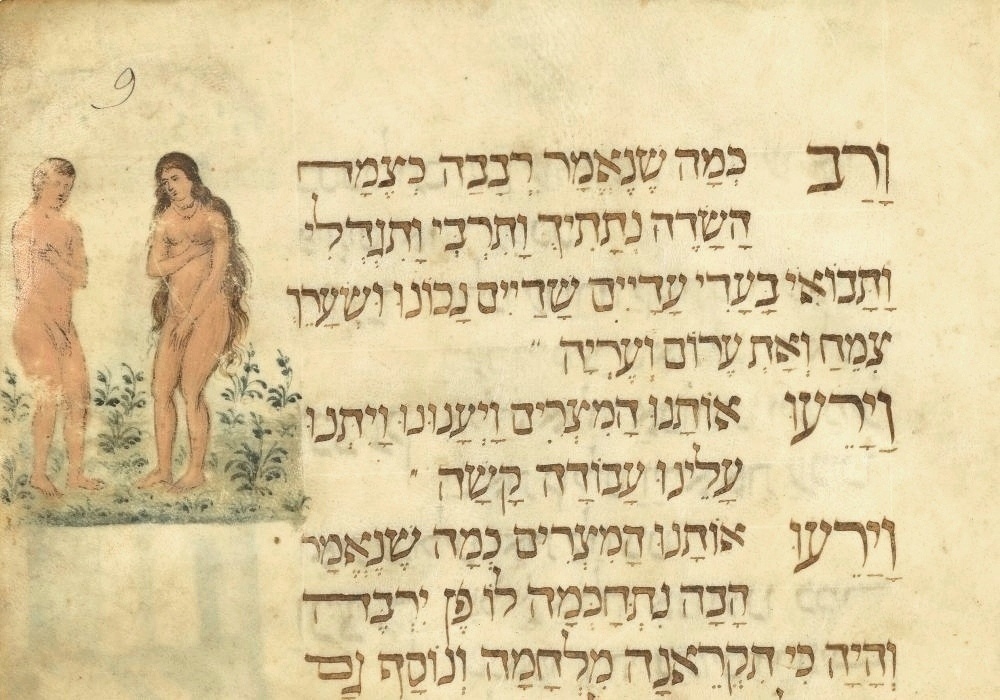
Passover Haggadah, 1583, f. 9r, Gallica. It includes the midrash on Ezekiel 16:7 but not Ezekiel 16:6; R. Hayyim Vital (1542–1620) is the earliest known source to mention the inclusion of a second Ezekiel verse.
The storytelling section of the Passover Haggadah (maggid) includes a midrashic exposition of ʾarami ʿoved ʾavi (Deuteronomy 26:5–8),[1] the passage that a farmer recites upon bringing the first produce to the Temple. It offers a brief overview of Israel’s history, and how YHWH redeemed them from Egypt.[2]
The opening verse of the passage ends by describing how Israel became a nation that was גָּדוֹל עָצוּם וָרָב “great, strong, and populous.” The oldest Haggadot do not include a midrashic gloss on these words.[3] At some point, a midrashic gloss was added to connect these words to a verse in Exodus about Israelite population growth:
"גדול ועצום ורב"—כמה שנאמר (שמות א:ז): "ובני ישראל פרו וישרצו וירבו ויעצמו במאד מאד."
“Great, strong, and populous”—as it says (Exod 1:7): “And the Israelites were fruitful, and swarmed, and became populous, and very very strong.”[4]
The midrash almost certainly was meant to gloss all three words, as preserved correctly in Midrash HaGadol (Deut 26:5),[5] including the third term וָרָב (va-rabh) “populous” in Deuteronomy paralleling the verb וַיִּרְבּוּ (va-yirbu) in the Exodus verse.
The Haggadah Introduces a Passage from Ezekiel
At some point, the last word וָרָב was separated out, and became the subject of its own midrash based, unusually, not on a Torah verse, but one from Ezekiel:
"וָרָב"—כְּמָה שֶּׁנֶּאֱמַר (יחזקאל טז:ז): "רְבָבָה כְּצֶמַח הַשָּׂדֶה נְתַתִּיךְ, וַתִּרְבִּי וַתִּגְדְּלִי וַתָּבֹאִי בַּעֲדִי עֲדָיִים, שָׁדַיִם נָכֹנוּ וּשְׂעָרֵךְ צִמֵּחַ, וְאַתְּ עֵרֹם וְעֶרְיָה."
“And populous”—As scripture relates (Ezek 16:7): “I made you abundant as the growth of the field, and you became plentiful and grew and became very beautiful: your breasts formed and your hair sprouted, yet you were naked and bare.”
The word play here is between וָרָב (va-rav) “populous” and רְבָבָה (revavah) “abundant,” but what is the midrash attempting to convey?
Six Children Per Pregnancy (Mekhilta)
In their commentary on the Haggadah,[6] Joshua Kulp and David Golinkin suggest that the gloss here is alluding to Rabbi Nehorai’s midrash there were so many Israelites in Egypt because Israelite women would give birth to six children at a time:
מכילתא דרבי ישמעאל פסחא יב ...שֶׁנֶּאֱמַר (יחזקאל טז:ז): ״רְבָבָה כְּצֶמַח הַשָּׂדֶה נְתַתִּיךְ, וַתִּרְבִּי וַתִּגְדְּלִי וַתָּבֹאִי בַּעֲדִי עֲדָיִים, שָׁדַיִם נָכֹנוּ וּשְׂעָרֵךְ צִמֵּחַ, וְאַתְּ עֵרֹם וְעֶרְיָה״, וּכְתִיב (שמות א:ז): ״וּבְנֵי יִשְׂרָאֵל פָּרוּ וַיִּשְׁרְצוּ״—שֶׁהָיְתָה אִשָּׁה אַחַת יוֹלֶדֶת שִׁשָּׁה בָּנִים בְּכֶרֶס אֶחָד...
Mekhilta de-Rabbi Ishmael Pischa 12 ...as it says (Ezek 16:7): “I made you abundant as the growth of the field, and you became plentiful and grew and became very beautiful: your breasts formed and your hair sprouted, yet you were naked and bare.” And it says (Exod 1:7): “And the Israelites were fruitful, and swarmed…”—A woman would give birth to six children in one pregnancy…[7]
The Mekhilta uses the verse from Exodus, and the Haggadah’s explanation is that “populous” refers to the Israelites’ miraculous, sextuplet pregnancies.
Growing Out of the Ground (Talmud)
Gabriel Wasserman, in his Haggadah commentary,[8] suggests an alternative possible origin for the glossing of “populous” with the verse from Ezekiel, in a midrash from the Babylonian Talmud that explains how the Israelites had so many children if the Egyptians were throwing the babies into the Nile River. Righteous Israelite women would go out to their husbands in the fields with food and drink, seduce them, and return nine months later to give birth under the apple trees. But they had to leave the babies in the fields,[9] and God protects them by miraculously sinking them into the ground and bringing them out safely afterwards:
בבלי סוטה יא: וכיון שמכירין בהן מצרים באין להורגן, ונעשה להם נס ונבלעין בקרקע, ומביאין שוורים וחורשין על גבן, שנאמר (תהלים קכט:ג): "על גבי חרשו חורשים וגו'". לאחר שהולכין היו מבצבצין ויוצאין כעשב השדה, שנאמר (יחזקאל טז:ו): "רבבה כצמח השדה נתתיך";
b. Sotah 11b Once the Egyptians realize what is happening, they came to kill them, but a miracle happened and the [newborns] were swallowed up by the ground, and oxen came and plowed above them, as it says (Ps 129:3): “The plowers plowed upon my back...” After the [Egyptians] left, [the Israelite babies] would pop up and sprout, like the grass of the fields, as it says (Ezek 16:6): “I made you abundant as the growth of the field...”
וכיון שמתגדלין באין עדרים עדרים לבתיהן, שנאמר: ותרבי ותגדלי ותבואי בעדי עדים, אל תקרי בעדי עדים אלא בעדרי עדרים...
Once they grew up, they would return in herds to their homes, as it says (Ezek 16:6), “and you grew up and got big, and came to adi adayim”—don’t read adi adayim (“age of womanhood”), rather adrei adarim (“herds”)...
Following this midrash, the Haggadah is saying that the populousness of the Israelites was due to these miraculous interventions.
Adding the Verse, “In Your Blood, Live”
The kabbalist, R. Hayyim Vital (1542–1620), seems to be the earliest source to mention a second verse from Ezekiel as part of this midrash in the Haggadah:
יחזקאל טז:ו וָאֶעֱבֹר עָלַיִךְ וָאֶרְאֵךְ מִתְבּוֹסֶסֶת בְּדָמָיִךְ, וָאֹמַר לָךְ בְּדָמַיִךְ חֲיִי, וָאֹמַר לָךְ בְּדָמַיִךְ חֲיִי.
Ezek 16:6 “And I passed by you and saw you wallowing in your own blood – and I said to you, ‘In your blood, live!’ and I said, ‘In your blood, live!’”[10]
Why is a woman’s blood introduced into this midrash? A clue comes from Targum Jonathan’s rendering of the verse in Aramaic (ca. 2nd cent. C.E.), which reads the reference to the blood in Ezekiel 16 as metaphorical for the blood of circumcision and the paschal offering, the first commandments given to Israel when they were still in Egypt:
תרגום יונתן יחזקאל טז:ו וְעַל דָכְרָן קְיָם אֲבָהַתְכוֹן קֳדָמֵי אִתְגְלֵיתִי לְמִפְרַקְכוֹן אֲרֵי גְלֵי קֳדָמֵי אֲרֵי אַתּוּן מְעַנַן בְּשִׁעְבּוּדְכוֹן וַאֲמָרִית לְכוֹן בִּדְמָא דְמָהוּלִתָּא אָחוֹס עֲלֵיכוֹן וַאֲמַרֵית לְכוֹן בְּדַם פִּסְחָא אֶפְרוֹק יַתְכוֹן.
Targum Yonatan Ezek 16:6 And because of the enduring remembrance of your fathers before Me, I revealed Myself to redeem you, for it was known to me that you are suffering in your enslavement. And I said to you: “By the blood of circumcision I will have mercy on you. And I said to you: “by the blood of the Paschal sacrifice I will redeem you.”
To understand the origin of Targum Yonatan’s reading of this verse in Ezekiel, we need to first look at the chapter in its original context and then how the Sages interpreted it.
YHWH Sees the Girl in Her Blood—Ezekiel 16
Ezekiel (ch. 16) presents a deeply disturbing parable about the birth and marriage of a girl to retell Israel’s beginnings and how the people sinned and were punished, offering a familiar biblical theodicy—covenant violation, divine rage, enemy punishment: Jerusalem is a girl abandoned at birth, wallowing in her blood, left to survive without care; growing to puberty unclaimed and exposed; entering covenant with YHWH; and ultimately accused of betrayal and subjected to graphic punishment, including stripping, stoning, and dismemberment. (See appendix for discussion.) Blood saturates the passage from its opening verse, but not all of this blood is alike.
The story opens by describing a newborn girl: cord uncut, unwashed, unsalted, unswaddled, cast into an open field:
יחזקאל טז:ד וּמוֹלְדוֹתַיִךְ בְּיוֹם הוּלֶּדֶת אוֹתָךְ לֹא כׇרַּת שׇׁרֵּךְ וּבְמַיִם לֹא רֻחַצְתְּ לְמִשְׁעִי וְהׇמְלֵחַ לֹא הֻמְלַחַתְּ וְהׇחְתֵּל לֹא חֻתָּלְתְּ. טז:ה לֹא חָסָה עָלַיִךְ עַיִן לַעֲשׂוֹת לָךְ אַחַת מֵאֵלֶּה לְחֻמְלָה עָלָיִךְ וַתֻּשְׁלְכִי אֶל פְּנֵי הַשָּׂדֶה בְּגֹעַל נַפְשֵׁךְ בְּיוֹם הֻלֶּדֶת אֹתָךְ.
Ezek 16:4 As for your birth, on the day you were born your navel cord was not cut, you were not washed in water to cleanse you, you were not rubbed with salt, and you were not swaddled. 16:5 No eye pitied you to do any of these things for you, to have compassion on you; but you were thrown out in the open field, for you were despised on the day you were born. (RJPS)
Then God passes by:
יחזקאל טז:ו וָאֶעֱבֹר עָלַיִךְ וָאֶרְאֵךְ מִתְבּוֹסֶסֶת בְּדָמָיִךְ וָאֹמַר לָךְ בְּדָמַיִךְ חֲיִי וָאֹמַר לָךְ בְּדָמַיִךְ חֲיִי.
Ezek 16:6 I passed by you and saw you flailing about in your blood, and I said to you in your blood, live! I said to you in your blood, live!
The blood here is birth blood — the blood of an unattended delivery still clinging to an unwashed infant. But the Hebrew is plural: bedamayikh, “in your bloods,” and while this is the natural form of the word in Hebrew, it is conceivable that the blood is also due to wounds, with the foundling a victim of active abuse as well as neglect. Nevertheless, Moshe Greenberg (1928–2010), in his landmark commentary on Ezekiel, notes that this plural follows the language of female bodily blood impurity governing parturient and menstrual blood (Lev 12, 15) in its priestly-legal dimension.[11]
The girl then grows to puberty — breasts developing, pubic hair growing — but still naked. Only at betrothal does God intervene, when he happens to pass by a second time: and then:
יחזקאל טז:ח וָאֶעֱבֹר עָלַיִךְ וָאֶרְאֵךְ וְהִנֵּה עִתֵּךְ עֵת דֹּדִים וָאֶפְרֹשׂ כְּנָפִי עָלַיִךְ וָאֲכַסֶּה עֶרְוָתֵךְ וָאֶשָּׁבַע לָךְ וָאָבוֹא בִבְרִית אֹתָךְ נְאֻם יְ־הוָה וַתִּהְיִי לִי. טז:ט וָאֶרְחָצֵךְ בַּמַּיִם וָאֶשְׁטֹף דָּמַיִךְ מֵעָלַיִךְ וָאֲסֻכֵךְ בַּשָּׁמֶן.
Ezek 16:8 I passed by you again and looked on you; you were at the age for love. I spread the edge of my cloak over you, and covered your nakedness; I pledged myself to you and entered into a covenant with you, says YHWH, and you became mine. 16:9 Then I bathed you with water and washed off your blood from you, and anointed you with oil.
What blood does God wash away? Greenberg reads it as birth blood still clinging — in the allegory’s telescoped vision, she has never been cleaned.[12] Others propose menstrual blood, the natural implication of the puberty description, while Tamar Kamionkowski understands it as a reference to hymenal blood, the blood of first intercourse.[13] All three candidates are specifically female, all connected to the reproductive body, all requiring removal before covenant can begin. The plural bedamayikh holds the ambiguity deliberately.
The image of Jerusalem lying in its blood for years, from infancy into puberty, has troubled readers for centuries. Moshe Greenberg tries to mitigate the disturbing imagery, arguing that the chapter’s opening verses are a portrait of extraordinary divine grace: God alone notices the discarded infant, commands her to live, watches her grow to maturity, all unmerited.[14] Meir Malul extends this into legal register, reading the command “Live!” and the spreading of the cloak as ancient Near Eastern adoption formulae, framing the encounter as formal protection, prior to and distinct from the marriage covenant.[15]
In contrast, Susan Ackerman in her “Neglected from Birth to Adolescence, Jerusalem Struggles to Love YHWH” (TheTorah 2026), finds that the metaphor generates sympathy not for YHWH but for Jerusalem—YHWH encourages the infant girl, but abandons her for twenty years, and the marriage is built on that shaky foundation.[16] (The chapter, with its blood imagery, becomes more disturbing as it continues; see appendix for discussion.)
Rabbi Eliezer and Public Reading of Ezekiel 16
Ancient readers already felt the disturbing force of Ezekiel’s parable before anyone had a framework for naming it. The Mishnah, after listing various passages that may not be read publicly or translated publicly, records the opinion of Rabbi Eliezer that this passage may not serve as a haftara (prophetic reading):
משנה מגילה ד:י רַבִּי אֱלִיעֶזֶר אוֹמֵר, אֵין מַפְטִירִין בְּ"הוֹדַע אֶת יְרוּשָׁלַיִם" (יחזקאל טז:ב).
m. Megillah 4:10 R. Eliezer says: “One may not make use of (Ezek 16:2) ‘Proclaim to Jerusalem’ as the haftara.”
The Tosefta records a debate, in which Rabbi Eliezer presents his objection in devastatingly harsh language:
תוספתא מגילה ג:לד "הודע את ירושלם" נקרא ומיתרגם. ומעשה באחד שהיה קורא לפני ר' ליעזר "הודע את ירושלם", אמ[ר] לו: "צא והודע תועבותיה של אמך."
t. Megillah 3:34 “Proclaim to Jerusalem” may be read and translated. It happened that someone was reciting “Proclaim to Jerusalem” [as a haftara] before Rabbi Eliezer. He said to him: “Go and proclaim the abominations of your mother!”[17]
Despite Rabbi Eliezer’s strong objection, the chapter was nonetheless read as the haftara for Parashat Shemot in Babylonian practice, as attested in six Cairo Genizah fragments and cited by Maimonides, and was standard practice for centuries across the Mediterranean and Middle East, even as Ashkenaz, Italy, and most of Sepharad substituted alternative readings.[18]
The Mekhilta: Israel’s Mitzvah Blood in Egypt
The Mekhilta de-Rabbi Ishmael, a tannaitic midrash on Exodus, compiled in the Land of Israel around the 3rd century C.E., quotes Rabbi Matya ben Harash, who transforms the blood entirely. In Ezekiel, it is the blood of birth and body: female, involuntary, defiling, passively endured. In the Mekhilta, it is the blood of ritual performance: male, voluntary, meritorious, actively undertaken. Whereas Rabbi Matya presents his midrash as a reading of Ezekiel, it is more akin to a polemic against Ezekiel himself; whereas Ezekiel’s depraved Israel is saved by pure divine grace, R. Matya’s Israel earns redemption through its own acts.
To do so, Rabbi Matya cites the passage in which YHWH sees Jerusalem/Israel in her blood (Ezek 16:6–8) in reverse order.[19] He skips over the reference to God initially seeing Jerusalem as a baby, and begins with God seeing her as an adult, and understanding that she is ready for redemption/commitment:
מכילתא דרבי ישמעאל פסחא ה הָיָה רַבִּי מַתְיָא בֶן חָרָשׁ אוֹמֵר: "וָאֶעֱבֹר עָלַיִךְ וָאֶרְאֵךְ וְהִנֵּה עִתֵּךְ עֵת דֹּדִים" (יחזקאל טז:ח)—הִגִּיעַ שְׁבוּעָתוֹ שֶׁנִּשְׁבַּע הַקָּדוֹשׁ בָּרוּךְ הוּא לְאַבְרָהָם שֶׁיִּגְאַל אֶת בָּנָיו.
Mekhilta de-Rabbi Ishmael, Tractate Pisha 5 R. Matya ben Harash says: “I passed by you and looked on you; you were at the age for love” (Ezek 16:8) — the time had arrived for the fulfillment of the oath that the Holy One, blessed be He, had sworn to Abraham to redeem his children.
The problem, though, was that Israel at the time of the exodus was like the naked girl of Ezekiel's allegory, bare in a metaphorical sense—of commandments, and thus unready for redemption.
וְלֹא הָיָה בְּיָדָם מִצְווֹת שֶׁיַּעַסְקוּ בָהֶם כְּדֵי שֶׁיִּגָּאֲלוּ, שֶׁנֶּאֱמַר (טז:ז): "שָׁדַיִם נָכֹנוּ וּשְׂעָרֵךְ צִמֵּחַ וְאַתְּ עֵרֹם וְעֶרְיָה"—עֵרֹם מִכָּל מִצְווֹת.
But they had no commandments to engage in, to enable their redemption, as it is said (Ezek 16:7): “Your breasts were firm and your hair had sprouted, yet you were naked and bare”—naked of all commandments.
To enable the redemption, therefore, God gives them two commandments: the Paschal sacrifice and circumcision, both of which require blood:
נָתַן לָהֶם הַקָּדוֹשׁ בָּרוּךְ הוּא שְׁתֵּי מִצְווֹת, דַּם פֶּסַח וְדַם מִילָה שֶׁיִּתְעַסְּקוּ בָהֶם כְּדֵי שֶׁיִּגָּאֲלוּ. שֶׁנֶּאֱמַר (טז:ו): "וָאֶעֱבֹר עָלַיִךְ וָאֶרְאֵךְ מִתְבּוֹסֶסֶת בְּדָמָיִךְ".
The Holy One, blessed be He, gave them two commandments — the blood of the Paschal sacrifice and the blood of circumcision — to engage in, so that they might be redeemed.[20] As it is said (Ezek 16:6): “I passed by you and saw you flailing about in your blood.”
Though unquoted in the midrash itself, R. Matya exploits the verse's repetition in the Masoretic Text וָאֹמַר לָךְ בְּדָמַיִךְ חֲיִי וָאֹמַר לָךְ בְּדָמַיִךְ חֲיִי “in your blood, live; in your blood, live,”[21] which is now understood to imply a reference to two different bloods, that of the paschal offering and that of circumcision, giving the Israelites of the exodus twofold merit. [22]
This reading lies behind the inclusion of the “in your blood, live” verse in the Haggadah’s midrash. It is not the cry over an abandoned infant but a testimony to Israel's meritorious readiness for redemption. The verse has been relocated, reordered, and regendered.
Ezekiel’s female blood of defilement, shame, and helplessness has been transformed into a male-associated blood of merit, activity, and redemption. The liminal events of birth and puberty are replaced by the apotropaic acts of circumcision and the placing of blood on a literal limen: the doorposts at the threshold of the Israelite homes in Egypt.
In Response to Supersessionists, Menstrual Blood Becomes the Third Blood Mitzvah
For some Christian readers, Ezekiel 16 invited a supersessionist reading. Ezekiel presents an epitome, even a caricature, of a sinful Israel and a wrathful “Old Testament God.” The marriage was always already doomed, Israel always already corrupt. The failure was not merely historical but ontological: a nature incapable of fidelity, which the old covenant could expose but not transform.[23]
Part of the debate centered on the precise understanding of God’s somewhat ambiguous message in the verse. What is the connection between the word “in your blood,” and the exhortation “live”? Many Christian translations understand the reference to blood as simply the narrator’s description of the circumstance. For example, the King James Version translates, “I said unto thee when thou wast in thy blood, ‘Live’; yea, I said unto thee when thou wast in thy blood, ‘Live.’”[24] In other words, redemption occurs despite the blood.
The cantillation marks in MT, however, take “in your blood” as part of YHWH’s command:
וָאֹ֤מַר לָךְ֙ בְּדָמַ֣יִךְ חֲיִ֔י וָאֹ֥מַר לָ֖ךְ בְּדָמַ֥יִךְ חֲיִֽי
And I said to you: “In your blood(s), live.” And I said to you: “In your blood(s), live.”
In other words, following rabbinic exegesis, on account of your (mitzvah) bloods, survive; and this is why the exhortation is doubled: once for each mitzvah. Blood, therefore, participates in redemption.[25]
Medieval exegetes, responding to Christian supersessionists, added the laws of menstruation as a woman blood-based mitzvah to the list. For instance, the Sefer Nizzahon Yashan, an anonymous 13th-century Ashkenazic polemical text, responds to the Christian claim that the paschal offering is allegory for the crucifixion of Jesus. Thus, he explains the symbolic reason behind the three drops of blood spread on the doorframe:
ספר נצחון ישן טז "ולקחו מן הדם" (שמות יב:ז)—ג' טיפין. "ונתנו על המשקוף"—אחד, "ועל שתי המזוזות"—שניים. רמז לשלשה דמים: [דם פסח], דם מילה, ודם נדה.
Nitzachon Vetus §16 “And they shall take of the blood” (Exod 12:7) refers to three drops: “Put it on the lintel” refers to one, “and on the two side-posts” refers to two more. This passage refers to three types of blood: [the blood of the paschal lamb], the blood of circumcision, and of the menstruant woman.[26]
In defending Jewish practice against supersessionist critique, Sefer Nizzahon Yashan reintegrates female blood into the very covenantal threshold that the dominant tradition had marked as exclusively male. Female blood is not replaced by male ritual blood but stands alongside it.
Similarly, R. Joseph Bekhor Shor (12th-cent.) presents the laws of menstruation as parallel to circumcision, ostensibly to explain in what way women are included in this covenant of blood God makes with Abraham:
בכור שור בראשית יז:יא ...ומשצוה הקב"ה לזכרים ולא לנקיבות, שמעינן דבמקום הזכרות צוה הקב"ה לחתום הברית. ודם נידות שהנשים משמרות ומגידות פתחיהן לבעליהן הוא להם דם ברית.
Bekhor Shor Gen 17:11 …Since the Blessed Holy One commanded [circumcision] to males and not females, we learn from this that the Blessed Holy One commanded that the covenant be sealed upon the male member. And menstrual blood, which women guard and disclose to their husbands, is for them the blood of the covenant. [27]
These are minority voices and do not reverse the dominant transformation. But they mark a place where female blood, vilified in Ezekiel and expelled from the center of the rabbinic Passover retelling, finds a way back in.
Appendix
The Pornoprophetic Imagery of Ezekiel 16
The latter half of the chapter, in which Jerusalem is unfaithful and YHWH vengeful, has led feminist scholars to call it a “text of terror.”[28] Once Jerusalem has been accused of cheating, blood returns to the narrative, but now it has become a weapon. The same image, wallowing in blood, now appears in God's mouth as accusation of infidelity, worship of other gods presented as sexual promiscuity, and Ezekiel has God turning the victim’s history against her:
יחזקאל טז:כב וְאֵת כׇּל תּוֹעֲבֹתַיִךְ וְתַזְנֻתַיִךְ לֹא (זכרתי) [זָכַרְתְּ] אֶת יְמֵי נְעוּרָיִךְ בִּהְיוֹתֵךְ עֵירֹם וְעֶרְיָה מִתְבּוֹסֶסֶת בְּדָמֵךְ הָיִית.
Ezek 16:22 In all your abominations and your whorings you did not remember the days of your youth, when you were naked and bare, flailing about in your blood.
The most striking shift comes with the accusation that Jerusalem sacrifices her own children:
יחזקאל טז:לו כֹּה אָמַר אֲדֹנָי יֱ־הֹוִה יַעַן הִשָּׁפֵךְ נְחֻשְׁתֵּךְ וַתִּגָּלֶה עֶרְוָתֵךְ בְּתַזְנוּתַיִךְ עַל מְאַהֲבָיִךְ וְעַל כׇּל גִּלּוּלֵי תוֹעֲבוֹתַיִךְ וְכִדְמֵי בָנַיִךְ אֲשֶׁר נָתַתְּ לָהֶם.
Ezek 16:36 Thus said the Sovereign YHWH: Because of your brazen effrontery, offering your nakedness to your lovers for whoring—just like the blood of your children, which you gave to all your abominable fetishes.
The body that bled passively in infancy, that bled in transition at betrothal, has become a body that sheds the blood of others. Ezekiel then transitions into the punishment verses, in which female blood has disappeared entirely, replaced by juridical language:
יחזקאל טז:לח וּשְׁפַטְתִּיךְ מִשְׁפְּטֵי נֹאֲפוֹת וְשֹׁפְכֹת דָּם וּנְתַתִּיךְ דַּם חֵמָה וְקִנְאָה.
Ezek 16:38 I will inflict upon you the punishment of women who commit adultery and murder, and I will direct bloody and impassioned fury against you.
The arc is complete: from involuntary female impurity — birth, maturation, sexuality — to active, culpable bloodshed and its consequences.
The metaphor of the God-Israel relationship as marriage, and specifically the representation of idolatry as adultery, is well attested across the prophetic literature. What is extraordinary in Ezekiel 16 is the graphic elaboration of the violence,[29] yet the dominant reading, in scholarship and religious tradition alike, accepts the metaphor of violence as an expression of justice and genre-appropriate to theodicy.[30] Some go so far as to recast the violence itself as the expression of a wounded but ultimately committed relationship: the anger of a lover, not an executioner.[31]
Twentieth-century feminist scholars, including Julie Galambush, Cheryl Exum, and Peggy Day, argued that the metaphor cannot be contained by its theological frame: the exposure, humiliation, and destruction of a female body generates meaning that exceeds and ultimately undermines the theodicy it was meant to serve.[32] The chapter does not merely use a disturbing vehicle. It enlists its readers in the violence it depicts, using rhetoric that some scholars have termed “pornoprophetic.”[33]
For Tamar Kamionkowski, the marriage metaphor embodies the theological crisis itself: Ezekiel addresses a male community shamed by Babylonian conquest, and the punishment restores what the metaphor diagnoses: hierarchy, with power residing solely in YHWH.[34]
Aaron Koller has argued that by intentionally constructing a narrative in which the audience cannot help but identify with Jerusalem against a monstrous deity, Ezekiel makes his exilic community feel the covenant’s asymmetry from the inside.[35] The point was not to invite judgment of God, but to confront them with the full weight of an obligation that survives even catastrophe.
TheTorah.com is a 501(c)(3) nonprofit organization.
We rely on the support of readers like you. Please support us.
Published
March 24, 2026
|
Last Updated
September 20, 2026
Previous in the Series
Next in the Series
Before you continue...
Thank you to all our readers who offered their year-end support.
Please help TheTorah.com get off to a strong start in 2025.
Footnotes


Dr. Shani Tzoref served as Professor of Hebrew Bible and its Exegesis at the Abraham Geiger College and the University of Potsdam School of Jewish Theology from 2015 to 2019. She holds an M.A. in Jewish History from Yeshiva University and a Ph.D. in Ancient Jewish Literature from New York University, and is the author of The Pesher Nahum Scroll from Qumran: An Exegetical Study of 4Q169. Her research focuses on the reception of the Hebrew Bible, especially in the Dead Sea Scrolls, and on feminist interpretation and digital humanities.
Essays on Related Topics: